The Quiet Company That Powers Everyone Else's Communities
For more than two decades, a husband-and-wife team in Charleston has quietly powered online communities for brands that outgrew Facebook Groups - and never took a dime of venture money.
There is a whole layer of the internet you use without ever seeing the company behind it. You post a question on a brand's forum, swap tips in a members-only group, argue about a TV show in a fan community - and somewhere underneath all of that runs a piece of software you will never think about. For a surprising number of those communities, that software comes from Social Strata, a company that has been building it since 1998 and has spent the years since doing one thing while the internet reinvented itself around them.
Social Strata is run out of Mount Pleasant, near Charleston, South Carolina, with a second base in Seattle. Its product today is called Crowdstack. Before that it was Hoop.la. The names changed; the mission did not. Give any organization - a media brand, a non-profit, an association, a creator with an audience - the tools to build and run its own online community, and let that organization keep control of the members, the content and the front door.
What Crowdstack actually does
At its simplest, Crowdstack is a hosted community platform. You sign up, brand it, invite people, and you have a working community without hiring engineers or running servers. What sits inside is broader than a message board. There are forums and content feeds, chat rooms, an events calendar, member profiles and directories, private messaging, and media sharing. The company gives some of it playful house names: status updates are "pips," shared photos, music and video are "clips."

The part that separates it from a plain forum is Automation Rules. Community managers can set the software to handle the repetitive parts of the job - onboarding new members, screening sign-ups and posts, nudging people who have gone quiet, flagging content for review. Groups can be public, private or hidden, and a single community can run an unlimited number of them, which is how one organization ends up hosting dozens of sub-communities under one roof.
Who uses it, and why
The customer list is more recognizable than the company name. Over the years the platform has powered communities tied to HGTV, Discovery Channel, Mattel, Military.com, Bose, Pinterest and Pepsi, alongside non-profits like the Asthma and Allergy Foundation's Kids With Food Allergies. The common thread is not size. It is that each of these groups wanted a community that felt like theirs - matching their brand, holding their data, answerable to them - rather than a tab inside somebody else's network.
They were so used to downloading and managing software that it was definitely a hurdle.Rosemary O'Neill, co-founder, on selling cloud software in the early years
That quote is a small time capsule. When Social Strata started, the idea of running important software in a browser - not installing it, not owning the box it lived on - struck many buyers as flimsy. The company bet the business on the cloud model years before "SaaS" was a word people said out loud. The bet aged well. The harder sell today is not whether hosted software works; it is whether an organization should keep pouring its community into a platform it does not control.
The problem it solves
Most organizations start their community on whatever is free and already crowded: a Facebook Group, a Slack workspace, a Discord server. It is easy, and for a while it is enough. Then the trouble shows up. The algorithm decides who sees what. The audience data stays with the platform. The branding is borrowed. And the whole thing can change terms, or disappear, on someone else's schedule. You built the audience; you do not own the relationship.
Crowdstack's answer is ownership. The members are yours, the content is yours, the look is yours, and the feed is not quietly optimized for someone else's ad business. The trade is straightforward: you pay for the platform instead of paying with your audience.
Own vs. rent - where the value sits
Illustrative comparison of the owned-community pitch vs. a free social group.
How it is different
The community-software shelf is more crowded than it was a decade ago - Circle, Mighty Networks, Discourse, Discord, Tribe, Vanilla, Higher Logic, and always the free gravity of Facebook Groups and Slack. Crowdstack's difference is less about a single killer feature and more about posture. It is a full-stack, white-label platform from a company that has watched community software cycle through hype and neglect since dial-up, and is still here. Longevity is not a feature you can screenshot, but for buyers choosing where to park years of member history, it counts.
Pricing tells the same story. Plans start in the range of roughly $49 to $59 a month and, unusually, include unlimited members, admins and page views. Most platforms meter growth and charge you more as your community succeeds. Social Strata moved the other way, decoupling price from headcount so that a community getting bigger does not become a community getting expensive.
Don't think of yourself as a 'female founder.' Identify yourself as a founder, entrepreneur, business owner, period.Rosemary O'Neill
The two people behind it
Social Strata is a married-couple company. Ted O'Neill founded it and runs it as CEO; Rosemary O'Neill joined as co-founder and serves as chief marketing officer, and over 20-plus years has become a familiar writer and speaker in the online-community world. They chose to bootstrap rather than raise venture capital, which shaped nearly everything that followed: a small team, a long horizon, and decisions made for customers and durability rather than for a fundraising deck.
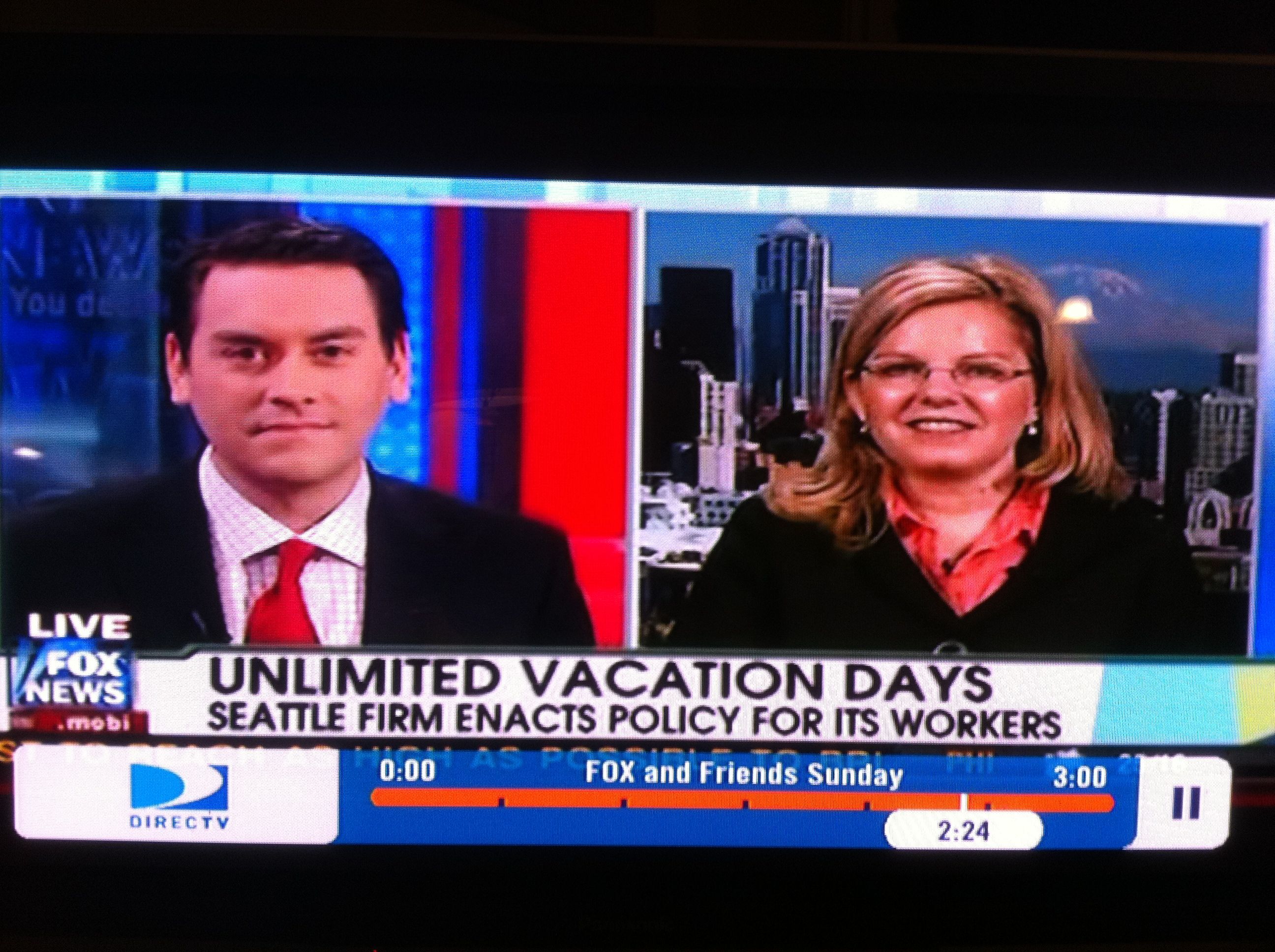
That people-first streak is not just marketing. The company drew national attention for an unlimited paid-leave policy, discussed on NPR's "All Things Considered" - the kind of move you make when you are building for the long run rather than the next quarter. It fits a business that grew mostly by word of mouth, riding the "powered by" links tucked into the communities it hosts, one referral at a time.
Where it fits in the market
Right now the whole internet is having the "own vs. rent" argument - creators pulling audiences off platforms, brands rebuilding email lists, everyone rediscovering that a rented audience is not really an audience. Social Strata has been on the "own it" side of that argument since before it was a talking point. That is the market it sits in: not chasing the next social network, but selling the boring, durable infrastructure that lets an organization run a community it fully controls.
The company's expertise is narrow on purpose. Nearly three decades in one category - through the rise and fall of Ning, Google+, and countless "forums are dead" headlines - is its own kind of proof. Social Strata is what a software business looks like when it optimizes for staying power instead of a splashy exit.