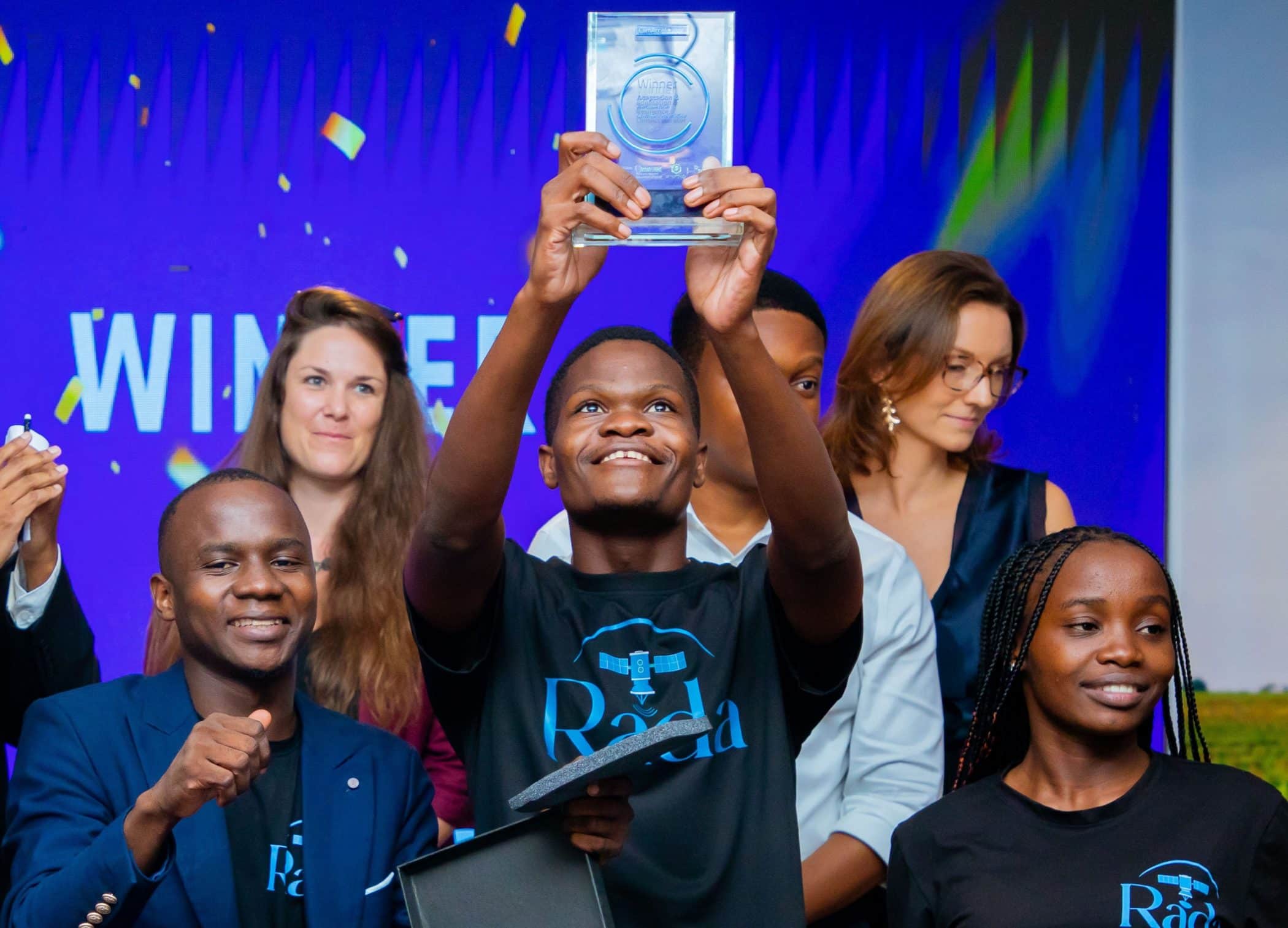
The trophy went up; the fieldwork was still ahead. At a climate startup showcase in Dar es Salaam in April 2025, four ventures earned €10,000 apiece and a place in the next phase of an accelerator run by Smart Lab and Climate KIC. Their assignments involved vegetables, insect protein, seeds and weather information. The prize was a chance to put those ideas to work with the communities they were supposed to help.
That is a useful introduction to Smart Lab, a company whose name could suggest anything from laboratory equipment to a coding school. Its work sits in the difficult space between having an idea and getting an institution to take it seriously. It brings founders into contact with corporate staff, technical advisers, funders and prospective partners, then helps prepare them for the questions that follow.
01 / ORIGINSThe university project that needs a buyer
Edwin Bruno, the entrepreneur behind Smart Codes, saw a particular disconnect: Tanzanian universities could produce promising technology projects, while large companies had resources and business problems. Bringing the two together required someone to organize the relationship. Early coverage of Smart Lab described university roundtables and corporate partners including Vodacom, Insignia and Precision Air. Bruno put his own money into getting the venture started.
The ambition grew from experience. A 2021 study of Tanzania’s innovation hubs identified Bruno and his team as early beneficiaries of the Dar Teknohama Business Incubator. It linked their knowledge of running incubation and acceleration programs to that earlier support. Smart Lab, now part of Smart Africa Group, belongs to a local lineage of entrepreneurs who received help and went on to organize it for others.
The first obstacle in this story was access. A final-year project can demonstrate technical skill without giving its creator an introduction to a decision-maker. Smart Lab’s proposition was to make that introduction part of a structured process: identify a business need, develop the product and discover whether a potential partner has a reason to use it.
02 / CORPORATE ACCESSVodacom brought more than a name
The arrangement became tangible in September 2019, when Smart Lab and Vodacom Tanzania launched the Vodacom Digital Accelerator. The original design included three months of acceleration, followed by an additional six months of support for selected ventures. Mentoring, technology and business networks formed the first stage; marketing, follow-on investment and possible integration with Vodacom’s systems featured in the next.
The initial commitment had a price attached. Tanzanian news outlet Nukta reported that Vodacom invested TZS 344.8 million in the launch program. That figure describes a program budget, with support extending beyond cash handed to founders. It gives a sense of the institutional commitment required to turn an accelerator announcement into people, time and technical assistance.
By the second season, the organizers were searching beyond the capital. A 2022 outreach tour covered seven regions, including Arusha, Mwanza, Zanzibar and Mbeya. Thirteen startups were selected for acceleration. At the March 2023 demo day, twelve pitched; BizyTech, with its Kilimo Bando product, Smart Darasa and Twenzao emerged as the three winners.
For a founder, the appeal is specific. Access to staff advisers and help with hosting or product development can address problems a general networking event cannot. Commercial collaboration remains conditional: Smart Lab’s program description says corporate partners can choose startups that meet their business needs after validation. A place in the cohort begins a conversation. It does not settle the purchasing decision.
03 / CLIMATE ADAPTATIONFour ways to keep a farm in business
The climate work applies a similar approach to a different customer problem. The second Adaptation and Resilience ClimAccelerator cohort launched in December 2024 after attracting more than 170 applications. Ten startups were selected. Climate KIC supplied the international climate-innovation partnership, with Irish Aid funding the wider Adaptation Innovation Cluster behind the initiative.
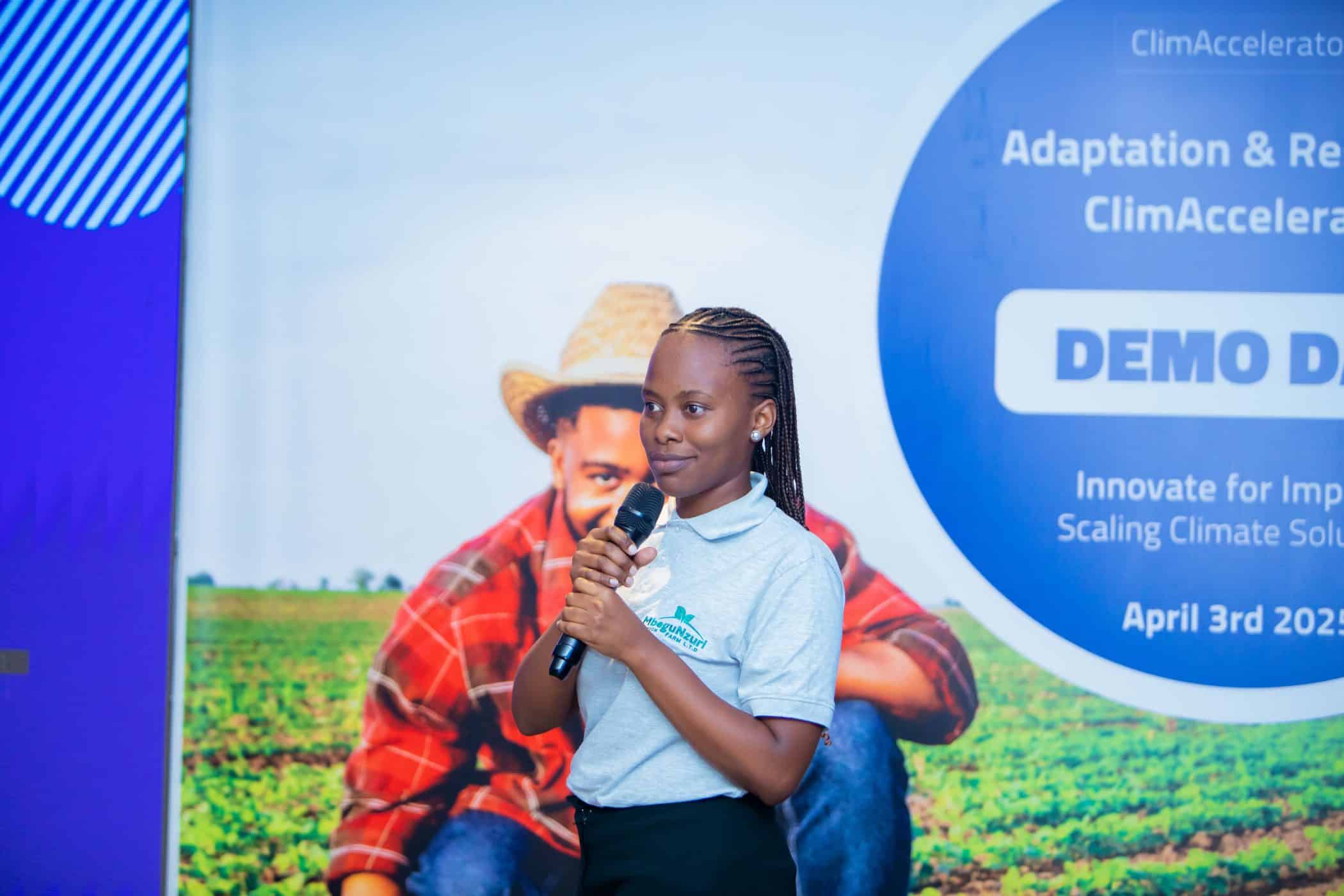
The eventual winners offered four interpretations of resilience. HerVEG.05 promotes nutritious vegetable cultivation. InsectUp turns organic waste into animal-feed protein using black soldier flies. Mbegu Nzuri Biotech Farms supplies seed varieties intended to cope with drought and pests. Rada 360 offers localized weather forecasts and agricultural advice. Together, they address food production from inputs to the decisions farmers make about uncertain weather.
Climate KIC’s assessment and validation framework asks ventures to measure and explain the adaptation benefits of their work. That changes the assignment for founders: they need to show what their product does for people exposed to climate risks. The four awards totaled €40,000, followed by plans for testing with end-users and refining the businesses around what they learned.
“One mentor’s presentation completely transformed my thinking about my business.”
Crescentia Mushobozi
Founder, Mbegu Nzuri · April 2025
Mushobozi’s account supplies a glimpse of what changed inside the program. She described learning from other participants and reconsidering business models, a subject she had previously given less attention. The striking detail is the object of that reconsideration. A founder could know her seeds and still benefit from thinking harder about how the business around them would work.
04 / THE COMMERCIAL ENGINEThe business behind the bootcamps
Smart Lab also sells the sorts of services that companies need between public events. Its talent operation covers permanent recruitment, outsourced staff and freelance projects. Employers can look for developers, product managers, quality assurance specialists and designers; the outsourcing offer includes interviewing, testing and payroll management. Here, the customer is an organization with work to deliver and a role to fill.
Research and consulting offer another route into the company. Smart Lab advertises market studies, consumer research, feasibility work, policy analysis and innovation strategy in Tanzania. These services address an earlier commercial question: whether an idea fits the market at all. Its local knowledge and contacts are part of what it offers organizations trying to make that judgment.
Then there is Smart Fund, which describes resources-for-equity agreements for post-revenue technology ventures. Marketing, technology, administration and team support are the advertised resources. The distinction matters when evaluating the business: equity-based support, sponsored acceleration and a bookable service are different arrangements, even when they sit under the same company name.
Institutions support a defined cohort and its objectives.
Organizations hire expertise, technical talent or space.
Post-revenue ventures exchange equity for resources.
SmartLab Spaces makes the service business particularly easy to picture. Its Mikocheni offering includes coworking, boardrooms, event space and a content studio for podcasts, interviews and videos. A founder can need a mentor on Tuesday and a room for a client meeting on Wednesday. Smart Lab has organized offerings around both needs.
05 / LEARNING BY DOINGThe classroom still feeds the company
The university connection survived the move into corporate and climate programs. In 2020, a partnership with the Human Development Innovation Fund set out to accommodate more than 400 students across the University of Dar es Salaam, St Joseph University, Dar es Salaam Institute of Technology and the Institute of Finance and Management. The emphasis was employability alongside entrepreneurship.
The same practical orientation appears in Talent Pool 2026, an eight-week program announced for students and recent graduates with DTBi, Buni Hub, Fursa Lab and COSTECH. Smart Lab also promoted a five-day FinTisha Mini App Bootcamp aimed at helping participants build a working prototype. Those are observable features of its learning culture: defined projects, outside mentors and work that can be shown to someone else.
Its Founder to Founders events add another form of instruction. A 2019 session brought together practitioners including Ubongo’s Nisha Ligon and ShuleSoft’s Ephraim Swilla to discuss market strategy. Across these activities, Smart Lab keeps returning to the handoff between learning something and persuading an employer, customer or partner that it is useful.
06 / THE NEXT WINDOWThe next application window is fintech
As of September 10, 2026, Smart Lab’s FinTisha Challenge is accepting applications, with a published deadline of September 30. Participation is free. The national challenge welcomes Tanzanian innovators and fintech startups at different stages, advertising acceleration, a testing sandbox and grant support for selected participants. A prototype is an advantage, rather than an absolute entry requirement.
That opportunity also gives founders something concrete to do: examine the published criteria and decide whether their financial-services idea fits. Being available to apply matters more than being impressed by the word “innovation.” The program is aimed at Tanzanian builders, so its national eligibility should be part of that first decision.
Another direction emerged in September 2025, when SmartLab Limited and Hungary’s MeOut Group signed an agreement covering digital innovation. Their announced plans included Living Labs to test AI applications in agriculture, climate resilience and digital inclusion, alongside training for young people, women and smaller businesses. These were proposed activities under an agreement, adding an international dimension to Smart Lab’s locally focused work.
07 / THE COMMERCIAL TESTAn introduction has to become a transaction
Founders have alternatives. Sahara Accelerator also offers corporate-sponsored support in Tanzania and advertises equity-free acceleration. Its PesaTech program targets fintech ventures with a minimum viable product or at a growth stage. The useful comparison is the match between a founder’s immediate problem and a program’s partners, eligibility and terms. Smart Lab’s combination of corporate relationships, climate programming and adjacent services gives it several ways to make that match.
The lesson a reader can copy is procedural: choose a real customer problem, bring the relevant institution into the discussion and reserve time to test the answer. This is an interpretation of Smart Lab’s program design, rather than a guarantee about its results. The approach depends on founders accepting feedback and partners having both a reason and the capacity to act.
It becomes much less useful when a startup needs a customer outside the partner’s market, when a sponsor cannot support a pilot, or when a team treats selection as proof of demand. Smart Lab can arrange the room and help a founder prepare. The consequential moment comes later, when somebody decides the product is worth using.
Follow the work
Programs, conversations and the people behind them.