The fabric arrived. The customer had gone. In 2012, Siddharth Dungarwal discovered an awkward feature of trading: you can own exactly what you ordered and still have nothing anyone wants to buy. A delayed shipment had wrecked a deal. Money borrowed to finance it remained tied up in cloth. The tidy margin he had expected now depended on finding a different ending.
He took fabric samples to retailers. One suggested making shirts. Dungarwal had no production experience, but he found a factory willing to help. The shirts sold, and the trader acquired a new occupation. Years before Snitch’s name appeared on shopping bags and television, he was learning how a problem changes when you can make the product yourself.
There is a pleasing inconvenience to this beginning. A fashion founder’s origin story might reasonably involve a sketchbook, a coveted jacket or a sudden insight about taste. This one involves a dispatch delay. The practical education came first. The label came later.
A shopkeeper’s inheritance
Dungarwal was born in Kolar Gold Fields, Karnataka, in 1987. His family’s business was jewellery, and he spent time working in it before finding his way into clothes. He completed a Bachelor of Commerce at Bhagwan Mahavir Jain College in Bengaluru. His early retail venture was a small clothing shop called 4EVER in Frazer Town. Even the shop’s name left little room for a modest commitment.
His father’s example runs through his account of work. In a public reflection, Dungarwal described his father moving from a village in Rajasthan to Bengaluru, eventually building a business of his own and running it for more than three decades. The children were encouraged to become independent earners. Their father supported their decisions and allowed them to learn through mistakes.
That last allowance matters in a story containing expensive fabric and an absent buyer. Dungarwal’s route involved several kinds of commerce before it involved a consumer brand: running a shop, trading surplus garments, supplying fabric and manufacturing clothes. Each put him in contact with a different person who could say no. A shopper could walk out. A retailer could decline a sample. A buyer could cancel.
From 2012 to 2019, he operated a buying house, designing and producing for other brands. The work gave him an understanding of production while someone else’s label went on the finished garment. In his later account of those years, he described them as preparation for Snitch. Manufacturing for other people had given him something useful to bring to his own business.
“I had fabric but no buyer.”
Siddharth Dungarwal, recalling the 2012 deal
Thirty-five products and a first order
Snitch began in 2019 as a business selling to retailers. Dungarwal wanted a label of his own, with clothes responsive to current demand. Initially, the customer remained another business. Then physical retail shut down in 2020, and inventory that had been made for that route needed another way out.
The official consumer website launch came on July 4, 2020. Dungarwal later remembered an order arriving during testing, before the formal opening. The website was almost finished. The team had four people, a small assortment and an Instagram audience of about 200. He remembered packing that early order with considerable feeling. It is an unusually tangible memory for a business later described in crores.
He also named the colleagues who made the beginning possible: Chetan Siyal, Naveen Jain and Praveen. Siyal brought marketing and advertising experience, complementing Dungarwal’s manufacturing background. The two had known each other for more than a decade. Their partnership joined the work of making something with the work of persuading a stranger to buy it.
By May 2021, Snitch had grown from its four-person start to a team of 50. Its catalogue had passed 1,000 products, and the business was reporting an average of 900 orders a day. The early warehouse had occupied 200 square feet in the office; within months, the operation moved into 15,000 square feet. A first order can be packed with joy. Nine hundred require a system.
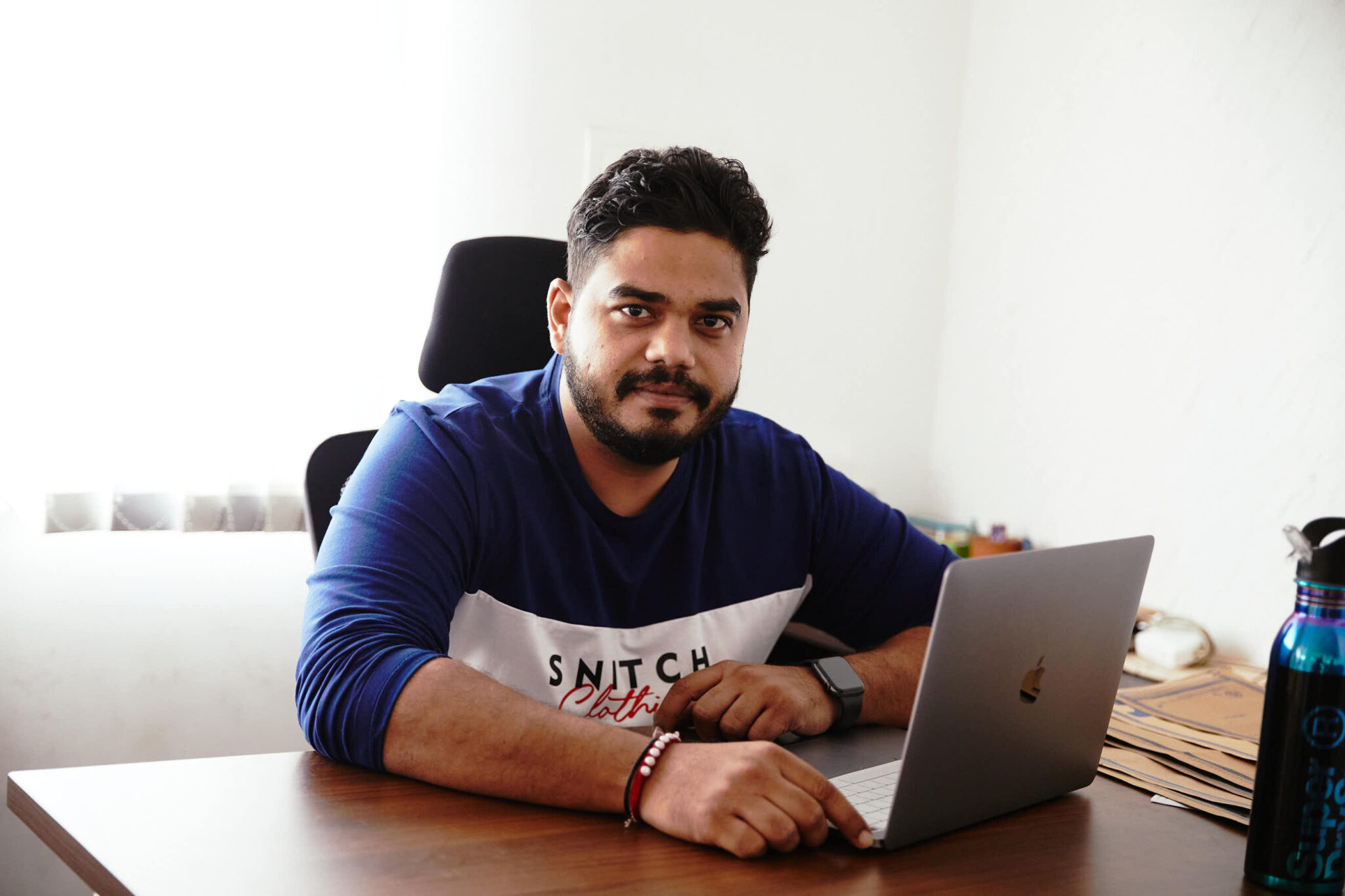
The calendar in the cutting room
Dungarwal’s experience gave him a particular complaint about fashion: the time it took to get clothes made. In his conversation on Groww’s Business Talkies, he described a process involving samples, approvals, raw-material sourcing and purchase orders that could stretch across months. Retailers were asked to commit to collections long before knowing what would sell.
Snitch’s proposition was frequent newness. In an early interview, he put it plainly: “We specialise in creating seasonless designs”. Shirts, denim and co-ordinated outfits were among the categories he identified as strong performers. He also pointed to customers beyond the largest metropolitan markets. The intended buyer wanted current styles at prices that made another purchase possible.
The business therefore required more than an eye for a shirt. A design had to become stock while someone still wanted it. The supply relationships and production knowledge accumulated before Snitch were useful here. Fashion offers plenty of room for taste; a late delivery is a rather less subjective matter.
His later conversation with DHL eCommerce’s Pablo Ciano explored how the company combined design judgement with data, demand forecasting and short production cycles. The episode described roughly 25 to 30 days from concept to shelves. The interesting contrast with his early career is the amount of uncertainty such a system tries to remove. The trader once waited for a delayed shipment. The founder now works on shortening the wait.
Five investors, one proud father
In 2023, Dungarwal appeared on Shark Tank India’s second season and secured a deal from all five participating investors. Anupam Mittal, Aman Gupta, Namita Thapar, Vineeta Singh and Peyush Bansal agreed to ₹1.5 crore for 1.5% equity. The agreement put Snitch at a ₹100 crore valuation.
He had expected a harder discussion about the valuation. Instead, he came away enthusiastic about what the investors could contribute. The appearance also brought attention: website traffic increased and messages arrived. For a founder who wanted marketing as well as investment, the programme served both purposes.
The most personal response came from his father, who kept calling as people congratulated him. Dungarwal described his father’s pride and the pleasure of receiving his approval. Television had made the business visible to an audience beyond its customers. At home, its meaning could be measured in another call from Dad.
More institutional backing followed. In December 2023, Snitch raised ₹110 crore in a Series A co-led by SWC Global and IvyCap Ventures. In 2025, a $40 million Series B brought in 360 ONE Asset as lead investor, alongside existing backers and other participants. The company said the money would support stores, new categories, quicker delivery and international pilots. Those were plans for the next phase, with the operational work still attached.
Back through the shop door
On July 4, 2023, three years after the official website launch, Snitch opened its first flagship store in Jayanagar, Bengaluru. It occupied 2,500 square feet. For a business known through a screen, the opening added a fitting room. For Dungarwal, it returned him to a familiar form of commerce.
He explained the appeal in practical terms: apparel involves touch and feel. Customers who knew the label online could experience the products in person. The website and app had helped build demand; a store gave that demand an address. A shirt can look persuasive on a phone and still leave a buyer wondering about the shoulders.
By February 2026, Dungarwal was discussing franchise-led expansion in detail. He described looking at repeat purchasing in areas without stores, demand for faster access and customers’ desire to try particular garments. Local retail partners could help the business expand, while centralized merchandising and shared inventory technology were intended to keep the experience consistent.
It is a more demanding version of opening the next shop. Newness has to reach the racks regularly. Staff need training. Stock needs replenishing. The same customer may browse on an app and buy in a store, or do the reverse. Dungarwal’s proposed solution was to manage those journeys together. The customer, after all, has only one wardrobe.
- 2012From fabric trading to making shirts
- 2019Snitch begins as a B2B label
- 2020The consumer website opens
- 2023The first flagship opens in Jayanagar
A second label, a different assignment
In July 2026, Snitch acquired Berrylush, taking the business into women’s fashion. Berrylush would continue under its own identity. Dungarwal said Snitch would work with co-founder Anusha Chandrashekar and the existing team on its next phase, called BERRYLUSH 2.0. The proposed contribution included product development, technology, supply chains, marketing and physical retail.
There is a useful difference between this chapter and the beginning of Snitch. Here, the label already has its own customers and history. Dungarwal is joining a business whose team has accumulated knowledge of its own. The stated intention to preserve Berrylush’s identity makes collaboration part of the assignment. An acquisition supplies access to a company; the work of building together comes afterwards.
He also announced plans to document the rebuilding process publicly over 100 days, including product, branding and business decisions. For an entrepreneur whose early work happened behind other labels, that is a change in visibility. Customers would be invited to watch decisions before the finished result arrived.
The longer ambition is international: an Indian fashion business serving customers beyond India. Dungarwal has discussed overseas markets and a future public listing. The route there remains a series of practical decisions about products, people and distribution. His career has already supplied plenty of practice. The first difficult question was what to do with fabric after its buyer disappeared. He found someone who could turn it into shirts, then someone willing to sell them. The next question followed.
More from Siddharth
Conversations, company updates and the next chapter.