Vivek Gupta spent close to a decade working inside a venture-capital firm. Then he tried asking venture capitalists for money to sell meat. This ought to have been familiar territory: numbers, meetings, a market waiting to be served. The surprise was how much depended on the people across the table having an appetite for the business. Looking back in 2025, he joked that VC could also stand for “Vegetarian Capital”.
It is a good joke with an expensive underside. Knowing how a fund works does not mean knowing how to persuade it to back your particular idea. Gupta had crossed from assessing other people’s companies to explaining why his own should exist. Chicken, unlike a slide deck, would eventually have to arrive at somebody’s door.
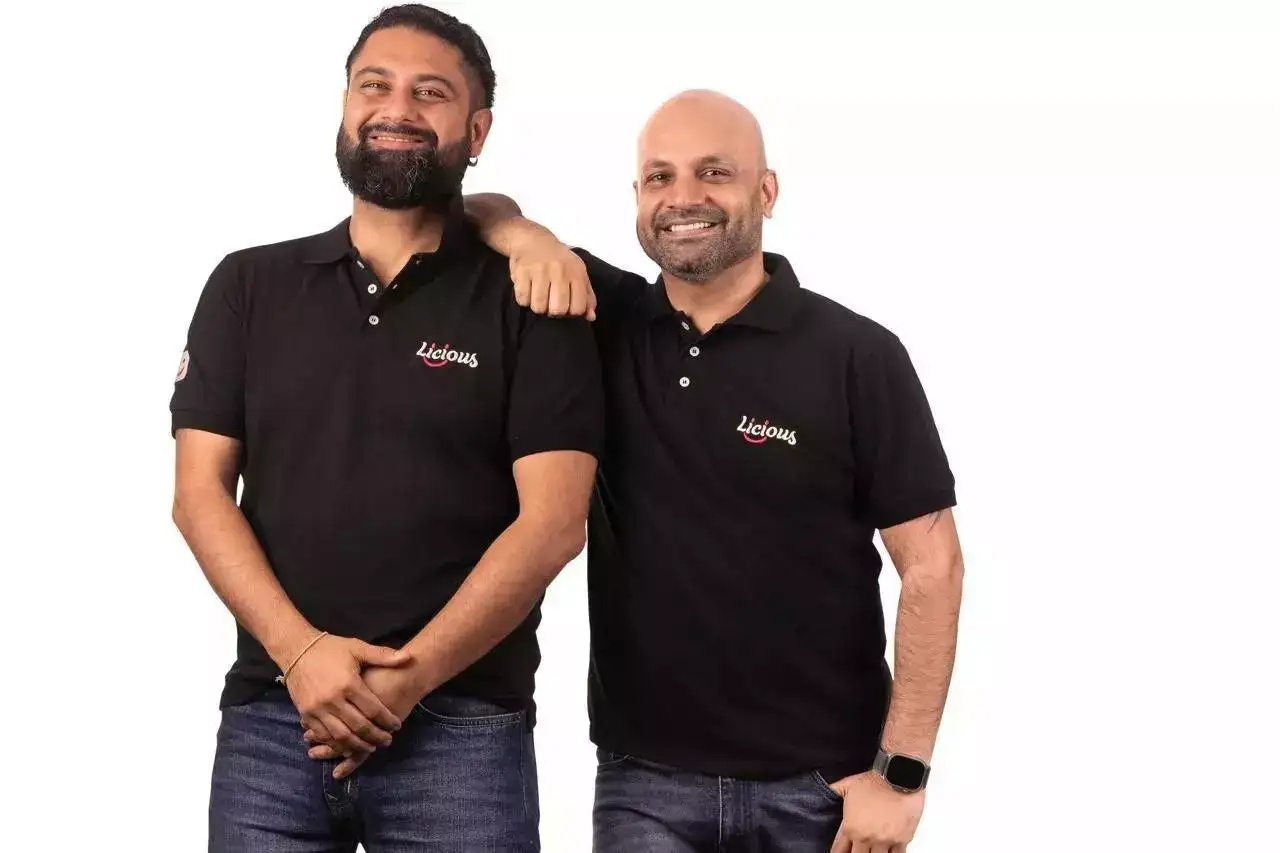
He had made that crossing with Abhay Hanjura, a friend whose enthusiasm for food matched his own. Together they founded Licious in Bengaluru in 2015. Their ambition was easy to describe over lunch: give customers a dependable meat brand. The difficulty would occupy years, processing centres, delivery hubs, and considerable capital.
A friendship with something on the menu
Gupta came from Chandigarh, qualified as a chartered accountant, and moved to Bengaluru for work. Before Licious, he worked in finance at Helion Ventures, spending time with its portfolio companies on operations and strategy. He knew the vocabulary of scale before he had a company of his own to scale.
Hanjura’s route was different, through science studies and insurance. Their common ground was the table. The two friends ate out together and discussed food, while both wanted to build something themselves. Gupta had considered a lingerie business. It never materialised. Entrepreneurship, it seems, does not always arrive with the right category already attached.
Their accounts of Licious’s beginnings return to disappointing restaurant meals. In one recollection, a poor chicken lunch at Gupta’s office sharpened the idea. A conversation about dinner became a question about accountability: who would take responsibility for the product before it reached the cook?
Gupta used Amul butter as a reference. A familiar packet saves the buyer from conducting a fresh investigation every time. Could meat earn that same confidence? The comparison was ambitious because butter already came with a recognisable branded habit. Licious would have to build one.
The leap also required a conversation at home. Both founders’ fathers had held senior government roles; leaving steady careers to enter the meat trade took some explaining. Hanjura later recalled sending his resignation from Gupta’s office, after which Gupta copied the email and sent his own. There are more elaborate methods of coordinating a career change. Few are quite so economical.
The spreadsheet meets the shopping bag
Being a finance professional was useful preparation, but it did not make Gupta immune to the awkwardness of a first pitch. He later described meetings that failed to become investments and offers to turn Licious into a network carrying the brand above other butcher shops. The founders chose to keep control of the product’s journey.
The distinction mattered. An ordering service can introduce a customer to a seller. A brand that promises consistency assumes responsibility for what happens between them. Each decision about sourcing, processing, packaging and delivery becomes part of the same bargain. It is a demanding way to attach your name to a shopping bag.
Early support came from people who already knew them, including Kanwaljit Singh. Familiarity opened a door; it did not remove the need for a workable plan. The company’s beginnings mixed personal relationships with the less sociable tasks of building processes and finding people who knew how to run them.
The first office was in a friend’s apartment. The founders considered roughly 300 possible names before settling on Licious. A company can spend days choosing a name and years earning the right to be remembered by it. In this case, the earning would happen largely out of sight.
A brand built behind the screen
The customer encounters a menu, a price and a delivery window. Licious had to assemble the operations behind all three. Its early setup moved meat through central processing, temporary cold storage and neighbourhood delivery centres. Experienced retail and supply-chain staff were part of the core team. The app was one doorway into a much larger building.
That structure helps explain Gupta’s unusually broad remit. His responsibilities have spanned finance, marketing, technology and expansion. Those functions can look separate on an organisation chart. In a perishable business, they keep meeting: a promotion changes demand, demand changes inventory, and the inventory has only so much time.
The company says it keeps products chilled through procurement, preparation, storage and delivery. A temperature promise is less glamorous than a launch party, but it has to work on an ordinary Tuesday. The experience depends on repetition by people the buyer may never see.
- SourceChoose the product
- ProcessPrepare and pack
- StoreKeep it chilled
- DeliverComplete the journey
A simplified view of Licious’s integrated supply chain.
Gupta’s account of an outsourced call centre offers a smaller, funnier version of the same problem. During a visit, he heard an agent explain turkey to a customer as “bigger chicken”. The founders brought the function back inside the company. His telling makes the point neatly: a script and a headset cannot, by themselves, give someone knowledge of dinner.
This is where his finance background meets the messy work of operating. Outsourcing may look sensible in a budget. The resulting conversation still belongs to the brand. The customer does not care which company signed the agent’s employment contract.
Bengaluru before the next pin on the map
Licious’s first year covered only part of Bengaluru, including Indiranagar, Koramangala and sections of Whitefield. It was a restricted footprint for founders thinking about a national business. Yet neighbourhoods offered something a countrywide map could obscure: the chance to learn how customers actually bought.
In a 2021 conversation, Gupta described the challenge of serving different food preferences across India. The brand needed consistency while allowing for local tastes. That is an awkward combination to reduce to a single national menu. A familiar logo does not make every household cook the same dinner.
By October 2021, a $52 million funding round had taken Licious past a billion-dollar valuation. The shorthand was unicorn. For Gupta, who had once worked on the finance side of other companies, it was a public marker of how far his own had travelled. It could not settle the next question: how much business could that valuation support?
“we have to get the fundamentals right to crack that opportunity”Vivek Gupta, 2021
His later advice to founders placed patience above speed and encouraged them to find support. It is advice with some irony coming from a delivery business. The customer wants the order promptly. The company that fulfils it may take years to build.
The accountant’s unfinished arithmetic
Licious’s later numbers make a less tidy story than its ascent to unicorn status. Growth slowed after the funding boom. The company cut spending and reset operations; in 2024, it laid off 80 employees. These belong in Gupta’s story because building a company includes decisions with consequences for people beyond its founders.
In September 2023, he had said the business wanted to operate without needing further fundraising, except for an acquisition or a substantial change in direction. That was a stated ambition, rather than proof that the financial work was complete. Available capital buys room to act. It does not automatically make the operation profitable.
The company reported ₹1,166 crore in FY26 revenue, compared with ₹795 crore a year earlier, a rise of 47%. It also reported an EBITDA loss of ₹187 crore, up from ₹168 crore. Revenue was increasing faster than that loss, but the loss remained. Both parts of the sentence matter.
Bars share a scale. EBITDA loss is shown as an absolute amount, not net loss. Financial year ended 31 March 2026.
The reported FY27 revenue target was ₹1,800 crore. A target belongs in the future tense. Gupta’s earlier training makes the distance between an aspiration and a result particularly relevant: the story cannot end just because the larger number looks handsome in print.
The shop joins the app
The next stage has also involved physical shops. In 2024, Gupta described stores as a way to make Licious more visible and give customers an experience beyond the screen. The company then acquired Bengaluru retailer My Chicken and More, adding its 23-store network.
This gave the founders another setting in which to keep the original promise. A shop allows questions, requests for cuts and direct encounters with the brand. It also brings another set of costs. The neatness of ordering on a phone can conceal the complexity of fulfilling the order; a store puts some of that work back in view.
By the FY26 announcement, Licious reported more than 60 outlets. Its Infiniti subscription programme had 356,000 active subscribers as of March 2026. These are different routes towards the same practical goal: customers choosing the brand again, without needing to be introduced to it afresh.
The expansion strategy increasingly favoured deeper coverage within existing urban markets. For Gupta, that returns to an early lesson from Bengaluru. There is room to grow inside a city before putting another city in a presentation.
A list, a cue, a longer commitment
Away from the funding announcements, Gupta’s descriptions of his day are agreeably ordinary. In 2019, he said he read the newspaper and wrote a detailed list each morning. He also spoke of playing snooker with Hanjura in the office. The friendship had acquired a business without losing every excuse to spend time together.
Badminton is another enduring interest. By 2024, he had been champion for three consecutive years at a Bertelsmann corporate tournament. That same year, Gupta and Hanjura received AIMA’s Entrepreneur of the Year award. The company has supplied formal recognition; the court supplies an entirely different scoreboard.
These details make him easier to picture than a valuation does: someone who likes a competitive game, a written list, and a friend with whom to talk things over. They do not explain every business decision. They do show a life with routines beyond the next financing round.
Licious began with dissatisfaction at a meal and an ambition to make the next one more dependable. Gupta’s part in that story has involved turning appetite into an operation, then confronting the cost of running it. More than a decade later, the promise still has to be renewed with each order. The spreadsheet remains open. Dinner, meanwhile, is getting cold.