The holiday had developed an administrative problem. Varun Khona was planning a European trip to visit Suren Sultania, who would later become his co-founder. There were things they wanted to experience. Getting from that list to an actual booking meant calls, emails and language barriers. The enjoyable part of travel had acquired the habits of office work.
It is a peculiar mismatch. You can arrange to cross a continent without speaking to anyone, then spend your afternoon trying to establish whether a local activity is available. A plane has a reservation system. A memorable day can still require a small correspondence department.
Khona was already working in travel. Customers of his first business, Trippy, described a similar difficulty: flights and hotels were straightforward enough to buy online; discovering and booking things to do was another matter. His own irritation had company. That overlap became the opening for Tourlandish, the venture that became Headout.
Today, Khona is Headout’s Bengaluru-based co-founder and CEO. The company sells access to tours, attractions, performances and local activities around the world. But his story is easier to understand by starting with that smaller question: why did arranging the interesting part of a trip involve so much work?
A bank offer, then a travel business
Khona studied business management at Bangalore University, with a finance focus, between 2007 and 2010. He interned in listed derivatives at Goldman Sachs and received a pre-placement offer. He chose to start a travel business instead. The professional itinerary was available. He booked something else.
Trippy, which he founded at 21, arranged bespoke trips. Khona says the business was profitable and reached more than $650,000 in revenue within two years, selling travel across more than 100 cities on four continents. The entire range of responsibilities landed on one founder: strategy, sales and product.
The eventual sale was less glamorous than the itinerary. In a 2015 conversation, Khona said he had sold Trippy without making much money; it had become a lifestyle business. Asked whether the same founders had moved on to Headout, he pointed out that Trippy had been his alone.
That is an unusually useful detail in a founder’s biography. A business can sell something people want and still fall short of its founder’s ambition. Trippy put Khona in contact with travelers and their recurring problems. The next venture would give those problems a different business model and a larger founding team.
Three founders, one awkward gap
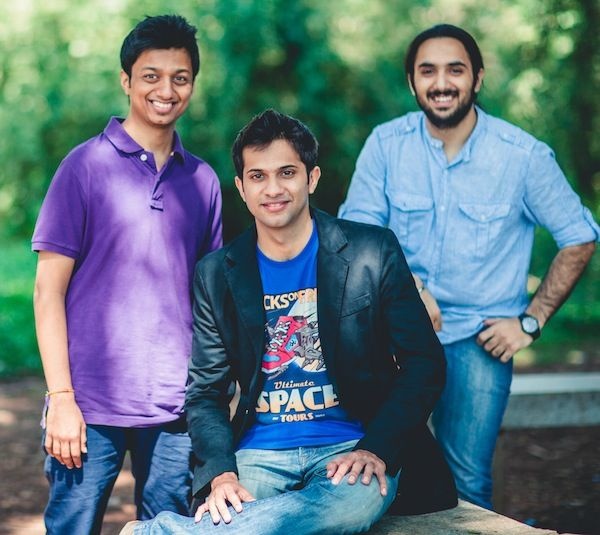
Khona began Tourlandish with Sultania and Vikram Jit Singh in May 2013. Sultania brought operational and financial experience, including work in Paris. Singh brought technical experience from Oracle. Khona and Sultania had known each other since their undergraduate years; the team also came together through shared friends, treks and hackathons.
Winning Startup Weekend Bangalore gave the idea an early vote of confidence. By January 2014, Tourlandish was being presented as a marketplace where travelers could find and book local experiences. The central difficulty was already clear: fragmented providers and incomplete real-time inventory. A lovely photograph of a tour cannot tell you whether there is room on it.
Headout’s launch is dated to 2014. Its early mobile proposition made the clock part of the product: curated activities available in the next 24 hours, reserved quickly, with paperless tickets. The founders were selling a practical way to be spontaneous. Even spontaneity benefits from a confirmation number.
- 01Find something
worth doing - 02Check a real
available place - 03Get a confirmed
ticket - 04Go out.
Be there.
A diagram of the problem Headout set out to solve, rather than a measured booking funnel.
New York on a very short runway
The early US move came with little room for error. Khona recalled that the founders initially had enough cash for one plane ticket and two weeks of accommodation. Sultania took a Greyhound bus from New York to Chicago during their search for backing. Dreamit Ventures provided early money that allowed the remaining founders to reach the US and gave them several months to launch.
Khona also remembered encouragement from InMobi founder Naveen Tewari at a TiE event in Bengaluru. Other investors had questioned the relocation. Tewari’s own experience gave the team a reason to proceed. Sometimes the useful connection is the person who has already made a comparable journey and can recognize the logic in yours.
Khona’s early New York chapter included staying with a family relative. Returning to India later helped the business focus and grow. The map was becoming part of the company’s method: selling to global travelers while building from a base that made the work sustainable.
By April 2015, Headout had raised $1.8 million from backers including Version One Ventures, 500 Startups and Nexus Venture Partners. The funding supplied breathing room. The less photogenic details remained. Asked in an early AMA how the team had handled visa issues, Khona answered with two words: “Expensive lawyers.”
The ticket has to keep its promise
An attraction ticket is a peculiar kind of product. The customer pays before knowing quite how the day will unfold. The meeting point, the entry arrangements, the guide and the operator all influence what that purchase becomes. The receipt is tidy. The delivery happens outdoors, in queues and among other people.
Khona’s explanation of Headout has increasingly centered on a managed marketplace. By 2021, he was discussing supply standardization, availability, market launches and pricing. These are the backstage subjects that decide whether the attractive front door opens into a good experience.
Headout works on curation and delivery with local partners, rather than treating every listing as interchangeable. Khona has argued that services demand more involvement than simply collecting products in a catalog. His approach makes the company responsible for more of the journey between an appealing listing and the actual afternoon.
“The managed experiences model we pioneered is working.”
Varun Khona, January 2025
In January 2025, Headout reported $130 million in revenue for 2024 and said it had achieved profitability, with contribution margins exceeding 30 percent. Those are company-reported figures, with a specific year attached. They describe a substantial business built around an awkward purchase that Khona first encountered as a traveler.
Announced January 2025. Revenue measures the business; the visitor’s day measures the promise.
Broadway, a circus, and the plumbing
Khona appeared on Bloomberg TV India’s entrepreneurial show The Pitch, where he finished as runner-up. In 2020, he was named to Forbes India’s 30 Under 30. By then, Headout had served six million people from about 200 countries, with experiences in 40 cities. The recognition arrived after years of work on the unglamorous booking details.
The same concern shows up in later partnerships. An expanded Cirque du Soleil relationship announced in April 2025 included direct technology integration, real-time bookings and instant confirmations. The performance supplies the spectacle. The integration is what gets someone into a seat without a confusing detour through the purchase.
Headout’s June 2025 London Calling campaign offered selected West End productions to visiting travelers, including Wicked and My Neighbour Totoro. That is a recognizable extension of the original idea: someone is in a city, there is something worth seeing, and the distance between the two should be easier to cross.
There is a pleasant irony in the work. A company selling escape must spend considerable time on operational precision. The visitor wants a memorable evening. The team needs a reliable way to issue the right ticket. One depends on the other, however little anyone wants to discuss booking infrastructure over dinner.
Ownership with a transaction attached
Another part of Khona’s public philosophy concerns who benefits from the company’s progress. In July 2025, Headout announced its second employee stock-option buyback. More than 250 employees participated across 11 global offices. The company said the money came entirely from its balance sheet.
Khona called ownership a core operating principle. The buyback gave that language a concrete event: employees could turn some of their stake into cash. Founder biographies often accumulate funding rounds as if they were birthdays. This transaction points the attention toward the people doing the building.
His public activity has included a more domestic kind of company gathering, too: sharing a post about Headout’s Bengaluru Homies Day, when employees’ loved ones visited. It is a small addition to the story, but a revealing one. The global business also has an office full of people whose lives extend beyond its city list.
A shorter route out of the screen
Headout acquired the Canadian technology company Dabble in 2024. Khona’s more recent public writing gives AI a prominent place in the company’s operating thinking. A LinkedIn article dated May 14, 2026 carried the title phrase “If AI can, AI should.” The booking business is adopting new tools while its destination remains decidedly physical.
In August 2026, Headout announced that US experiences could be discovered and booked within TikTok GO. In September, an expanded Merlin Entertainments partnership brought four attractions in Asia onto the platform through direct integration. An October agreement with Miral Destinations added joint promotion of Abu Dhabi’s leisure and cultural experiences.
These developments return to the original problem through different doors. Inspiration can begin in a video. The experience might be a museum, a show or a theme park. Someone still needs an available place, a clear purchase and a dependable arrival.
Khona’s work has changed in scale and machinery since the emails and phone calls of that European trip. Its central appointment has stayed familiar: a person wants to go and do something. The job is to make the arrangements good enough that, for a few hours, the arrangements can be forgotten.
Keep following the journey
Read, watch and explore more: