Shekar Natarajan’s childhood home in India had one room and eight occupants. Cooking, sleeping and studying had to fit inside the same small space. Years later, he would spend his working life thinking about how to use space, how to move things through it, and how much waste people tolerate when they can afford to. The connection is easy to draw. He has made a more specific one: the obligations people accept for one another matter as much as the systems intended to help them.
He credits his parents with teaching him integrity and a willingness to work. His mother sold her wedding ring to keep him in school. In his telling, education depended on someone else giving something up. It is a useful detail to carry through the rest of his career. Whenever the conversation turns to automation, he returns to the people who absorb the consequences of a decision. A spreadsheet can record the price of a ring. It has rather less to say about the person who removes it.
His professional biography is crowded with familiar names: Coca-Cola, PepsiCo, Disney, Walmart, Target and American Eagle. The current chapter belongs to Orchestro.AI, the company he founded in 2023. But the recurring subject is less glamorous than the logos. It is the everyday work of getting a product to the person who bought it, without wasting everybody else’s afternoon.
An engineer chooses the long route
Natarajan came to the United States in 2001 and enrolled at Georgia Tech. He chose the university partly because his older brother was in Alabama; weekend visits would be possible. The decision put a family relationship on the same footing as an academic opportunity. That is a different sort of college ranking, and a practical one.
His undergraduate training was in mechanical engineering at Jawaharlal Nehru Technological University. At Georgia Tech he studied industrial engineering. Later came an executive certificate through MIT’s Center for Transportation and Logistics and advanced management study at Harvard Business School. The sequence moves from the behavior of physical things to the behavior of organizations. Both can be wonderfully efficient until a person needs something the designer failed to anticipate.
By 2018 he was discussing drones, autonomous delivery and anticipatory fulfillment in an industry interview. He also described how a distribution operation could be rethought when a company’s product range changed. That is the less cinematic side of invention: understanding a constraint before choosing a machine. A robot is photogenic. A better arrangement of work may be what actually pays the bill.
- 2001Georgia Tech
Industrial engineering - 2016Target
Network design - 2018American Eagle
Supply chain - 2023Orchestro.AI
Founder & CEO
The last mile leads to Target
At Walmart, Natarajan served as vice president of last mile operations, emerging sciences and operational excellence. The title contains three jobs that do not always get along: deliver today’s order, explore tomorrow’s technology, and make the operation work economically. His later ideas about shared networks grew out of this territory, where the customer sees a doorbell and the operator sees a chain of handoffs.
Target hired him in November 2016 for a newly created position: senior vice president of network planning and operational design. He reported to supply chain and logistics chief Arthur Valdez and was based in Sunnyvale, California. His remit covered the network serving stores and customers directly, alongside automation and other technologies intended to improve delivery.
Those two destinations create a deceptively awkward problem. A store wants inventory in quantities that make sense for its shelves. A household wants one particular thing, often rather soon. Designing for both means reconciling different rhythms inside the same business. Natarajan’s career kept placing him at that junction. It also brought him closer to a question that extends beyond any single retailer: must each company solve the entire delivery problem by itself?
Rivals, with a joint shipping bill
American Eagle hired Natarajan in 2018 to oversee its global supply chain. He later led Quiet Platforms, the retailer’s logistics subsidiary. The proposition was unusual enough to require explanation: brands could keep competing for shoppers while sharing the machinery that fulfilled their orders. A customer might care deeply about whose jeans arrived. The truck would have no fashion opinion.
At a retail supply chain conference in 2022, Natarajan described the scale mismatch behind the idea. American Eagle moved 225 million units annually; Walmart moved about 50 billion. A smaller retailer could improve its own operation and still face a considerable disadvantage. Pooling volumes offered another route to scale. Quiet was then working with 70 brands, including Saks Off Fifth and Fanatics.
Fanatics gave the proposition a concrete commercial test. In August 2022, the companies announced an expanded partnership intended to bring same-day and next-day delivery to 11 additional markets. The existing arrangement had begun in May. Their plan involved fulfillment capacity and delivery connections, the parts of commerce customers rarely inspect until something goes missing.
Sharing introduces a negotiation alongside the engineering. Competitors need rules about information, service and responsibility. Someone must answer when a promised delivery fails. The appeal of a common network is easy to understand; earning the confidence to use it takes longer. Natarajan was attempting both inside a public retailer, where an attractive idea still had to meet a financial timetable.
Quiet meets a noisy balance sheet
The experiment did not produce an uninterrupted success story. In April 2023, American Eagle confirmed Natarajan’s immediate departure amid changes at Quiet Platforms. The logistics arm had grown, but its performance fell short of the retailer’s expectations. American Eagle planned to reduce expenses, and Niall Murphy took interim responsibility for the operation.
The retailer had also credited Quiet with improving its own supply chain. By the previous autumn, executives said 75 percent of online orders reached customers within three days. Those details belong together. An operation can improve service for its parent and still disappoint as a business serving other companies. Delivery speed and a satisfactory margin are separate accomplishments.
For Natarajan’s story, the departure puts a useful weight on the next chapter. He had worked on shared logistics inside a large company and encountered the demands of making it commercially durable. Founding a business around the idea meant taking those demands with him. The customer still needs the parcel; the investor still needs the arithmetic. Neither becomes more patient because the architecture is elegant.
of American Eagle’s online orders were reaching customers within three days, executives said in autumn 2022.
Service progress preceded Quiet’s 2023 restructuring.A company built around the handoff
Orchestro.AI began in August 2023. Its stated ambition is to connect logistics resources so that goods can move across a community of providers. The company’s mission includes reducing resource consumption by a third. That is a goal, rather than a result to be chalked up in the achievements column. It explains the direction in which Natarajan wants the business to travel.
The essential appeal is interoperability. Carriers and merchants already have assets, relationships and operating software. Connecting those pieces could let them use more of what is available, instead of asking each participant to recreate an entire network. The comparison with the internet is an organizing idea: a shipment would move through compatible connections toward its destination. Physical goods, of course, require trucks, handling and accountability at every transfer. A parcel cannot be restored from a backup.
Natarajan’s role now includes setting the strategic architecture, recruiting experienced logistics people alongside a younger technology team, and fundraising. It is an altered relationship with corporate power. As a founder, he has to win customers’ time and make decisions while information is incomplete. The grand concept eventually arrives at a very ordinary question: will someone trust this company with the next shipment?
“Technology doesn’t drive these companies. People drive the company.”
Shekar Natarajan
An algorithm with a pause button
Alongside the logistics work, Natarajan has developed a framework called Angelic Intelligence. The name carries his argument that automated decisions should account for human values. His personal site describes a reasoning layer that considers fairness, human impact and unintended consequences before an action is executed. It is a proposal about the criteria a system uses, as well as its speed.
There is a practical issue beneath the vocabulary. A decision that looks efficient for one participant may shift a cost onto another. A delivery plan might improve a commercial metric while asking a driver or customer to accommodate its shortcomings. Choosing what to measure shapes whose inconvenience appears on the screen. Natarajan wants that choice to become a deliberate part of the design.
In February 2026, Angelic Intelligence announced $15 million in seed funding and plans for international expansion, with the Middle East a priority. Discussions were underway with organizations in the UAE and Saudi Arabia. Subsequent descriptions presented the platform as software that can work alongside existing enterprise systems, with Orchestro.AI among its early adopters. The distinction matters: the wider AI proposition now reaches beyond the original logistics company.
The commercial challenge follows naturally from the moral one. A buyer needs to know how a system handles competing obligations, who can intervene, and what happens when its decision is questioned. Giving an algorithm a considerate name will not answer those questions. Natarajan has chosen a field in which the answer must eventually show up in an actual operation.
What fits outside the spreadsheet
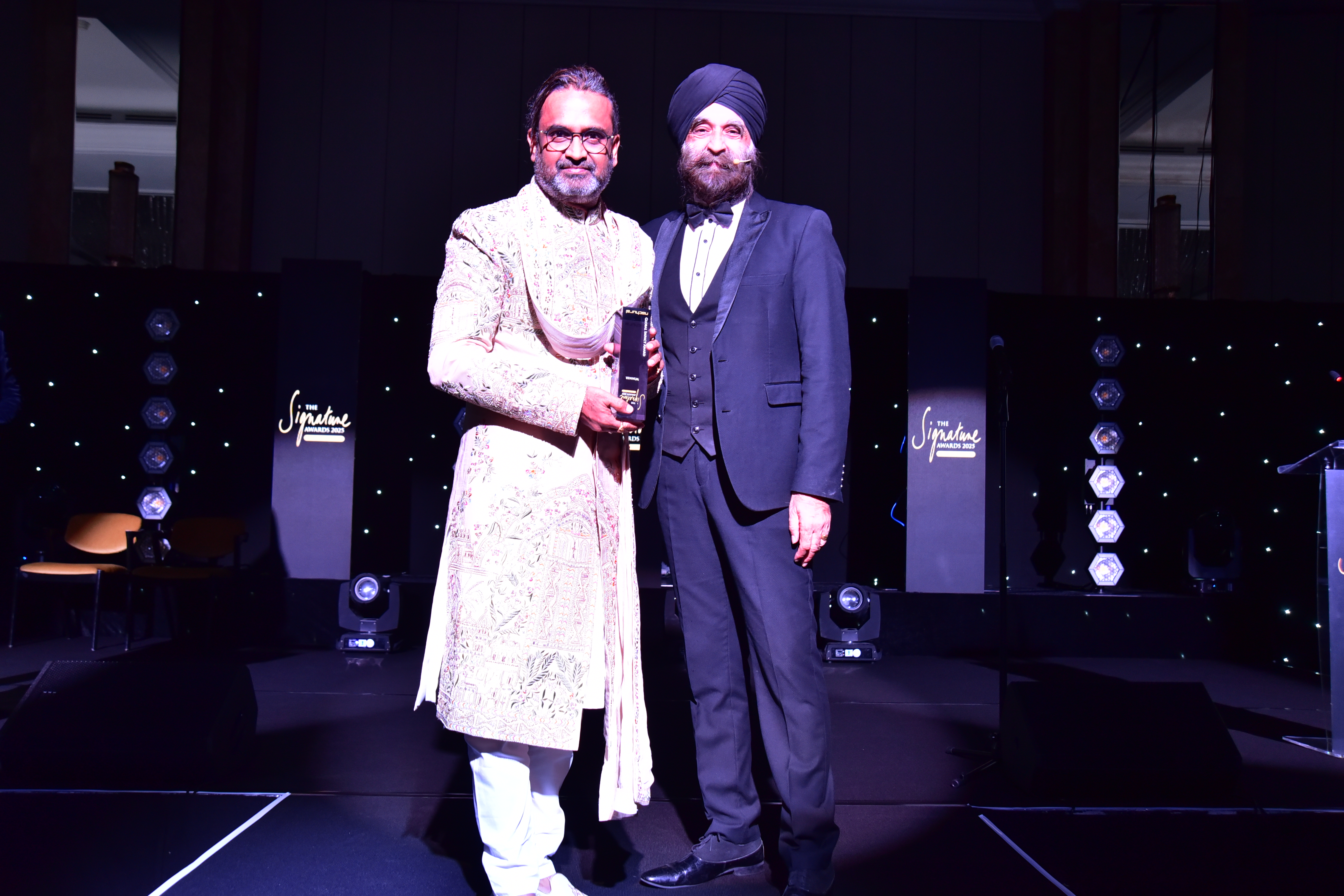
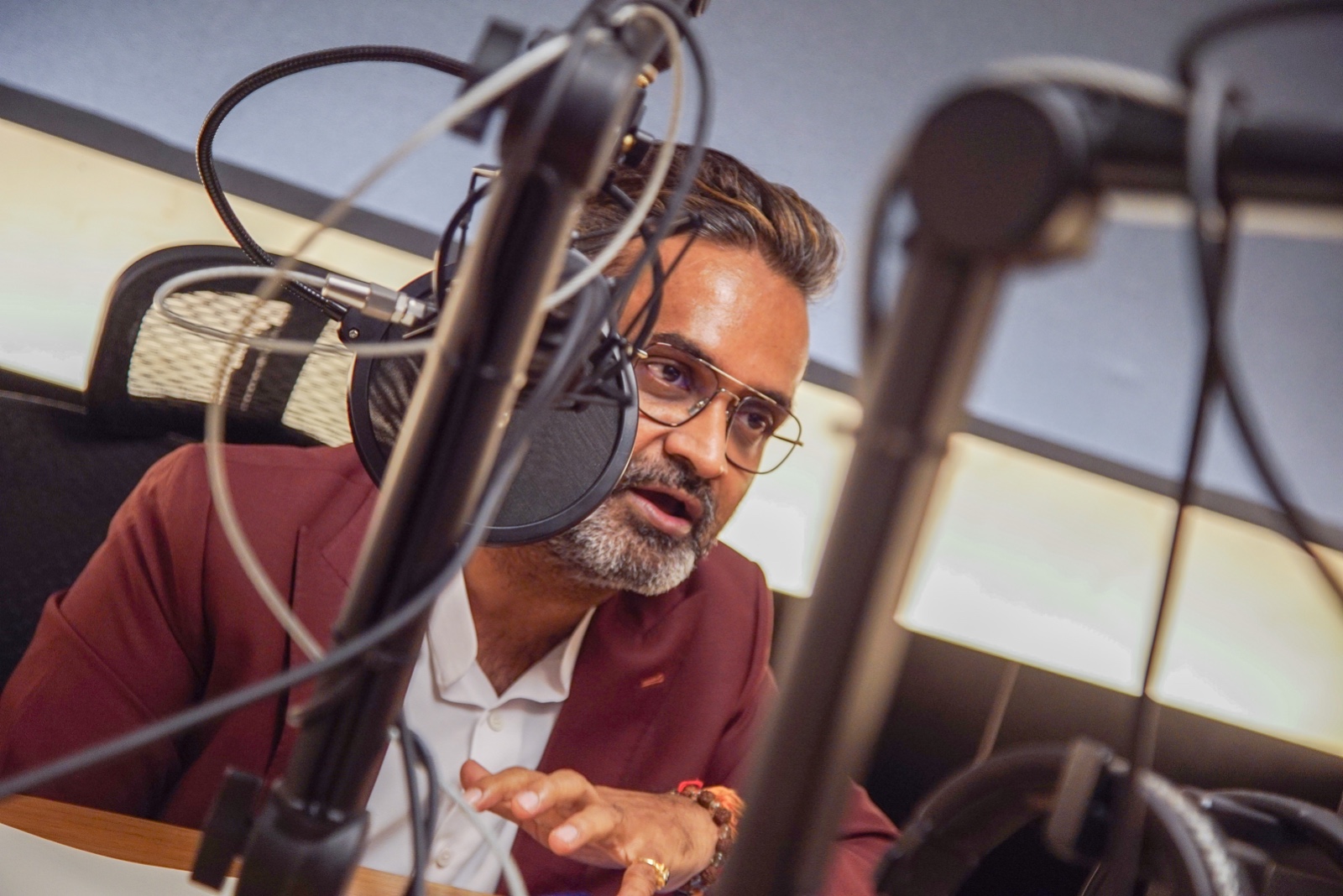
His public life has expanded into speaking, writing and hosting Tomorrow, Today, a show about technology and the choices it brings. In 2025, he received the Signature Awards’ Global Impact prize. Away from work, his published biography lists painting, meditation and time with family. The painting is a pleasing companion to a career in operational design: both involve deciding what deserves space.
The family connection remains central to his stated ambitions. He describes wanting his son’s generation to inherit a better world. That can sound abstract until it is placed beside the work he has repeatedly chosen: delivery systems, shared infrastructure, the treatment of people inside automated decisions. These are places where an aspiration can be tested in small increments, often without a ceremony.
Natarajan’s next test is whether organizations will agree to share enough, and trust enough, for his ideas to work beyond a presentation. He has spent years studying the journey between a purchase and a doorstep. Now he is asking who gets considered along the way. The road remains full of competing interests. His wager is that they can occupy the same truck.