At six o’clock, a customer wants dinner. At six o’clock, the person making it may want exactly the same thing. This is an awkward discovery for a food-delivery startup, particularly one hoping to turn talented parents into food entrepreneurs. In a February 2026 interview, Shef co-founder Joey Grassia recalled launching with hot meals on demand. A parent cooking for their own household could hardly drop everything to feed someone else’s. The appetite was there. The arrangement was wrong.
- Order ahead. Local cooks prepare meals that arrive chilled, ready to reheat.
- Choose your level of effort. Browse the marketplace or use a weekly plan built around your preferences.
- Count the costs. Chef payouts are revenue before ingredients, equipment, labor and any kitchen rent.
Shef’s answer was to give dinner a calendar. The customer would plan ahead; the cook could plan production. That sounds almost offensively ordinary in an industry accustomed to promising things immediately. But ordinary can be useful. A household doesn’t need every meal to be an emergency, and a good cook doesn’t become a better cook because an app starts a countdown.
The skill was already at the table
Grassia and co-founder Alvin Salehi grew up in immigrant households. Grassia’s family came from Sicily; Salehi’s parents came from Iran. Their starting question was how people with valuable cooking skills could earn money without having to open a restaurant. Shef began taking orders in January 2019, after the idea took shape the previous year.
The founders brought an unusually relevant combination of experience. Grassia had worked at Facebook and built food companies, including KUTOA and Steamm. Salehi was an attorney and former White House technology adviser who helped create Code.gov. Food operations and regulatory knowledge are useful companions when your proposed supplier is someone with a recipe, rather than a restaurant group with a legal department.
The name carries the family argument in five letters: “she” plus “chef,” a tribute to the founders’ mothers. There is a small economic observation tucked into that spelling. Being the person everyone asks to cook is a form of recognition. It is not, by itself, a business. Selling requires discovery, payment, scheduling and a legal place to prepare the food.
“We wanted to create a platform that offered the opportunity we wish our own parents could have had.”
Joey Grassia · August 2020
That distinction became urgent during the pandemic. Shef’s August 2020 seed announcement expanded its focus to restaurant cooks who had lost work. A platform initially inspired by immigrant families could also serve people whose professional kitchens had suddenly gone quiet. The proposition was practical: keep cooking, find customers, and let a marketplace handle some of the work around the meal.
The refrigerator changes the bargain
Here is what a customer actually does. Enter a ZIP code, browse available cooks and dishes, choose a delivery date, and build an order. Shef confirms whether it can reach the exact address at checkout. Meals arrive chilled, with a best-by label, typically two or three days after arrival. The diner reheats them or puts them in the refrigerator; Shef also suggests freezing meals for later use.
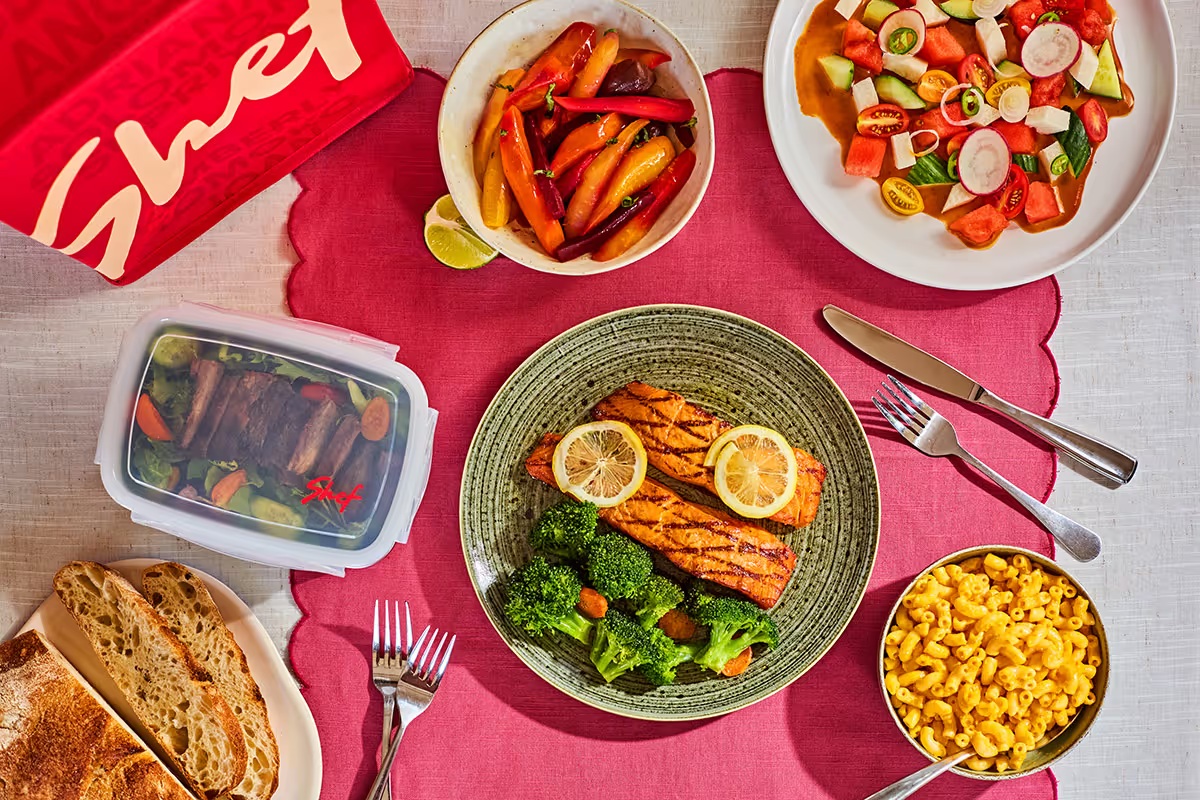
The cold arrival is central to understanding the service. Restaurant delivery usually asks a kitchen to finish a meal just before a courier collects it. Advance ordering gives Shef’s cooks a known set of dishes to prepare. They can shop and cook against orders rather than hope enough strangers become hungry at the right moment. Shef’s business-facing material describes orders placed at least one or two days ahead.
- 01ChooseBefore dinner day
- 02Cook + coolPlanned preparation
- 03DeliverMeals arrive chilled
- 04ReheatWhen you’re ready
There is a trade here. The customer gives up spontaneity and receives flexibility at home. The cook gives up the promise of instant service and gains preparation time. For a working parent planning several weekday dinners, that can be a reasonable exchange. For someone hungry right now with an empty refrigerator, the order-ahead premise is a poor fit. A service can be convenient without serving every definition of convenience.
Even choosing dinner can become work
Once a marketplace has enough food, it acquires a second problem: the customer has to choose among it. Shef’s weekly-service guide is unusually candid about this. Searching for the best meals on the marketplace could take too much time and effort. People who wanted relief from making dinner were still being asked to organize it.
The weekly offering combines curated mains and sides with household preferences. Customers retain control over meal selections; recommendations provide a default. The subscription guide says that when a customer misses the selection deadline, Shef chooses dishes using their taste profile. Payment and meal-selection cutoff happen three days before delivery. Skipping and cancellation also require attention to the deadline.
For the busy household, the useful product is therefore partly the food and partly a standing arrangement. You can repeat something the family likes, try another cook, or change meals before the cutoff. The task moves from a nightly negotiation to a scheduled decision. Anyone who has held a domestic referendum over dinner will understand the attraction.
Shef’s January 2026 weekly-service guidance lists the Bay Area, Los Angeles, New York, Chicago, Boston, Austin, Washington, D.C., and Seattle. This is a US business with local service boundaries, not a guarantee that any American address is covered. The ZIP-code check is the sensible first step. There is little point falling in love with a menu your courier cannot bring you.
The cook gets a storefront, and a bill of costs
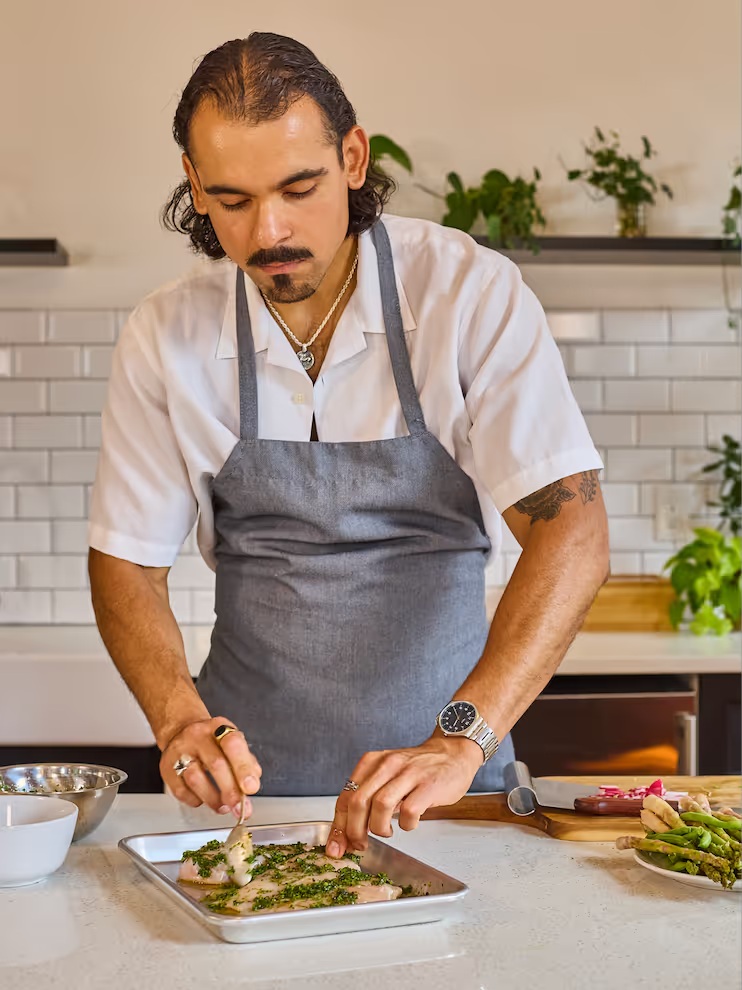
On the supplier side, Shef provides the commercial scaffolding: menus, order management, payments, customer service and delivery logistics. Its applicant guidance includes setting up a biography, dish photographs, certification and a Stripe account. These details matter. A family recipe may generate compliments; a clear menu and dependable handoff generate repeat orders.
What does it cost? The April 2025 onboarding FAQ says account setup has no fee, while cooks supply items such as containers and a printer. Ingredients and the work of cooking remain real expenses. Depending on local requirements, a legally permitted kitchen can add further costs. “Free to join” is a statement about enrollment, not a promise of profitable dinners.
Shef’s February 10, 2026 payout guide lists 70% of chef-set pricing for marketplace-only dishes. Weekly-service mains instead have fixed chef payouts of $10, $13 or $15 by tier. These are amounts paid to cooks, not a consumer price list. A seller needs to calculate what remains after ingredients, labor and facilities before deciding whether an order is worth taking.
Share of chef-set marketplace dish pricing. Chef payout is before the cook’s costs. Weekly-service dishes use separate fixed payouts.
The model also needs dishes that survive the journey. Shef’s recruitment material asks for meals that travel and reheat well. A lovely meal at the stove is not automatically a lovely meal later in someone else’s microwave. Product design, in this business, reaches all the way into the recipe.
Homemade has rules
“Homemade” describes the appeal of the food. It does not settle which kitchen may legally produce it. Shef’s guidance requires cooks to comply with the rules in their location. Where home preparation is not permitted, a commercial kitchen or another legally allowed facility is required. The company’s food-safety material also requires ingredient disclosure and allergen flags.
This is where Salehi’s background becomes particularly relevant. A food marketplace has to organize more than customer discovery. It must operate around preparation standards and local requirements. More cooks do not automatically make a better service if their facilities, packaging or availability cannot support dependable orders.
Shef has also spent money on widening access. In 2021 it announced fee waivers, expedited applications and $3,500 per Afghan refugee for supplies, training and marketing support. In 2022, Quicklly announced a partnership connecting its South Asian food shoppers with Shef ordering. One effort addressed entry into the business; the other addressed finding an audience for it.
A very crowded dinner table
Shef competes for the same household budget as restaurant delivery, prepared-meal subscriptions and local meal-prep businesses. CookUnity is a close alternative for chef-made prepared meals; Factor sells ready-to-heat meal plans. A personal chef offers another route, while cooking yourself remains the familiar substitute. Shef’s pitch emphasizes identifiable local cooks and a shared personal-chef arrangement.
The distinction is meaningful without making every other dinner sound dreadful. Some customers prioritize nutrition targets, some want restaurant favorites, and some want a regional dish that tastes familiar. Shef fits the customer who likes the idea of knowing who cooked the meal and can make advance ordering part of the week.
Investors have financed that ambition. Shef announced $8.8 million in seed funding in 2020 and $20 million in Series A funding in 2021. A $73.5 million financing package closed in 2022 and was announced in March 2023, including $7 million in venture debt. CRV led the Series B, with Andreessen Horowitz and Amex Ventures participating. The company reported total funding above $100 million.
The lesson another business can copy is fairly specific: design the promise around the person who must fulfill it. An advance deadline can make a service more workable; a curated default can make it easier to buy. Both depend on customers accepting the schedule and suppliers reliably meeting it. Shef’s experiment begins with the cook’s day and ends with someone else’s dinner. The useful distance between the two is time.
Take a seat
Explore Shef’s menus, read its company story, or watch the video featured on its story page. Hear Grassia on The Kara Goldin Show and read his 2026 founder interview.
Follow Shef on LinkedIn, X, Instagram, Facebook and TikTok. For the financing story, read the 2023 announcement.