Dinner has a peculiar voting system. Four people can spend twenty minutes naming restaurants, only to discover that each proposal has one enthusiastic supporter and three objections. The child wants chicken. Someone wants a burger. Someone else would prefer a meal that has met a vegetable. Everybody is hungry, which seldom improves constitutional negotiations.
Local Kitchens built a restaurant around that problem. Several cuisines share a kitchen, and diners combine their choices in one order. The interesting part is what happens after the argument ends. A business still has to buy ingredients, train cooks and persuade enough neighbors to return. Local Kitchens’ expansion, followed by a substantial retreat, makes it an unusually useful case study in the distance between a compelling customer proposition and a repeatable restaurant.
THE STORY IN THREE BITES
- Multiple cuisines, one kitchen and one bill make mixed orders practical.
- The company moved from licensed restaurant brands toward menus developed with individual chefs.
- A $40 million expansion round in 2024 was followed by extensive closures in 2025. Today, its website lists four Bay Area restaurants.
The receipt was the product
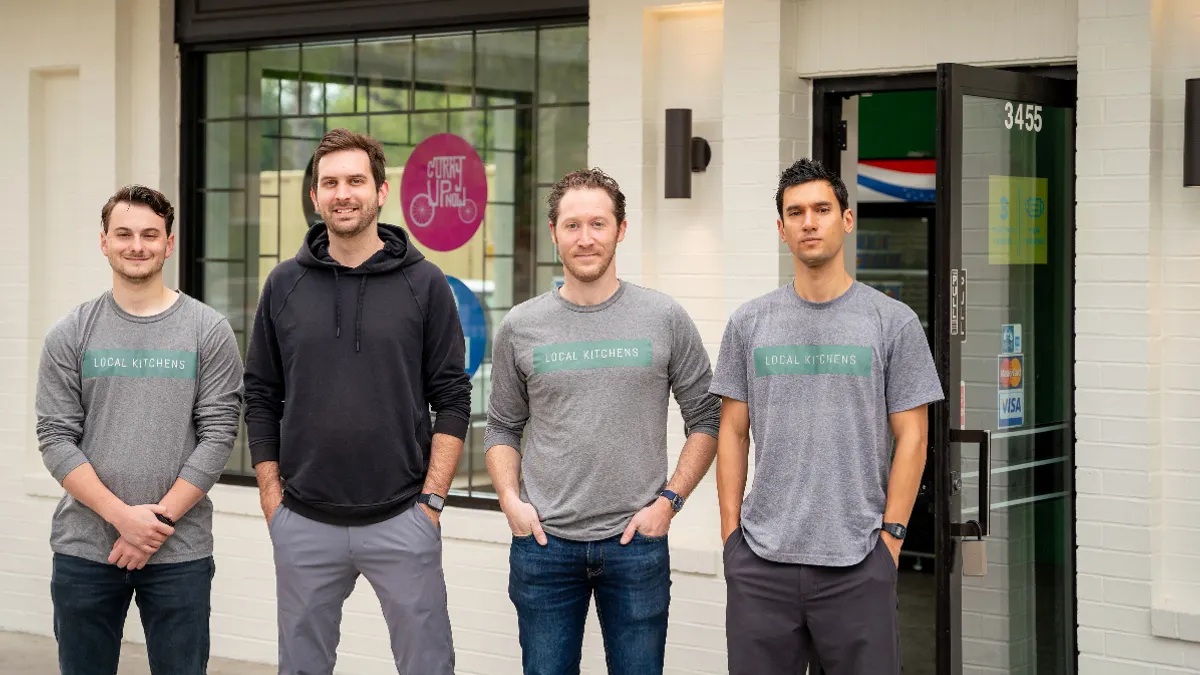
Founded in 2020 by Jon Goldsmith, Andrew Munday and Jordan Bramble, Local Kitchens initially offered a way for established local restaurants to reach new neighborhoods. The founding team’s DoorDash experience gave the venture a useful vantage point: getting a meal to someone and operating the restaurant that makes it are related jobs with very different burdens.
The early model licensed menus from restaurant partners. In its 2021 funding announcement, the company described stores containing eight to ten restaurant brands, with meals cooked fresh to order. A customer could choose across those menus without assembling separate purchases. The restaurant partner gained another place to sell its food without building and running another full restaurant.
The quiet invention was the combined transaction. A conventional food hall gathers vendors around a shared room. Local Kitchens gathered menus around shared production. Its usefulness to families, couples and groups came from removing the need to choose the same cuisine. The person who wants familiar food and the person who wants an experiment can sit down together.
Tacos
Chicken
kitchen
Several
happy eaters.
This also explains where the company fits. It sells prepared meals, with technology supporting the transaction. Diners can eat on site, take food home or request delivery. For a chef or restaurant partner, the proposition is access to customers through someone else’s operating team. For a guest, it is a dinner decision with fewer vetoes.
Someone still washes the dishes
In a 2022 account of the business, restaurant partners received a percentage of revenue while Local Kitchens absorbed the costs. That arrangement deserves more attention than the ordering screen. It transferred the work of expansion from the partner to the operator. The partner’s lighter burden became Local Kitchens’ heavier responsibility.
Shared production can help a restaurant use labor and space more efficiently. Yet a cook handling several menus must learn more than a cook repeating one narrow routine. The economic case depends on enough orders arriving to justify that complexity. A quiet kitchen remains a quiet kitchen, however elegantly the software routes its tickets.
“We always wash the dishes.”
Local Kitchens’ archived culinary leadership job posting
The company’s hiring language captured an appropriate attitude for this arrangement. Ownership extended to the unglamorous tasks. An archived culinary leadership listing emphasized teamwork and personal responsibility. Such language expresses an aspiration; the practical point is that a shared kitchen cannot outsource responsibility every time a dish disappoints.
The useful lesson for another operator is to centralize the work you can actually perform consistently. Combining menus is easy to describe. Teaching the team, choosing which dishes travel well and getting an entire mixed order ready together are the operational accomplishments that make the description believable.
From borrowed brands to a name of its own
Over time, Local Kitchens put greater emphasis on menus developed with chefs. Its 2025 lineup included Alvin Cailan’s Oklahoma onion burgers, Tuệ Nguyễn’s Vietnamese broken rice dishes, Einat Admony’s Mediterranean pitas and plates, and fried chicken associated with Ari Feingold. The chefs supplied distinct culinary points of view; Local Kitchens’ team handled preparation.
This changes the relationship with the diner. A collection of familiar restaurant brands offers recognition at first glance. A collection of chef collaborations asks the guest to trust the restaurant assembling them. Local Kitchens has to earn that trust across dishes that do not naturally belong to one culinary tradition. The variety is the attraction, and consistency is the obligation.
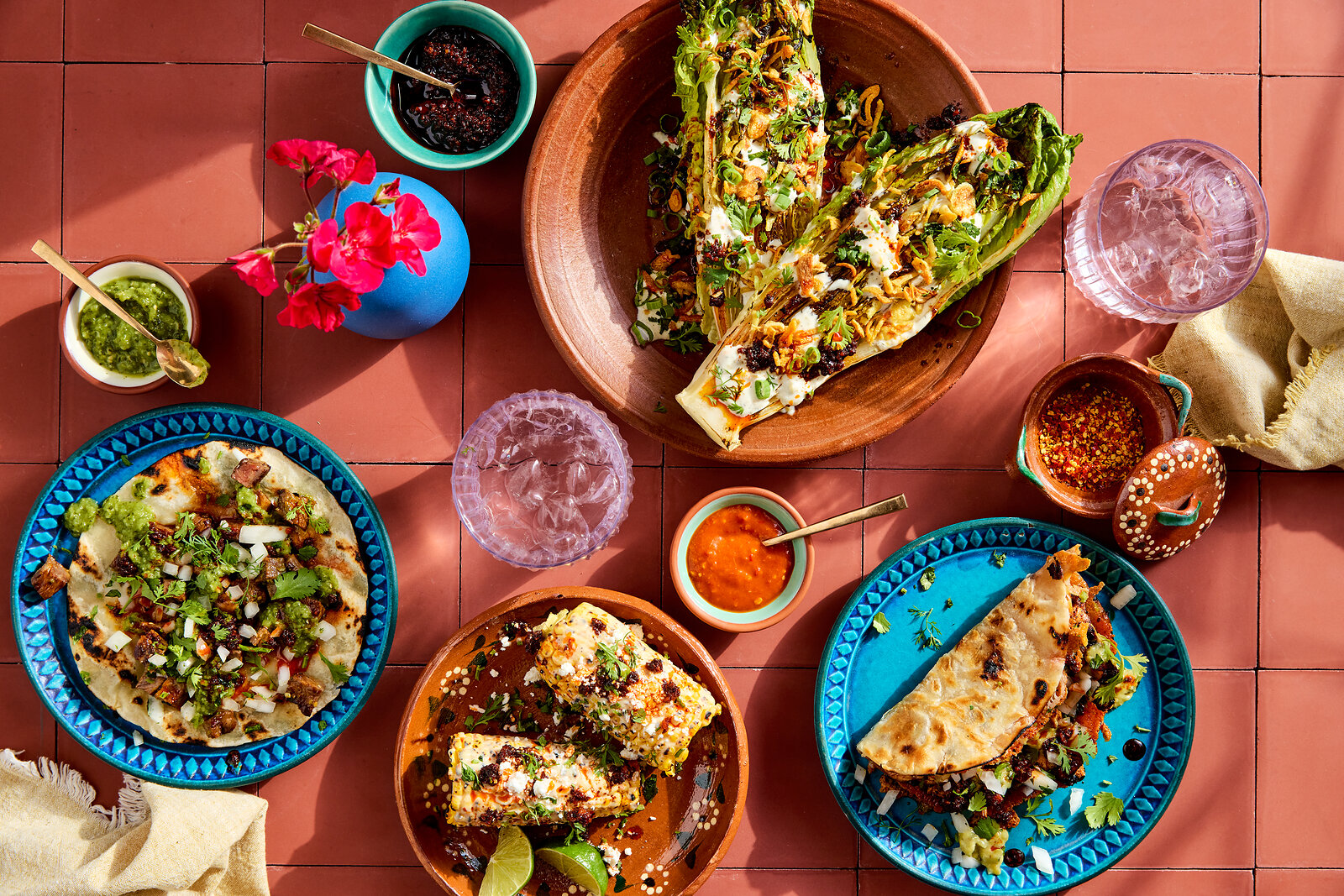
Rick Martínez’s collaboration illustrates the work behind a chef’s name. The August 2025 announcement described menu development involving a trip to Sonora with culinary lead Ashley Torrijos. It named flour tortillas from California tortilleria Mejorado and pecan salsa macha among the details. Those are specific choices a kitchen has to reproduce, rather than a famous signature added to a generic taco.
There is room for humor in the food, too. Martínez’s announcement invoked “a little bit of chile-laced chaos.” The chaos belongs on the plate. Behind the counter, repeatability is rather more desirable.
The expansion round met the neighborhood
In June 2021, a $25 million Series A led by General Catalyst brought announced cumulative funding to $28 million. A $40 million Series B followed in June 2024, again led by General Catalyst. The sums establish how much capital investors committed in those rounds. They do not establish how much a kitchen cost to open, or how much the later closures cost.
The 2025 Studio City location, opened July 2, gave the concept a more visible dine-in expression. It paired chef menus with seating and front-of-house service. Eater reported dishes generally below $20 at opening, before taxes and fees. That was a historical price snapshot for that restaurant, rather than a promise about today’s menu.
Then the footprint contracted. A spokesperson confirmed the Novato restaurant closed September 9. By October 27, Restaurant Business reported six remaining locations after the chain had reached thirteen. Studio City was among the closures. In November, the Sacramento Bee reported that Davis had closed after Natomas and Roseville, ending the company’s presence in that region.
THE FOOTPRINT CHANGED
*Historical footprint reported by Restaurant Business; October 2026 count is the current website listing. These are snapshots, not a complete opening-and-closing ledger.The reversal prevents a tidy growth fable. A menu partnership and fresh investment did not keep every address open. Local reporting identified relatively poor performance at Natomas. That explains one location’s stated closure rationale. Treating it as a complete explanation for every closure would make the story more convenient than the evidence permits.
A useful idea has to earn its regulars
As checked in October 2026, the company website lists Cupertino, Lafayette, Redwood Shores and San Bruno. It links to Toast ordering. The Lafayette ordering menu shows, for example, three fried chicken tenders at $12 and loaded Local Fries at $13. Prices and selection belong to a particular store and moment; checking the live menu is the sensible first step.
The remaining proposition is easy to use. Choose a nearby location, inspect its menu and combine the dishes your group wants. Pickup can turn several preferences into one stop. Dine-in gives the same household a shared table. Delivery offers another route, with availability and fees depending on the order.
Structurally, operators such as Wonder and Neighborly also combine multiple food concepts. At the neighborhood level, Local Kitchens competes with the ordinary alternatives: a nearby restaurant, a food hall or separate orders through a delivery app. Its advantage matters most when different tastes create friction. Someone devoted to one specialist’s cooking may see less reason to switch.
For a reader building a business, the copyable idea is precise: solve a recurring coordination problem, then take responsibility for the entire result. The condition is equally precise. Enough people must value the combined experience often enough to support the kitchen serving them. More choices can help win a first order. A reliable favorite helps earn the next one. Dinner’s voting system is unforgiving: tomorrow, the whole table gets to vote again.