A cyber insurance application can make a business feel as though it has enrolled in five different examinations for the same subject. In 2022, Shawn Wiora pointed to the inconsistent questions being asked across agencies and brokerages. The observation came from someone who had spent years trying to give those conversations a common language. He had helped build Maxxsure around cyber risk quantification: assessing exposure, estimating financial consequences, and making the results useful to people responsible for a company’s money.
It is an unusually administrative starting point for a founder’s story. No garage is required. The drama lives in the distance between a technical finding and a decision. A vulnerability means something to a security specialist. A possible loss means something to a finance director. Wiora’s work has occupied the space between them, where a business has to decide what it can afford to leave unresolved.
A business degree with an engineering sequel
Wiora studied at the University of Texas at Austin’s McCombs School of Business, earning a bachelor’s degree in business administration with a marketing major and an accounting minor. He then pursued a master’s degree in electrical engineering at Southern Methodist University. His graduate specialization included telecommunications systems and fiber optics. The combination gives his résumé two quite different vocabularies: the language of customers and accounts, and the language of the infrastructure underneath them.
That pairing matters because much of his early public work concerned ordinary business machinery. In 2014, he was preparing to present a workforce software case study at the HR Technology Conference & Exposition in Las Vegas. His employer had 5,000 employees across 61 Texas locations. Payroll, benefits, time and attendance had moved onto Dayforce, a shared application. The earlier difficulties involved manually arranged schedules, employee inquiries, records and reporting. Glamour was in short supply. Consequences were plentiful.
The point of the change was visible in what employees and administrators could do afterward. People could check and update their own information. Scheduling consumed less time. Reports became more accurate. Wiora’s account of the implementation concentrated on those working consequences. A system had to earn its place through the tasks it made easier for someone else.
The operating scale behind his 2014 HR technology presentation.
His software choices also allowed different parts of an organization to use different tools. In a 2015 discussion of Google for Work and Microsoft Office 365, Wiora described an arrangement in which the technology department used Google while the wider organization used Microsoft. It is a small detail with a useful lesson: the person using the tool belongs in the conversation about choosing it. A vendor logo can settle an argument much faster than it settles a workflow.
The premium that might move
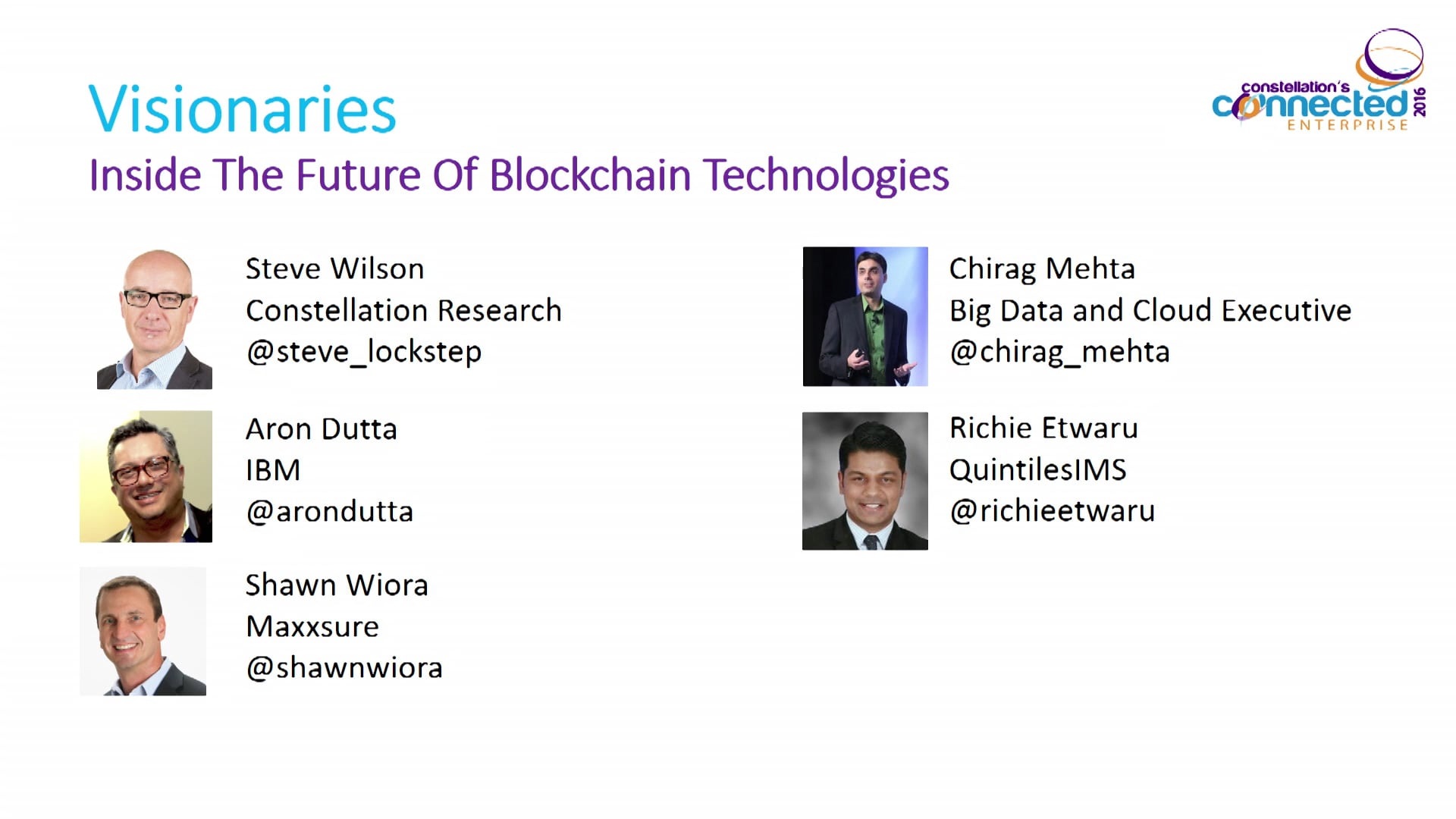
In 2016, Wiora co-founded Maxxsure with Srik Soogoor. Wiora became CEO; Soogoor served as president. The company focused on assessing cyber risk and connecting it to financial exposure and insurance. In the same year, Wiora appeared in a Connected Enterprise discussion about blockchain, alongside executives and practitioners including IBM’s Aron Dutta, Chirag Mehta and Richie Etwaru, with Steve Wilson moderating.
At a time when blockchain conversations could expand until they swallowed the entire economy, Wiora offered a specific insurance example. He described variable cyber insurance premiums that could change as an organization’s risk profile changed. It was a claim about the relationship between a changing risk and the price of covering it. His example brought a fashionable technology back to a commercial question someone could recognize.
There is a distinction between proposing a moving premium and demonstrating that an entire insurance market has adopted one. The useful part of Wiora’s example is the question it raises: if a company’s exposure changes, how should its insurance respond? That question would remain close to Maxxsure’s work as it developed relationships with insurance and risk advisory businesses.
Six inputs, one conversation
The M-Score gave that work a visible organizing device. A 2018 description placed the assessment on a scale from 1 to 1,000, with a higher score representing a better cyber risk position. The score drew on six pillars, covering governance, industry, the organization, its situation, infrastructure vulnerabilities and application vulnerabilities. These categories took the discussion beyond the condition of a single piece of technology.
standardsIndustry
riskOrganizational
riskSituational
riskInfrastructure
vulnerabilityApplication
vulnerability
A company exists in a setting. It has operating habits, obligations and dependencies. An assessment that brings those dimensions together can support a broader conversation about what deserves attention. The number provides a starting point; the work that follows concerns priorities, resources and financial consequences. A tidy score is satisfying. A decision about an untidy business is the harder achievement.
A number needs somewhere to go
In May 2018, Maxxsure and insurEco announced a relationship to bring M-Score into raterSpot and policySpot, tools used in rating and servicing insurance products. This put the assessment closer to the work of insurers and insurance intermediaries. Wiora described its purpose in terms of helping risk managers make decisions with greater confidence and take action before exposure became loss.
His name also appears on Maxxsure’s June 2018 securities filing, signed as chief executive officer. The filing lists him and Soogoor as executive officers and directors. It is a quieter record than a conference appearance, but it locates the founder in the practical business of building a company. Presenting a model and maintaining the organization behind it are separate jobs. A founder gets both.
The geography was practical, too. Maxxsure moved from Richardson to Addison in 2019. Wiora had previously lived in Addison, and he cited the community’s reputation in information technology when explaining the choice. Local council members attended the company’s June open house. Behind a product intended for organizations in different markets was a very specific Texas address and a local business community.
Different questions, the same company
By 2022, the insurance questionnaire problem had become part of Wiora’s public explanation of the market. His remark about agencies and brokerages asking different questions captured a coordination difficulty. A business may be trying to describe one set of operations to several organizations, each using its own process. More forms do not necessarily produce a shared understanding.
“Every insurance agency, every brokerage, they’re all asking different questions.”
Shawn Wiora, 2022
That July, Crisil and Maxxsure announced a collaboration combining risk advisory work with M-Score. The offering connected assessment and potential financial loss with cyber insurance analytics. Wiora spoke about keeping up with changing risks and examining opportunities to transfer exposure through insurance. In that arrangement, the software and the advisory work addressed different parts of the same decision.
He also co-authored A Cyber Risk Guide for Corporate Leaders with Chris Burrow. The intended reader is revealing. Corporate leaders have to consider risk among competing claims on their attention and money. A guide aimed at them must make the implications legible. The audience helps explain why Wiora’s public work repeatedly returned to financial consequences rather than stopping at a technical assessment.
At the casino, a familiar language
The financial framing found another setting in the gaming industry. In February 2024, BIG Cyber’s partnership with Maxxsure was reported as an arrangement to offer the company’s services exclusively to the global gaming market. Wiora’s comments addressed the need for gaming companies to quantify financial exposure and respond through insurance and remediation. BIG Cyber brought a route into that market; Maxxsure brought its assessment approach.
A casino business hardly needs an introduction to the idea of exposure. The cyber question concerns a different set of probabilities and consequences. The partnership placed risk quantification alongside the practical choices available after an assessment: reducing exposure through security work or transferring part of it through coverage. The calculation matters because it can change what a business does.
In April 2024, a further Crisil announcement described a global collaboration in technology risk management. It combined advisory services, entity-specific risk assessment and proactive mitigation. Wiora again emphasized giving organizations cyber risk and insurance insights with expert guidance. Across these partnerships, his subject was consistent: how a company moves from information about risk to an action it can explain.
Another audience behind the headset
Maxxsure was only one of the ventures Wiora co-founded in 2016. The other was MyndVR, now known as Mynd Immersive. Its work involved virtual reality content for older adults. Wiora was listed as a co-founder and board director, alongside co-founder and CEO Chris Brickler. A cyber assessment and an immersive content network are very different products, each built for an audience with particular needs.
The business relationship behind the VR company had a long history. In 2018, Brickler described a creative collaboration with Wiora lasting more than twenty years. Their backgrounds brought different experience to the venture: Brickler’s work included production and video technology. Their shared project adapted immersive technology and content to a particular group of users.
Wiora’s published interests include golf, electric vehicle technology and virtual reality. These details put some ordinary texture around the executive titles. In 2019, he also appeared among founders attending Capital Factory’s Texas Startups Roadshow in Dallas. His comment about the event focused on its mix of opportunities for companies. Even a founder working on quantified risk still benefits from a room full of possible connections.
The company changes hands
On August 24, 2026, Athena Agentic announced that it had acquired Maxxsure, with the transaction effective June 5. M-Score joined Athena’s Unified Cyber Operations Platform. The announcement identified Kevin Thomsen as Maxxsure’s CEO. Wiora’s place in this story is as the company’s co-founder and former chief executive, whose earlier work helped establish its approach to cyber risk and insurance.
The acquisition brought the assessment business into a platform combining several security functions. It also supplied a new setting for the question Maxxsure had been asking for years. Technical information must travel far enough to influence a business decision. Someone has to decide where the money goes, which exposure remains and how much uncertainty the organization will carry.
Wiora’s career crosses business, engineering, enterprise software, insurance and virtual reality. Its clearest connecting thread is a concern with what people can do with technology once they understand it. The useful answer has to survive the meeting, the application form and the next budget discussion. That is where the price of uncertainty becomes a decision.