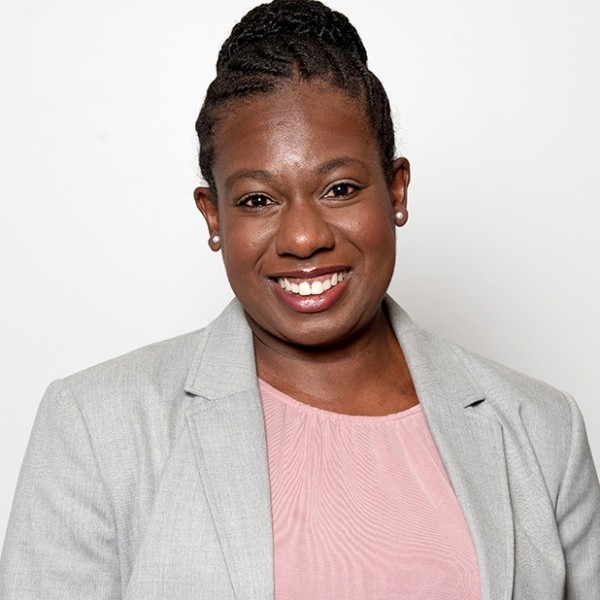
An Engineer Who Decided the Classroom Was the Most Complex System She'd Ever Seen
Shauntel Garvey is mid-stride. She co-founded Reach Capital in 2015 with a $53M debut fund and three co-conspirators - Jennifer Carolan, Wayee Chu, and Esteban Sosnik. Ten years later the firm manages over $300M across three funds, has backed 132 companies, produced five unicorns, one IPO, and 21 acquisitions. The portfolio reads like a syllabus for the future of learning: ClassDojo, Epic, Outschool, Handshake, Nearpod, Newsela, Brilliant.org. If you have a kid in school or recently graduated from college in the United States, there's a reasonable chance you've touched something Garvey wrote a check for.
She grew up in Denver, moved to Chapel Hill in ninth grade, and arrived at MIT to study chemical engineering. That last part still surprises people who meet her at edtech conferences. She spent her early career at Procter & Gamble designing supply chains and managing technology partnerships for the global laundry business. The connection to education was not obvious from the outside. It was obvious to her.
Her mother is a professor at Elon University. Long before Garvey ever wrote a term sheet, she had watched education function as a lever - not a guarantee, but a lever - for social mobility. The belief landed early and stayed. While still an engineer in Cincinnati, she ran afterschool programs for underserved high school students, testing a hunch that a technical brain could find design problems in educational systems the same way it finds inefficiencies in a supply chain.
We invest in education because we believe it's our most valuable resource. It has the power to influence our course, contribute to our dreams and strengthen our communities.- Shauntel Garvey
The hunch held. She enrolled in Stanford's joint MBA/MA in Education program in 2010 - a dual degree that almost nobody pursues, for the obvious reason that it is extremely difficult, and for the less obvious reason that the career path on the other end was not yet legible. The edtech investment ecosystem barely existed in 2012. What existed was a Stanford classroom where Garvey sat next to Jennifer Carolan. The origin story of a $300M fund is often that unremarkable.
After Stanford she joined NewSchools Venture Fund as a Partner, investing through the NewSchools Seed Fund in over 40 early-stage edtech companies. She and Carolan developed their thesis there: that education technology was systematically underfunded relative to its market size and its social stakes, and that a dedicated sector fund with deep domain knowledge could generate returns precisely because generalist VCs kept underestimating the space. In 2015 they spun out Reach Capital and proved the thesis across three funds and a decade.
She designed the supply chain for Procter & Gamble's global laundry business. Then she redesigned her own career. The same systems-thinking that made soap move efficiently around the world is now applied to moving capital into classrooms that need it. Different product. Same discipline.
High Return and Impact Are the Same Thesis
Garvey's investment philosophy is not complicated, but it runs against the grain of how most venture capital thinks. Most VCs back education as a reluctant concession to portfolio diversity - a hedge or a charity gesture dressed up as alpha. Garvey's position is the opposite: education technology is systematically mispriced precisely because most investors don't understand it, and the best deals in the sector look weird at first to anyone who hasn't studied how schools actually make purchasing decisions, how teachers actually adopt new tools, and how students actually build habits around learning.
She focuses on early-stage, stays active beyond Series A, and is most excited about startups that build connections and foster authentic relationships - not just between users and platforms, but between learners and ideas, teachers and students, institutions and outcomes. She's not looking for the app with the best engagement metrics. She's looking for the one that changes what a student believes about their own capability.
High return and impact go together.- Shauntel Garvey, Co-Founder & General Partner, Reach Capital
She brings a design thinking approach to portfolio selection - iterating on thesis, testing assumptions against end-user feedback, staying close to the classroom. When asked what advice she gives to people entering the edtech investing world from outside education, her answer is direct: educate yourself on the education system and the barriers to innovating in this sector. The system has specific physics. Understanding them is the investment edge.
That edge compounds. Reach Capital's portfolio includes companies that became category-defining: ClassDojo, which is present in nearly every American school; Epic, the digital reading library now used by over 50 million kids; Outschool, which turned online tutoring into a consumer marketplace; Handshake, which rebuilt the campus recruiting pipeline. Each of these looked like a crowded space or an uncertain market when Reach wrote the first check. That's the point.
The Companies She Backed Before They Were Obvious
From the Lab to the Classroom to the Cap Table
The Degrees That Don't Add Up - Until They Do
A BS in Chemical Engineering from MIT. Then an MBA and an MA in Education from Stanford simultaneously. On paper, a strange combination. In practice, exactly the toolkit required to understand why educational systems are resistant to change - and how to fund the tools that work around that resistance.
The Firm That Runs a Different Playbook
Most venture funds in edtech are generalist funds that occasionally write education checks. Reach Capital is the inverse - a specialist that brings deep domain knowledge to every investment decision. That distinction matters more than it sounds. The buyers in education are not typical consumers. A school district procurement process moves differently from a software purchase at a startup. A teacher's technology adoption cycle is constrained by curriculum, by classroom time, and by institutional culture. If you don't know this, you back the wrong companies for the wrong reasons and then wonder why your portfolio underperforms.
Garvey and her co-founders knew it. They built Reach Capital as a firm that understands the buyer, lives close to the classroom, and invests accordingly. The portfolio proves the model: companies that serve real learning needs, backed early, supported actively, and allowed to grow into their potential over the patient timeline that education actually requires.
The numbers are what they are: 132 portfolio companies, five unicorns, one IPO, twenty-one acquisitions, $300M in assets under management. What the numbers don't show is the counterfactual - the companies that wouldn't have existed, or wouldn't have survived, without a first check from a firm that believed education was investable before it was fashionable to say so.
Reshaping Who Gets to Write Checks
Garvey's influence extends past her portfolio. She was a founding member of All Raise, a nonprofit built to increase diversity in the venture capital industry - not by asking nicely, but by building pipelines, accelerating careers, and making the absence of diverse investors impossible to ignore or explain away.
She is a Pahara Institute Fellow, engaged in the broader ecosystem of education leadership. She sits on the NVCA Board of Directors, which means she is in the room where industry-level policy conversations happen. She chairs the Silicon Schools Fund and holds board seats at TeachFX, Riipen Networks, Fourthrev, and Brilliant.org. The board portfolio is not a trophy collection - it's a map of where she's spending her attention.
She has spoken at TechCrunch Disrupt, at the ASU+GSV Summit (the closest thing education technology has to Davos), and on podcasts including Venture Unlocked, where she laid out with unusual candor the mechanics of building a sector-focused fund in a generalist-dominated industry. She co-authored "New Approaches to Ed-Tech Funding" in the Stanford Social Innovation Review - a practical document, not a manifesto.
The point of all of it is the same: she wants the achievement gap between rich and poor students to close. She believes the tools exist. She believes the capital can follow. Ten years into the experiment, the returns are telling her she's right.
I'm most excited about startups that build connections and foster authentic relationships.- Shauntel Garvey
The Awards Are a Footnote to the Work
- Forbes 30 Under 30 - Education (2015)
- CNNMoney Upstart 30 - game-changing entrepreneurs
- LinkedIn Next Wave - Top Professionals 35 & Under
- THE REGISTRY Bay Area 40 Under 40 Tech Diversity
- Pahara Institute Fellow
- NVCA Board of Directors (2023)
- TechCrunch Startup Battlefield Judge (2021)
- Co-author, Stanford Social Innovation Review
- Founding Member, All Raise
- Chairman, Silicon Schools Fund (since 2018)