Before Shannan Carr was overseeing software portfolios, she was teaching people how to do their jobs. At a Pennsylvania accounting firm, where she spent 20 years auditing with a construction focus, she created a training program for new staff accountants. Later, at Viewpoint, she developed training for customers using its software. The setting changed. The need for a useful explanation kept turning up.
It is an interesting beginning for someone whose work now touches acquisitions, software businesses, and their management teams. A sale can be summarized in a sentence. Learning how a business works takes longer. Carr’s career invites a closer look at the work between the announcement and the next ordinary working day.
Twenty years before the portfolio
Construction is a particular place to acquire a business education. Its software vocabulary includes jobs, costs, work orders, dispatch, and payroll. An impressive interface still has to contend with those nouns. The invoice will eventually require more precision than the presentation.
Carr moved from auditing into technical training at Viewpoint, then into professional services leadership at Jonas Construction. Her work there brought her into contact with product, sales, finance, and executive colleagues. Customer acquisition, implementation, and retention became parts of the same operational picture.
There is a practical connection between teaching a new accountant and teaching a customer to use a system. In both cases, the person doing the explaining has to turn a body of knowledge into something another person can act on. Knowing the answer and making the answer usable are separate tasks.
That distinction gives Carr’s progression its shape. The story can be read through titles, but the recurring work is more revealing: helping people understand a process, then working on the business that depends on it.
- 01 Construction auditing
- 02 Customer training
- 03 Professional services
- 04 Portfolio leadership
Sequence of roles; no implied dates or duration beyond the documented auditing period.
The customer portal has a customer
In May 2021, Carr appeared on the presenter lists for two Jonas Connect Remote sessions. Her title was Director, Professional Services. The subjects were wonderfully resistant to glamour: project management and a customer portal called eService.
The May 10 project management session covered job documents, project views, and daily logs. The following day’s eService session addressed access to work orders, documents, service items, invoices, and reports. Colin Chan and Jason Tham were also listed as presenters for eService; Ioana Cumpanas appeared alongside Carr for project management.
These are useful landmarks because they locate her in the everyday business of software education. A customer portal has to answer questions that are small enough to sound obvious and important enough to interrupt a working day. Where is the document? What happened to the job? Which invoice belongs to it?
The webinar subjects give a concrete sense of the world behind the professional services title. They also make a good counterweight to the language of portfolio management. Before a company becomes a line in a portfolio, its software has to become a tool somebody knows how to use.
Four portfolios, many working days
By January 2026, Carr was a Group Leader at CORA Group, with responsibility for Data-Basics, BuildZoom Data, AscenteVMS, and mJob portfolios. The names cover related territory, but each opens onto a different part of the working life of construction and specialty contractors.
Data-Basics dates its software development work to 1974. Its SAMPro Enterprise system brings together field service, construction management, accounting, and inventory. Dispatchers, technicians, project managers, and the back office all appear in its product world. A job travels through several people’s hands before it becomes a settled account.
AscenteVMS groups two distinct platforms, Ascente and Ventus. Ascente serves specialty service contractors with functions including dispatch, maintenance contracts, job costing, inventory, and accounting. Ventus covers construction and specialty contracting through project management, financials, and field operations. The shared umbrella still leaves room for different products and markets.
mJob addresses labor, equipment, materials, and field reporting. Its features include time tracking, equipment usage, material requests, and daily logs. This is software close to the jobsite, where a record has to make its way from the work itself to the people responsible for managing and accounting for it.
Field service, construction, accounts, inventory.
Ascente and Ventus serve distinct contractor markets.
Labor, equipment, materials, daily reports.
Property, permit, and contractor intelligence.
BuildZoom Data, now also presented as Gryd, adds another perspective: information about construction activity. Its published offerings include bulk datasets, an API, and tools for exploring properties, projects, and contractors. The business connects permit histories and contractor information so customers can investigate activity across locations.
A portfolio like this makes the word software unusually tangible. It concerns hours worked, equipment used, jobs dispatched, and records found. The products deal with different portions of the same broad problem: making an operation legible to the people who need to run it.
The deal has a date. The business has a calendar.
CORA announced its acquisition of Data-Basics in May 2023. Kim Goldberg welcomed the company’s field service and construction expertise; Data-Basics CEO Arthur Divell emphasized continued service and support with CORA’s resources behind the business. The announcement placed continuity alongside the change in ownership.
That distinction matters when considering Carr’s remit. The acquisition date is a useful historical marker. It says little, by itself, about the work a technician, dispatcher, customer, or manager will encounter afterward. The operational calendar continues to fill up.
CORA describes its approach as acquiring software businesses, working with them operationally, and holding them over the long term. It is an operating group of Jonas Software, which is part of Constellation Software. The structure puts individual businesses inside a larger network while keeping their particular markets in view.
“We believe in partnership before process.”
Shannan Carr
Carr’s compact description puts the relationship at the beginning of the work. It is an order of operations worth considering: understanding a business creates a basis for deciding which procedures will help it. A procedure introduced without that understanding can become one more thing somebody has to explain.
Software companies come with accumulated knowledge. Their teams know customers, product habits, and the awkward corners of a market. The operating challenge is to make that knowledge useful within a wider organization. A portfolio chart can show ownership clearly while leaving the actual business of working together largely unwritten.
Back in the classroom
Carr’s teaching thread becomes visible again at Jonas Software Academy. After the 2024 gathering, attendee Sarah Byrne thanked her among the people who had shared their time and experience. Byrne described workshops, networking, team activities, and learning about the operational approach and acquisitions of vertical market software companies.
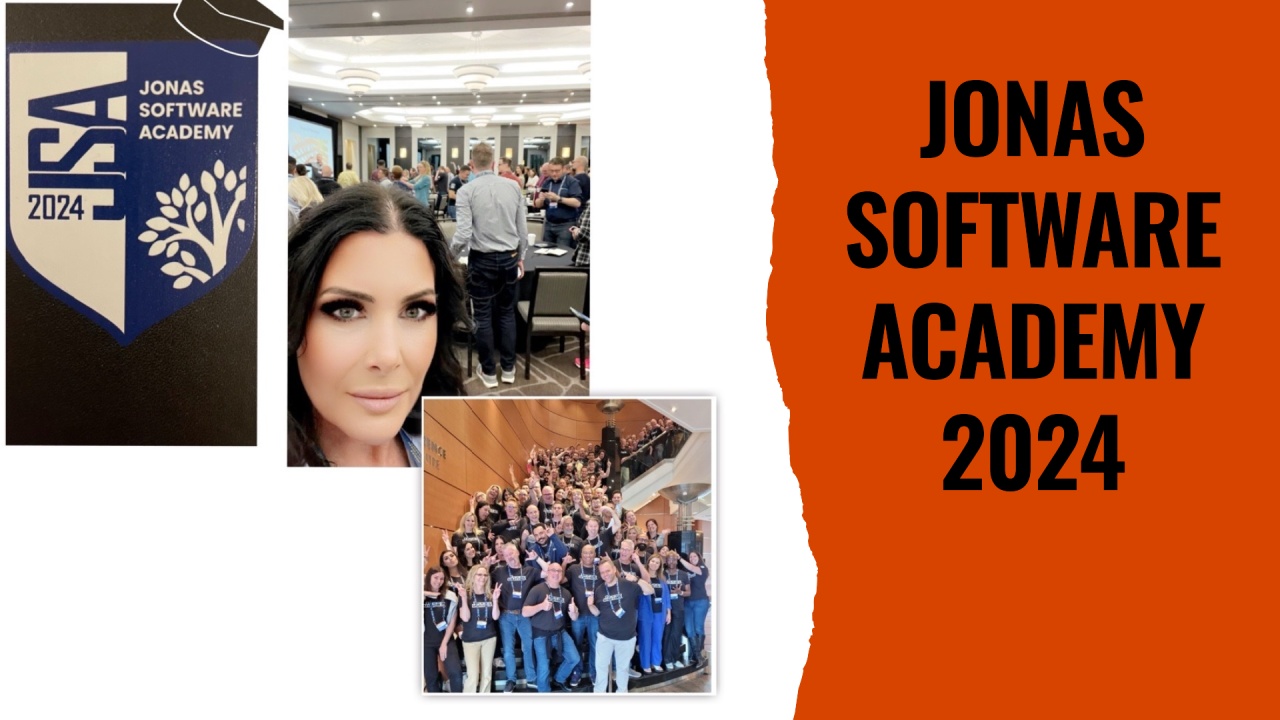
The 2025 Academy program scheduled Professional Services with Shannan Carr for 4 p.m. on June 2. It sat alongside sessions on finance, sales and marketing, research and development, and maintenance. The schedule offers a compact picture of the different disciplines an operator is expected to understand.
A teaching slot is a modest piece of evidence, and a revealing one. It makes experience available to people outside the business where it was acquired. The next operator can ask questions, compare circumstances, and decide what travels well to a different company.
Carr has also named the people who helped her learn. In a public response about her career, she singled out Kim Goldberg, Matt Otchet, and Jeff MacKinnon as mentors. That acknowledgement gives names to the network around her, rather than treating professional advancement as a solitary exercise.
Her own account of leadership emphasizes understanding people, exploring problems, and making decisions. The Academy appearances show one concrete way experience is shared. The same person who once built training for new accountants now has a place in the education of software operators.
Fewer syllables, the same work
In August 2026, Carr welcomed BuildZoom Data’s next chapter as Gryd and congratulated Kerri Goldsilver and the team. Her comment included a joke about the shorter name. A database can retain its complexity while the introduction becomes easier to say.
Earlier that year, she had used a marketing bat-signal motif to draw attention to a Director of Marketing opening at BuildZoom Data. Both posts brought a little levity to professional subjects that can become heavy with abstractions. Recruiting still needs a reader. A new name still needs an explanation.

The details leave a consistent impression without requiring a grand theory about her personality. Teaching, operating, and explaining recur in the public record. So do colleagues, customers, and the practical uses of information.
The account of her career begins with new staff accountants learning their work. It reaches portfolio leadership with the work still in view. Between those points are customer documents, software sessions, field records, and classrooms full of other operators. An acquisition announcement ends neatly. Carr’s subject keeps going.