Matt Otchet arrived inside Jonas Software as part of an acquisition. In 2005, Clubsystems Group joined the organization, bringing him into a business whose future he would eventually help shape. Years later, as chief executive of CORA Group, he would be on the other side of the transaction: assessing software companies, welcoming their teams, and considering what might happen after the signatures dried.
That reversal gives his career its particular interest. An acquisition can look tidy from a distance: a buyer, a seller, a price. Up close, it contains people who know a product, customers who depend on it, and employees wondering whether their next opportunity still lies within the company they joined. Otchet’s public account of CORA keeps returning to those employees. Their advancement is part of the acquisition proposition.
He has had time to test the proposition on himself. His work across several portfolio brands preceded his leadership of CORA, which formally launched its identity in 2022. The question running through that history is simple enough to fit across a meeting-room table: when a software business changes hands, how much room can its people gain?
The employee inside the buyer
CORA sits within Jonas Software, an operating group of Constellation Software. It acquires businesses serving particular industries, including construction, legal services, loyalty, relocation and financial services. The products are specialized. Their operators need to understand the work of the customers using them.
Otchet’s responsibilities combine operating leadership with looking for acquisition partners. His management philosophy gives weight to empowered employees and committed customers, while allowing teams to work with both independence and processes. Freedom, in this arrangement, still comes with a working calendar.
When the CORA brand launched, he described his own years within Jonas and Constellation as a period of personal and professional growth. His message to employees asked for participation: express an interest in opportunities, contribute ideas, and help determine the direction of the group. A chief executive recounting his career as an employee offers a useful detail about where he locates himself in the organization.
“Redefining Advancement is about our employees.”
Matt Otchet, CORA launch message, 2022
The letters in CORA stand for Collective Organization Redefining Advancement. A corporate acronym has a demanding social life. It appears in presentations, gets printed on things, and must somehow survive being said aloud. Otchet has given this one a practical assignment: connect the group’s expansion to the possibilities available to the people already working there.
Kim Goldberg’s expanding job description
One of the people who experienced that approach is Kim Goldberg. She joined Computrition in 1983, among its early employees, and worked across the business before becoming chief operating officer. By the time Jonas acquired it in 2007, she understood the company from several directions, including services, contracts and accounting coordination.
Otchet was its integrator after the acquisition. Goldberg remembers working with him as she introduced operating practices and developed some herself. Her experience then traveled: while still at Computrition, she began helping integrate other businesses. Eventually she became COO of the group portfolio, moved into acquisition work, and took responsibility for a construction group.
Her progression makes the mechanics visible. A person with deep knowledge of one company gained a role that used that knowledge elsewhere. The original job had supplied the experience; the larger organization supplied additional places to put it to work.
Goldberg also described a response to struggling businesses that centered on helping them improve. For an employee considering an acquisition, that is a consequential distinction in practice. The ownership model becomes meaningful through the decisions managers make when a business needs attention. Her recollections offer a colleague’s view of the environment in which Otchet developed his portfolio leadership.
A customer becomes a portfolio leader
Heather Klassman’s route began with using Computrition software. Through that work she developed relationships with its team, including Otchet. He eventually offered her a role at Jonas on a foodservice initiative. By her account, it connected her knowledge of the industry with a growing interest in technology.
She joined as a product manager and employee number two in the initiative, with responsibility for product development and roadmaps. A small team meant exposure to many parts of the business. She later became president, then a group leader overseeing additional companies and participating in integrations.
By May 2025, Klassman was a portfolio CEO overseeing 11 businesses, with responsibilities in both operations and acquisitions. Otchet’s offer had opened the first door in a sequence of increasingly broad roles. Her own willingness to take on more work mattered throughout that sequence.
This is a particularly apt career path for industry-specific software. Someone who understands a customer’s work can bring that understanding into product decisions, then into operating a business. Klassman’s story gives Otchet’s emphasis on advancement a concrete example: experience changes its setting and grows in usefulness along the way.
The school inside the software group
In December 2022, Otchet was recruiting for two kinds of work: portfolio management and learning and development. The pairing was revealing. CORA wanted people who could help run a growing collection of businesses, alongside someone focused on preparing employees for the opportunities that collection created.
The following year made those intentions more specific. Denis Brosnan joined as a portfolio manager in the first quarter of 2023, expanding acquisition and integration capacity. David Rennard arrived as director of learning and development in the second quarter. CORA also added people in finance, IT security and mergers and acquisitions.
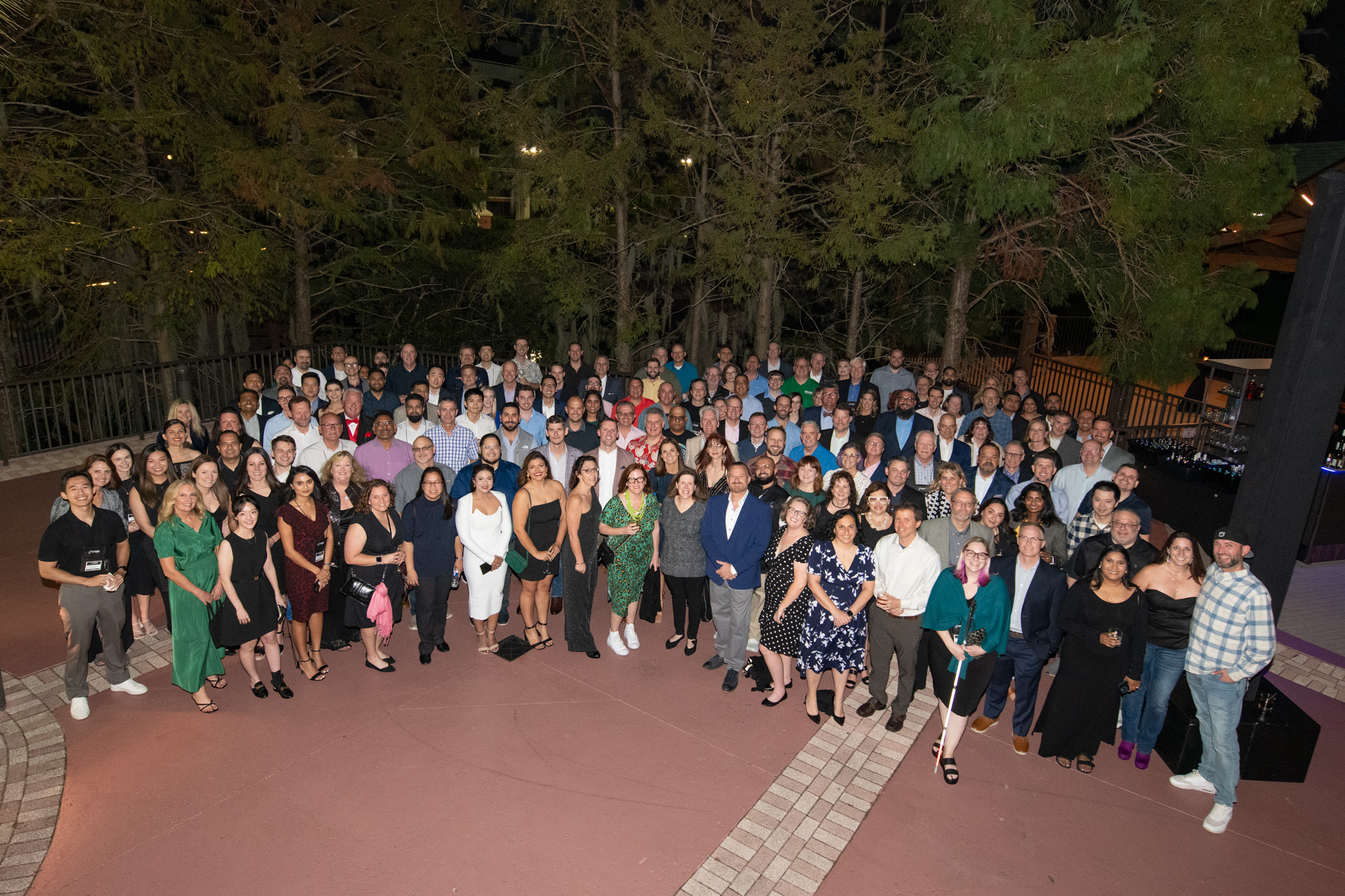
Its second annual CORA University brought together more than 120 team members in 2023, with seminars about developing and executing corporate strategy. The next gathering took place in Orlando in November 2024. Career development was central to that event, which included workshops, networking and live performances. Russ Bishop and Rennard even featured in an introductory song. Strategy, apparently, could tolerate a soundtrack.
For Otchet, the investment has an operating purpose. Preparing people for wider responsibilities helps the group support existing businesses and welcome additional ones. The classroom and the acquisition pipeline meet at the same practical constraint: someone has to be ready to do the work.
Those are CORA’s reported figures for 2024, rather than a measurement of Otchet alone. They give his priorities a scale. He linked the learning programs to career movement, stronger capabilities and organizational growth. A new title is easy to announce; preparing a colleague to carry it is the more substantial undertaking.
Independence needs somewhere to turn
Otchet’s description of CORA’s approach to ownership includes dedicated integration managers, executive mentorship and a network of contacts. New businesses can draw on operating knowledge and practical resources while retaining autonomy. His explanation recognizes that companies have different needs, even when they share an owner.
“After all, you’re the experts in your field,” he wrote in 2023. It is a short sentence with implications for the relationship between a portfolio leader and a specialist operator. Knowing how to acquire a software business does not automatically confer the customer knowledge accumulated by its team.
Denis Brosnan brings another perspective to that relationship. His background included law, consulting and running private equity-backed software companies. One of those businesses had been considered by CORA, which passed at the time. He later met Otchet and eventually joined the group.
Brosnan describes his portfolio role as combining operations with acquisition and asset management work. He credits the decentralized environment with allowing operators to make decisions, supported by leadership. His account suggests why Otchet needs experienced people around him: a portfolio of specialized businesses requires judgment in several places at once.
- Industry teamsProduct knowledge and customer relationships
- Portfolio leadershipOperating support, mentorship and acquisitions
- The wider groupShared experience and long-term ownership
The company grows; the work gets more specific
Raymond Hua, CORA’s vice president of M&A in his 2024 career interview, described employee mobility as central to the group’s culture. Movement might mean a promotion, or a sideways step into another department. That flexibility matters when advancement requires discovering what someone can do, rather than simply adding a rung above their current job.
Hua had helped Jonas and CORA acquire more than 20 businesses by that interview. His work let him revisit earlier promises about autonomy and see how employees and companies developed afterward. He described the acquired companies retaining what made them distinctive while gaining support from the larger group.
The acquisition work itself involves both developing relationships with prospective companies and executing transactions once terms align. These activities require different skills and different conversations. Otchet’s group has to connect the human proposition to the operational detail. Owners may want a lasting home for a business; finance teams, lawyers and operators still need to make that home workable.
A longer horizon, with new names on it
Recent transactions show the range of that responsibility. Volanté Systems joined CORA in 2024, with the foodservice software company continuing as a standalone brand and Sunil Selby remaining CEO. It entered Klassman’s portfolio. A leadership path that began with Otchet’s job offer now included welcoming another operating team.
In 2026, CORA Legal Group announced its acquisition of Minisoft, a provider of collections and accounts receivable software for law firms. In June, CORA acquired Finastra’s U.S. mid-market banking business, including Phoenix core banking, MalauzAi digital banking and related products. The announcement described the business continuing as a focused, standalone company under the group.
September brought the launch of PhoenixWorx, the banking organization built around those acquired products. Joe Gomez became its president and CEO. The sequence adds another set of customer relationships and operating responsibilities to the organization Otchet leads. Long-term ownership still has a succession of immediate tasks.
Outside those tasks, Otchet enjoys photography and boating. His Giving Angels Foundation biography records board service beginning in 2004 and time spent with his wife and two children. It also describes travel to meet employees, partners and customers across the United States and Canada. The portrait is of a career conducted through relationships, with a camera and a boat somewhere beyond the meeting schedule.
His own passage from acquired employee to acquisition leader remains the most telling part of that portrait. It gives him a lived example of what a larger organization can make possible. The people around him supply others. CORA’s next transaction will add another business to the list; the more interesting story may belong to someone whose present job turns out to be only the beginning.
Continue the conversation
- Matt Otchet on LinkedIn
- CORA Group
- Otchet on integration and ownership
- Kim Goldberg’s career interview
- Heather Klassman’s career interview
- Denis Brosnan’s career interview
- Raymond Hua’s career interview
- CORA’s 2024 year in review
- Finastra acquisition announcement
- PhoenixWorx launch announcement
- Giving Angels board biography
- Watch: Raymond Hua’s career story
- Watch: CORA University’s introductory song