Selling a company gives a founder a date to remember. For Jaime Sastre, that date was in 2014, when Juniper became part of Constellation Software. What followed deserves just as much attention: he stayed. The business he had built became the starting point for a different kind of career, one in which the founder would increasingly sit on the buyer’s side of the table.
There is a pleasing complication in that progression. The person explaining why another entrepreneur should sell has already made the decision himself. Sastre’s experience gives the discussion a particular shape. A transaction can change the ownership of a business while leaving considerable work, responsibility and opportunity with the people who know it.
Today, Sastre is CEO of Juniper Group, with Las Vegas listed as his base. His working story reaches back to Palma, through the practical business of travel distribution, and outward into a portfolio of software companies. Its recurring subject is continuity: what a product does for customers, what a local team understands, and what happens to that knowledge when someone new owns the shares.
A sale with a second act
Juniper’s buyer in 2014 was Vela Software, part of the Toronto-listed Constellation Software. Sastre continued leading Juniper after the acquisition. Expansion into Brazil and India followed, including Constellation’s first acquisitions in those markets. In 2021, the growth and international experience led to an invitation to lead a newly created operating group.
Those events give the sale an unusual place in his biography. It belongs near the middle of the story. Before it, Sastre had the experience of building a software business. After it, he accumulated experience of running one within a larger owner and extending its reach. Eventually, the job included helping other businesses enter that same family.
The distinction matters to anyone reading an acquisition announcement. The announcement records a transfer. A founder’s continuing role records a relationship. In Sastre’s case, the years after the transaction supplied the bridge between the two. His later work as a buyer sits beside a substantial stretch of life as the entrepreneur who had sold.
- 2003Travel platform development begins in Palma
- 2006Miami office opens
- 2014Juniper joins Constellation through Vela
- 2020Juan Mateos takes the operating lead
- 2021Invitation to lead a new operating group
The booking business behind the holiday
The early Juniper proposition was specific. Its platform, developed from late 2003 in Palma, helped travel businesses distribute and sell their products online. In 2006, a Miami office opened to handle sales and support in the Americas. The holiday was the visible product; software provided some of the machinery behind its sale.
Sastre’s education spans computer science at the Universitat de les Illes Balears, postgraduate study of high-speed networks at North Carolina State University, and an MBA at the University of California, Berkeley, completed in 2003. Technical systems and business decisions both appear in that background. Both also appear in the way he talks about software.
His advice to technology entrepreneurs in 2015 was deliberately practical: concentrate on customer results, keep an eye on finances and avoid being distracted by favourite programming languages or databases. He also discussed investment in architecture to cope with heavy transaction volumes. A booking system offers ample opportunity for technical ingenuity. The customer still needs the booking to work.
The same interview supplied a small joke at his own expense, whether intended or otherwise. The latest gadget he reported buying was a Raspberry. Someone warning founders about gadget distractions apparently remained susceptible to a gadget. Commercial discipline need not require a desk entirely free of interesting objects.
An international company has local homework
By the time Sastre discussed global expansion in 2018, the emphasis was on trust and adaptation. Brazil was a particular focus. Juniper’s route into international markets required attention to local cultures, conditions and ways of doing business. An office address can establish a presence; familiarity takes more work.
He also discussed living with fear as part of making decisions. It is a useful detail in a career otherwise easy to reduce to a sequence of offices and acquisitions. Expansion carries uncertainty even when the company has a product to sell. His account gave that uncertainty a place in the process rather than editing it out of the finished story.
At ITB Asia in Singapore in 2017, Sastre had described another part of Juniper’s proposition: enabling customers to connect with one another through its network. The value of travel software could extend beyond the functions available to one business. Connections between businesses could expand what each was able to do.
That helps explain the geography without turning it into a collector’s map. The practical question is what another location or relationship enables. Who can sell, who can connect and who can support the customer? For Sastre, these were subjects he discussed while still explaining the operating business, before the larger portfolio became the centre of his role.
The founder hands over the chair
In his account of Juniper’s evolution, Sastre put a specific date on a change of responsibility: in 2020, he appointed Juan Mateos to lead Juniper. The operating business had a new leader, while Sastre’s next chapter developed under Juniper Group. A founder’s career can grow partly through the work he entrusts to someone else.
His account also described an emphasis on training, internal promotions and autonomous teams. These are less photogenic subjects than the deal itself, but they give the organisation somewhere to go afterward. Someone has to acquire experience, take responsibility and make the daily decisions that a portfolio owner cannot usefully make everywhere.
Peakwork offers a concrete example of a leadership transition in an acquired business. When the German travel technology specialist joined in 2023, founder Ralf Usbeck stepped back as CEO and became a strategic adviser to the travel group. Manuel Saballus took over as CEO. Continuity can include a change in the person holding the operating role.
It would be easy to describe independence as simply leaving everything alone. These handovers show a more demanding subject: maintaining an organisation’s knowledge while giving its leadership a workable future. Sastre’s own move from operating founder to portfolio leader belongs to that subject too.
Buying a company without swallowing it
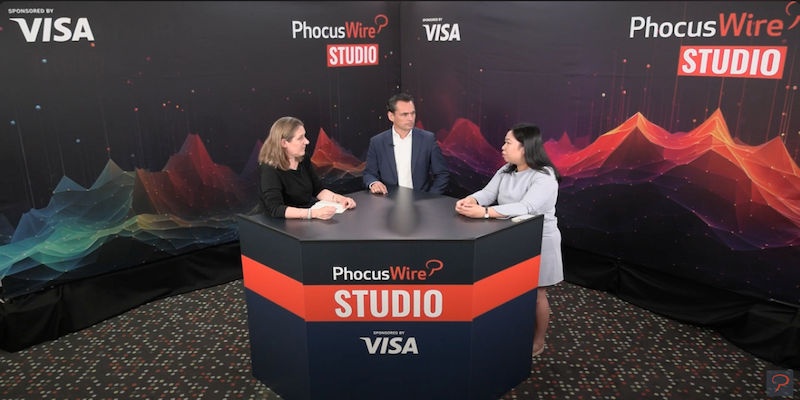
In that 2024 discussion, Sastre described acquisitions as part of Juniper Group’s growth, with possible connections among the businesses it owns. He also described an ownership horizon extending indefinitely. Independent CEOs were central to the operating model he explained.
“we have a philosophy of buy and hold forever”
Jaime Sastre, Phocuswright Europe, 2024
Juniper Group sets out continuity in terms of preserving identity, culture and personnel, with resources and guidance available to help a business grow. The interesting tension is built into that promise. A company joins something larger and is still expected to function with its own judgement. Shared experience has to reach the team without making every team identical.
The investment criteria give this approach a commercial outline. The group looks for software serving particular vertical markets, meaningful or growing market share, and a diversified customer base. Its financial criteria include businesses with at least $2 million in net recurring revenue, a high proportion of recurring revenue and high customer retention.
Acquisition criteria, not figures for Sastre’s personal wealth or Juniper Group’s revenue.
This is a rather concrete definition of an attractive business. It directs attention to the customer’s continuing need and the company’s capacity to meet it. The logic resembles Sastre’s earlier advice about useful products. A buyer examining recurring revenue is looking at the commercial history of customers continuing to use what a founder built.
The people who stay
There is another way to follow continuity through Juniper’s history: watch people arrive at the beginning of their careers. In a 2019 snapshot of its university relationship, the company reported that 38 students had completed internships over the previous three years. More than 80 percent had subsequently continued with a contract.
That is a dated observation, with a defined group of students. It offers a grounded connection between a software company and its local university community. A company selling across borders could still draw talent from the place where its platform development began. International reach and local relationships could coexist.
Sastre’s later portfolio work also made room for people learning from one another. In September 2025, he opened the group’s M&A offsite in Palma. Nearly 100 professionals attended over three days. His opening themes included decentralized operation, profitable vertical software and practices shared across the wider Constellation network.
The gathering brings his career back to Palma in another form. The city that supplied an early software base became a meeting place for people working across the group. The subject had widened from building a travel platform to learning how to acquire and operate many businesses. There was still a table for people to sit around.
The next booking, the next business
The acquisitions continued. Traveltek joined in October 2024, adding to the group’s presence in the United Kingdom, North America and Australia. Cardiff-based Inspiretec followed in November 2025, bringing reservation systems, customer relationship management software and digital tools for travel agencies and tour operators.
In June 2026, Juniper Group acquired Deem from Travelport. The corporate travel platform was to continue independently under its existing leadership. Sastre described the transaction as extending the group’s presence in the United States and corporate travel. Here was another acquisition with a defined product, customer base and operating team attached.
These businesses give scale a practical meaning. Each concerns work someone already has to do: distribute travel, manage a reservation or book a corporate trip. Sastre’s career now reaches across several such businesses. Its starting question remains recognisable from his years running Juniper: what does the customer need the software to accomplish?
The signature in 2014 changed his relationship to the company he had founded. The years afterward changed the scope of his work. He built, sold, stayed, handed over and began buying. The story keeps its interest in the space after each of those verbs, where another person takes responsibility and the next customer expects the system to work.