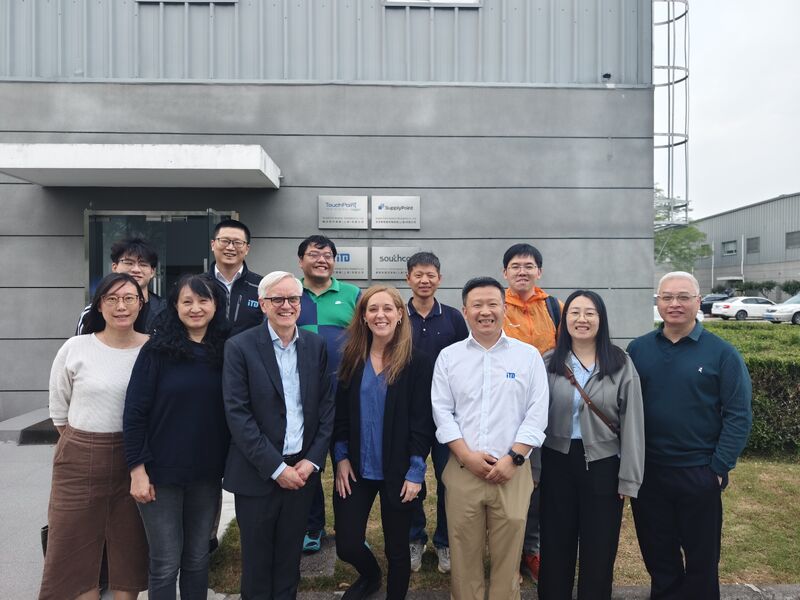
In Shenzhen, Staci Kroon found a factory worth lingering in. The processes interested her. So did the team’s ingenuity and its efforts to keep improving. A visit meant to introduce TouchPoint’s new chief executive to the business stretched into what she described as a record for her longest plant tour. Somewhere, one imagines, an itinerary acquired a slightly wounded expression.
The detail comes from Kroon’s own account of her first months at TouchPoint in 2025. It offers a useful opening into a career usually told through appointments. President. Executive vice president. Chief executive. Those titles locate a person in an organization. A tour that runs long tells you something about what holds her attention.
By then, Kroon had spent roughly two decades at Eaton and led BraunAbility through a period in which the company doubled in size. She had joined Winnebago Industries’ board. At TouchPoint, she was taking responsibility for an enterprise with businesses and employees across countries. Yet the little story from Shenzhen turns on a more immediate subject: how a particular team gets its work done.
Two ways to read a machine
Kroon’s education gave her more than one vocabulary for that question. She earned a bachelor’s degree in mechanical engineering at the University of Pennsylvania and a bachelor’s degree in economics, with a finance concentration, at Wharton. Postgraduate study at Cambridge added design, manufacturing and management.
Consider the range of questions those subjects bring to an industrial business. What does a component do? How can it be made? What will it cost? How should the organization invest? A product can be elegant on a drawing and troublesome in production. A financial plan can look tidy until it meets the practical demands of making something customers will actually use.
Her subsequent career kept these questions near one another. Eaton’s businesses gave her responsibilities in manufacturing, plant management, business development and general management. The progression makes sense as an education continued at work: learning a process, running a business, then taking on responsibilities that reach across businesses.
When growth complicates the factory
Kroon joined Eaton in 1996. Her roles included manufacturing operations manager, business unit manager, director of business development and general manager of its North American heavy-duty transmission business. In 2013, she was president of the Automotive business in North America. These are jobs in which a strategic decision eventually has to survive contact with a production line.
That year, she described a problem that can hide inside apparently cheerful news. Demand was recovering. Customers were bringing new vehicles to market more quickly. Suppliers had to respond to higher volumes while making increasingly advanced products. Having capacity available did not settle the matter; the equipment still had to make the component a new launch required.
“Even though the capacity to make a product is there, you still have to make modifications to make the new product.”Staci Kroon / 2013
Her response was concrete: different uses of equipment, additional people and production lines, more overtime. Growth arrives in an annual report as a number. Inside the factory, it can arrive as a succession of changes to what people must build and how they must build it. Kroon’s explanation stayed with that complexity.
The next move widened her view. In September 2015, she became executive vice president of Eaton Business System, reporting to Craig Arnold, then president and chief operating officer. The appointment drew on her understanding of the company’s operating and functional teams. A career spent inside individual businesses now carried a broader organizational responsibility.
Recognition followed alongside the job changes. Automotive News included her among its 100 Leading Women in 2015. In 2016, she received a STEP Ahead honor. The account of that award singled out her contribution to mentoring and developing peers at Eaton. Development was already part of the record, well before it became an explicit focus of her TouchPoint role.
A business worth leaving for
In November 2017, Kroon accepted the chief executive’s job at BraunAbility, succeeding Nick Gutwein. She also joined its board. Leaving after so many years at Eaton prompted an obvious question: why move? In a later interview, she described the pull of the company’s purpose and the people she met there.
She admired a culture rooted in hard work and decency. She also remembered a visit by Jesse Billauer, founder of Life Rolls On, to the manufacturing headquarters. Employees stayed afterward for autographs, questions and conversations about improving products. The encounter mattered to her because it brought the people making a product into conversation with someone using it.
There is a revealing personal footnote from the same interview. Asked about life outside work, Kroon named family holiday traditions involving The Nutcracker and The Sound of Music. Her most recent book was Rise Above, Ralph Braun’s autobiography. Ballet, a musical and a founder’s account of building a business: a reading-and-viewing list with rather more variety than the average management slide.
Her BraunAbility tenure also involved extending the business. In November 2018, the company acquired Ability Center, a dealer with 14 locations across California, Arizona, Nevada and Oregon. That transaction put distribution and the customer relationship beside manufacturing in the growth story. A product’s route to its buyer deserves attention, too.
The company’s board also credited Kroon’s leadership with record financial performance in 2023.
When her departure was announced in March 2024, BraunAbility’s board credited her with strengthening the company’s strategic, operating and organizational capabilities. Scott Nelson, already leading its North American manufacturing business, would succeed her on April 1. Kroon said she was proud of the company’s accomplishments and of the changes to its portfolio.
The doubling gives this chapter a measurable outcome. The board’s account also places weight on capabilities: what the organization had become able to do. Those two ideas belong together in an operating career. Expansion brings obligations as well as opportunities. People, processes and products must be able to carry the larger business.
A longer horizon at TouchPoint
By the time she left BraunAbility, Kroon had another responsibility. She joined Winnebago Industries’ board on October 11, 2023, with assignments to its Human Resources and Finance committees. Her earlier experience also included serving as a director and chairman of Nittan Global Tech.
Winnebago described her leadership in terms of learning, trust, transparency and accountability. It emphasized her knowledge of product design, operations and general management. The committee assignments put people and finance beside each other again, an echo of the combination that had appeared in her education.
TouchPoint appointed her President and CEO effective March 1, 2025. Brian McNeill, who had led the business for 25 years, became Executive Chairman. Kroon would report to the board. This was a succession within a company that presented its history as 125 years of adaptation, with a long-term approach to owning and developing businesses.
Her remit includes operational excellence and leadership development across the enterprise’s platforms. She has described the opportunity in terms of strengthening its core, investing in innovation and pursuing thoughtful growth. A long-lived business brings an interesting leadership assignment: make room for change while understanding what existing teams have learned.
An early transaction made the operating agenda tangible. On April 2, 2025, TouchPoint acquired Newcastle Systems, a Massachusetts business making mobile powered workstations and modular power systems. Its products let users bring their workstations with them around a facility, reducing trips back to a fixed location for routine tasks.
Newcastle would continue as an independent business and collaborate with SupplyPoint and Morse Watchmans. Kroon linked the acquisition to extending TouchPoint’s offering for inventory management and e-commerce customers. The arrangement made room for both a company’s existing expertise and the possibilities of learning from adjacent businesses.
The details that earn another question
Kroon’s early visits took her to places with quite different manufacturing capabilities. At Honeoye Falls, New York, she noted stamping, die casting, turning, machining and assembly. At Concordville, Pennsylvania, she paid attention to injection molding. Shenzhen supplied the tour that kept going. Her account reads like someone enjoying the specificity of the work.
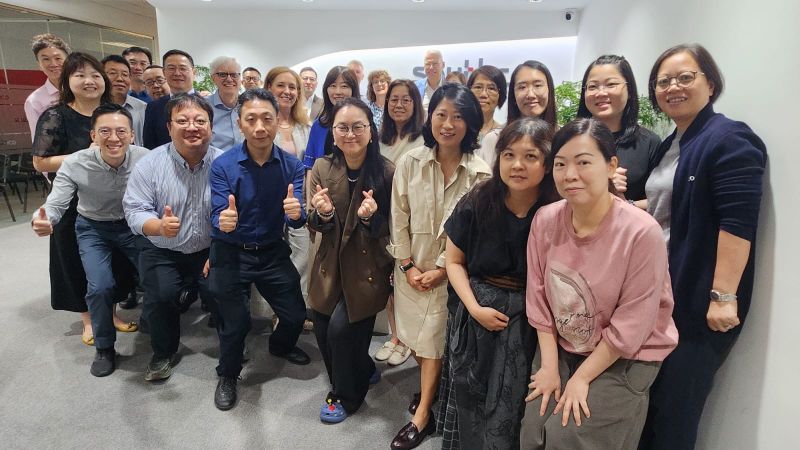
On a separate visit to Southco’s Poland operation, she praised the care evident in the facility and the energy of its team. She wrote about conversations with people focused on improvement and growth. The recurring subject is the relationship between a place, the people working there and their ability to make it better.
In TouchPoint’s 2026 Code of Conduct, her message asks employees to raise concerns and says that doing so in good faith will carry no negative consequences. That is a practical companion to talk of trust and accountability. An organization needs ways for a difficult question to travel, as well as ways for a useful idea to spread.
The public milestones remain substantial: an industrial career at Eaton, a growing business at BraunAbility, a board seat at Winnebago, a new leadership role at TouchPoint. But the smaller details make Kroon easier to see. A founder’s autobiography. A team proud of its plant. A conversation that needs more time.
The factory tour is a fitting place to leave her. It has no grand stage and no ceremonial ending. It has people who know their work and a visiting chief executive interested enough to keep listening. For a career built around making things, that seems a sensible use of an afternoon. The itinerary will recover.