A licence-plate renewal is an unlikely place to find a business idea. It offers very little glamour and ample opportunity to contemplate the passage of time. For Shamira Jaffer, an early touchscreen kiosk suggested something useful: give people the means to finish a task themselves, and they could get on with their day.
“I am impatient, I don’t like lineups,” she has said. The founder and CEO of Signifi Solutions turned that preference into work involving self-service machines, software and the mechanics of getting an object into the right hands. Convenience, in her telling, begins with giving people more control over their time.
The awkward part was the company’s own clock. She spent nearly ten years building before the North American market caught up with her ideas. A founder bothered by delay had chosen an occupation that required considerable waiting. Her account of those years makes patience sound less like a personality trait than a bill that keeps arriving.
An education in things that stop working
Signifi, established in 2005, was her third business. The earlier two supplied a practical education in what customers need after a technology has been sold. At 24, Jaffer started selling computers, teaching people to use them and helping automate accounting. Hardware sales and repairs followed. She was close to the moment when an apparently useful machine becomes somebody else’s afternoon problem.
Her next business developed software for photo kiosks. A machine could be present, switched on, and still fail its customer because it lacked paper. Software that alerted the manufacturer to a supply problem helped make remote equipment useful again. An unprinted photograph is a modest inconvenience. It is also an excellent demonstration of how a whole service can depend on one neglected detail.
Jaffer came to see an opportunity in bringing hardware, software and support together. Customers needed the pieces to cooperate. Her father, an entrepreneur who encouraged thinking about opportunities, had helped establish that habit of questioning. Corporate employment lasted about six months, she recalled. She wanted to change things faster. Signifi gave that impulse a place to work.
The invention is in the handover
The word automation can make a business sound abstract. Jaffer’s patent record brings it down to shelves, trays and doors. In February 2020, a US patent for an automated vending machine with a tray transport system named her and Simon Treadwell as inventors. Its subject is the controlled movement of products through a machine, including vending, returns and restocking.
The design describes trays travelling along inclined rails, a dispensing unit that can couple with a tray, and a gantry that moves that unit between positions. It is a small choreography of storage and delivery. To the customer, there is an item to collect. Behind the enclosure, something has to find it and bring it within reach. That apparently uneventful handover is the invention’s business.
A smart locker patent granted in April 2021 names Jaffer alongside John Paul Schmider, Kieran Maguire, Eloisa Vera and Yong Suk Jin. The record describes storage bins, doors and electronic control within a locker system. It gives the work a collaborative cast: several people are named on the mechanism behind an interaction that one person will eventually use.
Reading those names is a useful corrective to the solitary inventor picture. The formal record preserves the contributors, even when the finished cabinet conceals the effort. A locker has to earn its adjective through the way its parts work together.
and compartments
access decisions
to a person
A machine needs a passport, too
Jaffer’s ambitions crossed borders early. In April 2017, Canadian trade minister François-Philippe Champagne highlighted Signifi’s entry into the United Arab Emirates, helped in part by Export Development Canada insurance. The company had secured a second UAE contract and was considering European expansion with help from the Trade Commissioner Service.
The minister also relayed her enthusiasm for the Middle East and North Africa as a market where businesspeople were receptive to innovation and willing to make purchases quickly. For a founder sensitive to slow decisions, the attraction is easy to understand. There was a practical structure around that appetite: contracts, insurance and help entering the next market. International growth had paperwork as well as promise.
That year, OWIT-Toronto named her Woman Exporter of the Year. By 2021, Signifi was described as serving the automated retail industry in more than forty countries. Jaffer discussed using dedicated agents in Europe and the United States who understood their clients and local business cultures. She also emphasized the resources needed to implement complex solutions and support customers.
Those details make the export story more interesting than a collection of flags. A machine can be shipped. A relationship needs someone who understands the buyer, the expectations and the next question. Her approach puts local knowledge alongside technical capability. The sale continues into implementation and repeat business.
Many ways to see the same problem
Jaffer’s familiarity with cultural differences has a personal history. Born in Africa to East Indian parents, she grew up in Canada and lived in Europe. Her father helped instil resourcefulness and an awareness of the ways people communicate across cultures. Those experiences inform how she talks about building an inclusive workplace and working with international customers.
At Signifi, the practice includes coaching employees about diversity and international business cultures. CAMSC certification also provides a concrete answer when potential customers ask about the company’s internal diversity. It turns a broad claim into something a procurement process can recognize and discuss.
The company received CAMSC’s Technology Innovation Award in 2020 and Supplier of the Year Award in 2021. Jaffer linked innovation with the diversity program rather than treating the two as unrelated subjects. Different experiences give a group more ways to approach a problem. The recognition followed deliberate work on the supplier program.
The people who finance the waiting
A company building physical products needs resources long before an award ceremony. Jaffer has described an early credit line that could not keep pace with Signifi’s growth. A larger facility from RBC gave the business room to make decisions and meet payroll. The problem was immediate and ordinary: growing required money.
In September 2022, Graham Partners Growth announced a minority growth equity investment in Signifi. Its account described robotic dispensing kiosks, smart lockers and loss prevention products operating on an enterprise software platform. The investment connected Jaffer’s company with an investor already familiar with retail automation, remote equipment management and connected devices.
Graham’s Dennis Dunegan described plans to support growth and new product development. Jaffer pointed to the relevance of the investor’s experience and operating resources. The language of the announcement was about a partnership around an existing business. Signifi had been founded seventeen years earlier. The outside investment arrived after a long period of building.
- 2005Signifi established
- 2017OWIT export recognition
- 2022Minority growth investment
- 2023RBC innovation award
Eighteen years, then an evening
On November 22, 2023, the RBC Canadian Women Entrepreneur Awards gala at Toronto’s Ritz-Carlton put Jaffer among seven award recipients. She won in the Innovation category. The evening placed her work beside businesses operating in very different fields, from maple products to jewellery and consumer goods. The list of winners made room for an automation business from Mississauga.
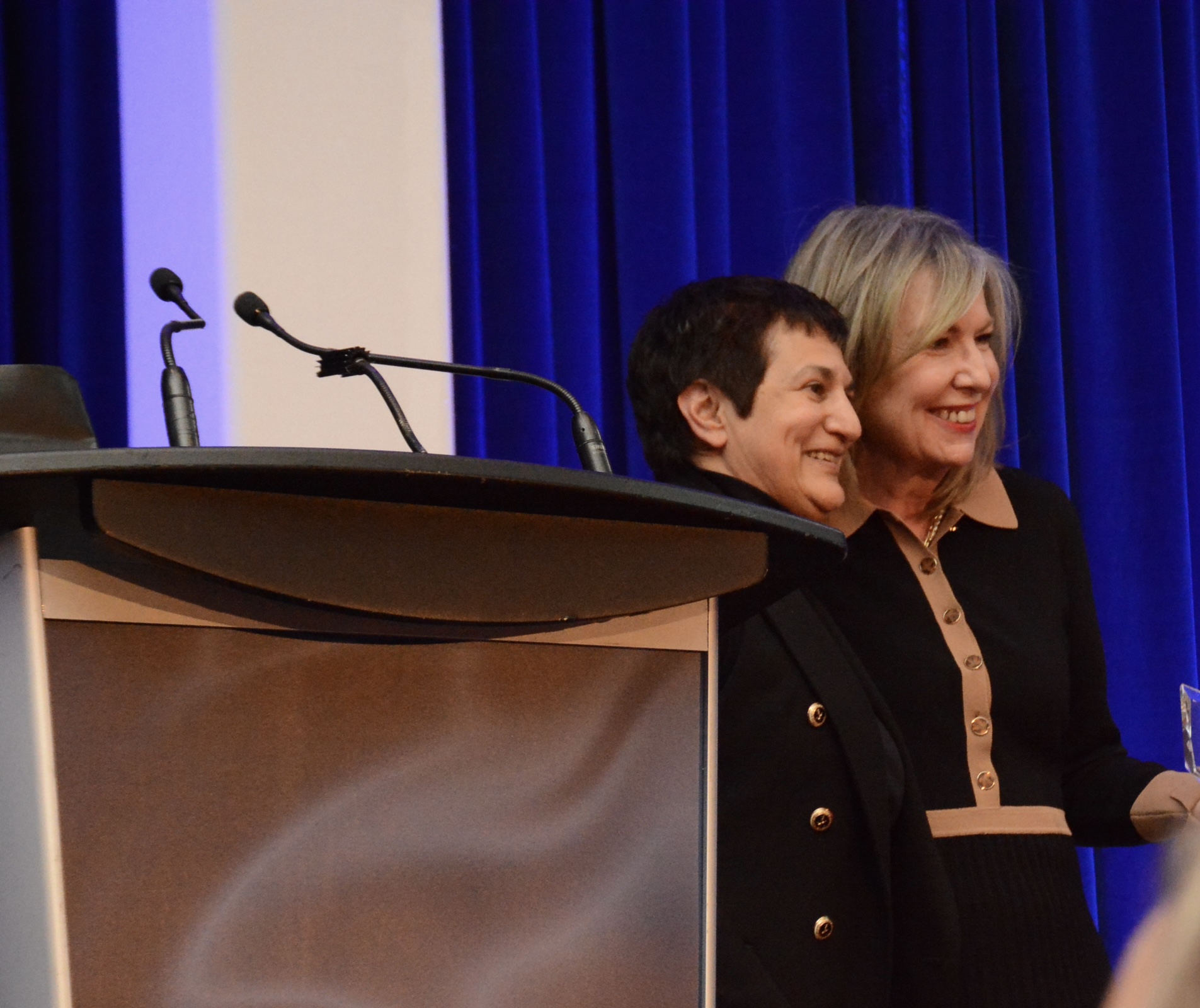
The photograph gives the milestone a human scale: Jaffer smiling beside the podium, with the microphones temporarily unoccupied. The machines and their complicated interiors are elsewhere. Here is an evening in which someone gets to stop explaining the business and accept recognition for it.
A gala compresses years into a few minutes onstage. For Signifi, eighteen years separated its founding from that award. Put the two dates beside each other and the picture acquires a different weight. A good part of entrepreneurship happens outside the photograph: developing a product, finding a customer, and keeping enough confidence to do it again.
More time, and what to do with it
The public milestones continued. EY listed Jaffer as a 2025 Ontario Entrepreneur Of The Year finalist. In March 2026, she joined Jennifer Menard-Shand and Georgette Zinaty on Tony Chapman’s Chatter that Matters for a conversation about women building businesses and what helps them grow. The finalist listing and the podcast appearance extend the story beyond the night of the award.
When asked about her proudest accomplishment in 2023, Jaffer chose a contract to build a forty-foot food dispensing kiosk for the World Food Programme, intended for refugee camps in Sudan. She described the goal as equitable access to rations. The example gives her interest in dispensing things a different setting, and her preference for practical problems a clear expression.
She also disclosed an earlier ambition to become an archaeologist. Asked what she would do with an extra hour, she considered learning a musical instrument or another language. There is something pleasing about a founder devoted to saving time having a ready use for more of it. Her ambitions include learning something outside her own field.
For all the machinery in this story, its central concern is familiar. Someone has a task to complete. Something is taking too long. Jaffer keeps returning to the space between those two facts, looking for work that a better system could do. An uneventful transaction may never earn a grateful speech. It can still give a person their afternoon back.
“Don’t overthink it; be action-driven.”
Shamira Jaffer