A magazine rack and a smart locker look like unrelated objects until you watch someone use them. Each waits in public. Each asks for a small decision. Each succeeds only when content, context and timing line up. Scott Stevenson has spent much of his career around that moment - the last metre where a strategy stops being a slide and becomes an encounter.
In August 2026, Stevenson announced that he had joined Mississauga-based Signifi Solutions as Global CMO and Sector Growth Strategist focused on healthcare and higher education. Signifi designs and engineers kiosks, smart lockers and loss-prevention systems, with software that monitors assets and connects to enterprise tools. Stevenson's assignment is partly familiar marketing work: explain the product, develop sectors and build partnerships. It also asks him to help name a category that most people only notice when it fails.
He calls that category critical asset governance and secure unattended infrastructure. The language is formal because the underlying questions are concrete. Where is the laptop? Who took the key? Is the equipment charged? Can the exchange be audited? Does a person have to wait for an employee to unlock a room? The machine is visible. The choreography around it is the real product.
“The future of enterprise infrastructure will not simply be connected. It will be governed, intelligent, accountable, and outcome-driven.”Scott Stevenson, announcing his Signifi role
The rack was the channel
Long before this turn toward enterprise hardware, Stevenson learned the power and fragility of distribution through print. Chill was a free Canadian lifestyle magazine built for a male-skewing audience and placed in The Beer Store. The arrangement was unusually tangible: the publication knew where readers were, what errand had brought them there and what advertisers might want to say in that setting.
The business made money from advertising rather than cover price. In 2011, as Chill prepared its 50th issue, the team increased the page count, added 30,000 copies in Western Canada and paired the issue with an iPad app and a microsite. Stevenson explained the choice with a line that doubles as a compact operating philosophy: “As opposed to reducing our price point, we added value.”
Chill later expanded beyond a print object into digital, social and experiential work. Stevenson's Next Level Thinking portfolio describes the property as a multi-million-dollar annual model that ran from 2002 to 2015. Other publishing projects reached golf audiences through Golf Canada Magazine and ClubLink Life. The titles were different, but the commercial puzzle stayed constant: earn attention, package it honestly and give advertisers a reason to renew.
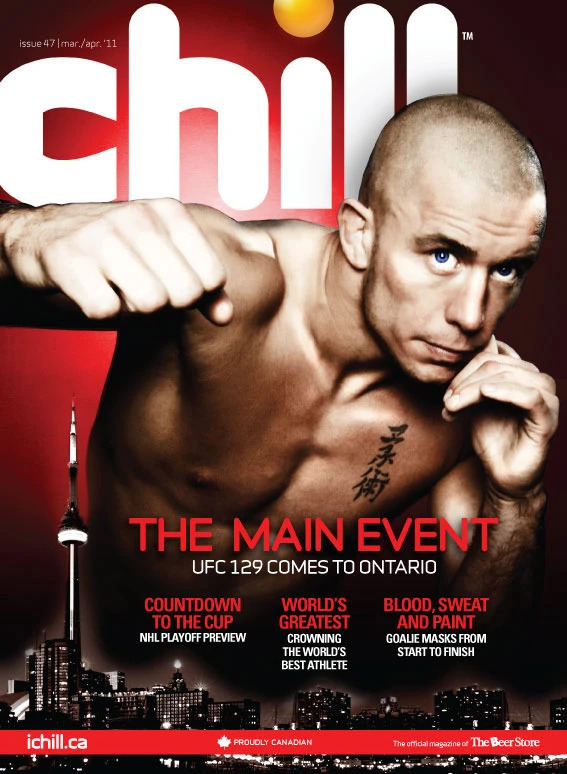
Distribution also revealed its downside. Chill's relationship with The Beer Store ended in 2014, and the publishing business gradually ceased operating. An Ontario court decision later recorded Chill Media's claim that a portion of its print run had not been distributed. Whatever the eventual legal questions, the operating lesson is plain enough: when access depends on one channel, the channel is not plumbing. It is structural.
A playbook has to travel
Stevenson carried the lesson into agency and consulting work. He led Bedrock Strategic Marketing Group, where a former client credited the team with memorable Castrol promotions. In 2017, he founded Next Level Thinking in Oakville. The firm describes itself as a collective: specialists assembled around a particular challenge instead of a permanent roster applied indiscriminately to every account.
Its process is deliberately sequential. Begin with discovery and market assessment. Choose the team, tools and tactics. Build a playbook. Put it into a channel and watch for conversion. That may sound like standard consulting language, but the case studies make the approach more specific. A Ticketmaster media and sponsorship program is reported to have generated more than $4 million a year in third-party revenue. Work for Castrol Canada produced channel programs, consumer data and a five-year agency-of-record extension.
Four chapters, one recurring job
His own summary is blunt: most companies and agencies separate marketing and sales; his work tries to bridge them. The useful part is not the slogan. It is the insistence that a story should survive contact with a revenue model. Positioning has to reach a buyer. A promotion has to change behavior. A channel has to produce an observable handoff.
That discipline also explains the mix of clients in Next Level Thinking's public portfolio. Ticketing, motor oil, packaged food and car care share very little at the category level. At the moment of action, however, each asks the same practical questions. Who is the audience? What do they need to notice? Which partner can add relevance? What is the next behavior, and can the business see whether it happened? Stevenson's playbooks treat creativity as one part of a chain. The idea matters because it can move through a channel, survive execution and leave evidence behind.
The handoff model
The whiteboard and the ice
The résumé becomes easier to read when hockey enters the frame. Stevenson played varsity hockey for the Ryerson Rams while attending what is now Toronto Metropolitan University from 1986 to 1990. Two decades later, he spent nearly 13 years as a head or assistant coach with the Oakville Rangers, working from novice through midget divisions. His public profile describes five OMHA provincial championships along with International Silver Stick and Nike-Bauer Chicago Elite titles.
A coach gets immediate feedback on whether an idea can travel. If a player cannot understand the play, the play is not finished. If every role looks clever on a whiteboard but nobody owns the handoff, the system breaks at speed. Stevenson's hockey testimonial for a weighted training belt even dwells on a small psychological result: players felt a “zest of confidence” when they took it off after the opening skating set. The tool mattered, but so did the sensation it created.
He served a three-year term on the Rangers' executive board, focused on membership, revenue, innovation and the organization's brand. In 2015 and 2016, he also helped design, recruit and manage the VIP program for the World Junior Hockey Championships in Toronto. The common thread is operational storytelling: establish the purpose, assign the people and make the experience coherent for someone moving through it.
“Great storytelling gets your business and brand selling.”A Next Level Thinking maxim
Showing up is a system
Stevenson's community work supplies another version of the same idea, one with fewer slogans and more chairs to set. Since 2009, he has led and activated a Neighbours Helping Neighbours meal program with Kerr Street Mission in Oakville. His description of the work is unusually operational: teams of roughly 14 to 16 residents plan, shop, prepare and serve a quarterly dinner for 42 guests, with meals supporting more than 20 families the next day.
He also spent six years on Smilezone Foundation's marketing committee and fundraising representation. Alongside the hockey years, these are long commitments rather than event-day cameos. They suggest that “collective” is more than a consultancy label. It is how he prefers work to be arranged: gather people around a clear need, give them a usable plan and make repetition possible.
Public recommendations describe him as thoughtful, collaborative, creative and hard-working. Next Level Thinking chooses “energetic founder.” His own online voice favors exclamation points, compressed maxims and the language of momentum. Even a recent comment on Signifi's Spark kiosk starts with the footprint and ends with a spark: “Small footprint. Big impact!” There is little mystery about the tempo he wants.
Making the invisible legible
At Signifi, that energy now meets a more technical sales cycle. The company's products combine custom hardware, cloud software, authentication, analytics and integrations. The buyers care about security, uptime, asset loss, labor and auditability. A university may need laptops available outside help-desk hours. An enterprise may need a traceable return process. A retailer may need inventory dispensed without adding another staffed counter.
Stevenson's job is to make these invisible workflows visible without flattening them into gadget marketing. A locker door is easy to photograph. Chain of custody is harder. So is the cost of a missing peripheral, the productivity gained when a device can be collected after hours, or the relief of knowing an asset is where the dashboard says it is.
This is where his past becomes useful. Publishing taught him that placement shapes attention. Sponsorship taught him that partners need a reason to participate. Retail work taught him to care about the point of decision. Coaching taught him that systems live or die in the handoff. Community work taught him that a recurring promise requires people who keep showing up.
The objects have changed across his career. The question has barely moved. A magazine, a campaign, a team and a locker each sit between an intention and an outcome. Stevenson's work is to make that middle feel less like friction and more like a path someone can actually follow.