Shailesh Kumar Davey sells software for a living. His to-do list, however, has been known to run on pen and paper. In a company that makes applications for organising much of working life, that is a pleasing little act of consumer choice. The checklist needs to work. It need not demonstrate allegiance to the industry.
That old detail fits the executive who became Zoho Corporation’s Group CEO in January 2025. Asked about his leadership, Davey reached for cricket. Sridhar Vembu, his co-founder and predecessor, played like Virender Sehwag, the attacking opener. Davey put himself closer to Rahul Dravid, with an emphasis on preparation and the team. A software succession had acquired a batting order.
The comparison is useful because it came from Davey himself. It also offers a way into a career that spent decades inside engineering before attracting the attention attached to the chief executive’s chair. His subject has usually been how things work: a network, a product team, a database, the arrangement of responsibilities that lets people get on with building.
A career takes an unexpected turn
Davey studied metallurgy at IIT Madras, graduating in 1992, and also earned a master’s in industrial management there. Before Zoho, he worked on networking projects at Tata-IBM. The route into software therefore included both materials and management, followed by the practical business of getting computers to communicate.
One account of his entry into entrepreneurship places him on the way to an IIM interview in 1996 when Vembu proposed joining a technology startup. The alternative career was already close enough to have an appointment. Davey chose the company that became Zoho. It is a useful corrective to the tidy founder biography in which every classroom exercise seems to anticipate the eventual business.
His recollection of the early office is wonderfully ordinary. The team worked above Vembu’s father’s house, with tables, computers and the frustrations of dial-up and ISDN connections. The first network-management software went onto the web. Then came the wait: would anyone download it, use it, ask a question, pay?
Davey remembered the surprise of someone actually purchasing what they had made. Customers also found uses the builders had not anticipated. Each question carried information about the product’s life outside the room. The business was becoming real through other people’s decisions, one download and one payment at a time.
Someone uses it.
Someone pays.
Davey’s account of the first products begins with customers, rather than a growth forecast.
Learning starts at the support desk
By 2001, Davey was helping other people learn the same lesson. When Girish Mathrubootham joined AdventNet, Zoho’s original name, Davey put him to work answering customer-support questions. Mathrubootham would later found Freshworks. At that moment, he was a new employee discovering that orientation could arrive in the form of a customer’s problem.
“That’s the fastest way to learn the product.”
Shailesh Kumar Davey, on answering customer questions
The assignment demanded more than familiarity with a presentation. A customer could ask an awkward, precise question and expect an answer. Mathrubootham later described the experience as a push towards ownership. Davey had made the product somebody’s responsibility before giving him the comfort of feeling fully prepared.
That period also brought the telecom and dot-com downturn. Davey later recalled customers disappearing and new deals shrinking to a fraction of their former size. Teams were divided into smaller product groups while work continued for customers who still depended on the existing software. The adjustment involved hard decisions, including sales job losses in the US. Patience had to coexist with a willingness to change course.
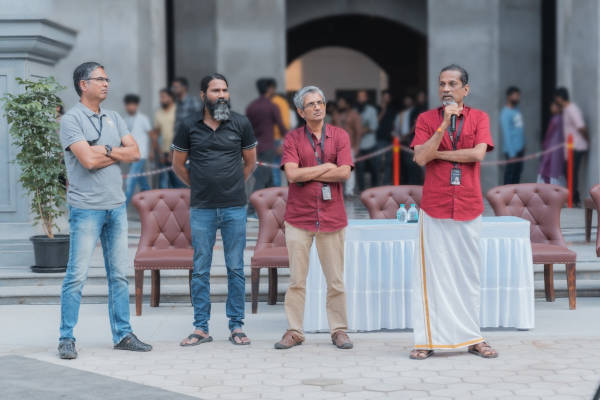
The title changes. The colleagues stay.
On January 27, 2025, Vembu announced that Davey would become Group CEO. Vembu moved to chief scientist to concentrate on deep research and development. Tony Thomas would lead Zoho’s US operations, Rajesh Ganesan its ManageEngine division, and Mani Vembu the Zoho.com division.
This distinction matters when describing Davey’s job. Zoho CRM is a product within a much broader organisation. His responsibility extends across the corporation, including the enterprise IT work of ManageEngine. The person taking the top role had already spent years working on the technical foundations beneath those businesses.
In the months after the appointment, Davey stressed the length of the relationships among the leadership team. He and Ganesan had worked together for 28 years. Knowing colleagues’ strengths and weaknesses gave the reorganisation some practical advantages. Introductions were presumably a manageable part of the workload.
He also offered a consumer’s way of thinking about the transition: people can buy a Toyota without knowing its CEO. A useful product can carry a company’s reputation. For someone following a founder so closely identified with Zoho, that observation set an interesting standard. The succession would eventually be experienced in what customers bought and used.
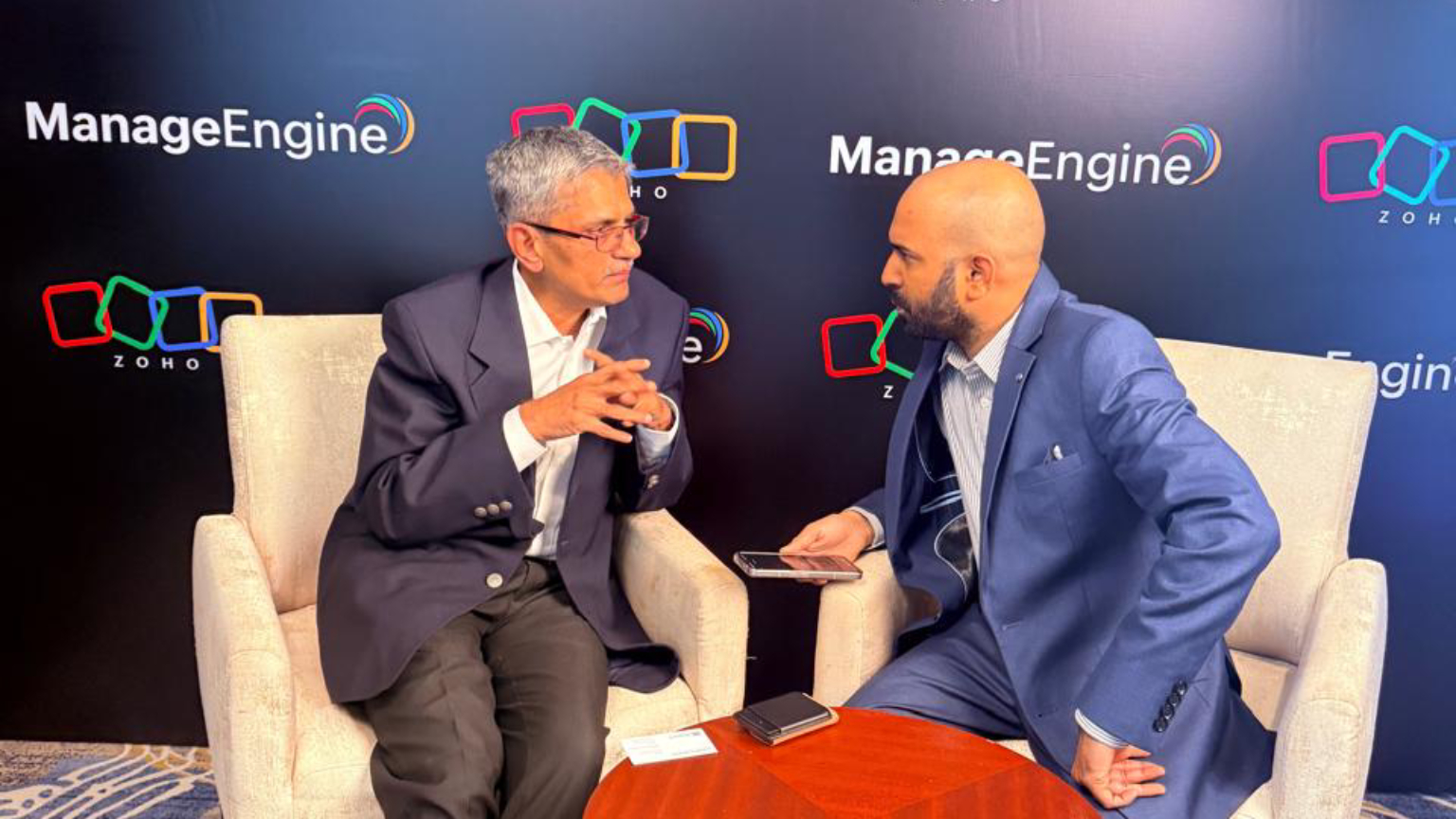
Under the cloud, the plumbing
Davey’s official biography identifies three recurring concerns: data, databases and data centres. His earlier work included network-management frameworks, tools for equipment vendors and the company’s rapid application development tool. It is the sort of engineering history that makes a polished software screen look like the final paragraph of a much longer document.
In 2020, discussing digital transformation, he described a fairly practical distinction. Changes that help a business attract or retain customers often find support more readily than an abstract technology programme. He pointed to integrating newer capabilities with an existing banking system, rather than assuming that progress requires replacing everything underneath.
Discussing the UAE in January 2026, Davey described one tangible result of local data centres: requests no longer had to travel to servers in the United States. Shorter journeys meant faster responses. He identified CRM Plus and Zoho Books as important products in that market, and linked a local presence to keeping up with changing requirements. It is an unglamorous definition of international expansion: the customer’s software should respond promptly, and the people supplying it should understand the place where it is being used. There is considerable engineering beneath that modest expectation.
That attention to the underlying machinery has become more visible during his tenure. In June 2026, Zoho introduced Nathu La, a server platform developed through more than five years of work in Nagpur, using Intel Xeon 6 processors. Davey connected the project to the company’s ambition to own more of its technology and develop skills beyond the usual centres of recruitment.
The reasoning runs through several layers. Software has a workload. That workload needs machines, power and cooling. Decisions at those levels affect the eventual cost of delivering an application. An executive preoccupied with the plumbing has plenty to discuss when AI starts sending larger bills downstairs.
How much intelligence does the job need?
In April 2025, Davey said Zoho had spent about $20 million on AI over the preceding two years. He described learning as a constraint in its own right. More spending could follow greater understanding; a larger budget alone would not settle the questions the engineers were trying to answer.
His preferred approach was to size a model around its intended task. Enterprise software supplies a useful boundary: there is usually a particular job to perform, a customer with expectations and a cost someone must bear. The ambition was to understand the technology well enough to build suitable systems, including homegrown models, rather than rely entirely on outside capabilities.
The leadership’s questions have become increasingly concrete as those systems reach employees and customers. By early 2026, Davey was discussing the discipline of using Zoho’s own products internally, conducting security and interface reviews, and involving beta customers early. A product can add complexity as readily as convenience. Giving a team permission to simplify is part of the engineering work.
There is also a cost to that learning period. In October 2026, Vembu said Zoho could not provide its usual annual pay increases, citing higher server prices, rising AI expenses and an uncertain business outlook. He said marketing spending had been cut as well. Those were Vembu’s public statements about the company Davey leads. They put a harder edge on the question of how to pay for reinvention.
The geography of a long innings
Davey’s ambitions extend to where the work happens. At the January 2026 launch of Zoho ERP in Kumbakonam, he linked the product to recruiting and developing local talent. Part of its team worked from the town. Zoho intended to keep building that presence as the software expanded into other markets.
The approach has a counterpart overseas. In Southeast Asia, Davey has emphasised local offices, partnerships and infrastructure as ways to stay close to customers. His January 2026 interview about the region returned repeatedly to affordability, listening and operating within the company’s means. A worldwide software business still has to answer somebody nearby.
“Customers face real problems first.”
Shailesh Kumar Davey
He has also described retraining developers when the iPhone changed the software landscape. The organisation had to acquire new skills while retaining people who already understood its products. That experience gives some substance to his talk of preparation. Change has repeatedly required employees to learn a different way of doing their work.
The Dravid comparison leaves room for all of this: the support desk, the shared history, the machine room, the uncomfortable bill. A long innings contains defensive strokes and decisions about when to move. Davey’s career has brought him from waiting for a download to running the company behind a vast collection of business software. The next entry on the checklist is rather bigger. There is still room to write it in pen.