Shahzad Yaqoob can describe expansion in a way that makes it sound rather less like a ribbon-cutting ceremony. In his account of 2017, he opened four call center locations across three countries. By the beginning of the following year, two had closed. There had been travel, financial pressure, and too little time for family. The map had grown faster than the business could comfortably carry it.
It is a useful place to meet the founder of IdeasUnlimited. Company histories tend to acquire a spotless complexion with age. Yaqoob, also known as Nick, has been willing to leave the awkward parts visible. He says he rushed. He says it cost him. Some of the workers from the closed locations continued remotely, and the business continued too.
By May 2025, IdeasUnlimited was being described as a 400-person outsourcing firm. In August 2026, it marked sixteen years in business. Those milestones are easier to understand once the detours are allowed into the picture. His career contains both the impulse to create more opportunities and the less glamorous work of learning how many commitments an organization can sustain.
A job arrived in the inbox
The beginning was small enough to fit inside a Facebook message. A Canadian IT staffing business needed someone to make outbound calls remotely. Yaqoob took the assignment and worked with the client for about four months. He had call center and marketing experience already. What changed was the discovery that he could sell those abilities without reporting to a conventional office.
He joined oDesk and Elance, the freelance platforms through which he found additional clients. Some assignments expanded. He asked friends to help. Then there were more projects and more people. The organization emerged from work that had become too much for one person, a fairly practical origin for a company with an expansive name.
His elder brother, Shahid Yaqoob, helped turn the arrangement into a registered US business in 2010. Shahid was already a US citizen and advised him on registration. Yaqoob continues to describe his brother as a mentor. The international structure had a family connection at its center, long before there was a network of call centers to put on a company map.
There is no need to improve this beginning with a grander plan. Its sequence is interesting enough: an assignment, a discovery, more clients, then friends helping with the workload. A service business must eventually persuade customers that the result will remain reliable after the founder stops doing every task himself. Yaqoob had reached that problem almost as soon as he had found the opportunity.
The honeymoon was three days
From late 2010 until early 2015, Yaqoob says he worked nights in Pakistan and put in more than eighty hours a week. His recollection of time off is unusually precise. A week for his wedding in 2013 included the celebrations and three days of honeymoon. He even invited the interviewer to check with his wife. Romance had been allocated a remarkably efficient itinerary.
The anecdote is funny because the arithmetic is so severe. It also gives the early company a scale that a list of services cannot. Behind the remote-work proposition were nights spent handling clients, workers, and the problems that arrived from both directions. Flexibility for a customer could mean a very inflexible evening for the person responsible for delivery.
In April 2015, he moved to the United States and began working days. By then, his teams extended across several countries. The change in schedule was personal, while the underlying challenge remained organizational: how to make work dependable when people were separated by geography and had different habits, expectations, and circumstances.
“I was working hard but not smartly”
Shahzad Yaqoob, reflecting on the early years
That is a more useful admission than another celebration of long hours. Effort could bring the first clients; it could not substitute indefinitely for recruitment, supervision, and quality checks. Over time, IdeasUnlimited developed processes around those tasks. The founder’s workload had exposed a management problem that enthusiasm alone would never quite solve.
Four openings. Two closures.
In his retrospective account, the next expensive lesson arrived in 2017. Promising projects encouraged him to open locations in Houston and Karachi, along with two Philippine locations operated with partners. He later described the move as opening too many centers simultaneously. Prospective work had encouraged a level of expansion that became difficult to manage.
Travel and financial demands followed. By early 2018, he says, he had closed two of the four locations and taken a heavy financial loss. Keeping some employees working remotely preserved part of the team even as the physical footprint contracted. A closed office and a lost working relationship were not automatically the same event.
He would later call 2017 a second chapter for IdeasUnlimited, the period when it evolved into a call center business. The description allows for both ambition and correction. Opening sites changed what the company could offer, while closing some of them forced a decision about which commitments deserved to survive.
The distinction matters in a business built on promises: coverage, staffing, availability, and consistent service. An additional address creates obligations before it creates a satisfying anniversary photograph. Yaqoob’s account makes the burden unusually concrete. Growth meant more than winning work. It meant being able to support the people and places enlisted to deliver it.
A hometown enters the picture
One of the relationships that grew through that period was with Allena Cruz in the Philippines. She had joined IdeasUnlimited in 2015 as a customer service representative, initially working a six-hour shift on one account. After years in larger cities, she had returned to her home region near Polomolok in South Cotabato.
Her responsibilities expanded from customer service into managing accounts and teams. Establishing a call center locally offered a way to connect international client work with people who wanted careers closer to home. Yaqoob backed the venture with help for early setup expenses and technical arrangements. The local knowledge and daily leadership came from Cruz.
It is an important partnership in his story because it gives the idea of opportunity an actual location. For workers in that region, a local center could reduce the need to travel long distances or move to a larger city for employment. The commercial arrangement also had a domestic consequence: a career could be built nearer the family it helped support.
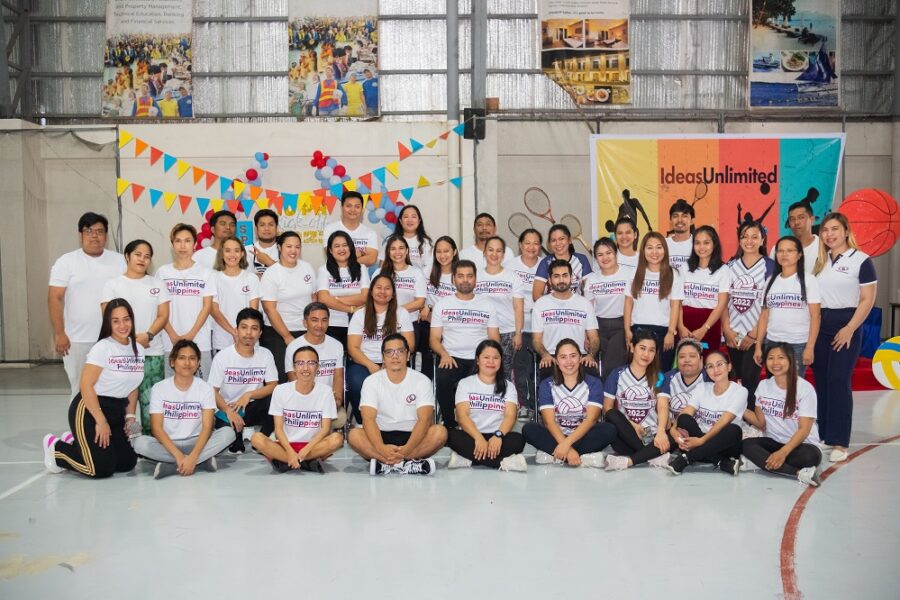
The enterprise depends on both halves of that arrangement. International clients need dependable support; local teams need work with room to advance. Cruz’s progression from one account to wider management responsibilities gives that proposition a human scale. A founder’s ambition becomes more persuasive when someone else can describe what changed in their own working life.
The names behind the numbers
Asked what kept him going, Yaqoob produced a substantial list of colleagues alongside his family. He named people across the business, including Mehwish, Allena, Ahmed, and many others. The answer became almost a roll call. In an interview centered on the founder, he appeared reluctant to let the founder collect all the credit.
There are smaller details too. He reads, follows sports, enjoys time with his children, and identifies himself as a Spider-Man fan. His ambitions have included family holidays and sponsoring education for disadvantaged children and orphans. These are expressed wishes, rather than a ledger of completed charitable projects. They help explain the mixture of family concern and wider opportunity that appears in his account of the business.
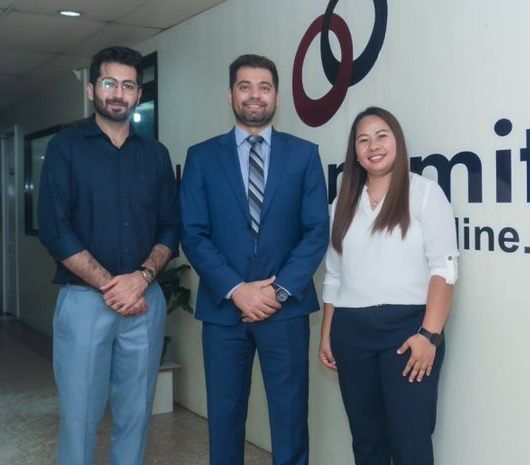
His later public comments bring those concerns into a changing industry. In 2025 he discussed incorporating AI into IdeasUnlimited while emphasizing the importance of people and long-term decisions. The company’s offering still rested on call center services, experience, and operating processes. Technology entered an organization whose core task remained arranging for people to do useful work reliably.
Recognition also has a place in that arrangement. At the Philippine team’s January 2025 gathering in Polomolok, Yaqoob delivered a video message while employees met for performances, games, and awards. Seven major awards and twenty-one recognitions gave the evening a practical purpose alongside the entertainment. A distributed workforce had an occasion to see colleagues and hear that its work had been noticed.
For the sixteenth anniversary in 2026, celebrations continued across Philippine centers, including Polomolok, Davao, and Panabo. The scale was different from the early freelance assignments. The underlying connection was still recognizable: clients needed support, workers wanted opportunities, and someone had to build an organization capable of keeping those interests together.
Yaqoob’s history is most engaging when it stays close to those particulars. The first client lasted four months. The honeymoon lasted three days. Four centers became two. A colleague began with a six-hour shift and went on to lead others. Each detail resists the smoothness of a corporate slogan. Together they describe a founder learning, sometimes expensively, how to make room for more people without promising more than the business can carry.