A jar and a delivery app make an unlikely pair of calling cards. Yet they offer a useful introduction to Seval Işık. She founded Mari Balkan, a food business drawing on her family’s Balkan traditions. Today she leads Lalamove in Türkiye. One venture begins with something people make. The other concerns the journey it takes. Between them sits a problem every business eventually meets: a customer is waiting somewhere else.
Her working life has crossed procurement, sales, mobile technology and logistics. The changes are substantial, but the practical questions keep returning. What is being offered? Who needs it? How does it reach them? Reading her career through those questions brings a little order to a résumé that travels between industries. It also puts the modest details of business back where they belong, beside the impressive job titles.
A family business with something to carry
Işık grew up in Istanbul in a family with roots in Bulgaria. Mari Balkan grew out of a wish to keep its food traditions alive. Her mother, Gülsüm, was her principal supporter. The brand’s name came from a familiar form of address, “Mari,” which Işık associated with the women around her. A word heard at home became something that could appear on a label.
By 2021, she was discussing sending the products across Türkiye and involving more women in production. Those were plans with a distinctly human scale: more households, more participation, more chances to pass something on. They also carried an operational consequence. Once a family product is offered beyond the family, affection has to share the table with fulfilment. The customer enjoys the contents; someone else must worry about the parcel.

Mari Balkan’s own business description puts seasonal ingredients and inherited recipes at the centre of its method. There is an appealing precision to that combination. A season establishes when something can be made; a recipe establishes how. Selling it introduces a third question: when can somebody else have it? The commercial side begins to take shape through these small, consecutive decisions.
For a founder, the distance between intention and execution can be measured in surprisingly ordinary objects. A label. A lid. An order. A box. None looks particularly grand in isolation. Together they determine whether a business can keep its promise. That observation gives Işık’s later logistics work an interesting companion. She has a founder’s experience of making an offer before taking on an executive role concerned with movement.
Madrid, with homework attached
In 2019, Işık completed an MBA at IE Business School in Madrid. Her graduation reflection was warm and candid about the mixture of enjoyment and difficulty. She described learning, meeting people and feeling excited about the next chapter. The sentiment was personal; the setting was a demanding year of study. A graduation photograph catches the relief more efficiently than a list of qualifications ever could.
She wrote that her philosophy involved following her heart. It is an unusually direct phrase in a professional setting, where instinct is often dressed in a suit and called something longer. Taken alongside her subsequent career, the reflection offers a glimpse of how she described making a consequential choice. She had selected IE for the MBA and was looking back on the experience with satisfaction.
A decision can be personal and still require considerable work. Choosing a programme does not complete the assignments. Looking forward to a new chapter does not write it. The graduation reflection is interesting because it holds the emotional and practical sides together: enthusiasm about the year, acknowledgement of its difficulty, and readiness to move on. The photograph is the celebration after the effort.
“feeling proud, happy and so excited for the new chapter”
Işık, on completing her MBA, 2019
- 2019MBA completed at IE Business School
- 2020Mari Balkan established
- 2025Lalamove Türkiye leadership role
The classroom tries several markets
Her MBA project record shows an appetite for different business problems. SkyScape proposed a green-roof consultancy and project company. Another project examined expansion options for Millas Para El Retiro, a Mexican retirement-saving business. A technology assignment with Nokia considered gaming and 5G. These were student projects, with the useful freedom to investigate an idea before a company had to live with it.
The variety matters more than a neat claim about destiny. Roofs, retirement saving and gaming do not naturally share a sales pitch. They do share the need to identify a customer, compare options and explain why a proposal deserves attention. Işık’s project descriptions include research, business cases and presentations. In her account, SkyScape was selected first among sixteen entrepreneurship projects.
A classroom can make unfamiliar subjects temporarily manageable. A team gets a brief, a deadline and a chance to present its reasoning. The exercise encourages a habit that is useful outside university: treat the unfamiliar problem as something to investigate. Start with the proposal. Test the assumptions. Work out who has to agree. Then explain the case to people who may have good reasons to disagree.
A résumé that changes its vocabulary
Her reported employment history begins in consumer goods. At Unilever, she worked in procurement and project management; at DöhlerGroup, she held a sourcing role. She later moved to sales and account management at Volt Lines, then to Google, working with large clients in apps and gaming. The sequence brings supply, customers and technology into the same professional history.
These jobs involve different relationships. Procurement begins with obtaining what a business needs. Sales begins with understanding what somebody else needs. An account role adds continuity: the conversation must survive the first agreement. Technology introduces another layer of products and changing capabilities. A résumé compresses that work into a few lines. The actual business sits in the decisions made between those lines.
The move across industries is worth looking at without turning it into a fable about reinvention. There are concrete changes of responsibility here. The point of view shifts from suppliers to customers, from materials to services, from established operations to digital businesses. That gives the later delivery role several professional predecessors rather than one convenient origin story.
The people in the room
In 2024, Işık was part of the Google Move team acknowledged after an event in Abu Dhabi. Griffin thanked her alongside Svetlana Glinkina and Varvara Belova following a discussion involving Peter Y. Levin and Luis de la Cámara. The subject was gaming intellectual property. Işık’s own response thanked Levin for joining and sharing his perspective on making games.
It is a small public glimpse of the connective work around a business event. The speakers have the stage. The team makes the occasion possible. An event brings people into a shared conversation for a limited time; its usefulness depends on who attends, what they discuss and what they carry away. Being acknowledged in that setting places Işık within a working community, beyond the boundaries of a job title.
She also served as master of ceremony at Istanbul’s first IE Venture Day in 2024. The gathering linked her MBA institution with a local entrepreneurship event organised with Garanti BBVA. There is a pleasing circularity to the setting: an alumna returns to the institution’s wider community, this time helping a programme unfold in her home city.
A master of ceremony has a practical responsibility disguised as a public one. People must know what happens next. Speakers need introductions; an audience needs a thread. In a room devoted to ventures, the work includes giving other people’s ideas their moment. It adds another kind of coordination to Işık’s record, one conducted with a microphone rather than a sourcing plan or an account portfolio.
A city becomes an operation
Lalamove began serving Istanbul in November 2024. In her subsequent announcement, Işık described leading the local journey and pointed to a range of everyday transport needs, from documents to household moves. That range is revealing. The same customer may need a small item moved one day and something far less portable the next. A delivery offer has to accommodate the object, not merely the order.
Her stated priorities for Türkiye included serving individuals and small businesses and creating earning opportunities for driver partners. Those are connected promises. A customer needs a dependable service. A driver needs worthwhile work. The operation has to bring the two together often enough, and suitably enough, for each to return. The announcement opens the conversation; the working arrangement sustains it.
Lalamove’s Türkiye service offers vehicle choices and delivery tracking. To a customer, those features translate into concrete decisions: what fits, where it is going and how to follow its progress. The interface makes the request compact. Behind that request is the more elaborate task of matching a need to a vehicle and a driver.
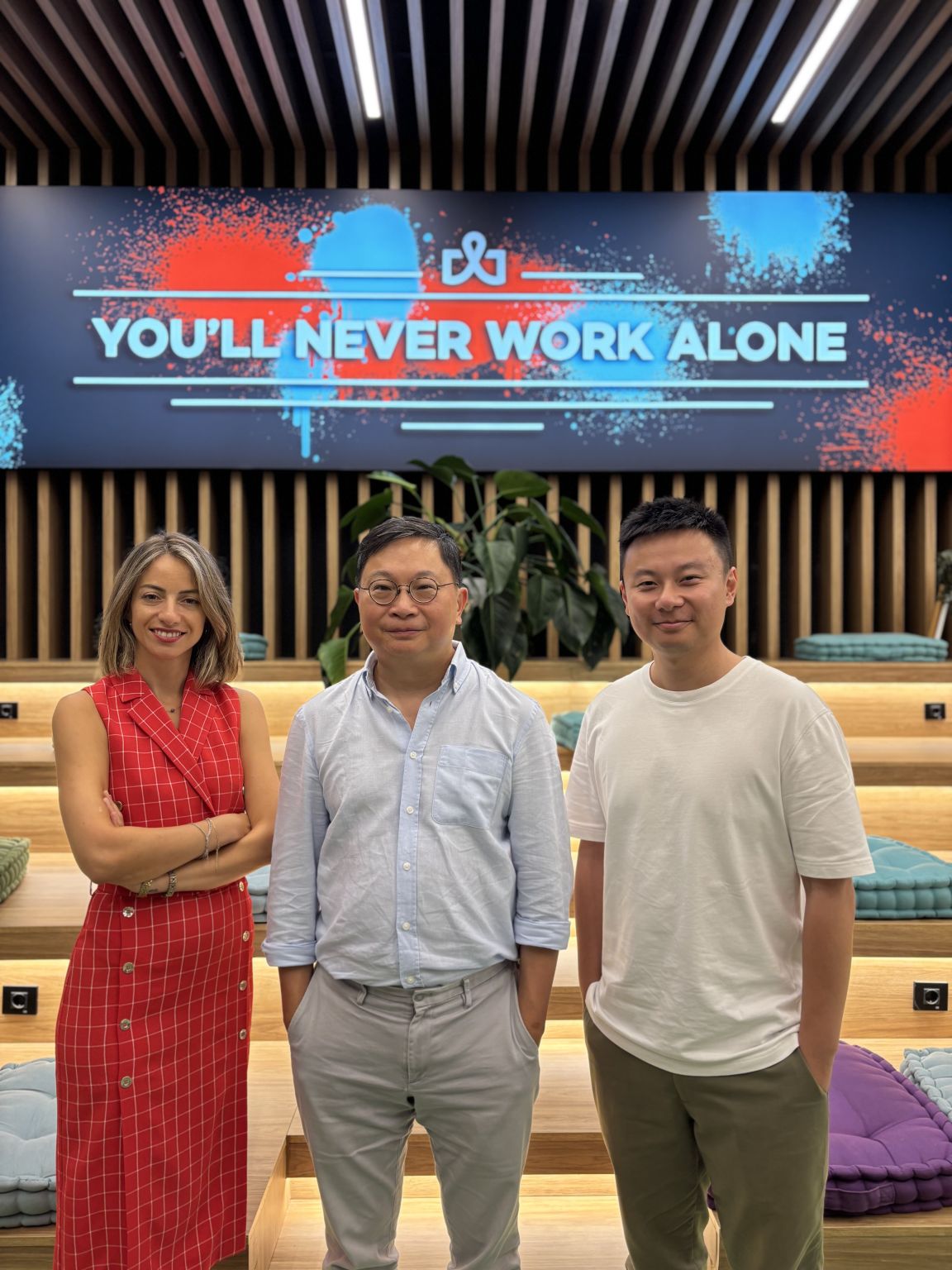
When Paul Loo and Brian Shia visited the Istanbul operation, Işık wrote about introducing them to the city and its market potential. Loo thanked her for walking them through the markets. The exchange makes the local role tangible. A visiting executive sees a place through someone who works there. Streets, customers and conversations give the market a shape that a presentation alone cannot supply.
The two ventures in Işık’s story meet at that practical scale. Someone has made something. Someone else wants it. Between those people lies a sequence of decisions, relationships and movements. A family business makes the sequence personal; a delivery operation makes its coordination the daily job. The jar and the app have different uses. Each eventually brings the same test to the doorstep: did the promise arrive?