A fintech startup can build a working product and still have nowhere useful to plug it in. The bank has its systems. The insurer has its requirements. The founders have a demonstration, a small engineering team and a growing appetite for an actual customer. Fintech Zone Istanbul has made that awkward distance part of its business: putting financial technology companies closer to the institutions, infrastructure and support they need to get beyond the pitch.
Its address helps tell the story. The fintech-focused technopark operates inside Istanbul Financial Center, tying startup development to Türkiye’s ambition to become an international financial hub. But the more revealing detail is in its Fintech Gate program. Before matching startups with corporations, the program asks the corporations to identify their needs and prepare for collaboration. Even the established company gets homework.
That sequence gives Fintech Zone a proposition worth examining. An innovation hub can offer a room, introductions and an encouraging speech. Here, the stated route continues into corporate test environments, pilot projects and commercialization. Whether those steps produce repeatable business is the question that will make the program matter.
The customer on the other side of the API
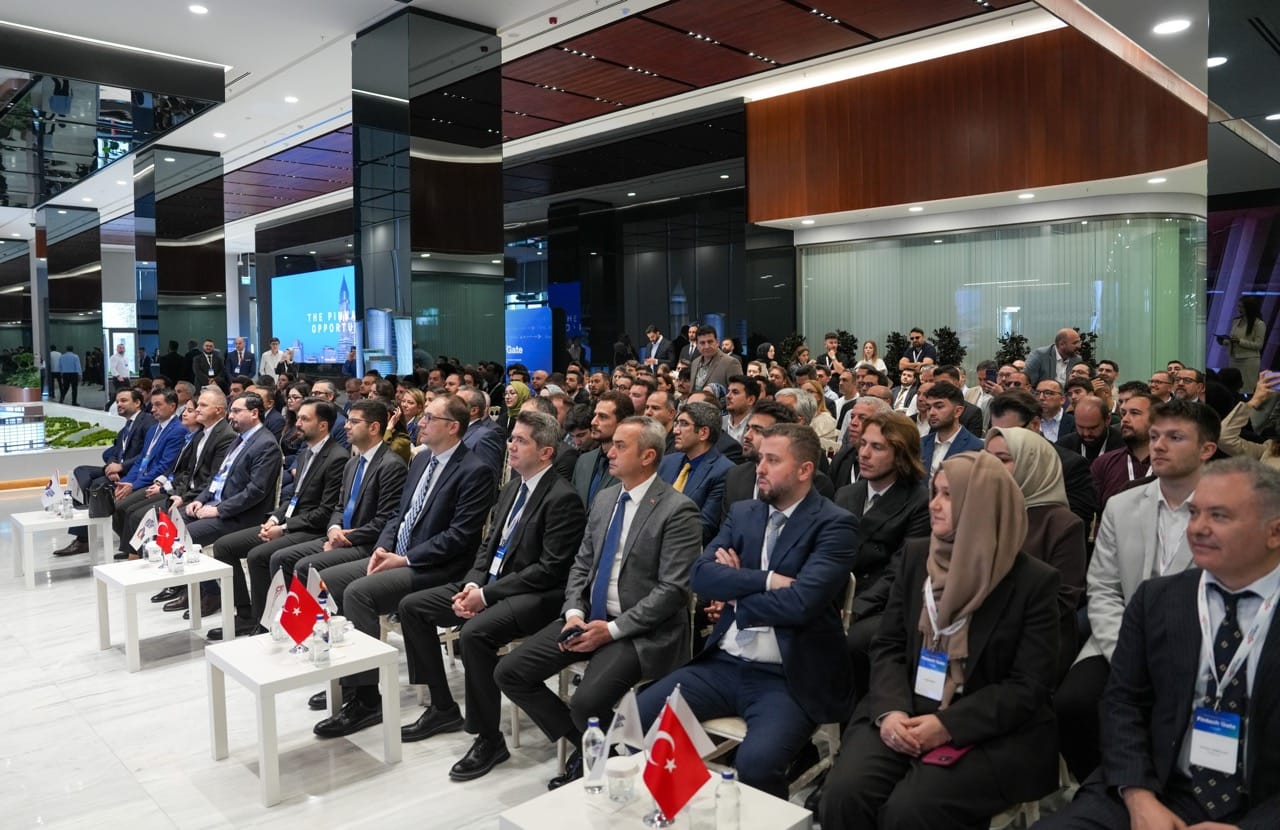
Fintech Gate Istanbul, launched in May 2026 with Istanbul Development Agency support, brings together startups and corporate partners that need financial technology. Its intended users include companies working in payments, open banking, insurance technology, regulatory technology, cybersecurity and embedded finance. Corporate participants can come from banking and insurance, but also from sectors such as retail, e-commerce and defense.
The entry requirements are refreshingly concrete. A startup should have at least a minimum viable product, or an already commercialized product, and a core team capable of developing it and handling sandbox integration. Its business model should support integration with institutional systems and high transaction volumes. A clever slide deck alone does not meet that description.
Corporate partners have requirements too: an innovation strategy or responsible unit, capacity to mentor founders, and an appetite for proofs of concept or potential strategic investment. The program treats institutional readiness as part of the job. That is the distinctive operational choice: ask whether the buyer is equipped to work with a startup before arranging the introduction.
The agency’s launch announcement sets targets of 10 corporate companies and 20 strategic collaborations. Those figures provide a useful standard for assessing progress. A collaboration, however, can cover several stages of work. The commercially interesting progression is from introduction to test, from test to pilot, and from pilot to a relationship both sides want to continue.
Before the handshake, a needs assessment
The published roadmap begins with corporate applications and selection. Next comes an analysis of each institution’s technology and innovation needs, followed by preparation through training and meetings. Only then does the process move to a startup call, strategic matching and a three-party protocol. Training and mentorship prepare founders for integration before they enter partners’ sandbox environments to conduct pilots.
Here, “sandbox” refers to corporate testing infrastructure. The Investment and Finance Office describes secure, API-based environments supplied by partners. That makes the offer specific: an opportunity to develop and test against an institution’s infrastructure. Participation should be understood in those operational terms; the program does not describe admission as permission to conduct every regulated financial activity.
The published schedule places training and mentorship between July and October and a Demo Day in December 2026. Pilot work and commercialization appear as a longer track running from July into February. The overlap is sensible: a team can need technical guidance while its pilot is already underway. The calendar gives founders something more actionable than a promise of eventual exposure.
- 01Define the corporate problem
- 02Match a startup and agree the work
- 03Integrate and test in a partner sandbox
- 04Present results and pursue commercialization
There is a practical lesson here for other accelerators and founders: start with a named institutional need, then organize the introduction around work that can be tested. The model depends on both sides contributing. Without an integration-capable startup team, or a corporate partner willing to run a pilot, the proposed sequence loses the mechanism that makes it useful.
A technopark with an admissions desk
Fintech Zone’s broader offer extends beyond this accelerator. It operates as the brand of İstanbul Finans ve Teknoloji Üssü A.Ş., providing a fintech-focused technology development setting within Istanbul Financial Center. Its public positioning combines R&D support, clustering, sector representation and international expansion. The ambition is to connect institutions that founders would otherwise have to approach separately.
Its technopark application route has five stages: pre-application and an individual meeting; an R&D project application; expert-panel evaluation; an Istanbul Financial Center participant-certificate application; and space allocation with a lease. Activities begin after the required processes are completed. This is a selective project environment with an administrative pathway, rather than an office booking made with a credit card.
Applicants need a fintech project involving R&D, software or technology, and an existing or intended business in the sector. They can apply before incorporating and finish establishing their company during the process. Reviewers consider innovation, the business plan, competitive advantage, financial viability, commercialization potential and sustainability. Technical novelty and a plausible business therefore sit in the same admissions conversation.
That broader route should not be confused with Fintech Gate’s MVP threshold. A founder preparing to establish a company may be a candidate for the technopark application process while still being too early for an accelerator that expects a product and integration team. Choosing the right door matters before spending time on the paperwork.

Free to knock. A lease to move in.
Pre-application is free. Fintech Zone’s FAQ says a subsequent R&D company application may involve a payment. Rent is primarily calculated by area, with the type and location of space, equipment and additional services affecting the charge. Common-area fees reflect shared services and infrastructure. For a prospective tenant, this is an operating-cost decision as well as a startup-support decision.
The offer includes offices accessible around the clock, technical infrastructure, shared social spaces, mentoring, education and support connecting with investment networks and international grant funds. These services describe how Fintech Zone intends to help companies work and grow. Access to a funding network still requires the founder to make an investable case.
Its business model has a visible property-and-services component: allocated workspace, rent and common-service charges. Fintech Gate adds a publicly supported program, with Istanbul Development Agency backing, Istanbul University as project partner, and Ser Danışmanlık and Craftgate listed as participants. The arrangement brings a university, a consultancy and a payments-technology business into the support structure.
Fintech Zone also promotes the conditional advantages available through technology development zone and Istanbul Financial Center frameworks. The application process explicitly includes the participant-certificate stage. For founders comparing locations, the useful calculation is the total package: premises, services, administrative work and incentives applicable to their activity. An attractive address has to earn its place in that calculation.
The export pitch gets a boarding pass
The international ambition has already produced a visible piece of joint activity. At the 2025 Singapore FinTech Festival, the Investment and Finance Office collaborated with Fintech Zone Istanbul on Türkiye’s pavilion. Eight companies featured: Bull Technology, Colendi, Enqura, Insider, Mars Neo, Paywall, Rally and Treasy. They were participating exhibitors; that role should not be confused with tenancy or investment by the hub.
A shared pavilion packages several companies into one national presence. The benefit is a place to demonstrate products and meet international investors and technology leaders. It is also a concrete version of Fintech Zone’s two-way international strategy: helping Turkish companies reach overseas markets while seeking to attract foreign startups to Türkiye.
That outward-facing work continued in 2026. General manager Bilal Benna Haksal attended the Spain-Türkiye fintech bridge event in April. In August, Fintech Zone hosted a Nigerian delegation from finance, academia and information technology to discuss technoparks, entrepreneurship and possible cooperation. These are relationship-building activities, with commercial value dependent on the work that follows.
“scaling, regulatory compliance, and investor relations remain critically important”
Bilal Benna Haksal, general manager, in The State of Turkish Fintech Ecosystem 2025
The network-building also reaches prospective investors. On July 22, Fintech Zone held an online TechInvestor Academy with Startupfon, covering the workings of the startup ecosystem, investment fundamentals, fund management and investment processes. It is a modest but relevant extension of the hub’s role: founders need people on the other side of the table who understand what they are evaluating. Alongside corporate preparation, investor education suggests an approach that works on the surrounding institutions as well as the startup itself. That is an observable program choice, rather than a claim about how employees experience working there.
The useful part is the sequence
Fintech Zone occupies a market with other startup-support options. Dijitalpark Teknokent’s FINEXT offers fintech acceleration; Teknopark Istanbul and Vakıf Katılım have collaborated around financial technology through Cube Ümraniye. Founders therefore have alternatives. Fintech Zone’s particular proposition combines its Istanbul Financial Center setting with dedicated fintech project admission, corporate integration work and international representation.
Its wider roadmap includes eight named clustering programs, from Academy and Forum to Library, Database and ScoreCard. The ecosystem page describes much of this in future-facing language. Fintech Gate supplies the more immediate operational detail: who can join, what partners must contribute, how matching happens and where testing belongs.
For a founder, the action is straightforward. Identify which application fits the company’s stage. Bring a clearly defined technical project, an honest account of integration capacity and a business case for the institution being approached. For an accelerator operator, the transferable idea is equally plain: prepare the corporate partner, specify the need and give the match a test environment. The eventual customer relationship is where the interesting story begins.
Open the right door
Explore the website, technopark application process and Fintech Gate program. Follow updates on LinkedIn, X and Instagram, or browse company news.
Watch: Göksel Aşan discusses Fintech Zone and Istanbul Financial Center Turkish-language interview · February 2025