Selling a software company gives a founder several respectable options. Start another one is among the less restful. Seth Narayanan chose it anyway. In 2008, he led Avalon International into an acquisition by Bluepoint Solutions. In 2010, he co-founded Telliant Systems. The interval included a CTO’s job; the next chapter brought customers, delivery teams, and the familiar obligation to make software do something useful.
There is a pleasing absence of theatrical reinvention here. Avalon served check and payment processing in banking. Telliant would build software for other businesses. The scope changed, but the distance between an idea and a working system remained the territory. Today, alongside running Telliant, Narayanan hosts The Innovator’s Playbook, inviting other builders to discuss their own crossings of that distance. A career spent supplying answers has acquired a public outlet for questions.
An engineer with a second vocabulary
Narayanan studied electrical engineering at the Indian Institute of Technology, Madras, then completed an MBA in Marketing and Information Systems at XLRI Jamshedpur. His education put technical systems and commercial decisions on the same itinerary. The pairing is particularly apt for a software entrepreneur: eventually, someone has to explain both how a product works and why another person should pay for it.
He began as a software engineer at Tata Unisys in India before moving to the United States. His work with Unisys included more than fifteen years of consulting, with a particular concentration on financial services and banking. The early career was therefore rooted in institutions whose software had daily responsibilities, well beyond providing an agreeable demonstration.
That background matters when reading the rest of his career. Banking systems gave him a specific field in which to apply engineering. Business education supplied another set of questions. The later founder would be responsible for delivery and for the organization doing the delivering. The two disciplines had already met on his course list.
The combination also appears in how professional contacts describe him. Thomas Hintz has praised his effort to understand a business partner’s goals. Sean Banks has pointed to his technical creativity and knowledge of transaction processing. Their observations bring the résumé down to the working relationship: a person who has to understand what the customer is trying to accomplish, as well as the system being built.
Before Telliant, the checks had to clear
At Avalon International, Narayanan became founder and CEO of a business making software for check and payment processing. Its products included ImagePoint, a Check21 offering used by banks and financial-service providers. This was software with an unglamorous but consequential assignment: helping the machinery of payments function.
The glamour deficit is part of the interest. A payment system does not become more valuable because its founder gives a charming interview. It has work to perform inside somebody else’s operation. Avalon placed Narayanan in that practical relationship between a software supplier and a customer whose business depended on the result.
In 2008, Bluepoint Solutions acquired Avalon. Narayanan then took responsibility as CTO of the combined organization, overseeing research and development for check-processing and document-imaging products. Selling the business was followed by another technical leadership role. His career continued through the transaction, with a different title and a wider organizational setting.
- EngineeringTata Unisys, then US consulting
- 2008Avalon acquired by Bluepoint
- 2010Telliant’s founding chapter
- 2025The podcast begins
May 2010: starting with a team, not a blank sheet
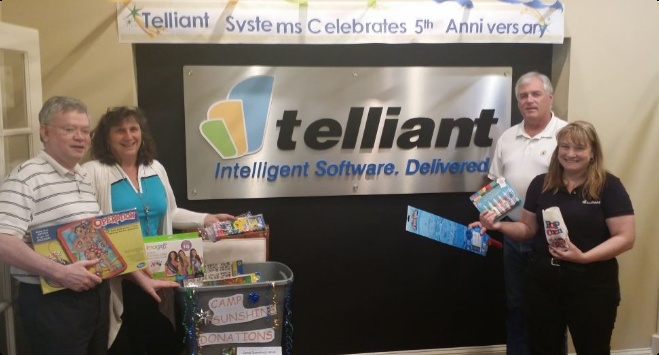
Telliant’s opening chapter included a transaction of its own. On May 14, 2010, the company announced that it had acquired all the operational assets of Thapovan Info Systems, an IT services and software development business based in Iselin, New Jersey. The announcement identified Narayanan as co-founder and chief executive.
It also named P. Vaidyanathan, known as Vaidy, as a Telliant co-founder and its president of global operations. Thapovan brought a delivery team, customers, and an operating history. Those details give the beginning more texture than the customary picture of a lone founder and a very clean whiteboard.
Narayanan’s stated case for the business was practical. Global customers wanted continuing value from outsourcing and offshore services, including “higher quality and lower cost.” It was a commercial promise with two sides that would have to coexist. A low bill becomes less enchanting when the software fails to do the job.
Application development, testing, and implementation were part of the initial service offering. As Telliant developed, its American base and development operation in India gave that cross-border proposition an organizational form. The work required people to translate customer expectations into something a distributed team could build, test, and deliver.
The other Narayanan at the table
Kathleen Narayanan is Telliant’s CFO and co-founder, as well as Seth’s wife. Their working history reaches back to Avalon, where her responsibilities included finances, product development, sales, and customer relations. She also brought her own software and project-management experience from Unisys.
This gives the company story a partnership that a photograph of the CEO alone cannot convey. Engineering and finance appear here as jobs held by two people with a shared business history. Their responsibilities have included the product, the sale, the customer relationship, and the accounts: an extensive list of things that continue to exist after launch day.
When Telliant announced its 2025 Inc. 5000 recognition, Kathleen emphasized financial discipline and sustainable operations. Seth spoke about clients, technology, and “building a culture where talented professionals can thrive.” The two statements place growth beside the organization needed to support it. A business requires both the ambition and the arithmetic.
Two entries in the growth ledger
Telliant first appeared on the Inc. 5000 in 2020, its tenth-anniversary year. It ranked 2,491 and reported revenue growth of 165 percent over the preceding three-year measurement period. The milestone gave a number to the company’s development after its first decade.
A year later, the service offering expanded to include product strategy. Narayanan also described further investment in sales, marketing, and experienced software engineers. The change made room for decisions that precede writing code: what a product should become, and how it should reach a market. Those questions sit comfortably beside his engineering and MBA background.
In 2025, Telliant returned to the Inc. 5000 at number 3,878, reporting three-year revenue growth of 96 percent. These are two distinct reporting windows. They offer useful markers of company progress without supplying an annual account of everything between them.
Company figures for separate three-year periods. Percentages show growth, not revenue totals or annual growth rates.
A microphone for the questions that remain
In June 2025, Telliant announced The Innovator’s Playbook, with Narayanan as host. Its conversations cover product strategy, engineering, leadership, and the passage from a promising technology to a functioning business. The format lets him bring other people’s operating experience into view.
With Rodrigo Senra, a data and AI engineering leader at logistics company Loadsmart, he explored responsible innovation, learning, and the constraints around technical work. Senra’s path through academia, open-source communities, and enterprise software supplied a different route into familiar questions. The guest’s history belonged to the guest; Narayanan’s role was to draw it out.
Gaurav Roy of Accelya brought airline retailing into the conversation. Their discussion addressed open platforms, APIs, and the challenge of changing systems in an established industry. For a host whose earlier work involved banking technology, it offered another setting where technical change has to fit around an operating business.
The range widened again with Mike Sperling of Sperling Interactive, discussing marketing and measurable business results, and Keith McFarlane of Globality, examining innovation inside large technology organizations. Together, these interviews move beyond the software itself to the market, the institution, and the people expected to adopt it.
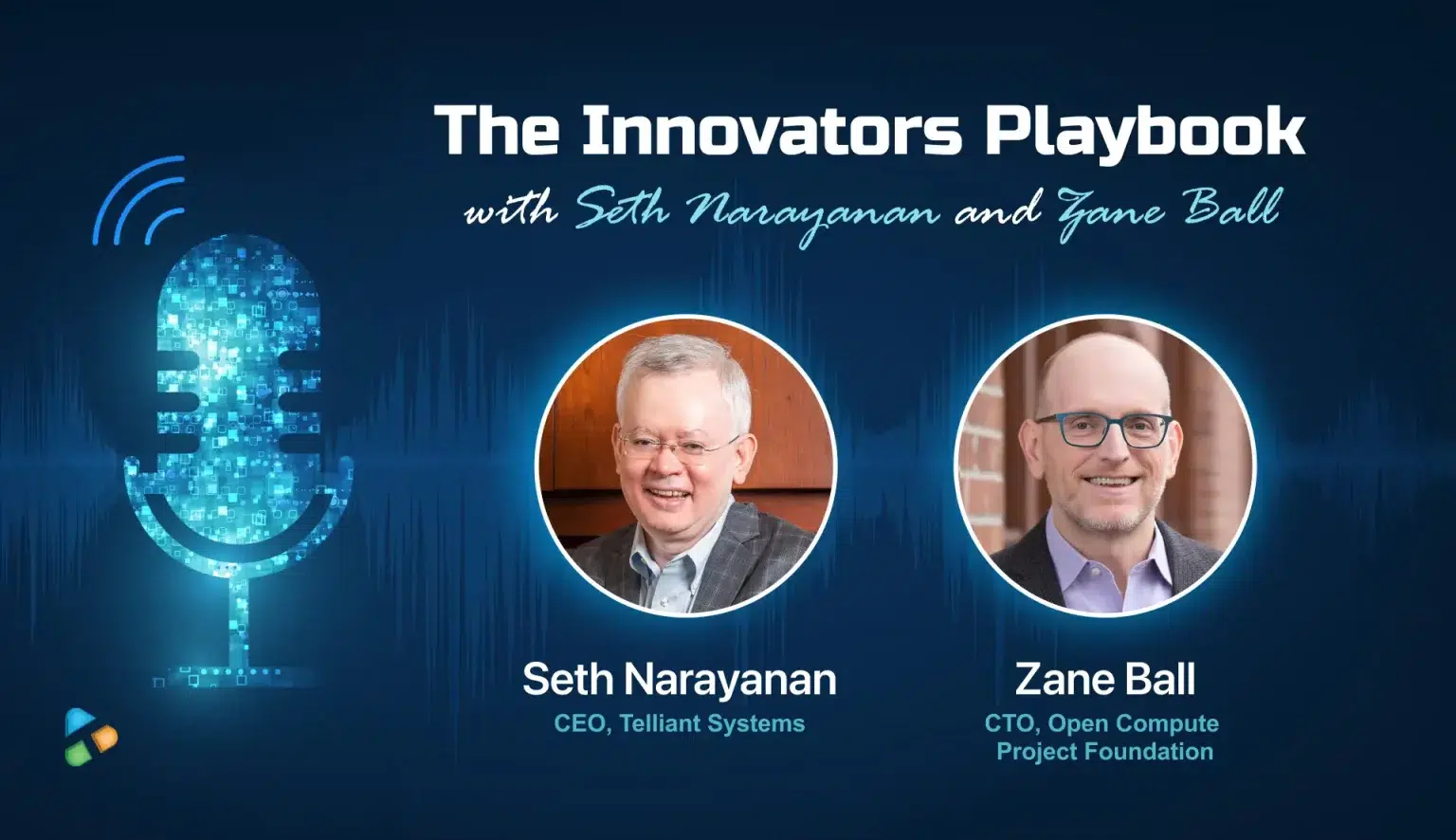
In March 2026, Zane Ball of the Open Compute Project joined him to discuss open hardware and the infrastructure supporting AI. Their conversation included an organizational problem: as teams grow, communication and alignment require more deliberate work. The technology may occupy the announcement; coordination occupies rather more of the calendar.
Narayanan also includes himself among founders who can find it difficult to leave startup mode, wanting to be involved in everything. The admission gives the exchange a personal stake. Here is a founder asking how an organization changes when the habits that suited its beginning become harder to sustain. Ball answers through the mechanics of communication, written objectives, and clear responsibilities. It is a useful moment of candor from the host: building another company still leaves things to learn about running one.
“Money isn’t usually the problem. Focus is.”
Zane Ball, speaking with Seth Narayanan on The Innovator’s Playbook
By October 2026, Narayanan was interviewing Twinkle Johnson about trust, human judgment, and accountability in AI adoption. Her argument included redesigning work rather than simply adding another system to an existing process. It is a current subject with an old business question underneath: what will the organization actually do differently?
The customer still gets a vote
Narayanan’s own public commentary gives that question a commercial edge. Sharing his conversation with Domenic Ravita, he emphasized understanding a specific customer and solving a specific problem before trying to serve everyone. Read alongside Avalon’s banking focus, the observation has a concrete career history behind it. A defined customer has appeared in this story from the beginning.
Outside work, Narayanan lives in the Atlanta area with Kathleen. Both of their sons are Georgia Tech graduates. He enjoys golf and discovering new courses. These details offer a modest view beyond the executive title: family, a local university connection, and a pastime whose scorecard is refreshingly indifferent to anyone’s job description.
His stated plans for Telliant include expanding emerging-technology capabilities and building stronger partnerships. The interviews continue alongside that operating work. After Avalon, after the CTO role, and well into Telliant’s life, he is still dealing with the practical consequences of choosing what to build. The company is different. There are more people at the table, and now a microphone. The customer still gets a vote.
Keep reading. Keep listening.
- Seth Narayanan on LinkedIn ↗
- Telliant Systems ↗ Software services and company news
- Telliant’s people and history ↗
- The May 2010 Thapovan acquisition announcement ↗
- The 2020 Inc. 5000 announcement ↗
- The 2025 Inc. 5000 announcement ↗
- The 2021 expansion into product strategy ↗
- The Innovator’s Playbook episode library ↗
- Watch: Zane Ball on AI infrastructure ↗
- Listen: Twinkle Johnson on people, AI, and trust ↗
- Rodrigo Senra on logistics, learning, and AI ↗
- Gaurav Roy on airline retail and APIs ↗
- Mike Sperling on marketing and measurement ↗
- Keith McFarlane on innovation in large companies ↗
- Career and education profile ↗
- Narayanan on customers and product focus ↗