Drew Edwards remembers the customers standing in the lobbies. They had a check, bills to pay, and a perfectly reasonable objection to waiting for their own money. Years before embedded finance became a conference subject, his business was operating twelve bank branches around Atlanta, serving working-class Latino immigrants. The problem arrived at the counter on paper. Its consequences followed people home.
That memory gives Edwards's career its through line. He founded Ingo in 2001. The company eventually carried check cashing onto smartphones, worked with Visa on getting funds onto prepaid cards, and expanded into payment infrastructure for banks and businesses. The machinery changed considerably. The customer's impatience remained an excellent product specification.
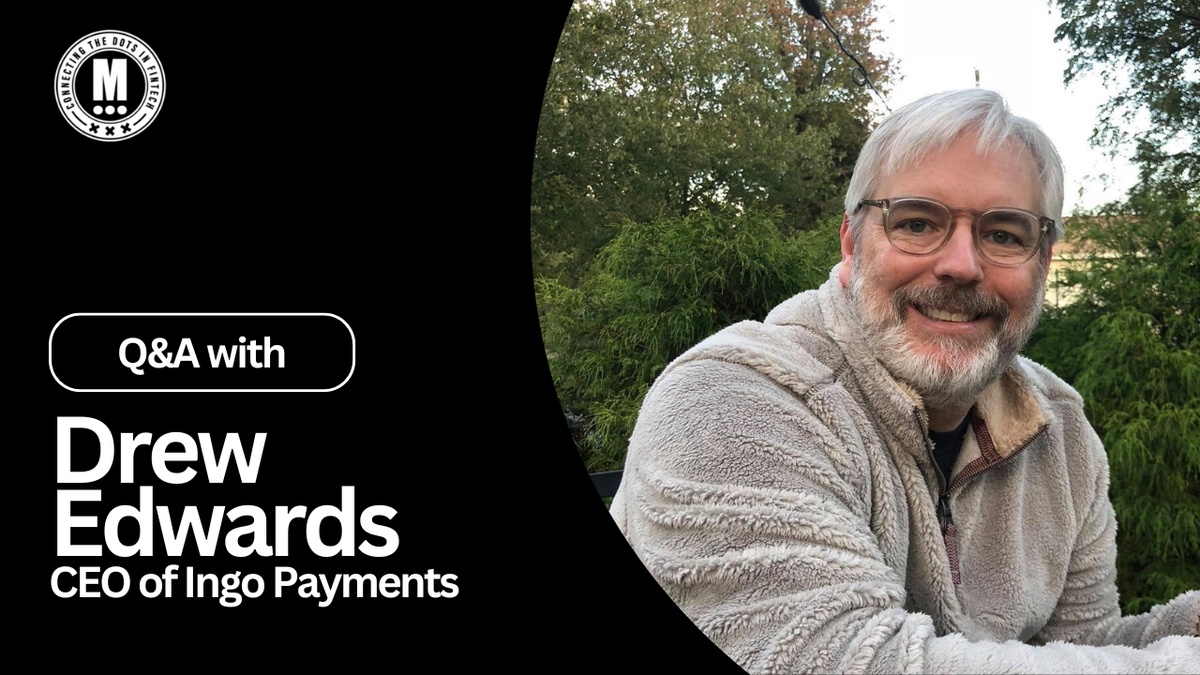
Today, Edwards leads the business behind the Ingo Money and Ingo Payments brands from Alpharetta, Georgia. He talks about risk, ledgers, and account funding with the familiarity of someone who has spent years explaining why the plumbing deserves a budget. Money has a remarkable talent for making supposedly dull subjects urgent.
A banking career with an unexpected flight plan
Banking was not his original ambition. Edwards went to college intending to become a Navy fighter pilot. His working life instead took him into a management training program at the Federal Reserve Bank of Atlanta, then into correspondent banking at The Bankers Bank. He had found a vantage point from which to observe how financial institutions actually operated.
Those early roles matter because his later businesses sold technology into banking rather than approaching banks as an inconvenient obstacle to technology. His professional vocabulary developed around institutions, payments, and the services one bank could supply to another. Long before the fashionable terminology arrived, there was work to do.
Before Ingo, Edwards founded Towne Services and served as its chairman and chief executive. The publicly traded company supplied e-commerce solutions to more than a thousand financial institutions. He also served on the board of Skylight Financial, an early payroll card business. His career already occupied the intersection where a bank's obligations meet a customer's need to get paid.
The education across the counter
In a September 2024 account of Ingo's beginnings, Edwards described customers who needed several things from the same paycheck. Cashing it was only the opening move. They also wanted to pay bills and send money to friends and family abroad. A teller faced the entire sequence, with a person waiting on the other side.
This is a useful antidote to thinking about payments as isolated transactions. A paycheck has a destination beyond the first account it reaches. For the recipient, receiving money and using money belong to the same afternoon. A system that completes its own narrow assignment can still leave the customer with a rather long errand.
Ingo's early branch operations made that sequence visible. Edwards has since returned to it when describing digital money movement: help money enter an account, then help it leave for the purpose its owner intended. His phrase for this is money mobility. The phrase is modern; the demand behind it was already waiting in the lobby.
A photograph of a check becomes a payment
In October 2013, Ingo announced the commercial launch of its mobile remote deposit capture service with Visa, following a beta program involving prepaid card providers. A customer could use a phone to submit a check and receive approved funds on an eligible card. The company was translating a counter service into something that could travel with its customer.
The important work extended beyond taking a legible photograph. Checks introduce uncertainty about whether the promised funds will materialize. Ingo's proposition involved evaluating that risk and making approved money available. Edwards's interest in underwriting was therefore built into the service itself. A handsome interface could not settle that question on its own.
His writing on digital payouts in 2021 widened the argument. Sending money to consumers required reach across the places they actually kept and used it. Checks had an awkward advantage: a business could send one to almost anyone. Digital alternatives had to make recipient choice practical while handling the difficulties behind the screen.
Two names, one business
In January 2024, Edwards introduced Ingo Payments as a brand aimed more clearly at banks and corporations. Ingo Money had become closely associated with consumers cashing checks. The business had expanded, and its name needed help explaining the difference between a familiar service and a broader set of capabilities.
Brand architecture can sound like a problem invented to occupy a meeting. Here it had a practical cause. People looking for help cashing a check and enterprises looking for payment infrastructure arrived with different questions. Edwards explained that the two brands belonged to one company. The distinction let each audience find the relevant door.
The new business-facing identity also made his accumulated banking experience easier to see. Account funding, disbursements, and embedded services share a requirement for reliable operations. Ingo's past did not vanish when its presentation changed. Edwards was putting the older experience to work in a larger range of transactions.
Buying more of the plumbing
The acquisition of Deposits Inc., which closed on August 30, 2024, moved the company further into banking infrastructure. Deposits brought software tools and capabilities that Ingo combined with its payments operations in the Modern Money Stack. The offering included a bank-grade ledger and controls covering accounts, onboarding, and money movement.
The strategic ambition was to connect a payment with an ongoing account relationship. A business paying someone could offer more than a single transfer; a bank could participate in the relationship that followed. Edwards was looking beyond the moment a payment disappeared from the sender's screen to what might happen after its arrival.
In his January 2025 writing, he compared fragmented fintech infrastructure with a delivery network dependent on too many separate operators. His argument favored owning critical capabilities so a provider could take more responsibility for the whole service. Behind the metaphor sat a practical question: when something fails, who can actually fix it?
That same year, he described evaluating the embedded banking market as resembling a firefighter entering buildings others were leaving. The humor had a pointed commercial purpose. Edwards believed experience with banking, compliance, and risk could make the unsettled market an opportunity. His company was choosing to expand where those capabilities would be tested.
“You actually have to get the banking part right.”
Drew Edwards, February 2025
A trophy, then back to work
In June 2025, Ingo received the BankingTech Awards USA award for Best Embedded Payments Solution. Edwards credited the team and used his announcement to describe further work: expanding real-time payment connections, developing issuing capabilities, and giving partners more tools to configure their services. The award supplied a pause, followed by another to-do list.
His connections across traditional banking remained visible too. At American Banker's DIGITAL BANKING event that June, he moderated a discussion with leaders from KeyBank and Pathward about bank-fintech collaboration. It was familiar territory for someone whose career began inside the institutions now debating how to work with technology providers.
The personality that emerges from his public writing is conversational, occasionally teasing, and consistently preoccupied with operational responsibility. He has acknowledged the tension between accommodating clients and limiting a company to what it already offers. In a January 2025 post, he argued that being willing to develop with partners would pay off over time.
When the payment delay reaches the family
Edwards's November 2025 writing supplied a smaller, more personal scene. A family member was considering putting a car repair on a credit card while three payments were still processing. The head of an instant money movement business could recognize the irony without needing anyone to explain it. The family's earned money and the family's available money occupied different schedules.
That account accompanied Ingo's work with PYMNTS Intelligence on the Wage to Wallet Index, examining workers earning $25 an hour or less. Edwards used the project to connect payment timing with household spending. It gave a research framework to a problem he had encountered years earlier across the teller counter.
In a separate late-2025 essay, he described a creative freelancer in his family whose income arrived from projects and consulting rather than a conventional fortnightly paycheck. That rhythm helped explain his interest in payouts as the basis for banking relationships. A worker with several sources of income may have several paydays, each carrying its own practical urgency.
By January 2026, Edwards was explicitly returning to the people in those Atlanta lobbies. He wrote that he had underestimated how pressing workers' need for access to earnings would become. His observation allowed the career story to circle back without pretending the work was finished.
“The timing of pay is as critical to the worker as the amount.”
Drew Edwards, January 2026
The next account has to work immediately
In February 2026, Ingo announced a partnership with Elektra USA to let U.S. customers fund Elektra Go accounts in real time from debit cards. The stated aim included helping customers send remittances sooner. For Edwards, the connection to Ingo's beginnings is easy to follow: money coming in, money needed elsewhere, and someone who would prefer to get on with the day.
A quarter-century after founding Ingo, his subject remains unusually consistent. The delivery mechanism has acquired software, brands, partners, and more elaborate diagrams. The original customer would recognize the request immediately. Make the money usable. The future of finance can keep its elaborate invitation; people still have bills to pay.