Take a photograph of a check. The phone can capture the ink, the signature, the amount. It cannot tell you whether the money will still be there when somebody tries to collect it. That small distinction explains much of Ingo Money. The visible product is an app. The consequential decision happens behind it: whether to let someone spend money before the uncertainty has gone away.
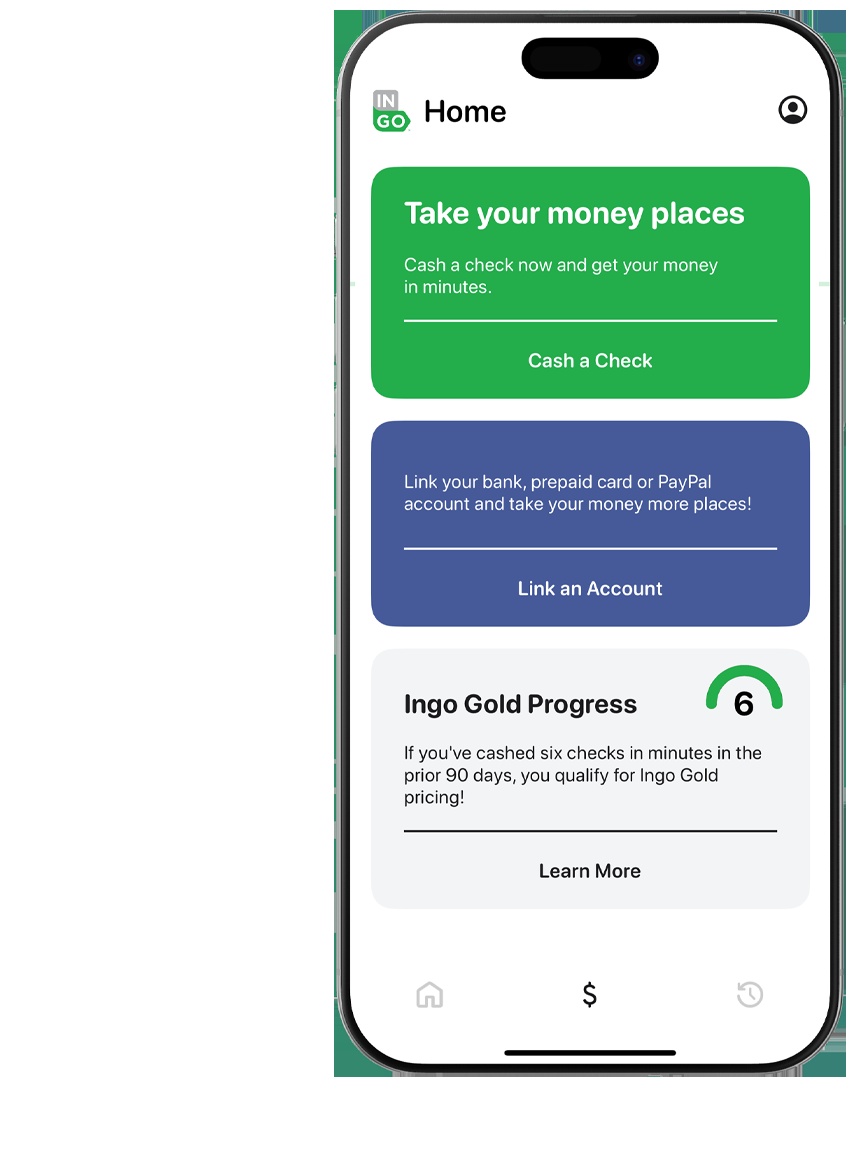
- Consumers photograph checks and choose paid expedited funding or free 10-day funding.
- Ingo Payments supplies businesses with payouts, account funding and banking software.
- Its recurring proposition: pair payment delivery with decisions about risk.
01 The photograph is the easy part
Ingo’s beginnings were considerably less virtual. Founder Drew Edwards has described operating 12 bank branches serving customers around Atlanta. People brought checks and needed usable money. Seen from the teller’s side, the problem was immediate and practical. A balance that becomes available later does little for an expense due today.
The consumer service reached commercial launch in October 2013. By May 2014, Ingo announced more than 100,000 enrollments. Its app let customers turn approved checks into funds without visiting a counter. Financial inclusion acquired a very ordinary interface: a camera, a check and somewhere to send the proceeds.
Today, users can connect eligible bank, prepaid and PayPal accounts. Checks are reviewed before funding. Under the service terms, Ingo assumes collection losses on approved, funded checks, with exceptions for fraudulent conduct. Sunrise Banks is the named bank provider alongside Ingo Money. That allocation of responsibility is central to what the customer buys.
Snap.
Request.Approval happens behind the screen.
02 A price tag on the clock
The trade-off is refreshingly measurable. Standard app terms list a 2% fee for payroll and government checks with pre-printed signatures, and 5% for other accepted checks. Both have a $6 minimum. On a $500 check, those fees are $10 and $25 respectively. The same approved amount can therefore produce rather different spending money.
Customers who can wait have another choice: no Ingo fee for approved funding in ten days, provided the check is not returned unpaid during that period. Frequent eligible users can qualify for preferred pricing. The useful comparison is the amount received and when it becomes available, including any separate account charges.
“Minutes” also has conditions. Approval can take up to an hour, and the receiving institution controls final availability. The consumer service excludes New York. A declined check remains a declined check. Those qualifications belong in the buying decision, especially when the reason for using the service is an urgent bill.
03 Why a check company learned to send money
Once Ingo could assess a check and deliver its value electronically, another customer came into view: the business writing it. Why mail paper to someone who would promptly photograph it? Ingo could offer that business a way to send funds to a destination the recipient selected.
The 2014 agreement to acquire Fuze Network added card-disbursement technology. Ingo described Fuze’s reach as more than one billion bankcards. That figure measured potential destinations, rather than people using the service. By 2016, Ingo’s company timeline records a disbursement API platform for banks and businesses.
Conceptual view of the expanded platform. Available routes and guarantees depend on the product.
Funding helped finance the expansion. In April 2015, Ingo announced $13.5 million in additional growth capital, naming Spring Capital, CNF Investments and MissionOG among its investors. More than 120 prepaid programs had adopted its service. The company was selling infrastructure through other financial products as well as through its own app.
That breadth eventually required a second shop window. In January 2024, Ingo introduced the Ingo Payments brand for business customers. Edwards later explained that consumer check-cashing searches were burying the enterprise offering. “It’s one business, it’s one company,” he said in a podcast interview. The branding followed the customer’s vocabulary.
04 Buying the middle
In August 2024, Ingo closed its acquisition of Deposits, a banking software company. The addition supplied account and ledger capabilities for its Modern Money Stack. A payout could now lead into an account relationship, with money coming in, being recorded and moving out again. The acquisition announcement did not disclose a purchase price.
“You can’t outsource the core responsibilities of banking.”Drew Edwards · on the Deposits acquisition
The accompanying risk products are specific. Check Alert supplies fraud signals, including duplicate-deposit information, to customers’ underwriting systems. Check Protect supplies deposit risk scores. An October 2024 Sardine partnership extended risk-managed funding across cards and ACH, with an optional fraud guarantee. Customers can choose different combinations of information, decisions and responsibility.
The 2025 partnerships show where that infrastructure fits. ACI Worldwide announced digital disbursements for Speedpay clients. Ingo selected Marqeta as issuer processor for its expanded banking platform. Self Financial announced Ingo-powered push-to-debit delivery for Self Cash advances. Enterprise pricing comes through commercial agreements; the consumer app’s fee schedule cannot price those integrations.
05 The useful thing to copy
A builder can borrow Ingo’s sequence: find the moment money becomes useful, identify the uncertainty delaying it, then design delivery and risk controls together. Competing approaches include ordinary bank deposits, retail check cashers and enterprise payout processors. Their appeal depends on cost, timing, destination coverage and who bears a loss.
There is a caution inside Ingo’s experience, too. Edwards has described losses involving customers who first established a record of good transactions. Familiarity does not settle the next payment. Ingo’s proposition depends on continuing to make that judgment well. The phone takes the picture once. The business has to keep deciding.