Before Dwolla became a payment API, it was one man's invoice-induced grudge. Ben Milne ran an Iowa company that built enormous loudspeakers. The business sold enough equipment to rack up roughly $50,000 a year in card interchange fees. He did what any annoyed speaker maker with a software-minded partner might do: in 2008, he started a payment company with Shane Neuerburg.
The pitch had the satisfying neatness of a diner menu. Transfers under $10 were free. Anything larger cost 25 cents. No percentage, no math, no matter how large the payment. The name mashed together "dollar" and "web." Dwolla was going to build a network outside the card system, convince consumers and merchants to use it, and make expensive interchange look faintly ridiculous.
The price was memorable. The habit was harder.
Twenty-five cents was not the moat
By 2013, Dwolla had real evidence of demand: about 250,000 accounts, an annual processing run rate above $1 billion and a $16.5 million Series C led by Andreessen Horowitz. But the useful signal was hiding inside the volume. Shoppers were not clamoring to learn a new way to pay at retail. Large organizations were using the network to replace checks and push money to many recipients.
“We found that retail is a really hard place to convert users in terms of getting them to pay with another payment form.”Ben Milne, speaking to TechCrunch in 2013
That was what failed first: not the technology, and not necessarily the price, but the coordination problem. A consumer payment network needs both sides to show up. A payroll company, government department or marketplace can make one integration and create thousands of transactions. Dwolla saw one-to-many flows growing faster than checkout adoption. The boring behavior was the better business.
A visible consumer network. Free under $10. Ask people to choose Dwolla.
Custom-priced infrastructure. Several bank rails. Let the client's brand take the credit.
Follow the checks, lose the logo
The change took years, which is how consequential pivots usually behave. In 2014, Dwolla began leaning beyond consumers and mobile payments. In November 2016, it removed its iOS, Android and Windows apps from stores and retired consumer-facing tools including Forms and Hub pages. The API and business transactions kept running. In early 2017, a $6.85 million funding round arrived with a relaunched white-label product called Access API.
The company's explanation was disarmingly plain: brands like their own names. A marketplace does not want to send a seller out to create a relationship with its payment vendor. It wants payouts to feel native. Dwolla stopped asking to be the destination and became a component. Its customer's interface stayed in front; Dwolla handled bank accounts, transfers, webhooks, returns and records behind it.

That move also clarified the customer. Today's Dwolla is built for platforms and enterprises with meaningful U.S. bank-payment volume: an accounts-payable product paying vendors, a lender disbursing and collecting loans, a property platform moving rent and deposits, an insurer reimbursing claims, or a marketplace paying sellers. It is not a general checkout suite. Cards remain somebody else's specialty.
One API, four clocks
Moving money is the simple phrase for a messy job. Standard ACH is inexpensive but works on a slower schedule. Same Day ACH compresses the wait. The Clearing House's RTP network and the Federal Reserve's FedNow service operate around the clock and can make funds available within seconds at eligible institutions. Each rail has its own reach, rules, messages and failure modes.
Dwolla's rail cabinet
Dwolla's product is the normalized layer above that cabinet. A developer can create customers and funding sources, verify bank accounts, initiate transfers, receive status webhooks and reconcile results through one API pattern. The Mass Payments endpoint accepts up to 5,000 payouts in one request. Dwolla Balance can hold funds through financial-institution partners. Dwolla Connect serves companies that retain an existing banking relationship. Open-banking integrations with Plaid and MX can verify accounts and retrieve balances without passing raw bank credentials around.
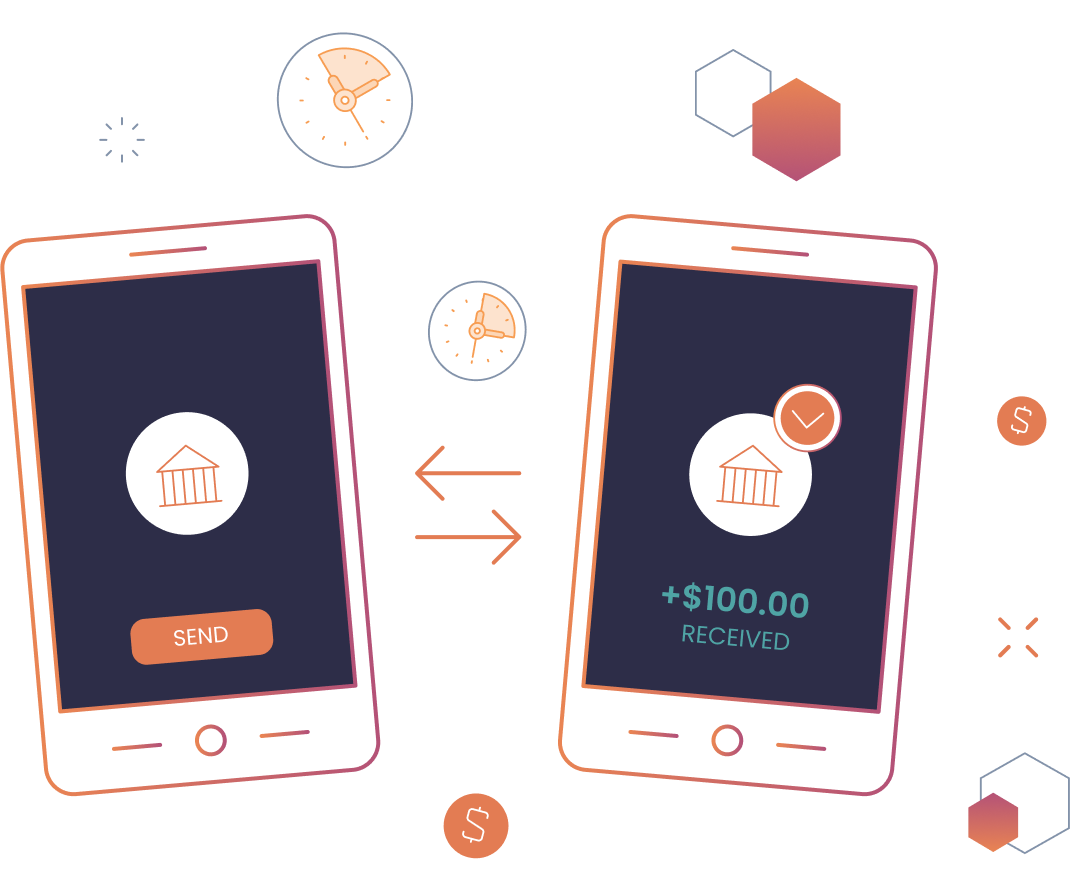
In 2025, the company added FedNow alongside RTP. Its orchestration checks an account's eligibility and selects an available instant rail, while keeping the developer-facing processing channel consistent. That is a small technical detail with a large commercial point: a buyer is paying to maintain fewer integrations and fewer exception playbooks.
The business lives in the exceptions
Dwolla no longer publishes a cute universal fee. Pricing is negotiated around volume, rails and integration needs. The model is enterprise software plus transaction economics, sold with a sandbox, documentation, integration help and ongoing support. That makes comparisons slippery. Stripe offers a broader payments bundle; Plaid Transfer, Modern Treasury, Moov and Sila overlap in bank movement or orchestration; a direct bank connection can be cheaper when the flow is simple and stable.
Dwolla's case is strongest when the money flow is central to the product and ugly enough to deserve a dedicated layer. The API call is not the scarce part. Handling a return, matching a payment to a ledger entry, proving who owns an account, tracing a payout and preserving a consistent customer experience are where teams lose afternoons.
lower transaction costs reported by an AP platform
less bookkeeping time in the same case study
cost savings reported by a pet insurer moving off checks
Company-published case-study results. Outcomes depend on the customer's previous process, volume and implementation.
Routable, an AP and AR automation platform, offers the cleanest illustration. Its Dwolla integration replaced more than 400 manual entries and 250 mailed envelopes per month for customers, according to the case study. BasicBlock uses instant transfers to pay truck drivers faster. Branded Research says Dwolla's Plaid integration reduced maintenance complexity. These customers are buying fewer handoffs, not a prettier pay button.
Trust, after a public miss
A payment company's history should not be told only in product launches. In March 2016, the Consumer Financial Protection Bureau accused Dwolla of misrepresenting its data-security practices. The agency said some sensitive data was not encrypted at rest, applications had been released without adequate security testing and public claims exceeded actual controls. Dwolla paid a $100,000 civil penalty and agreed to improve policies, training, testing, risk assessments and audits.
There was no alleged breach or identified consumer loss in the order. The problem was the gap between what Dwolla said and what it had implemented. For founders, that distinction is not an escape hatch; it is the lesson. Security adjectives are claims. "Safe," "encrypted" and "industry-leading" create an evidence burden every bit as real as an uptime promise.
The timing makes 2016 the company's genuine reset: the consumer surface went away while the infrastructure company had to become more disciplined about the surface it could not hide - trust. Dwolla now advertises tokenization, monitoring and SOC 2 Type 2 and SOC 3 reporting. The public penalty remains the more useful artifact because it shows the cost of letting marketing get ahead of operations.
The buyer wanted the plumbing
On May 19, 2026, embedded-payments provider NMI acquired Dwolla. The price was not disclosed. NMI brought merchant onboarding, card acceptance and lifecycle management. Dwolla brought account-to-account payments, open banking, instant rails, payouts and more than 400 customers. The combined companies said they process close to $700 billion in annual transaction volume.
It is a tidy ending to the pivot. Dwolla once tried to stand next to card networks at the consumer checkout. Eighteen years later, a card-oriented infrastructure company bought it precisely because bank money movement filled a hole in a wider stack. CEO Dave Glaser stayed to support integration and continuity. The brand now appears as "Dwolla by NMI," and existing customers continue to use the product.

What to copy - and where it breaks
The copyable move is not "pivot to APIs." It is more specific: separate stated demand from behavior that produces volume. Dwolla's early story was cheaper retail payments. Its transaction pattern said check replacement, payouts and third-party platforms. Management followed the pattern even though doing so removed the app, changed the buyer, lengthened sales cycles, replaced transparent pricing with contracts and made the brand less visible.
The Dwolla test
- Find the workflow customers repeat without being reminded.
- Measure where one integration creates many transactions.
- Let customers own the surface if your advantage is underneath it.
- Price for operational complexity, not only for the API call.
- Audit every trust claim against the control that proves it.
The model does not travel everywhere. Low-volume startups may not justify custom enterprise pricing or a long sales process. International flows need capabilities beyond Dwolla's U.S. bank focus. Consumer brands seeking a ready-made wallet need a different product. Card-heavy commerce still needs authorization, chargeback and acceptance tools. And if a company's ACH flow is simple, predictable and supported well by its bank, adding another platform can create cost rather than remove it.
But under the right conditions - high volume, multiple money flows, real reconciliation pain and a product team that wants payments embedded rather than advertised - Dwolla offers something useful: fewer ways for the plumbing to become the product. The logo disappeared. The lesson did not.