Before Moov became a payments business, Wade Arnold had acquired an education in repetition. In his account of the company’s origins, he recalled connecting to 42 banking cores. Forty-two variations on getting financial systems to cooperate. Eventually the useful question changed: what would you build if you could stop doing the same integration work again?
- One platform connects payment collection, wallets, payouts, and virtual cards.
- Its buyers include software platforms, lenders, and financial institutions.
- The commercial service has a $500 monthly minimum. Open-source libraries are a separate proposition.
Forty-two ways to learn the same lesson
Arnold and co-founder Bob Smith founded the company in 2018, following open-source work that began in 2017. The early object was wonderfully specific: software for creating and validating Nacha files, the instructions used in ACH payments. It was the sort of problem every financial developer needed solved and few customers would ever notice.
That origin explains the company better than the usual language about disruption. The obstacle was accumulated integration work: deciphering formats, connecting systems, and handling details that did little to distinguish the finished product. A shared library made one piece reusable. A payment platform could carry the idea further.


Follow the dollar, not the button
A checkout button shows the customer one action. Behind it, a business may need to collect money, record a balance, deduct a fee, and send the remainder somewhere else. Each step introduces another opportunity for the payment and the business’s understanding of it to drift apart.
Moov connects those steps. Its API supports card and bank payments, wallets with transaction histories, payouts, and virtual card issuance. Direct connections to payment networks sit beneath the interface. Drops, its prebuilt components, collect sensitive information and handle onboarding inside a customer’s product. Data Sync moves records into a warehouse for analysis.
The balance sheet behind the button.
There is a useful distinction here. Downloading Moov’s Apache-licensed ACH code gives developers a reader, writer, and validator. It does not give them the hosted platform’s processing service. The commercial business adds operational infrastructure around moving money. Confusing those two products would make both the engineering plan and the budget look easier than they are.
The bank wants its customer back
Moov’s audience includes companies whose main product is something else: lending software, construction tools, transportation systems. Its website displays customer logos including LoanPro, Valon, Trimble, and Super Dispatch. Their common need is to make payment activity fit the work users already do.
Consider Canopy Servicing. In February 2025, it announced Canopy Repay with Moov, bringing repayment processing together with loan servicing. The stated targets were specific: simpler workflows, fewer dropped or timed-out transactions, and current loan and payment information in one dashboard. Those were announced aims, rather than published measurements of improvement.
Jack Henry provides another route into the market. Its September 2024 collaboration with Moov proposed payment acceptance and reconciliation through community and regional financial institutions. The attraction for a bank is straightforward: a small business can take payments and manage the proceeds closer to its existing banking relationship. Distribution matters as much as the API.
“The Visa Everywhere Initiative opened doors that a year-old company could never have imagined.”
Wade Arnold · quoted by Visa
Moov won that competition globally in 2021. Visa subsequently participated in its $45 million Series B, announced in January 2023 and led by Commerce Ventures. Alongside the earlier seed and Series A, those announced rounds totaled $77.5 million. Building connections and operating payment infrastructure requires a substantial balance sheet of its own.
The bill has a floor
The published standard plan starts with a $500 monthly minimum. Next-day ACH credits cost 25 cents; same-day ACH costs 40 cents. Instant payouts carry a 0.95 percent fee, bounded by a 50-cent minimum and $5 cap. Verification, wallets, and other services introduce further charges. Larger programs can negotiate custom pricing.
That floor changes the calculation for a small experiment. A team processing little money may struggle to justify it. A platform with complicated flows should compare the full cost of its alternatives, including separate integrations and reconciliation work. Stripe Connect, Adyen for Platforms, and Dwolla overlap with parts of this territory. The relevant comparison starts with the actual funds flow.
The breadth also creates a buying decision. A lender might value repayment-specific interchange programs; a marketplace might care about allocating funds among several parties. Moov’s fee plans let software partners set prices for their own accounts, making payments a possible revenue stream as well as an expense. That flexibility needs deliberate design.
The operational questions remain stubbornly concrete. Who answers a declined payment? What happens when a bank transfer returns? Is a recipient eligible for the chosen rail? Moov supplies tools for these situations, but the product team still has to decide what users see and what the business promises. Faster settlement cannot fix an incorrect destination.
The debit card was there all along
In September 2026, Moov introduced Moov Money with Visa and Mastercard infrastructure. Its premise: senders and recipients need not share a payment app when an eligible debit card can identify the destination account. Jack Henry’s Banno platform supplies an initial distribution channel.
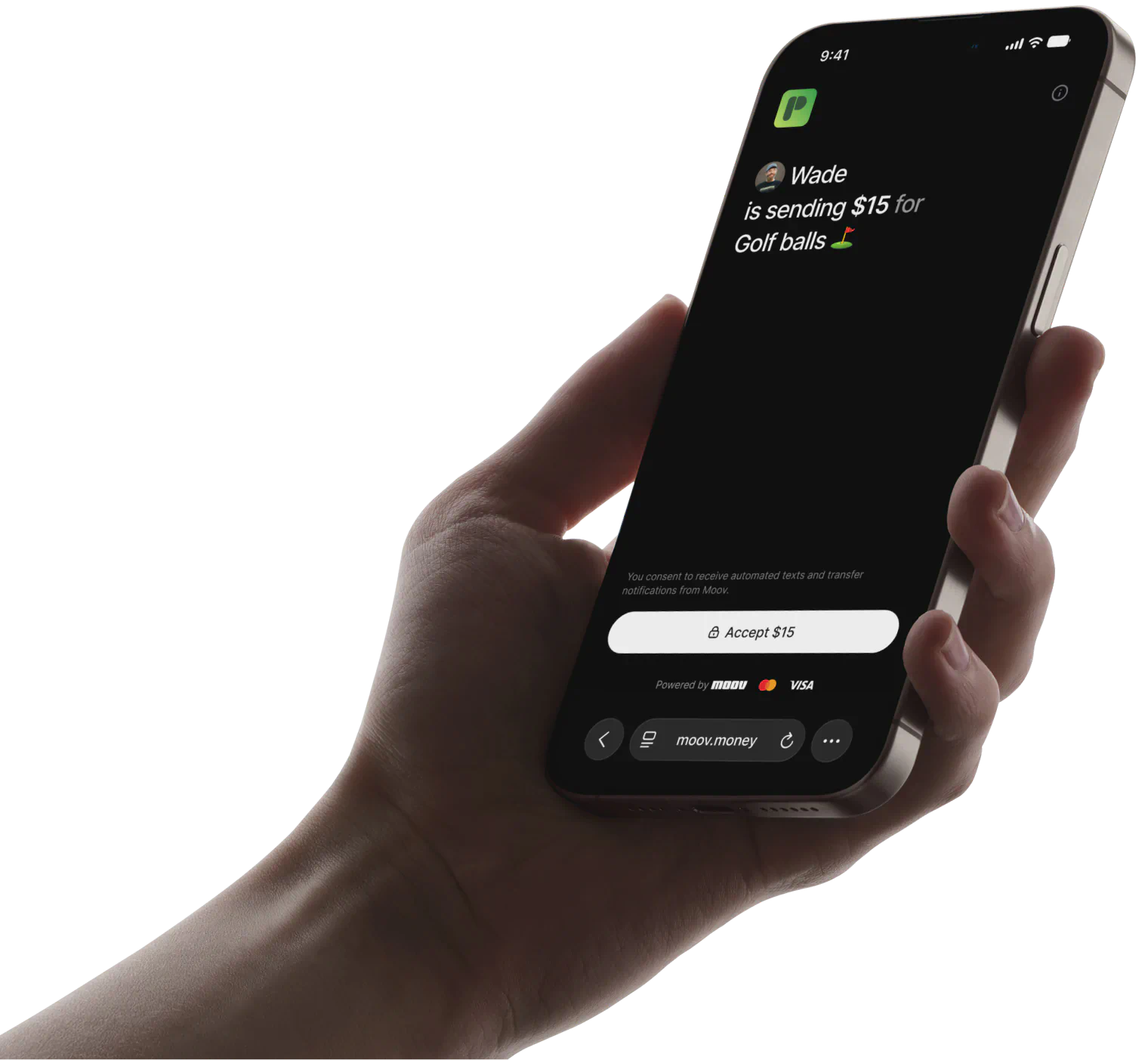
This remains a domestic U.S. service. Sending requires a participating institution; receiving requires an eligible destination. Payment timing depends on the institution and method. The promise is less ceremony around payment, with the financial institution keeping its customer relationship.
Copy the question
For builders, the transferable lesson is practical: map the money before choosing the interface. Name every recipient, permission, balance, and exception. Moov’s quick-start documentation warns that transfers need enabled capabilities and accepted terms. A neat front end cannot substitute for an account that is ready to transact.

Moov’s own culture gives the approach another outlet: a fully remote team, public code, and fintech_devcon, a developer gathering that excludes sales pitches. The interesting habit is making difficult knowledge reusable. Start with one stubborn file format. Keep asking which piece the next builder should not have to rebuild.