In 1967, Serge Kampf opened an information technology business in a two-room apartment in Grenoble. The address was provincial. The ambitions were less so. Within eight years, the enterprise he founded had a presence in 21 countries. A little office had acquired a rather inconvenient relationship with geography.
Kampf had come from selling computers at Bull. He understood a question that could disappear beneath the excitement surrounding the machines: who would help a business make use of them? He built Sogeti around technical assistance, organizational advice and close relationships with clients. Buying a computer was one transaction. Learning to run a company with it was another, potentially much longer, conversation.
His story takes place between two very different kinds of room: the office where acquisitions and control were negotiated, and the rugby gathering where friendship could lead to a bill being quietly paid. The same preference runs through both. Kampf wanted room to act, and people he could count on beside him.
A salesman’s route into computing
Born in Grenoble on 13 October 1934, Kampf studied law and economics. His professional route took him through the telecommunications administration in Paris and then into Bull. This was a commercial education in an industry still working out what its customers would need. He approached computing from the customer’s side of the desk.
That distinction mattered. A manufacturer had a machine to sell. A services business could begin with the organization buying it: its work, its difficulties, its employees. The opportunity lay in all the human arrangements around the equipment. Kampf’s company would combine knowledge of technology with knowledge of how businesses functioned.
On 1 October 1967, he founded Sogeti with three former Bull colleagues. Its apartment office is a pleasingly ordinary beginning for a company associated with large corporate contracts. There was no need for the premises to resemble the eventual enterprise. There was, however, a need to persuade a client that a small team could be trusted with consequential work.
The founder was a salesman among competitors often established by engineers or technicians. Grenoble also placed him outside the Paris setting of much of the industry. Neither fact supplied an automatic advantage. Together, they gave the venture a different starting position: fewer reasons to take the established way of doing things for granted.
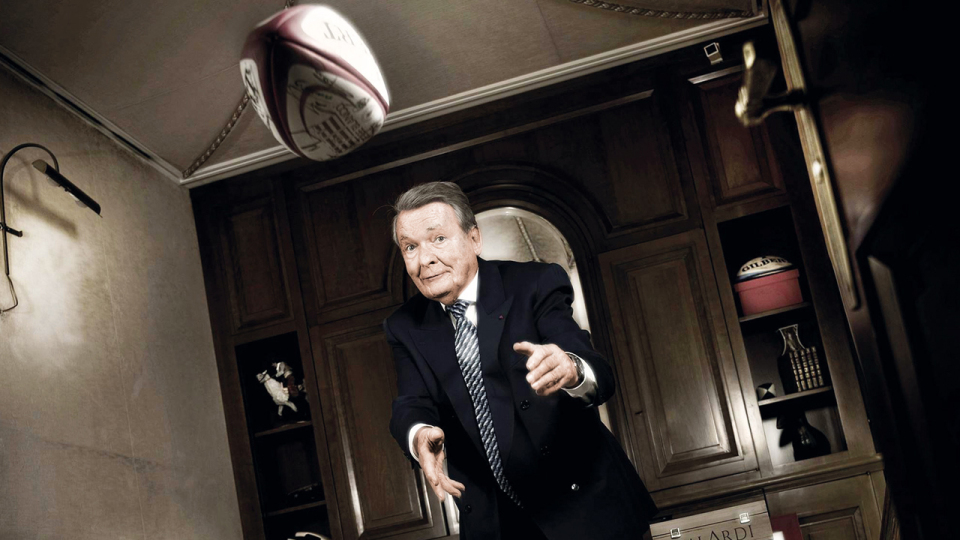
The name became a record of the deals
Sogeti’s expansion soon required more than new contracts. Kampf bought into CAP in 1973 and acquired the American Gemini Computer Systems in 1974. By 1975 the business was called CAP Gemini Sogeti. The name read almost like a receipt: evidence of the companies brought together to make the next version possible.
Acquisitions changed the map as well as the letterhead. They offered established teams, client relationships and a way into countries where building from scratch would take time. A founder could have a global ambition in an afternoon. Assembling an organization capable of delivering it required other people’s experience, and a willingness to join their histories to his own.
The Paris stock-market listing followed in 1985; admission to the CAC 40 came in 1988. Those dates mark the distance from the apartment without explaining away the work between them. A public company has shareholders to answer to, financial expectations to meet and a larger audience for every error. Independence grows more complicated as the company grows more valuable.
Later purchases widened the consulting business, including United Research and the Mac Group in the United States, and Bossard in France. The acquisition of Ernst & Young’s consulting business in 2000 added another substantial chapter. The familiar Capgemini name eventually emerged from this succession of combinations. A short name can contain a long negotiation.
Freedom came with a capital requirement
Kampf’s attachment to independence was deeply personal. Yet there was a practical limit to how far a growing international group could be financed around its founder. In 1996, under pressure from fellow major shareholders CGIP and Daimler-Benz, he accepted a restructuring that merged the holding companies through which he had retained majority control into the listed business.
He also committed 300 million francs personally to a 2.1 billion franc capital increase. The headquarters moved from Grenoble to Paris. These were substantial concessions for someone whose company had been so closely tied to his own authority and home city. The business needed resources beyond those its original structure could comfortably supply.
By May 1996, the group employed 25,000 people and had annual revenue of approximately €2 billion. Those figures give the ownership decisions their proper weight. Kampf was negotiating the future of a sizeable employer, with interests and obligations extending well beyond the preferences of the person who had started it.
There is an instructive tension here. Freedom for a founder can mean keeping control. Freedom for a company can mean acquiring the means to develop beyond that founder’s financial reach. His career required him to live with both meanings. The apartment had been easier to govern.
A card player’s sense of proportion
For all the scale of the enterprise, some of its identifying choices were delightfully small. Kampf had played bridge as a student. The ace of spades became the company’s emblem, carrying a private enthusiasm into public corporate life. It was an unusually personal contribution to a visual identity that would travel much farther than a card table.
The original colours came with an economical joke. After reading about the substantial sum the oil company Elf had spent explaining its red and blue identity, Kampf adopted the colours for his own business. The reported cost was 50 million francs. He enjoyed the saving. Corporate symbolism had found a customer unwilling to pay twice for the explanation.
The anecdote helps give texture to an otherwise imposing collection of titles and transactions. Here was a founder who could appreciate a symbol and also find the expense surrounding it faintly ridiculous. In 2017, after his death, the company introduced a handwritten wordmark based on his signature. His handwriting joined his card suit on the corporate stationery.
Capgemini continues to identify these as its core values.
There was always another team
Rugby gave Kampf an outlet for loyalties that did not need to fit a corporate chart. He supported Grenoble and Biarritz, helped clubs including Lourdes, and became honorary president of the French Barbarians. The relationships connected him with figures such as Serge Blanco and Jean-Pierre Rives. His business life and sporting life shared people as well as vocabulary.
One story begins after France’s victory over Australia in the 1987 World Cup semi-final. Kampf paid the team’s restaurant bill without making himself the occasion. When coach Jacques Fouroux learned who had done it, he invited him to join the players. It is a good entrance to a social circle: arrive by settling the account, rather than delivering a speech.
The assistance could be more consequential. In 2011, he contributed €500,000 to help Bourgoin-Jallieu through a financial crisis. His rugby patronage extended to helping players establish businesses or shops. For the recipients, the important detail was presumably less the patron’s philosophy than the fact that useful help arrived.
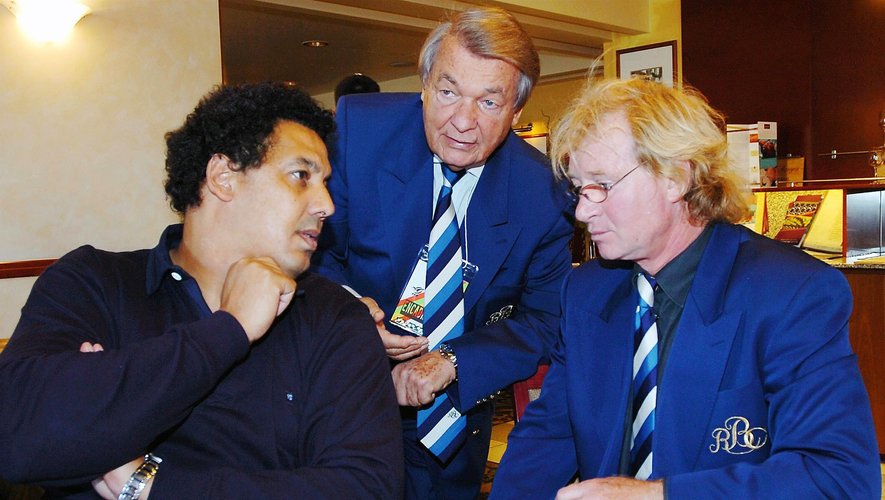
He described rugby as an undertaking dependent on teammates. It was an apt preference for someone selling the work of teams for a living. Expertise might belong to an individual; a service delivered to a client required cooperation. The sporting comparison had particular appeal because its consequences could be seen immediately. An unsupported player soon discovers the limits of individual ambition.
Learning to leave the chair
Passing responsibility to a successor was another test of the organization he had assembled. Paul Hermelin joined the group in 1993 and became chief executive in 2002. Kampf continued as chairman. Ten years later, in 2012, he handed over that position too, remaining vice-chairman and honorary chairman.
The interval allowed a long working relationship to develop around distinct responsibilities. It also meant that succession was more than a single announcement. For a business identified so closely with its founder, a decade sharing leadership gave the next chief executive time in the role while Kampf was still there to advise and argue.
In his 2015 letter, Kampf described continued contact with Hermelin and a relationship shaped by friendship and demanding expectations. He also returned to listening, a habit he placed before speaking. His brief instruction was “take the time to listen.” From a person whose working life depended on persuading others, that is a useful order of operations.
“take the time to listen.”
Serge Kampf, letter dated 8 April 2015
Kampf died on 15 March 2016, aged 81. Grenoble’s rugby club remembered him at its next match against Brive with applause, a speech and black jerseys. Grenoble won 26-22. The score belongs to the players; the tribute explains something about the place their supporter occupied in the club’s life.
A name still in circulation
His legacy appears in settings both formal and pleasantly everyday. Capgemini still sets out the seven values associated with its founder. The French Barbarians retain his words and honorary presidency in their account of the club. At Biarritz, a stand bears his name; the club’s 2025-2026 merchandise announcement directs customers to the shop there.
That last detail has a modest charm. A name survives in corporate histories and biographies, but also in directions given to someone buying a shirt. Kampf built an enterprise that had to outgrow its first rooms, and supported teams whose lives continued beyond his own. He remains present in the vocabulary of both: a signature on one side, a place in the ground on the other.