Some companies begin with a grand theory. BenefitHub began with a recurring annoyance. During the 1990s, Seif Saghri ran startups built around aggregation: bring enough small businesses together and, collectively, they could negotiate like a global corporation. Yet his own employees remained locked out of the little luxuries that arrived with a large corporate badge. Bank workers could get discounted cinema tickets and other everyday perks. Smaller-company workers could not. The imbalance was mundane, visible and stubborn. It was precisely the sort of problem that can hide in plain sight because nobody calls it a market.
Saghri did. His answer was to aggregate the employees of many companies, then give those people one place to access negotiated offers. The second piece arrived with the young commercial internet. Instead of asking human-resources teams to tend a list of merchants and manually announce every new deal, the offers could live behind a company login. Each employer would get a branded destination. Employees would get a catalogue. The provider would handle the untidy middle.
BenefitHub launched in 1999, when calling something “online” still explained most of the product. It began with roughly 20 offers. Within a few years, its client-branded sites had reached 100,000 employee users. The founding move looks obvious from the present because the present is crowded with marketplaces. In its moment, it required a more peculiar conviction: a stray administrative duty inside HR could become a software business, and discounts could be infrastructure.
He pooled the people who had been left outside the velvet rope
Aggregation was Saghri’s recurring professional grammar. He has described four startups that reached exits, each shaped by the notion that fragmented buyers gain leverage when someone gathers them. BenefitHub applied that grammar to a new subject. The company was not buying movie tickets for its own amusement. It was arranging a three-sided exchange among employers, workers and merchants, then making the exchange easier to repeat.
The aggregation loop
This is the practical theft available to other founders: pay attention when many small organizations are each doing a shabby version of the same job. Their inconvenience may be one market in disguise. A marketplace does not always need a new species of buyer or seller. Sometimes it needs to recognize that the scattered buyers already belong together.
The early product also carried an important contradiction. It wore the customer’s identity, not its maker’s. Employees entered a site branded for their employer. BenefitHub could become widely used while remaining largely invisible to the people clicking through it. For a consumer brand, invisibility is a failure. For infrastructure, it can be evidence that the machinery fits.
Then Citi made the young marketplace answer grown-up questions
Selling a convenience to a small employer is one sort of job. Selling access to a workforce of more than 200,000 people is another. Saghri identifies Citi as BenefitHub’s first jumbo client and the moment the company’s enterprise story became easier to tell. A bank would ask the severe questions a young software provider needs to survive: Can the platform cope? Is the data protected? Will the service remain standing when a city’s worth of employees arrives?
Winning the account mattered beyond the account. Citi lent the company proof that could be carried into the next boardroom. Security objections did not disappear, but they no longer had to be answered entirely in the future tense. Once several Fortune 500 clients followed, BenefitHub had acquired a valuable sales asset: transferred trust.
“Of course, I also made thousands of mistakes.”Seif Saghri, reflecting on 25 years of building
That admission is more revealing than the usual anniversary polish. Saghri does not present longevity as a clean line drawn by foresight. He speaks of misjudgments, lost time and lost revenue as the ordinary tuition of a startup. He also says BenefitHub never had a down year during his 25 years as CEO, including through the 2008 recession and the pandemic. The two claims belong together. Durability does not require an absence of mistakes. It requires a structure able to absorb them.
The structure here sits close to persistent needs. Employers compete for people. Employees notice what their pay can buy. Merchants want qualified customers. In tighter years, a discount may become more useful rather than less. BenefitHub occupied the junction, an unshowy place with favorable weather resistance.
Success created a fresh nuisance: too much choice
The platform’s technical landscape changed beneath it. At the start, providers owned data centers and installed software was normal. Later, the cloud turned infrastructure into something rented by the hour. Programming complex features became faster. The catalogue expanded from dozens of deals to thousands. The old challenge had been finding enough supply. The new challenge became keeping abundance from turning into clutter.
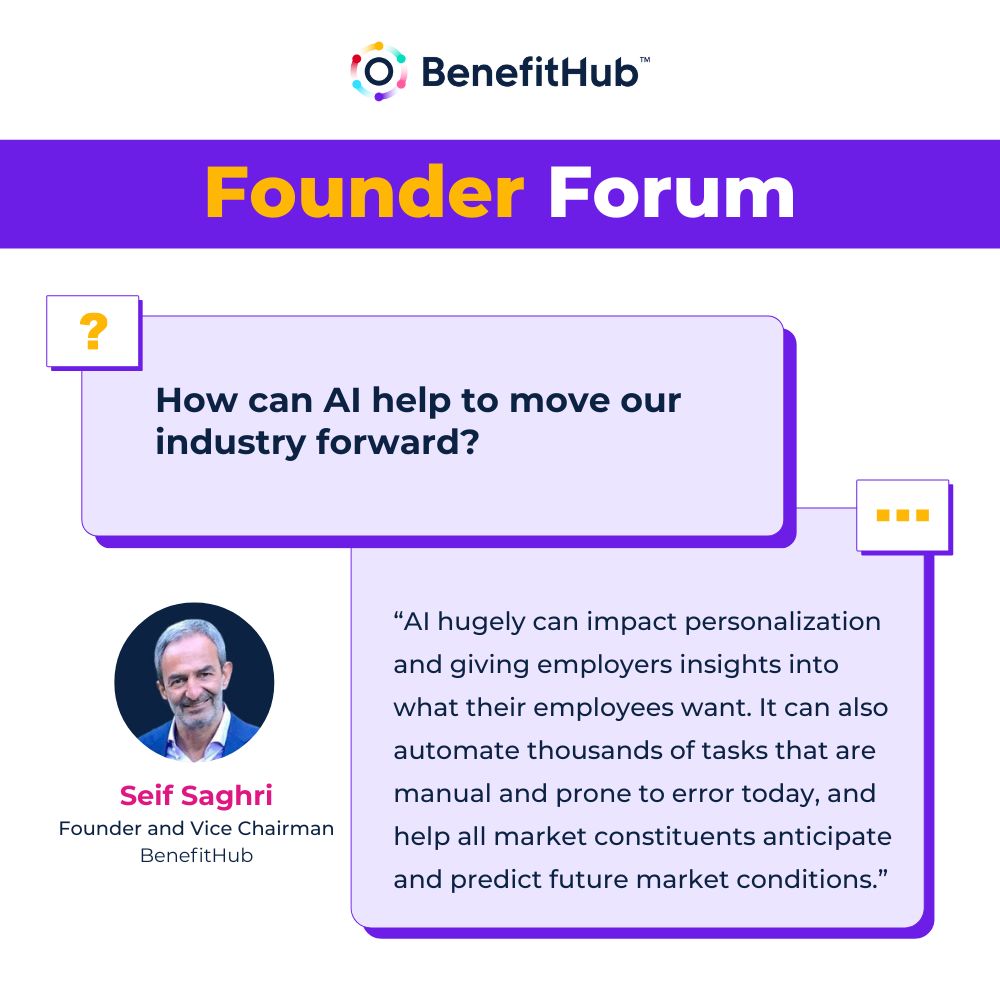
Saghri’s current product argument follows neatly from that reversal. When the shelf is small, display is enough. When the shelf becomes an aisle, search matters. When it becomes a warehouse, relevance matters more. He expects artificial intelligence to help employees describe what they need and surface suitable options, while helping employers understand patterns in demand. The aim is not a theatrical robot in the benefits portal. It is fewer irrelevant results.
His diagnosis has a useful generality. Marketplaces tend to celebrate more: more vendors, more inventory, more categories. Eventually “more” begins charging rent. Users must spend attention to retrieve value from the abundance. The product team then has to build a smaller experience on top of a larger system. Search, recommendations and timing become the new front door.
BenefitHub also widened beyond retail discounts into insurance and other voluntary benefits, while large employers began treating non-core offerings as part of recruiting. The humble coupon shelf had grown into a broader employee marketplace. Yet Saghri’s stated principle remained plain: bring value to people. A principle that simple can sound almost suspiciously neat. Its advantage is that it survives several product generations.
After 25 years of Tuesdays, the calendar changed
On April 8, 2024, Inverness Graham announced that it had acquired BenefitHub. The price was not disclosed. At the time, the investor described a platform serving more than 10 million employees, with customers among large American employers. A month later, BenefitHub appointed Jeff Litvack as CEO. Saghri became vice chairman of the board.
Founder transitions are dressed in ceremonial verbs: pass, hand, begin. The daily reality is more concrete. Someone else chooses the meeting, approves the hire, carries the forecast and owns the Tuesday problem that cannot wait for a board session. Saghri had been CEO since the company’s founding. Moving upstairs meant surrendering not only authority but rhythm.
He described the new role in practical terms. Strategy would replace daily operations. He would support Litvack, look farther afield for ideas and help consider opportunities backed by the new owner. BenefitHub’s acquisition of Abenity, a private-perks provider, offered an early example of the platform-building agenda. He also intended to spend more time with Voluntary Advantage, the industry association where he serves on the board.
“My role now is much more strategic.”Seif Saghri on becoming vice chairman
There is a clean test hiding inside that change. A founder-run company becomes an institution only when judgment can travel without its original owner. The code can move. Contracts can be assigned. The harder transfer involves standards, exceptions, relationships and the memory of why some tempting ideas were rejected years ago. Saghri’s vice-chairman role places him near those questions without returning him to the operator’s chair.
The company grew up. The original annoyance did not disappear.
BenefitHub’s scale by the time of the transition would have been difficult to sketch from its first 20 deals. The company said it served more than 10,000 clients in 20 countries in 2024. Behind those numbers is the same asymmetry Saghri noticed in the 1990s: individual employers do not all possess the same negotiating power, individual workers do not all encounter the same offers, and administrative attention is never evenly distributed.
Technology changed the cost of assembling the catalogue. Scale changed the credibility of the seller. Private equity changed the ownership. AI may change how an employee searches. But the durable object is access. BenefitHub’s work has been to make someone else’s size less decisive.
The amusing part is that this quarter-century journey still ends where it began, with a person trying to save a little money on an ordinary Tuesday. Founders may speak in markets, platforms and strategic combinations. Users remain wonderfully literal. They want the ticket, the quote or the discount, preferably without a scavenger hunt.
Saghri now gets to examine that problem from a greater distance. The operating calendar belongs to someone else. His task is to preserve the useful instinct while the machinery changes: gather the scattered demand, remove work from the customer, and keep the sprawling marketplace feeling smaller than it is. After 25 years, the idea is no longer young. It is still recognizably his.