Before Scott Love could help anyone make sense of a spreadsheet, he needed a name. The business idea was ready enough to pursue. The name was taking its time. A company cannot introduce itself with a thoughtful pause, however promising the pause may be. His girlfriend eventually supplied the answer: Lovelytics.
Love later described the delay with cheerful embarrassment: “That honestly took forever, it sounds silly.” It is an appealing beginning for a business that would come to deal in artificial intelligence, enterprise data, and large corporate decisions. Its first obstacle could have been settled over dinner.
By September 2026, CDW had completed its acquisition of Lovelytics. The announcement earlier that month valued the transaction at approximately $525 million. Between the naming problem and that number lay nine years of hiring, partnerships, and an expanding definition of what customers needed. Following Love through those decisions reveals a founder whose business kept moving further behind the screen.
From Indianapolis to Arlington
Love is originally from Indianapolis and spent seven years living in the Netherlands. He attended Purdue University from 2007 to 2012, studying Selling and Sales Management. His public education record also lists an entrepreneurship certificate and College Mentors for Kids. The combination puts commercial work and participation in a community alongside the later technology story.
Before founding Lovelytics in 2017, he worked in sales for other analytics services businesses. At Data Meaning, he was head of business development. He came to entrepreneurship through the business of understanding customers and finding work for technical teams. That background helps explain the customer-facing language that keeps appearing in his account of Lovelytics.
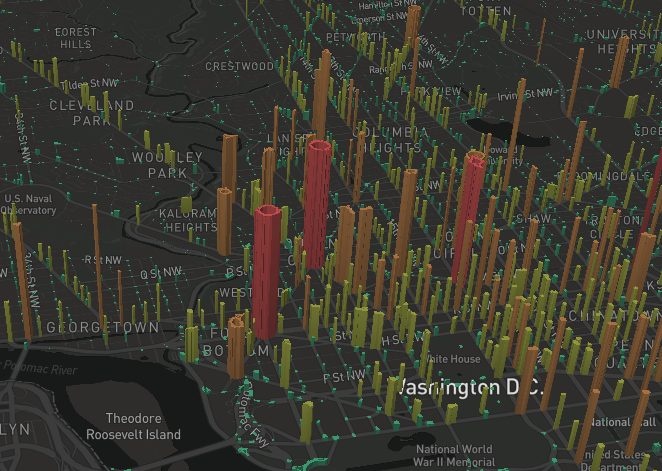
Arlington became the base. In the early years, the company worked in Rosslyn, helping clients turn their data into visual forms they could understand. One example was a map of Washington traffic-crash intersections. A map gives an abstract problem an address. For a young consultancy, it also gives a prospective customer something to look at before the conversation gets lost in terminology.
The work moves upstream
A visualization is a useful place to begin a conversation about data. It is also where the viewer encounters the result of work done elsewhere. Someone has to gather the information, organize it, and make it available. Love’s company increasingly took on those earlier stages, expanding from the visible presentation into the systems that supported it.
By the start of 2022, Lovelytics had moved from Rosslyn to Courthouse. Its team had grown from 23 to roughly 50 during the previous year. A Toronto operation, opened in 2019, had already taken the business beyond the United States. Love was now hiring across a much wider area than his Arlington surroundings.
The Databricks partnership, made official in 2021, was changing what those hires needed to do. Clients purchasing the platform needed people who could put it to use. Love described expanding machine learning, artificial intelligence, and data engineering capabilities to meet that demand. A relationship with a software company was becoming a decision about the composition of his own company.
That is a substantial commitment for a services founder. Expertise takes people, time, and repeated practice. A new service cannot simply be added to a menu and left there looking appetizing. Someone must be ready when the order arrives. Love was building the team to answer it.
An editorial view of the firm’s expanding scope, rather than separate business phases.
A partner places a bet back
In June 2023, Interlock Equity and Databricks Ventures invested in Lovelytics. For Databricks Ventures, this was its first investment in a consulting implementation partner. The technology relationship had acquired a financial dimension. Love and the leadership team retained significant ownership and continued leading the business.
Love described the reciprocity neatly: “We placed a bet on Databricks, and now Databricks Ventures is placing a bet on us.” A platform decision had become part of Lovelytics’ identity. The company was concentrating its resources around a particular place in the enterprise technology world, with investors prepared to support the next stage.
His account of the business’s beginnings emphasized the working environment he wanted to create. He wanted room for entrepreneurial initiative, enjoyment, and demanding work. In describing what the investment would support, he grouped the priorities around people, customers, partners, and services. The language keeps returning to relationships, even when the subject is software.
His fundraising advice was rather less ceremonial. Keep the operation moving while the deal takes attention. Maintain organized financial records. Separate business and personal expenses early. “Be disciplined and organized from the start,” he said. These are useful instructions precisely because they would look so unexciting embroidered on a conference tote bag. A company still needs someone to answer its customers while the founder is discussing its future.
“We placed a bet on Databricks, and now Databricks Ventures is placing a bet on us.”
Scott Love, June 2023
What the customer keeps
By 2024, Love was explaining Lovelytics as a business organized around customers’ transformations on Databricks. Its approach included investment in its own tools, such as using large language models to help automate migrations. Another example involved generative AI for warranty administration in manufacturing. These were specific pieces of business work, with specific users waiting at the other end.
He also emphasized architecture and training: build systems that can adapt, then equip people to operate them. The practical consequence is easy to understand. A customer has to live with a system after an engagement ends. The handover belongs inside the definition of a successful project.
This is a revealing way to read Love’s career. His early job was to help win consulting work. His later responsibility included making sure the company could deliver work that remained useful. The selling and the implementation were connected by an obligation to the people buying the service.
Lovelytics’ current description of its work continues that theme, covering strategy, architecture, implementation, and training. It promises to develop the customer’s own capabilities. For a consulting founder, that introduces a demanding test: whether the client can confidently use what the team has built when the meetings are over.
340 people, then more than 600
In January 2025, Lovelytics acquired Datalytics. The combined firm had 340 people. Datalytics brought an established operation headquartered in Buenos Aires, with offices in Medellín and Madrid. The transaction changed the company’s geographic reach and added colleagues with their own experience, customer relationships, and ways of working.
Love’s account of the combination put cultural integration alongside the technical reasons for doing it. That emphasis had practical weight. A consultancy’s capabilities reside substantially in the people who show up to do the work. Bringing firms together requires those people to be able to collaborate, rather than merely appear beneath the same logo.
By September 2026, the team exceeded 600. In reflecting on the CDW agreement, Love described the distance from the original two-person Arlington shop and credited the people who had built the business with him. The headcount had become international; his public account of the achievement remained collective.
Combined team after Datalytics acquisition
Team reported at CDW acquisition
Reported headcounts at each milestone. Growth includes acquisition activity.
An investor who knows services
Robert Herjavec became an investor and board member in February 2026. His television profile made the announcement conspicuous, but the stated working relationship with Love was specific: go-to-market strategy, brand positioning, and support for expanding enterprise AI deployments. Love stressed Herjavec’s experience building a technology services business and his attention to employees.
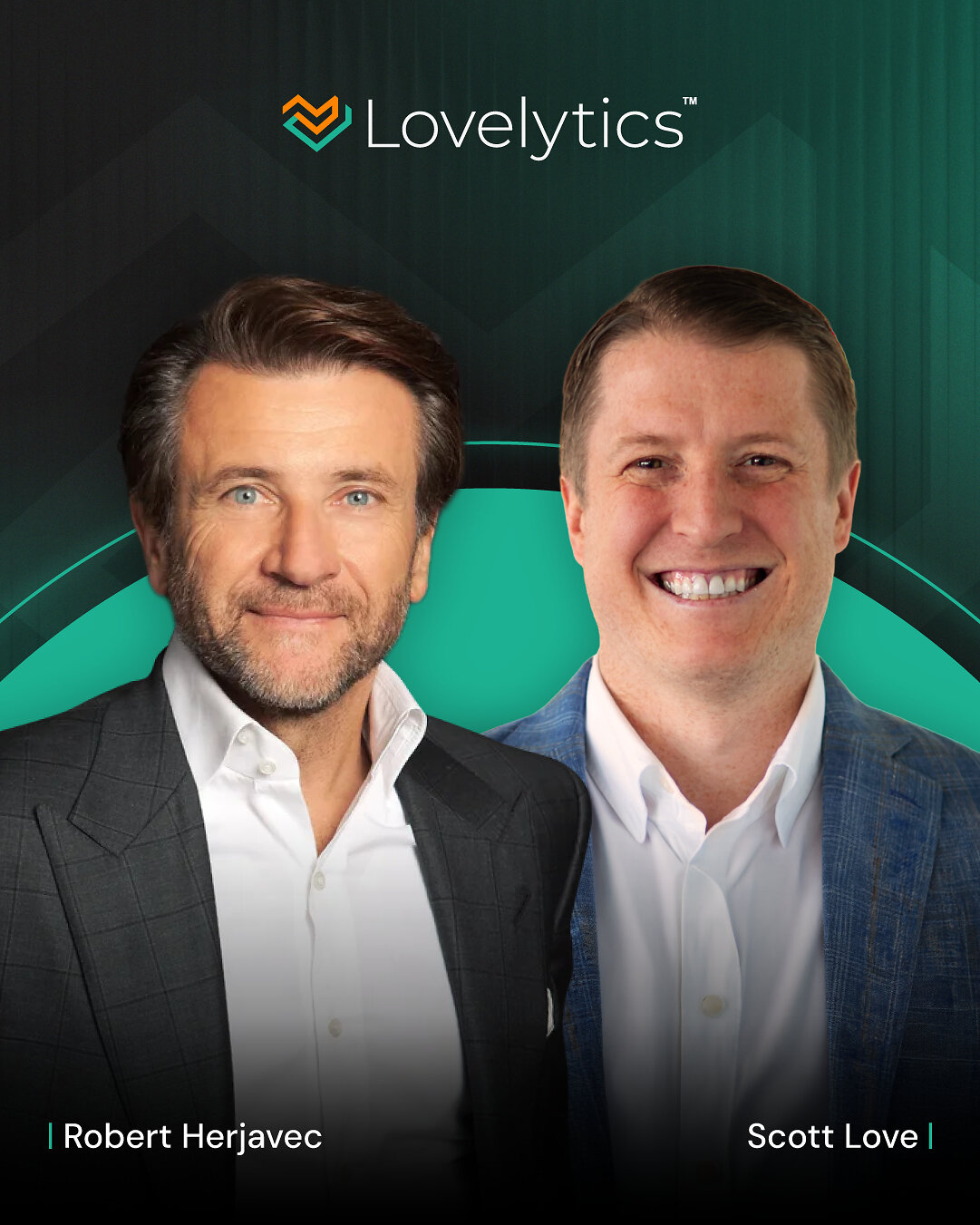
The two also appeared together in conversations about the problem facing CEOs who want technology spending to produce business performance. Love’s own public comments on the partnership emphasized governed implementation and results visible in a client’s profit and loss statement. The ambition had a measurement attached.
There were other measures of company growth. Lovelytics placed No. 810 on the 2026 Inc. 5000, with 426 percent three-year growth. It had also appeared in 2023 and 2025. A ranking captures a defined stretch of revenue growth; Love’s story includes the earlier choices that made the firm capable of taking on a different scale of work.
September’s change of scale
CDW announced the acquisition agreement on September 2, 2026, and completed it on September 25. The transaction brought Lovelytics into a technology business with a broader customer base and service portfolio. Its data and AI specialists would become part of CDW’s expanded Data & Analytics Practice.
For Love, the stated prospect was to put his team to work on larger challenges for CDW customers. There is a familiar continuity in that ambition. The company that once helped people see their data now had a wider route into helping organizations rebuild how they used it.
The beginning remains a useful counterweight to the transaction value. There was a founder with experience selling analytics services, a business waiting for its name, and a suggestion from someone close to him. Then came the less quotable labor: recruiting specialists, developing partnerships, keeping records, and delivering projects.
The name survived all of it. Lovelytics is an unusually cheerful word to find attached to enterprise data infrastructure. Perhaps that suits Love’s recurring interest in the people doing the work. The systems became more complicated. Someone still had to make them useful.
Follow the conversation
- Lovelytics website and company profile
- Scott Love on LinkedIn · Twitter / X
- Watch: Ten Minute Tuesday with Scott Love
- Watch: Love and Robert Herjavec, shared by Lovelytics
- Listen: AI & Machine Learning in the Enterprise
- Read: Love’s founder interview
- Read: the 2018 Arlington startup profile
- Read: CDW completes the acquisition