Two thousand dollars is an unassuming number to put at the beginning of a business story. In 2005, it bought a week of Fractal’s work for P&G. Pranay Agrawal remembered the assignment seventeen years later, by which point the consumer goods company had become one of Fractal’s five largest clients. The fee was small. The invitation to return would prove rather more useful.
That early American chapter moved slowly. Fractal had arrived without an established sales engine, and Agrawal described the first five years as difficult. Clients including P&G, SAP and Microsoft helped it build momentum. His explanation of the process was almost stubbornly ordinary: “You have to keep showing up.”
It is a useful place to meet him. The co-founder of an enterprise AI business has an abundance of contemporary vocabulary available. Yet the episode he chose to remember concerns a short piece of work, a modest payment and a customer who stayed. A relationship has to begin somewhere. Sometimes it begins with a purchase order that would barely trouble a large company’s accounts department.
By October 2022, Agrawal described P&G as one of Fractal’s top five clients.
Before Mumbai, Section B
There is an earlier room in this story. In June 1996, Agrawal met Srikanth Velamakanni in a Section B classroom at the Indian Institute of Management Ahmedabad. They were students. Fractal was still several years away. A future company can be invisible even to the people who will build it.
Agrawal completed the institute’s postgraduate management program in 1998, following a commerce degree from Bangalore University. His early career included ICICI Bank and ANZ Grindlays Bank. At ICICI, he worked in fixed-income analytics. He also earned the Financial Risk Manager certification from the Global Association of Risk Professionals.
The banking work had substance beyond a convenient line in a founder biography. He was part of the team behind ICICI’s first collateralized bond obligation and part of the core team involved in its New York Stock Exchange listing. Those are assignments in which a persuasive explanation must eventually meet a financial consequence. The arithmetic has an audience, and the audience has money at stake.
Fractal began in Mumbai in 2000. Agrawal was among its founders and joined its board at incorporation. Its early analytics work concentrated on financial services, before the 2005 expansion to the United States opened further industries and a much larger pool of prospective customers.
In 2019, IIM Ahmedabad recognized him with its Young Alumni Achiever’s Award in entrepreneurship. The recognition brought his professional life back to the institution where the partnership began. It also recorded a career that had already moved from financial instruments to the less tidy problem of helping other businesses decide what to do.
Years later, in 2023, Agrawal returned to Ahmedabad for his class’s twenty-fifth reunion. A classmate, Shishir Singhania, suggested that he and Velamakanni take a photograph in their old classroom. Agrawal described the pleasure of sitting together where they had first met. Among the milestones of a working life, this one required neither a valuation nor a bell.
- 1996First meeting in Ahmedabad
- 2000Fractal begins in Mumbai
- 2005The US expansion
- 2016Agrawal becomes CEO
The recommendation has to survive Monday
Agrawal’s professional territory became the relationship between a company’s data and the decisions made with it. As executive vice president of global client development, he worked on the commercial side of that relationship. A client had to understand the recommendation, see its relevance and find a way to act.
In 2013, he explained how Fractal’s Customer Genomics work classified shoppers across more than eighty dimensions. Retailers could use the analysis to guide discounts, product assortments and promotions. The interesting part was the translation: a statistical description of shopping behavior became a choice about what a store would sell and how it would sell it.
He was also explicit about being agnostic toward analytical tools. Fractal used different platforms according to clients’ needs. That position sounds less romantic than falling in love with a particular technology. It is helpful when the customer already has systems, staff and a perfectly understandable reluctance to replace everything before lunch.
On November 2, 2016, Fractal announced that Agrawal would succeed Velamakanni as CEO of Fractal Analytics. Velamakanni became Group Chief Executive and Executive Vice-Chairman. The division of responsibilities gave Agrawal a brief that included developing the US and European businesses and building capabilities around changing client needs.
Moving toward larger, more mature companies had been a deliberate choice. Agrawal’s explanation for the American expansion was that Fractal wanted its work to have greater impact. Large customers offered more decisions, more information and more opportunities to apply analytics. They also required the company to establish credibility in a new market. Reaching them was a commercial task with no shortcut supplied by the mathematics.
The promotion followed years of client work. It placed the task of making analytics commercially useful closer to the center of the organization. His current responsibilities as CEO of Fractal USA include strengthening partnerships, growing revenue and increasing Fractal’s visibility and scale. The titles have evolved around a recognizable set of duties.
“We believe happy employees create happy customers.”
Pranay Agrawal, 2013
Permission to choose another boss
Fractal’s approach to employees offers a particularly concrete detail: people could seek different projects, roles and managers. The company’s People Principle, put into writing in 2013, gave formal expression to a culture of trust and freedom. Work schedules, vacation and expense claims also involved employee self-regulation.
There is a practical argument beneath that freedom. Someone who has grown tired of a role may still have useful work to do elsewhere in the same organization. A change of manager can be less expensive, and less wasteful, than a departure. The company made room for an employee’s interests to change without automatically ending the relationship.
Agrawal’s discussions of talent were similarly concerned with what happens after recruitment. He emphasized recurring training, shared values and recognition. He also described drawing from a global talent pool, with people near clients in the US and Europe alongside a substantial base in India.
In his account of employee practices, recognition could take small, visible forms: a thank-you board, peer nominations, an open town hall. None requires a mysterious theory of motivation. They give colleagues ways to notice useful work and speak to leadership. For a business asking clients to trust recommendations, the willingness to hear people inside the company is a relevant habit.
A pilot needs somewhere to land
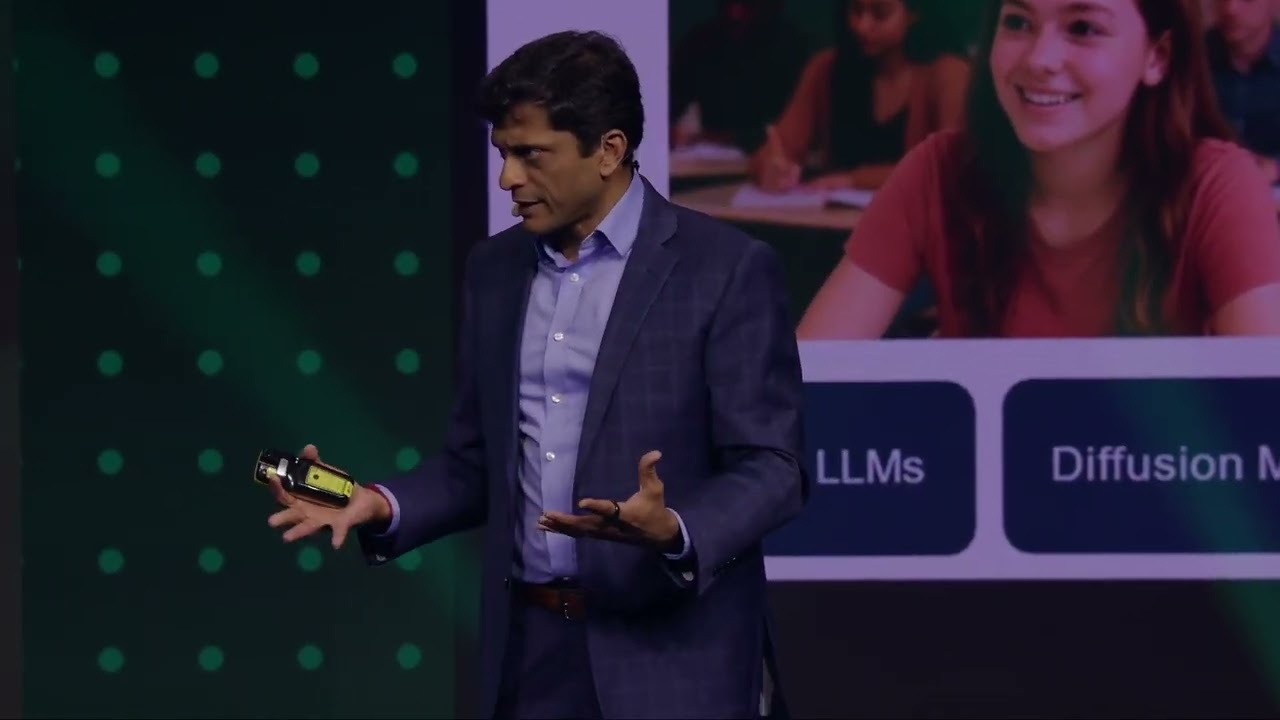
The same concern with use runs through Agrawal’s more recent writing about AI. In December 2025, he set out five stages for moving from pilots to performance: begin with an outcome, change business processes, commit investment, establish internal values and accountability, and prepare the workforce.
Read as a sequence, it puts considerable work around the technology. A team needs a reason to build. It needs somewhere to put what it builds. People need the ability to use it, and the institution needs a way to take responsibility for the results. The demonstration is a brief appointment in a much longer calendar.
His public remarks also connect AI adoption to behavioral science and design. Emotions, biases and context affect whether a person will accept a recommendation. That creates an uncomfortable obligation for anyone selling intelligence: the user’s response is part of the problem to solve. A system can be technically capable and still be awkward company during a busy working day.
- 01Choose the business outcome
- 02Redesign the process
- 03Fund the capability
- 04Build accountability into it
- 05Train and empower people
In March 2026, Fractal announced LLM Studio, a workbench for customizing and operating domain-specific language models using NVIDIA infrastructure and software. Agrawal’s accompanying comments emphasized governance, predictable costs and reliability in production. These are the concerns of a buyer who must continue running the business after the interesting presentation has finished.
His stated ambition reaches into the business model itself: new products, revenue and decisions across the organization. That makes adoption a leadership responsibility. A procurement decision can purchase software. It takes wider cooperation to change how departments work together and what employees are authorized to do with the result.
The next question, across the table
Agrawal now spends part of his public working life asking other leaders how they handle that cooperation. On Fractal’s Not Just AI podcast, his conversations span financial services, mobility, telecommunications and governance. The guest list places the company’s central question in different institutional settings.
A discussion with Nasdaq’s Byron Loflin concerns board oversight. A conversation with Qualcomm’s Nakul Duggal considers mobility. With Forrester’s Alyson Clarke and Franklin Templeton’s Deep Srivastav, the subject is scaling AI in financial services. Different businesses bring different constraints; the interviewer keeps returning to how technology becomes part of their operation.
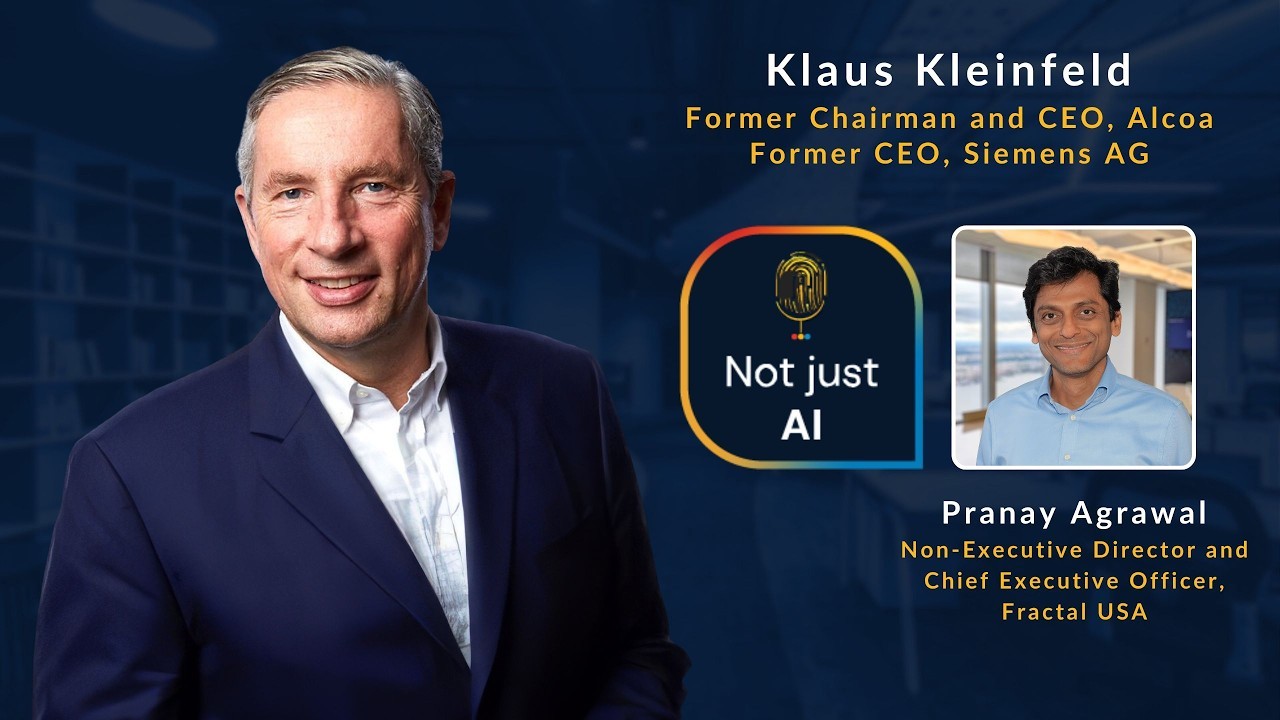
One episode pairs him with Klaus Kleinfeld, the former leader of Siemens and Alcoa. Its subjects include execution, organizational change and the skills people need as work changes. The format makes room for another executive’s experience. It suits a career built in part on understanding what a client is trying to accomplish before proposing how to help.
In May 2026, he gathered reflections from those interviews into an essay about enterprise transformation. It extended the concerns of his earlier client work into a wider conversation about how institutions think, govern and serve. The setting had changed; responsibility for a useful outcome remained central.
Fractal’s shares began trading on India’s BSE and NSE on February 16, 2026. Agrawal serves as a Non-Executive Director of the listed company while leading Fractal USA. Public markets add another audience to a business that once needed a handful of American clients to gain momentum.
The old classroom and the small assignment remain useful coordinates. One marks a partnership before it had a business. The other marks a client relationship before it had much revenue. Both leave room for the years in between, when the job was to do enough useful work to be asked back. Agrawal’s next conversation about AI begins with that considerable history already at the table.