The interesting word in VySystems’ service menu is “transfer.” It appears in Build-Operate-Transfer, an arrangement offered through its Global Capability Center practice. A supplier helps establish a team, runs it, then hands it over. For a business selling expertise, promising an eventual handoff is a revealing proposition. It asks the buyer to think beyond the project to the organization that must live with the result.
- Connects technology consulting, talent sourcing and managed operations.
- Works on enterprise applications, cloud infrastructure, data and AI.
- Offers recruitment through TALON and delivery through managed or transfer models.
That is a useful way into VySystems, a technology services company whose menu can otherwise resemble an enterprise IT department’s entire shopping list. There is recruitment. There is custom software. There are data platforms, cloud migrations, ERP systems and application support. The connective tissue is responsibility: who designs the work, who supplies the people, and who answers for the system once everyone has stopped admiring the launch.
01 / Follow the work between teams
VySystems presents fragmentation as the enemy. Its technology and talent practice describes strategy, systems, data and people moving at different speeds. Its ERP practice points to the accumulated complications of acquisitions, regional customization, spreadsheets and tactical fixes. These are wonderfully unromantic problems. A business can own perfectly respectable software and still spend its mornings reconciling numbers that should already agree.
The company’s proposed answer combines advisory work with engineering and workforce planning. A customer can commission a technology roadmap, recruit specialists, modernize an application and arrange ongoing support within the same service portfolio. That breadth is the positioning. The buyer’s practical test is whether the engagement actually connects those responsibilities, with named owners and agreed measures, rather than merely listing them in adjacent proposal chapters.
02 / The recruiter in the engineering room
One specific piece of that offering has a name: TALON. The parent group, vy.ventures, describes it as a proprietary recruitment engine powering talent services. VySystems also offers recruitment process outsourcing, contract and permanent staffing, offshore talent programs and hiring for capability centers. Recruitment sits alongside technology delivery because a roadmap without the people to execute it has a limited shelf life.
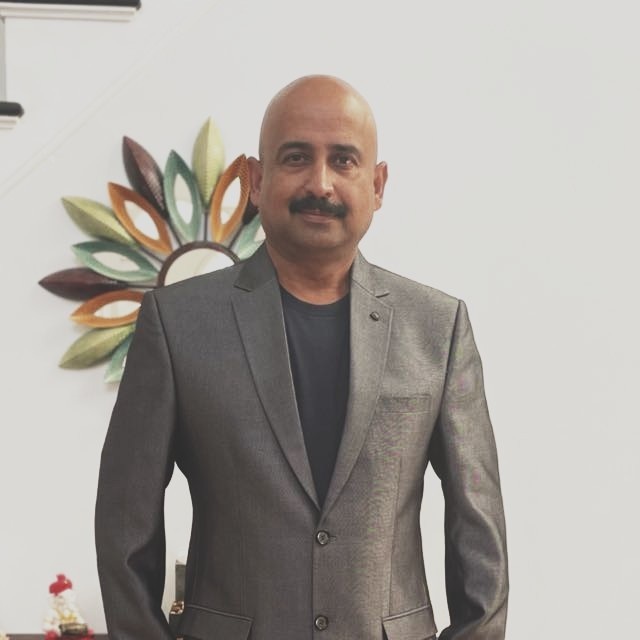
The company is built around people in another sense. Founder and chief strategist Ramesh Santhanam is a computer engineering graduate whose official biography emphasizes entrepreneurship and mentoring. VySystems calls its employees “Vyiers.” It describes a management mix of leaders developed internally from graduate roles and experienced outside hires. The stated preference is continuity alongside fresh experience, a sensible combination for work that depends on institutional memory.
03 / AI meets the old plumbing
Today’s VySystems talks extensively about AI, but the concrete work often concerns the systems surrounding it. Its data practice includes governance, engineering, reporting and machine learning. Its modernization practice describes discovering dependencies, mapping lineage, reconciling records and migrating incrementally. Keeping old and new environments running in parallel gives a customer a way to check that a migration preserves the business logic hiding inside the data.
The agentic AI offering extends that integration work. VySystems describes agents that retrieve knowledge, call business systems, validate results and escalate when confidence falls. Its delivery sequence moves through discovery, architecture, a supervised pilot, hardening and scale. Cost and latency budgets enter during architecture. Human review enters during the pilot. That ordering gives prospective customers concrete questions to ask before granting software permission to take consequential actions.
“We believe responsiveness drives results.”
VySystems’ stated operating principle
For a reader borrowing the approach, the copyable part is the sequence. Choose a bounded workflow. Define success and the limits of autonomy. Test it under supervision. Add monitoring and escalation before widening access. This is an editorial reading of the published process, rather than a claim about any particular deployment. It is especially relevant where a clever answer matters less than a correct, traceable action.
04 / Buying the work after launch
The intended customers are enterprises dealing with complexity: large and mid-market organizations, legacy estates, multiple clouds and compliance demands. VySystems markets agentic services to sectors including banking, insurance, healthcare, manufacturing and the public sector. Its software practice covers web, mobile and enterprise applications. Its managed services cover monitoring and application management, including support governed by service-level agreements. The commercial offer is people and delivery responsibility across those activities.
That places it in a busy market alongside broad IT service firms, specialist consultancies and staffing agencies. VySystems’ own cloud practice invokes Cognizant as a reference point for enterprise transformation. The useful distinction to evaluate is the combination of talent services, engineering and continuing operations. A buyer choosing among alternatives should compare scope and accountability: recruitment alone, a defined build, ongoing support, or an operating team that can eventually transfer.
Build Operate Transfer
One of the capability-center models in the company’s published offering.The cost question belongs in that scope discussion. A proposal should distinguish setup, staffing, migration and continuing operations, then spell out the transfer terms where relevant. The model needs a customer able to define priorities, grant appropriate access and retain decision-making authority. If a project leaves data ownership unsettled or success unmeasurable, putting more services under one supplier does little to settle either problem.
05 / The company behind the connections
VySystems’ history starts in 2002 across the United States, Singapore and India, according to the parent group. Canada followed in 2018; the UK entity was incorporated in 2019. The group reports UAE market entry in 2024. VySystems now sits within vy.ventures, alongside separate businesses covering software delivery, SaaS, immersive computing, training and AI research. The group describes its portfolio as founder-funded and bootstrapped.
Read together, those details explain a company selling the coordination around technology as much as the technology work itself. Its proposition becomes most legible at the transitions: a vacancy becomes a delivery team; a legacy application becomes a maintained platform; an outsourced capability becomes something a customer can own. For anyone evaluating VySystems, following those transitions is a useful place to start the conversation.