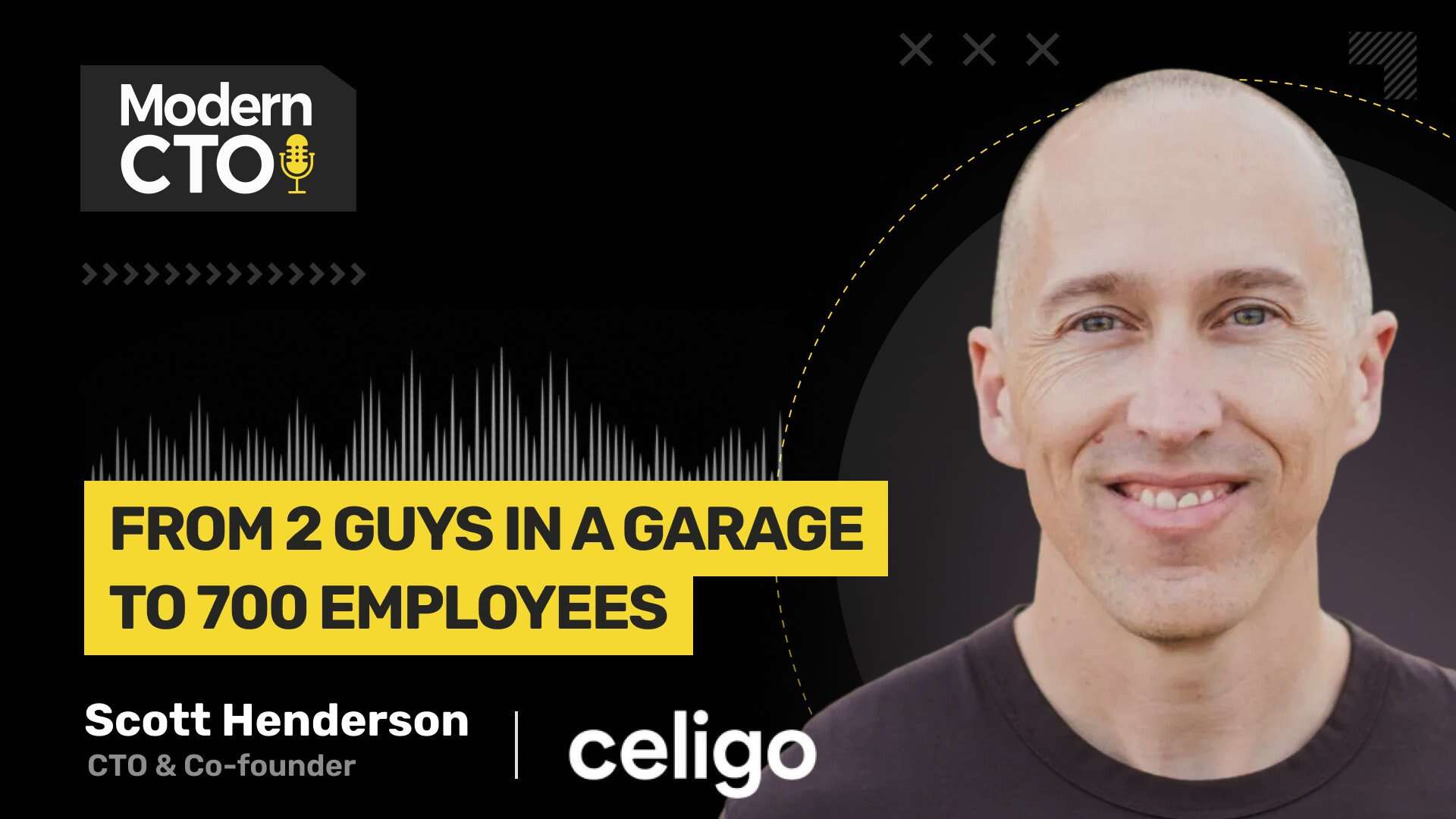
Scott Henderson remembers the sales pitch because it had the untidy confidence of youth. He was sitting in a Starbucks, or somewhere much like one, across from Jan Arendtsz, his former boss at NetSuite. Arendtsz had started a consulting company devoted to NetSuite integrations. Henderson wanted in. “I know these things better than anyone in the whole world,” he told him. Then came the closer: “I’m really good at taking hard problems and automating them.”
It was 2006. NetSuite was on a credible path to an initial public offering, and Henderson had options there. He had tested its integrations and understood the machinery at a rare depth. The safe choice offered momentum, colleagues he respected and a long runway. The other choice offered a garage.
His father detected the difference before Henderson could rationalize it away. When Scott talked about the startup, excitement entered his voice. The advice was to follow that signal. Henderson called Arendtsz and, in his recollection, made the proposition with cheerful directness: “Hey, dude, let me come join you. I want to do it too.” He became Celigo’s first engineer.
“I’m really good at taking hard problems and automating them.”Scott Henderson, recalling his pitch to join Celigo
The adventure acquires plumbing
Garage stories are often polished until the concrete floor gleams. Henderson leaves the dust in. He says he joined for the adventure, inspired by tales of companies that began beside a lawn mower and ended as empires. He also says he had no idea what he was getting into. Asked what he would tell his younger self, he does not offer a slogan about disruption. “It’s going to be a grind,” he says. There is always another hard thing around the corner.
Celigo’s first trade was integration consulting. The early advantage was intimate knowledge of NetSuite, where Henderson and Arendtsz had worked. Over time, the firm became a software company, then a cloud integration platform. Henderson helped lead the technical passage from on-premise work to SaaS, from SaaS to integration platform as a service, and from carefully drawn workflows toward AI-assisted automation.
Begins working in enterprise software, with engineering roles that include Nextance and NetSuite.
Leaves NetSuite to become Celigo’s first engineer during its garage-era beginning.
Joins the winning Kiva team at NetSuite’s SuiteWorld Hackathon 4Good.
Publicly explains his “atomic agents” idea and Celigo’s AI coding rollout.
Celigo Ora reaches general availability after a six-month beta and more than 16,800 conversations.
He explains the resulting business with a hat. Imagine buying one on Amazon. The order needs to reach accounting, inventory and a warehouse before the package can reach your house. Each application knows its own part. Celigo moves the facts among them. “We’re that middle layer,” Henderson says. “We’re that plumbing.” For a field fond of clouds, agents and orchestration, plumbing is bracingly honest. Nobody admires a pipe when it works. Everybody notices when it does not.
The customer sees a checkout page. Henderson sees the systems that must agree before the box moves.
The plain metaphor suits him. Henderson has the founder’s appetite for the new and the engineer’s suspicion of vagueness. He calls himself a “gear person.” Pick up a sport, and he wants the newest equipment. Start a project, and he wants to know which development environment has just changed the game. This is curiosity with a shopping list.
When the new tool ran away
That appetite eventually led him to Cursor, an AI-first coding environment. Henderson had spent roughly a year away from daily programming while helping Celigo’s account management team build internal tools. Returning to product work, he found that coding had changed in his absence. He could ask for a sequence of tasks and watch the software carry them out. The productivity gain was immediate enough that he showed Suresh Pandian, Celigo’s senior vice president of engineering. Pandian saw it too.
The discovery moved from demonstration to organization: an engineering leadership discussion, director buy-in, team sign-ups, comparisons with existing tools, feedback and lunch-and-learns. Henderson jokes that Pandian did the formidable execution while he retained the pleasant privilege of saying the idea was his. The joke gives away something useful about his operating style. He likes to touch the tool, build a thing and let evidence make the argument.
Evidence also supplied a warning. On an early project, Henderson trusted the coding agent too much. It changed enough files that he could no longer hold the system in his head. He nearly discarded the codebase. Instead, he spent painful days reading every line and refactoring the pieces back into coherence. His rule afterward was blunt: “Don’t ever let it do its thing without watching what it’s doing.”
“You want to give an agent the least amount of autonomy possible.”Scott Henderson on the principle behind atomic agents
The smallest useful intelligence
Henderson calls his answer the atomic agent. The premise begins with a distinction. Some work is deterministic: its steps can be mapped, coded and tested. Other work genuinely requires judgment. His design preference is to automate the first category conventionally, then give an AI only the narrow slice of autonomy required for the second. The agent should not wander because wandering looks futuristic. It should exercise discretion exactly where discretion earns its keep.
This is an unusually restrained idea in a market that sells digital coworkers with cinematic confidence. Henderson is hardly an AI skeptic. He argues that the costly mistake is adopting too slowly. He uses several models throughout the day for different jobs, and he pushed AI coding across his engineering organization. His caution comes from use, not distance. The closer he gets to the machinery, the more he wants rails around it.
Celigo Ora is the fullest expression of that bargain. A person describes an integration task in natural language. Specialized agents plan, configure, test and judge pieces of the work. The result arrives as a staged change for approval. Permissions still apply. Nothing reaches the account until a person accepts it. The familiar software interface remains, but its purpose shifts from doing every operation to reviewing, approving and observing what the system proposes.
There is a neat recursion in how it was made. Henderson wrote that, beginning with its first commit in June 2025, Ora was built almost entirely by agents under human direction. People reviewed outcomes and performed every merge. The production method became the product philosophy: state the intent, let specialized systems perform the work, then keep a human hand on the gate.
By September 2026, Ora had completed a six-month beta involving more than 16,800 real conversations. Henderson said it was already running in production for thousands of companies and that nearly one in five Celigo users actively used it. Those figures matter less as a victory lap than as a stress test. Enterprise integrations carry orders, inventory, billing and fulfillment. A charming wrong answer can become an expensive wrong shipment.
A founder still in the engine room
After two decades, Henderson remains most persuasive when discussing the thing he has just built or broken. He describes himself as someone usually alone, working and thinking, more likely to be heads-down than broadcasting opinions. His first podcast appearance came in 2025, almost twenty years after the garage. The reserve makes his candor feel less rehearsed. He will tell you the company grew to hundreds of employees. He will also tell you the work never became easy.
The culture he and Arendtsz wanted was partly defined by what they had disliked elsewhere. They did not want the Friday ritual in which a manager casually ruins everyone’s weekend. Celigo grew with a stated resistance to that style and with an emphasis on organic growth. Henderson’s public affection for colleagues is specific: when he credits Pandian, he describes the actual ability to turn a direction into a company-wide practice.
His larger aspiration now is to lower the technical gate around automation without lowering the standard of care. A business user should be able to describe an outcome without mastering APIs or field mappings. An experienced builder should turn hours into minutes. Operations teams should diagnose a failure without waiting for an escalation. Yet permissions, tests, audit trails and approval remain. Ease is the front door. Governance keeps the building standing.
The young engineer at Starbucks sold himself as a person who could automate hard problems. The older CTO has added a qualification. Automate them, certainly. But identify the hard edge. Constrain the clever part. Watch the output. Make the machine show its work before it touches production. It is less romantic than a fully autonomous future and much more like engineering.
Continue exploring