In 1993, Scott Brandon came home with news that would have tested the conversational skills of a much better salesman. He was leaving his litigation practice in Myrtle Beach. He would take a pay cut. He would go to work for his father. He had recently married, and he and his wife were expecting their first child. The family agency had seven people. A law degree is an expensive way to discover that you would rather work in advertising.
Brandon later recalled the decision as a sharp turn away from a promising legal career. He did not describe a triumphant entrance into a waiting empire. The business he joined was small, local, and familiar. He knew its founder rather well. What he could not know was how many times he would have to change its shape to keep it useful.
Today, he leads Brandon and the wider EVOQ Group, a collection of specialist marketing businesses. The distance between that seven-person office and the present group is considerable. Yet his career becomes more interesting when measured in departures: from law, from a single agency’s limits, and, in his recent writing, from advertising’s habit of demanding attention simply because it can.
01 /A family business, before the family succession
Cecil Brandon founded the agency in Myrtle Beach in 1959. His work was tied to the coast’s tourism economy, including the business of persuading golfers to book a trip. He served as executive director of Myrtle Beach Golf Holiday from its inception in 1967. Selling a destination meant selling an experience before the customer arrived: the course, the weather, the prospect of a few days spent pleasantly elsewhere.
Scott was born and raised in Myrtle Beach. His eventual return to the business looks tidy in retrospect, as family succession usually does once the uncertainty has been edited out. His route was less tidy. He earned an economics degree from Davidson College in 1985 and a Juris Doctor from the University of South Carolina in 1989, then practiced at Bellamy Law before joining the agency.
Those qualifications make an appealing pair for an agency owner. Economics asks how people allocate resources. Law requires close attention to arguments and obligations. Advertising adds a less obedient participant: the person who may decline to buy anything at all. A campaign can have a handsome internal explanation and still receive the public’s most efficient review, a shrug.
Brandon bought the business from his father in 2001. The surname remained; the responsibilities changed. Joining a family company and owning it are different commitments. The first gives you a place in an existing arrangement. The second makes you responsible for whether the arrangement will survive its next encounter with the market.
02 /Seven people, then a different kind of scale
By 2018, Brandon described an agency with six offices, 120 staff, and roughly $15 million in revenue, compared with about $1 million when he joined. These are historical figures, but they reveal the size of the transition. A business that once fitted into one office had become an organization whose problems could no longer be settled by everyone turning their chairs toward the same desk.
A quarter-century in two numbers
His argument that year favored speed over size. That is an intriguing position for someone who had spent a quarter-century making his agency bigger. It suggests a useful distinction between accumulating resources and becoming cumbersome. Growth earns its place when it improves the work. Otherwise, the extra people and offices merely make the meeting invitation longer.
The next phase made specialist expertise increasingly visible. Eight Oh Two brought search marketing capabilities into the group. Cineloco brought video production. Rather than insist that every new discipline develop inside the original agency, Brandon acquired businesses that already concentrated on particular kinds of work. The resulting organization could offer a broader range without asking one team to be equally accomplished at everything.
This approach creates its own demands. An acquisition buys a company, but collaboration still has to be organized. Clients need to know who is responsible. Teams need to understand where their work connects. A collection of specialists is useful only when the handoffs are good enough to make the collection feel coherent.
03 /The names on the doors still matter
In July 2025, TBA Worldwide became EVOQ Group. Its announcement explicitly preserved the independently operated agencies within the network. Brandon, Eight Oh Two, Joybyte, TravelBoom, and Cineloco were among the businesses named. The new parent identity put a clearer name around a structure that had already been developing through acquisitions and specialist services.
The ownership turns
Joins the agency.
from Cecil.
becomes EVOQ.
The distinction matters because an agency’s name often holds relationships, working habits, and the reputation of its people. Folding every business into one identity can simplify the stationery while complicating the reasons clients hired it. Brandon’s group chose to retain distinct operations and make cooperation part of the proposition. The organizational design is itself a bet on how clients want to buy expertise.
In May 2026, EVOQ acquired Amazon specialist Red View Ventures and announced its combination with SaleSurf Growth. The transaction expanded an existing marketplace capability. It was another example of growth through a specific discipline, rather than a vague promise to do more of everything. Listing optimization, advertising, creative, and brand protection were among the services described for the combined business.
Brandon discussed the mechanics of acquisitions with Sharon Toerek on The Innovative Agency podcast that same month. The conversation covered evaluating opportunities, keeping separate agency identities, developing talent, intellectual property, and financing. Those subjects bring the story back to the owner’s desk. Expansion is a sequence of operating decisions, each carrying consequences long after the announcement has been shared.
04 /The owner still has a client list
Brandon’s public description of a working day begins early. In 2022, he said he rose around five, fed his dogs, made coffee, and read news and trend reports before meetings began. More revealing was his decision to continue managing some clients himself. He wanted direct experience of the agency’s processes and of what customers expected from them.
There is a practical advantage to that arrangement. A chief executive can hear about a troublesome process in a report. Working through it personally supplies a different education. Every unnecessary step becomes harder to defend when it appears on your own calendar. Staying close to clients also makes technological change a daily question about the work, rather than a theme for the next presentation.
His account of marketing strategy starts with understanding a client’s business, goals, customers, competitors, and definition of success. Research comes before tactics. When a program falls short, he favors investigating the cause and adjusting the work. That sequence sounds ordinary, which is part of its value. It gives a client something more useful than a beautiful explanation of why disappointment was inevitable.
“their success is our success.”
Scott Brandon, on working with clients
He describes the relationship in unusually direct terms: “their success is our success.” The phrase is easy to say. The operational test is whether an agency understands enough about the client’s business to recognize success when it arrives. Brand strategy, analytics, creative work, and media decisions have to agree on what they are trying to accomplish.
05 /A bigger group, a smaller claim on your attention
In July 2026, Brandon published an argument for responsible advertising. He urged brands to respect people’s time, explain their use of data, and consider the environments in which their messages appear. He also made room for restraint: a company should have a reason to show up, rather than treating its ability to reach someone as sufficient justification.
For an executive assembling businesses across search, social, marketplaces, and production, that is a consequential position. The group has more ways to communicate; the argument asks it to be selective about using them. Capability alone cannot answer a question of judgment. An advertiser may be able to follow a customer around the internet and still have little worth adding to the conversation.
The commercial logic is clear enough. A relationship deteriorates when every encounter becomes a demand. Better targeting can identify a person likely to buy; it cannot make an unwelcome interruption welcome by administrative decree. Brandon’s writing treats trust as something affected by the way advertising behaves, including the decisions that occur before anyone sees the finished message.
06 /Another generation, another kind of stewardship
Family continuity remains important to him. Asked about his biggest accomplishment as an owner, Brandon chose the fact that two of his three children had joined the business. The answer is more personal than a revenue figure. It places value on other people choosing to participate in a company whose demands he knows intimately.
In May 2025, the group appointed Haley Brandon chief financial officer. She had helped analyze acquisitions, including Eight Oh Two, Cineloco, and Joybyte. Her remit covered financial strategy and performance across the network. The appointment put financial analysis beside the creative and specialist work that clients see, a reminder that the ability to grow depends partly on calculations made well away from a campaign launch.
Brandon’s responsibilities also extend beyond the agencies. He joined Brookgreen Gardens’ trustees in 2017, became vice chair in 2020, and was named chair in June 2026. He also serves on the boards of Southern Financial Corporation and MB National. The Myrtle Beach Area Chamber of Commerce named him Citizen of the Year in 2012; that year he also received the American Advertising Federation’s Silver Medal.
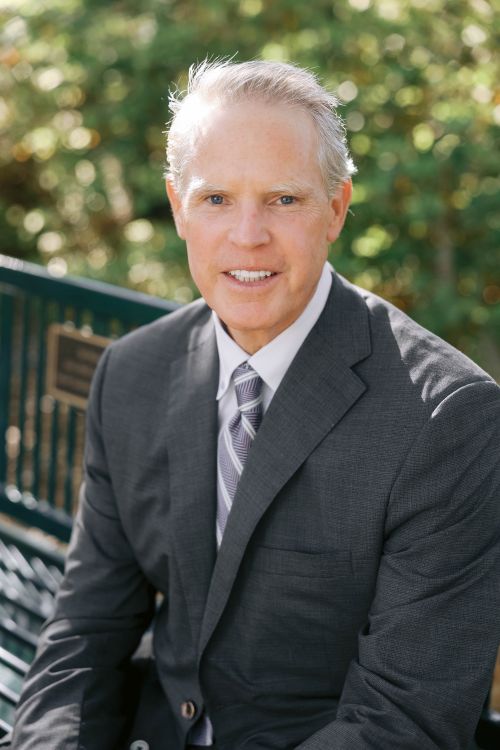
There is a quieter creative detail in his history. At college, he studied painting before changing direction. He has described making large abstract works with acrylic and pumice, and expressed a wish to return to them. Away from marketing, his published biography places him outdoors, hunting and fishing with his family. The interests give the economics graduate and former lawyer a less predictable outline.
The seven-person agency was a return to something familiar and the beginning of a long series of unfamiliar decisions. Brandon has spent the years since adding expertise, changing structures, and taking responsibility for businesses beyond the one bearing his name. His recent argument for restraint gives that expansion a useful question to live with. Once you have acquired more ways to speak, what deserves to be said?
Follow the conversation
- Brandon
- EVOQ Group
- Scott Brandon on LinkedIn
- Rules to navigate the new age of responsible advertising
- The Innovative Agency: Scaling Through Acquisition
- Generation Excellence: Scott Brandon in conversation
- The 1993 decision, in Brandon’s own words
- Brookgreen Gardens: the June 2026 chair appointment
- An interview on agency life, acquisitions and painting