Before Scott Boatwright had an earnings call to prepare for, he had homework to finish after a shift washing dishes. High school meant football practice, then a steakhouse job that could keep him working until close to midnight. A car, insurance and petrol required wages. The restaurant supplied those, along with something less predictable: managers who thought he might be good at more than cleaning up.
That small act of recognition runs through his career. Someone needed another pair of hands. Boatwright accepted. Someone saw he could handle more. The assignment expanded. Decades later, the chief executive of Chipotle Mexican Grill still talks about restaurant work as a succession of opportunities that somebody has to notice, offer and explain.
It is a useful history for a company whose product is assembled in public. Customers can watch the work, judge the portions and count the people ahead of them. A strategy that sounds splendid in Newport Beach has a much less forgiving appointment at lunchtime.
An education with the television switched off
Boatwright grew up in Brunswick, Georgia, and applied at McDonald’s on his fifteenth birthday. Quincy’s Family Steakhouse followed. After school came banquet work at Jekyll Island Club Resort and increasing responsibility at Sea Palms Resort. Tables, trays, staffing and events provided an education in what happens when the plan meets the guests.
Later, while working at Arby’s, he decided his evenings could accommodate something more demanding than Seinfeld reruns. His boss, Paul Brown, supported an MBA and agreed to fund it. Boatwright completed Georgia State University’s Executive MBA in 2016 with a 3.96 grade point average, while continuing his restaurant career. He has credited the course with teaching him to assess performance, frame strategy and articulate a vision.
The pleasing part of the television anecdote is its lack of ceremony. No lightning strike was required. A working executive noticed a gap in his knowledge and enrolled. The sitcom would survive his absence.
His career at Arby’s lasted 18 years. By its later stages, his responsibilities covered the performance of more than 1,700 restaurants. A restaurant manager can see the queue from the office. An executive responsible for that many locations needs other people to see it, understand it and act without waiting for a telephone call.
Georgia State
Restaurant operations
November 11
Five responsibilities, please
Boatwright joined Chipotle as chief restaurant officer in May 2017. He became chief operating officer in May 2023. The distinction matters: his route to the chief executive’s office involved years of responsibility for the restaurants themselves, followed by a broader operating role. His appointment was the promotion of somebody already familiar with the work behind the counter.
One early intervention was almost aggressively plain. Chipotle established the five main responsibilities for each position. Field leadership spans were reconsidered. Training moved onto iPads that could travel into kitchens and dining rooms, bringing instruction closer to the place where employees would use it.
“They were eager for leadership and direction,” Boatwright said of employees adopting the clearer roles. The observation carries a practical rebuke to management fashion. Before asking people to be more engaged, it helps to tell them which decisions belong to them and what completing the job looks like.
Consider the difference between a general instruction to improve service and a defined responsibility during the lunch rush. The first can hang on a wall for years. The second gives a person something to do in the next thirty seconds. Clear expectations also give a manager a fairer basis for coaching: a shared description of the work comes before a verdict on the worker.
He returned to those themes in a 2025 conversation with David Novak: simplifying work, establishing accountability and developing leaders. There is a certain consistency here. Having acquired responsibility one assignment at a time, Boatwright puts considerable weight on making assignments intelligible to the next person.
“We’re working to drive a culture where we reach down and pull people up.”
Scott Boatwright, 2023
In a 2023 discussion of training, Boatwright and field leader Eddy Ceballo highlighted that more than 90 percent of Chipotle’s restaurant managers had been promoted internally. That is a snapshot from that period, rather than a permanent rate. It nevertheless gives substance to his belief that restaurant jobs can lead somewhere.
Internal promotion creates its own obligations. A capable employee needs preparation for supervising former colleagues. The business needs a supply of managers before it opens more restaurants. For Boatwright, development belongs inside the operating plan, where it can affect staffing and succession, instead of waiting for an annual speech about opportunity.
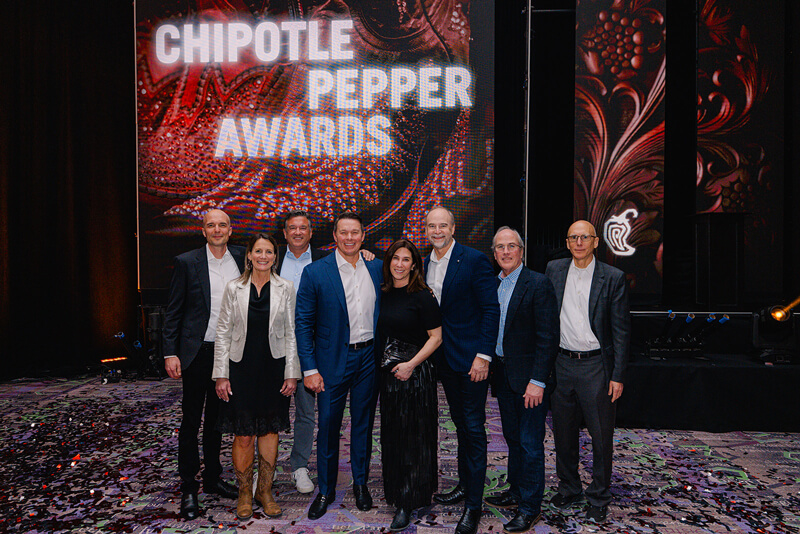
The award was for operations
In 2021, Nation’s Restaurant News named Boatwright its Operations CREATOR. The work behind the recognition included Chipotle’s digital-only kitchen format and expanded mobile pickup and carside options. These are changes a customer experiences as a different way to collect lunch. Inside a restaurant, each introduces questions about space, staffing, preparation and handoff.
Software can accept an order in an instant. Somebody must still make it. A pickup option earns its place by helping the physical restaurant serve that order reliably. The distinction explains why a restaurant operator can be central to a digital business without writing its software.
Boatwright’s contribution has also been collaborative. Chipotle credited his integration of technology into restaurants when announcing his permanent CEO appointment. The leadership team includes technology executive Curt Garner; Boatwright has publicly credited Garner’s role in building the digital system. There is little sense in pretending one executive personally constructed every piece.
By the second quarter of 2026, digital orders accounted for 38.3 percent of food and beverage revenue. That share makes the digital customer part of everyday restaurant work. Whether an order arrives through a screen or a conversation, the kitchen must find room for it.
The title changes. The arithmetic remains.
When Brian Niccol left for Starbucks, Boatwright became interim chief executive in August 2024. On November 11, the board made the appointment permanent and added him as a director. The announcement followed a search process; it also recognized seven years already spent inside Chipotle.
The move brought a wider set of duties. In May 2025, Chipotle hired Jason Kidd as chief operating officer, reporting to Boatwright. That same month, Boatwright resigned his independent directorship at Academy Sports + Outdoors. The retailer’s filing recorded no dispute behind the departure.
The results supplied a sterner test than the appointment announcement. In 2025, Chipotle’s revenue rose 5.4 percent to $11.9 billion, while comparable restaurant sales fell 1.7 percent. Opening restaurants can grow the business even as established locations lose momentum. For a chief executive, both numbers belong in the same conversation.
Up 5.4% year over year
restaurant sales
In February 2026, he put a five-part strategy called Recipe for Growth before investors. It combined restaurant execution, brand messaging and menu development, technology, international expansion and talent. Its breadth reflects the CEO’s problem: a faster kitchen alone cannot answer every question about demand, and an advertisement cannot cook the rice.
The first quarter of 2026 brought a 0.5 percent rise in comparable sales and a 0.6 percent increase in transactions. Revenue increased 7.4 percent to $3.1 billion. Operating margin, however, fell to 12.9 percent from 16.7 percent a year earlier. The business was attracting more visits while facing pressure on profitability.
By the second quarter, comparable sales increased 2.2 percent, including a 1 percent rise in transactions, and revenue reached $3.3 billion. Operating margin remained below the previous year’s level. Those figures describe progress with unfinished work attached, which is generally how an operating business arrives at the next quarter.
His attention to throughput offers another view of the same habits. In early 2025, Chipotle was conducting weekly reviews of how quickly restaurants served customers. It also assigned the manager on duty to the expo position, a role that helps keep orders moving. The company was working on equipment improvements behind the counter as well.
Throughput is a rather bloodless word for something diners understand immediately. It is the difference between a queue that advances and a queue in which everyone starts checking the time. For the employee, better equipment and a clear position can make the rush more manageable. For Boatwright, these details connect the promise made to a customer with the work required to keep it. A burrito has a short journey down the counter, but a surprising number of management decisions travel with it.
A bigger map, the same kitchen
Boatwright wants Chipotle to become a global brand. In a January 2026 interview, he connected that ambition to access, technology and maintaining the food experience as the company expands. His description kept returning to the physical business: ingredients prepared in restaurants using pots, pans, knives and cutting boards.
There is a useful constraint in that picture. A digital brand can cross a border before breakfast. A restaurant must arrange a site, suppliers, equipment and a team that can repeat the work. Expansion adds opportunities for the business and opportunities for its standards to become harder to maintain.
Boatwright’s early experience makes that challenge personal without making its outcome inevitable. He has worked on both sides of an assignment: the young employee being offered more responsibility and the executive relying on others to carry it. Chipotle’s growth will require plenty of both.
The next stage of his career will be judged in new markets and quarterly results. It will also be judged at the counter, where a guest waits and an employee needs to know what happens next. For a former dishwasher who kept accepting another job, that remains familiar territory.