Before Clay Dover had a portfolio to oversee, he had a menu to marvel at. Growing up in Southern California, the oldest of five children, he knew restaurant meals as occasional treats. Money was tight. A visit from his grandfather could mean dinner out, and dinner out meant the pleasure of choosing something for himself. The menu offered a small, unusually delicious kind of freedom.
That memory gives his career a useful starting point. Restaurants entered his life through the guest’s chair, then through the work required to keep that chair ready for the next arrival. His first job was bussing tables at Bob’s Big Boy. He was 15, earning money to buy his own clothes. The industry that had supplied special occasions began supplying ordinary necessities.
In October 2026, Dover is CEO of Savory, the Utah-based restaurant investment and operating platform. His previous chapter included leading Velvet Taco from four restaurants to 54. Those numbers belong in a business profile. So does the teenager clearing plates. A dining room can look like an asset on a balance sheet and feel like an occasion to the person sitting in it. Dover’s career has kept both views in play.
The distance between them is where his work gets interesting. Expansion demands repeatability. A memorable restaurant needs something worth repeating. A chain can reproduce the furniture, the packaging and the sign with relative ease. Reproducing the reason somebody wanted to eat there in the first place requires a little more care.
A career paid for in shifts
Dover worked as a server while attending Brigham Young University. His Utah restaurant experience included Prestwich Farms in Spanish Fork. After college, he managed a Chili’s, before moving into the corporate side of the business in 1998. The route ran through the dining room before it reached the office. By his own account, supporting a young family as a restaurant manager meant working more than 60 hours a week.
Leadership roles followed at Houlihan’s, Apex Restaurant Group and Metromedia Restaurant Group. Marketing became a substantial part of his career, though his experience also included serving as Metromedia’s CEO. There is a practical connection between those jobs. A restaurant’s promise has to survive the trip from an advertisement to an actual order. A persuasive campaign cannot make a kitchen execute it.
At Raising Cane’s, which he joined in 2008, Dover served as president and chief marketing officer during a period of expansion. He has credited founder Todd Graves, CEO Brad Sanders and colleagues there with influencing his development. The lesson he singled out was a company that took its culture seriously while holding people to demanding expectations.
Pei Wei came next. In 2015 he took its chief marketing officer role. By 2017, another opportunity had appeared: Randy DeWitt wanted him to lead Velvet Taco. Dover was taking the experience of established restaurant companies into a smaller concept whose appeal depended on being a little less predictable.
The business card gets a kitchen job
Velvet Taco named Dover president in March 2017 and promoted him to CEO in August 2019. It was a brand with a deliberately broad idea of what a taco could contain. A tortilla could carry flavors normally encountered somewhere else entirely. For an operator, that freedom creates a tempting question: how do you build a system around a restaurant that makes room for surprise?
Dover’s job title provided one answer, or at least a good introduction. Alongside CEO and president, he used “Taco Maker.” The title appeared on his business card and in his signatures. He went through the restaurant training and learned the work. It is an amusing addition to an executive title, and it sets a useful standard: the person asking a team to deliver an experience should understand how that experience is made.
At the time of his 2019 promotion, Velvet Taco had grown from four restaurants to 11 during his presidency. His eventual tenure would cover a much larger expansion. Savory’s account of his career records 54 restaurants, including international growth, and a sale from L Catterton to Leonard Green & Partners in late 2021.
A count of locations describes the result. It leaves out the daily work inside each addition. New restaurants need trained people and shared expectations, and every new address gives the brand another chance to disappoint somebody. Dover’s public emphasis on restaurant teams makes sense against that arithmetic. Growth multiplies the number of people who must get the details right.
A little mischief, every seven days
Velvet Taco’s Weekly Taco Feature had a name suited to a raised eyebrow: WTF. The joke was short; the operating calendar was longer. The program offered a new taco each week, giving guests a reason to wonder what might be waiting next time. Novelty was part of the restaurant’s promise, with a regular appointment attached.
In 2018, Dover described a process that scheduled offerings roughly four months ahead. Training material went out to restaurants. Teams sent photographs back so presentation could be checked. Sales were tracked. A dish that looked spontaneous at the counter had already passed through planning, instruction and measurement. The kitchen’s sense of adventure had a timetable.
One of Dover’s favorites was the Velvet Elvis, a dessert taco involving fried banana, peanut butter and other sweet and savory ingredients. Elvis had certainly inspired stranger tributes. More broadly, the weekly feature gave the company a way to learn from what people actually ordered. An experiment could be enjoyed, counted and considered for future menu development.
For Dover, this is an especially revealing combination. He has a marketer’s interest in the thing customers will remember and an operator’s interest in whether a team can deliver it. A new idea becomes more useful when somebody works out the instructions. Mischief travels better with a packing list.
- PlanSchedule ideas ahead
- TeachSend recipes and training
- CheckReview presentation
- LearnMeasure what sells
The people who carry the restaurant
Dover has repeatedly directed attention toward the employees doing the restaurant work. In a 2019 conversation about his career, he described team members and managers as a daily inspiration. He also said that some of his proudest moments came when somebody he had worked with earned a promotion or moved into a larger role elsewhere.
That last detail deserves a pause. The larger role did not have to be inside his own company to count as a success. It suggests a view of leadership in which a person’s development can remain valuable even after an organizational chart stops claiming it. Restaurants are demanding workplaces; taking pleasure in another person’s progress is a fairly concrete way to explain what their demands are meant to produce.
His advice to a younger version of himself was equally plain: “Patience. Let things come to you.” Coming from someone who describes himself as driven, it has the appeal of advice earned rather than merely framed. Ambition can open opportunities. It can also make every opportunity look late.
By 2021, Dover was discussing Velvet Taco’s culture in terms of retention, advancement and the preparation needed for growth. The sequence matters. More locations create more jobs, but a company also needs people ready to take responsibility for them. The restaurant can reproduce its recipes on paper. Experienced employees help reproduce its judgment.
“Be in touch with your team. Be in touch with consumers. Listen to them.”Clay Dover
An invitation he did not see coming
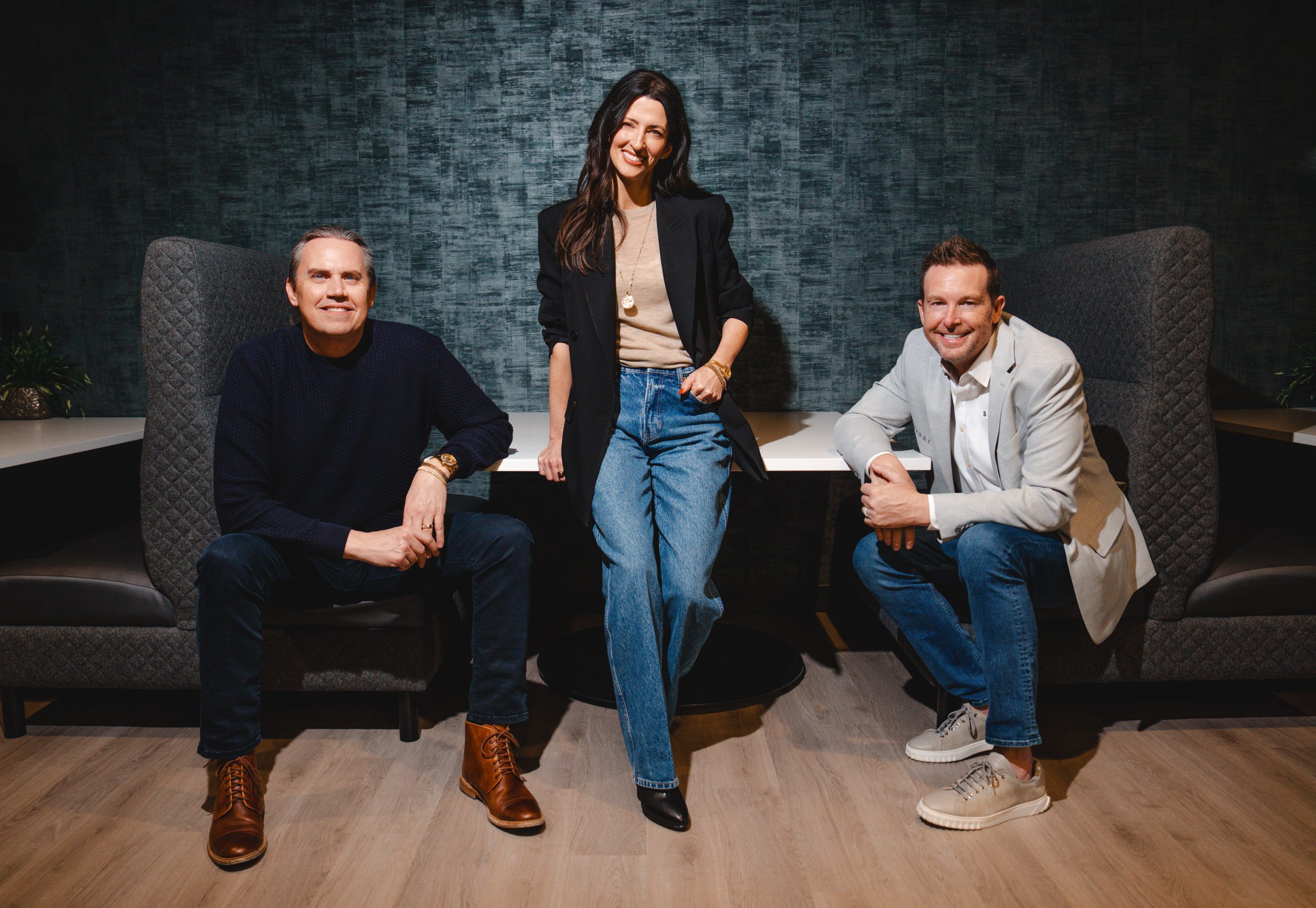
Dover had known Andrew and Shauna Smith for years when the possibility of joining Savory became a real conversation. After more than eight years at Velvet Taco, he was considering what to do next. Andrew invited Dover and his wife to spend time with the Smiths. Shauna proposed that he become their CEO. Dover later said the suggestion surprised him.
The appointment was announced on January 7, 2026. Shauna, Savory’s co-founder and outgoing CEO, moved into a managing director role alongside Andrew. For Dover, the change meant taking responsibility for a collection of founder-led businesses after years spent leading one restaurant brand. The unit of attention had changed from the next Velvet Taco to the needs of several different concepts.
He explained the attraction through three considerations: the people, the purpose and the platform. Savory’s investment and operating teams worked in the same building. It could offer support in areas such as culinary development and marketing. Dover saw a setting where the financial decisions and the restaurant work could stay close enough to inform each other.
The founders remained part of the model. That makes his brief more particular than opening a string of interchangeable restaurants. A founder carries knowledge about why the original worked, including decisions that may never have appeared in a manual. An operating platform brings resources to help more people act on that knowledge. The quality of their partnership will show up on the plate, at the counter and in the next opening.
One platform, several kinds of guest
Savory’s January appointment announcement described a platform spanning more than 370 restaurants across 26 states. Its brands included Mo’ Bettahs, Via 313 Pizzeria and Houston TX Hot Chicken. These figures describe the business Dover joined, built under the Smiths’ leadership. They also explain why a common operating resource needs room for different restaurant personalities.
In a 2026 conversation with Thanx CEO Zach Goldstein, Dover discussed using a shared loyalty baseline while allowing individual concepts to customize it. His criteria for technology partners were practical: understand restaurants, make execution manageable and provide help when a problem arrives during service. Saturday night is a poor moment for software to develop a philosophical objection to working.
That approach connects the portfolio job with his earlier restaurant experience. A useful system should help the person using it and leave the guest with a better experience. The technology can sit behind the scenes; the restaurant still has to feel like somewhere worth returning to. Shared infrastructure earns its place by making the individual businesses work better.
The next table
In August 2026, Savory announced an investment in Zao, a pan-Asian fast-casual business founded by Dave Duffin. It had 23 locations across the Mountain West. Dover welcomed the company publicly, emphasizing its founders, teams and established relationship with guests. Here was another brand arriving with a history of its own, before the next stage of expansion.
The question running through Dover’s career now applies across a wider set of dining rooms. How do you give a business more capacity without blurring the decisions that made people like it? His experience offers a set of working habits: learn the restaurant jobs, prepare teams before asking more of them, make experimentation repeatable and keep founders close to the business they created.
The boy who once studied a menu for the pleasure of choosing now helps decide what gets built around many menus. There is a satisfying continuity in that. A restaurant can grow into a substantial enterprise while the guest’s request remains wonderfully modest: something good to eat, served by people who make the visit feel worth making. The next location has to earn that feeling again.