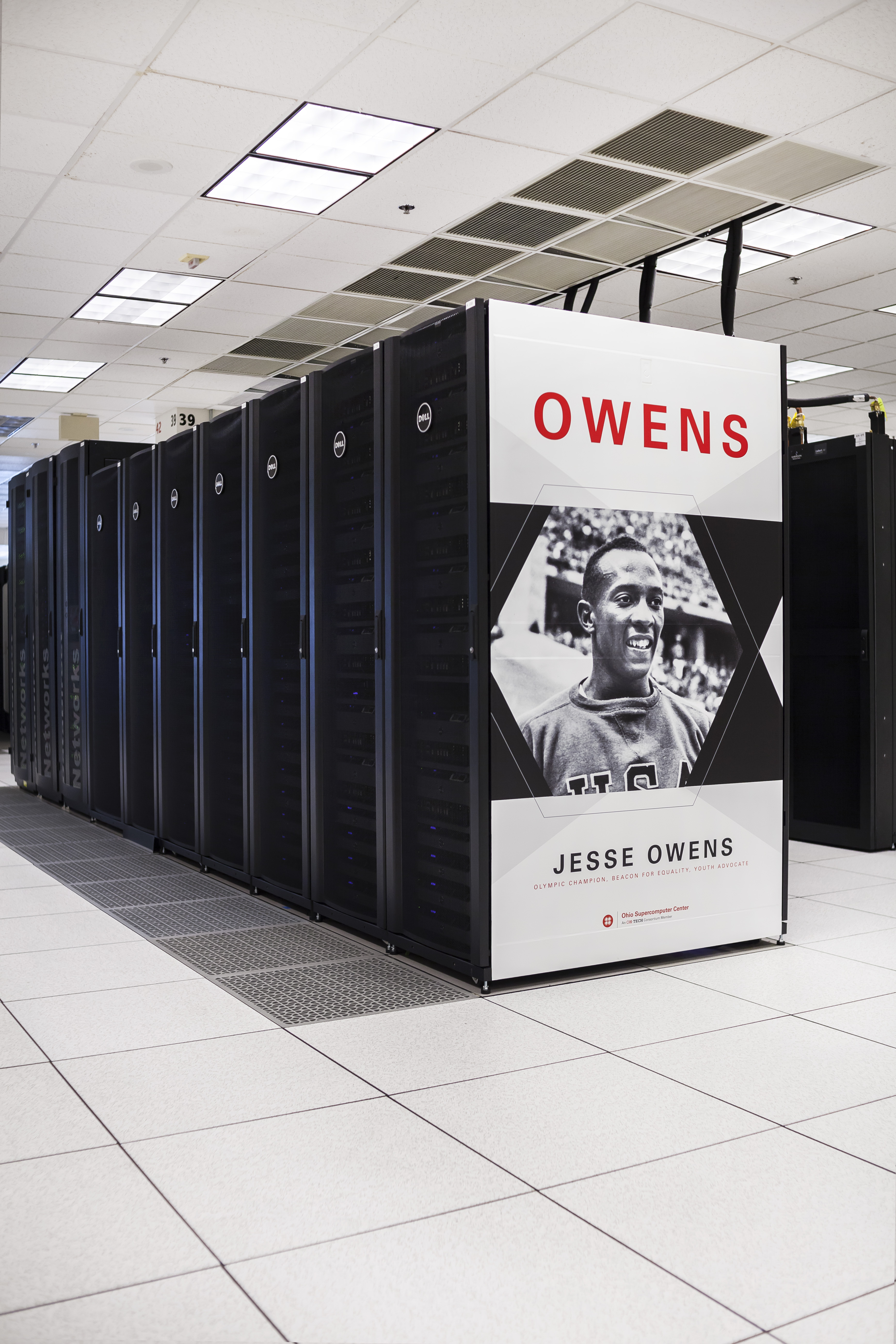
On May 24, 2017, a Michigan database company gave a supercomputer a weather problem. Scientel Information Technology had built a sample weather database application for the Ohio Supercomputer Center’s Owens Cluster. The exercise used 600 compute nodes, or 16,800 cores, and produced 1.25 terabytes of synthetic data. At the time, OSC called it the largest-scale calculation in the center’s history. Quite a lot of machinery for an imaginary forecast.
- Gensonix connects Scientel’s database software, content search and AI systems.
- The Owens run demonstrated scale on a specific synthetic workload.
- Scientel sells integrated systems and offers analytics billed by time used.
The number attracts attention. The arrangement behind it explains the company. Scientel builds both the software that organizes information and the server systems that process it. Its proposition is that these two jobs belong in the same conversation. A fast machine still needs a sensible way to store, retrieve and distribute its work.
A big test with a small print lesson
OSC’s research report recorded more than 86 million data transactions per minute, with no errors, during the demonstration. That is a result tied to an application, a machine and a moment. A prospective buyer should keep all three attached. Synthetic weather records establish something about parallel execution; they cannot, by themselves, predict the speed of a company’s customer database or document archive.
For Scientel, the useful achievement was getting a database application to operate across that much equipment. For OSC, the run demonstrated a capability of its new cluster. Interim executive director David Hudak put the relationship plainly: “Scientel helped us demonstrate the power of the Owens Cluster.” Both parties got a test they could explain.
The filing cabinet inside the computer
Gensonix is the thread through Scientel’s portfolio. Earlier announcements describe a NoSQL database supporting several data models. The current website calls it an AI database and describes NewSQL expertise. Across those changing labels, the recurring idea is to keep different kinds of information in distinct stores within one database environment.
Consider the ordinary office mess: a spreadsheet of orders, a PDF contract, a presentation and a folder of photographs. These objects carry different structures. Scientel’s Enterprise Content Management & Search product, ECMS, offers a centralized repository with drag-and-drop ingestion, metadata and extended or fuzzy searches. Users can search text within textual documents and retrieve stored files. The attraction is almost domestic: put the material somewhere you can find it again.
The smaller products make that intention particularly clear. EZContent was announced for smaller enterprises in 2015. My little BigData combines a compact Intel-based server, Linux PC, storage and search functions for individuals and small businesses. A company associated with supercomputers also markets a way to organize your pictures. Both products address the distance between owning information and being able to use it.
Buy the system. Or rent the work.
Scientel occupies the junction between database vendor, hardware supplier and systems integrator. It offers consulting and support alongside customized hardware and software. Its Elastic Scaling Server range pairs equipment with Gensonix; the ESS 3400 product page advertises support for 3,456 database nodes. That figure describes a product claim, separate from the measured Owens demonstration.
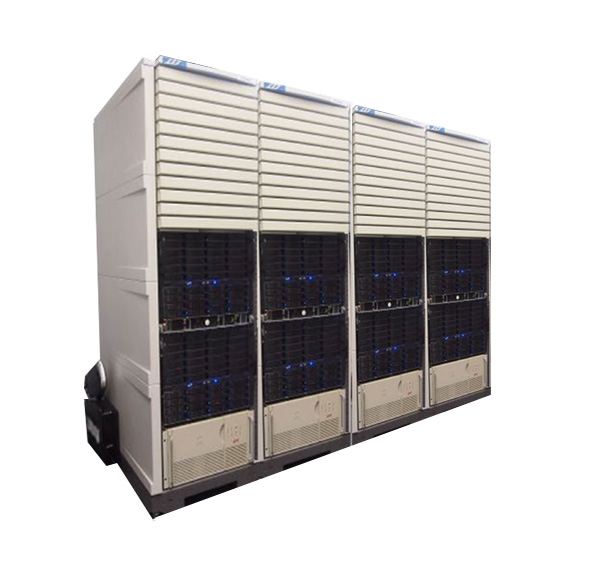
The intended buyers include businesses, scientific organizations and government users. They may need analytics, an internal content repository or an AI system built around their own information. Scientel’s emphasis is on assembling those components into a working deployment. The commercial relationship can therefore extend beyond a software purchase into configuration, integration and ongoing assistance.
There is another route. Scientel’s database-as-a-service offering combines staff expertise in data preparation, transformation and modeling with parallel computing resources. Customers pay for time used. That changes the buying decision: an organization can purchase analytical work without first acquiring servers, software and additional IT personnel. The service puts an easily overlooked expense, preparing the data, inside the offer.
The chatbot needs somewhere to live
Private AI gives Scientel a new use for its database argument. Its current systems store relational, document, text and vector data within Gensonix. The company offers configurations using AMD, Intel or Nvidia GPUs, mixtures of CPUs and GPUs, and CPU-only options. The target is an organization that wants a system fitted to its own data and computing requirements.
In March 2026, Scientel reported running DeepSeek R1, a 671-billion-parameter model, across 36 Nvidia H100 GPUs at OSC. Its six-trillion-parameter headline adds together nine parallel model instances. Read that as multiple copies in a deployment. The arithmetic does not describe one newly trained six-trillion-parameter model, and it supplies no answer-quality comparison.
The practical question is how the data, the model and the machine work together.
A March database option lets processing nodes use a central repository or local databases. April’s MOV-LLM announcement adds mixed-vendor GPU nodes, potentially with different model sizes. Scientel’s pitch is that existing hardware can remain useful as a system grows. Buyers should read this as a distributed configuration proposal, then test the particular models and equipment they intend to combine.
Bring your own difficult question
The lesson a reader can copy is straightforward: specify the job before admiring the machine. Choose representative files, queries and update patterns. Measure preparation time as well as execution time. Include migration, support and the work of learning Gensonix’s SDBL development language when evaluating an integrated system against an existing SQL deployment or separate specialist tools.
That approach is especially relevant when data types and processing demands are varied enough to justify integration. A modest database already serving its users well may offer little reason to switch. Scientel’s most interesting demonstration remains useful because it was concrete: a named application, a known cluster, a defined run. Bring that same specificity to the next purchasing conversation. Start with the information you need to find.