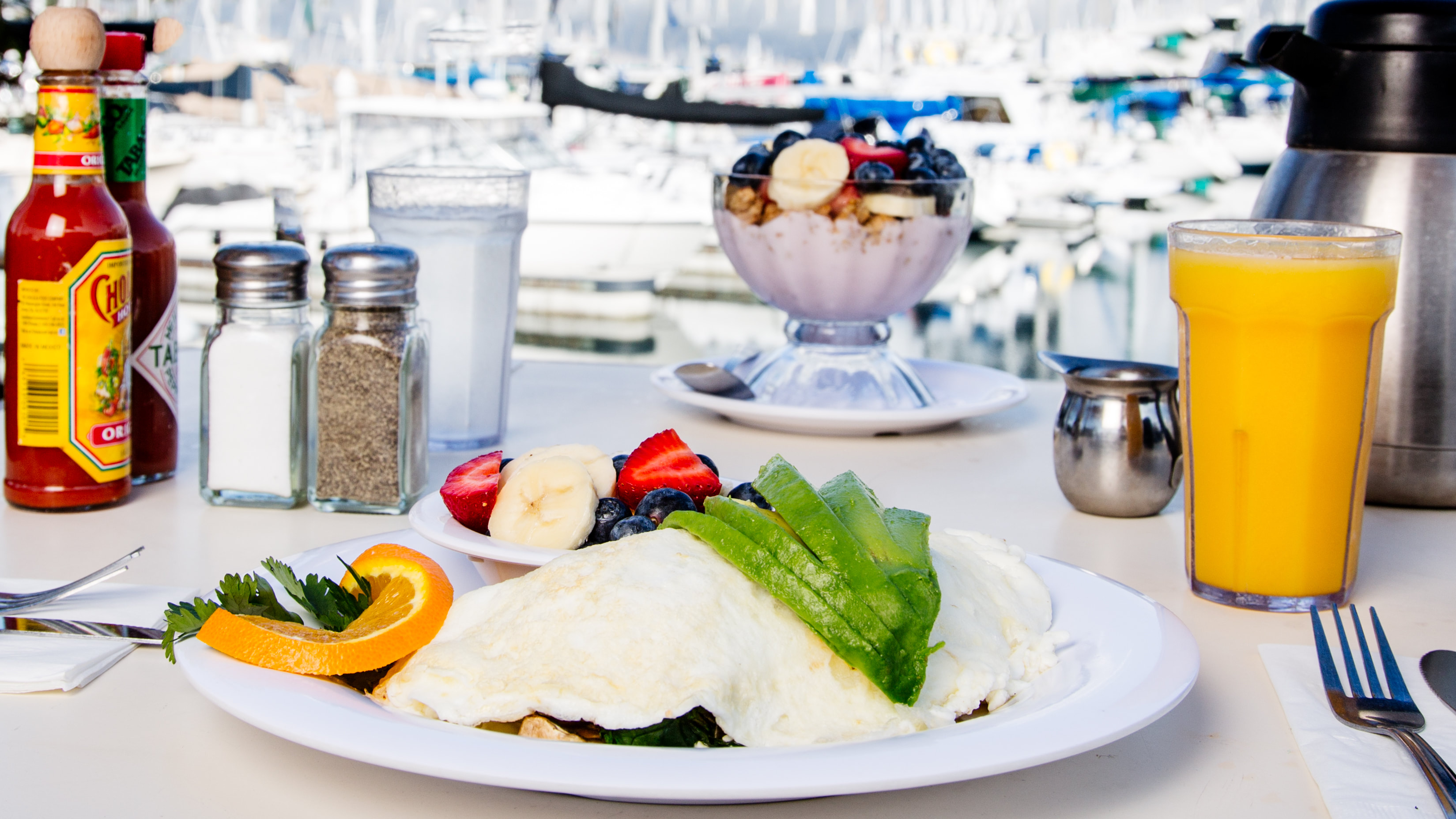
There is a particular kind of business insight that sounds obvious only after somebody else has made a living from it. In the early 1980s, Denny Lund was eating at a small cafe called the Little Ships Galley on the eastern edge of Alamitos Bay. The cafe had a counter, diner food and, just outside, a large patio doing almost nothing. Beyond it were the masts and white hulls of the marina. Lund looked through the window and saw not empty concrete but inventory.
He and his sister Denise reopened the place as Schooner or Later on May 12, 1985. The first outdoor expansion consisted of three aluminum tables. This was not an architectural master plan. It was a cheap test of a useful hunch: breakfast tastes different when the background is a boat harbor.
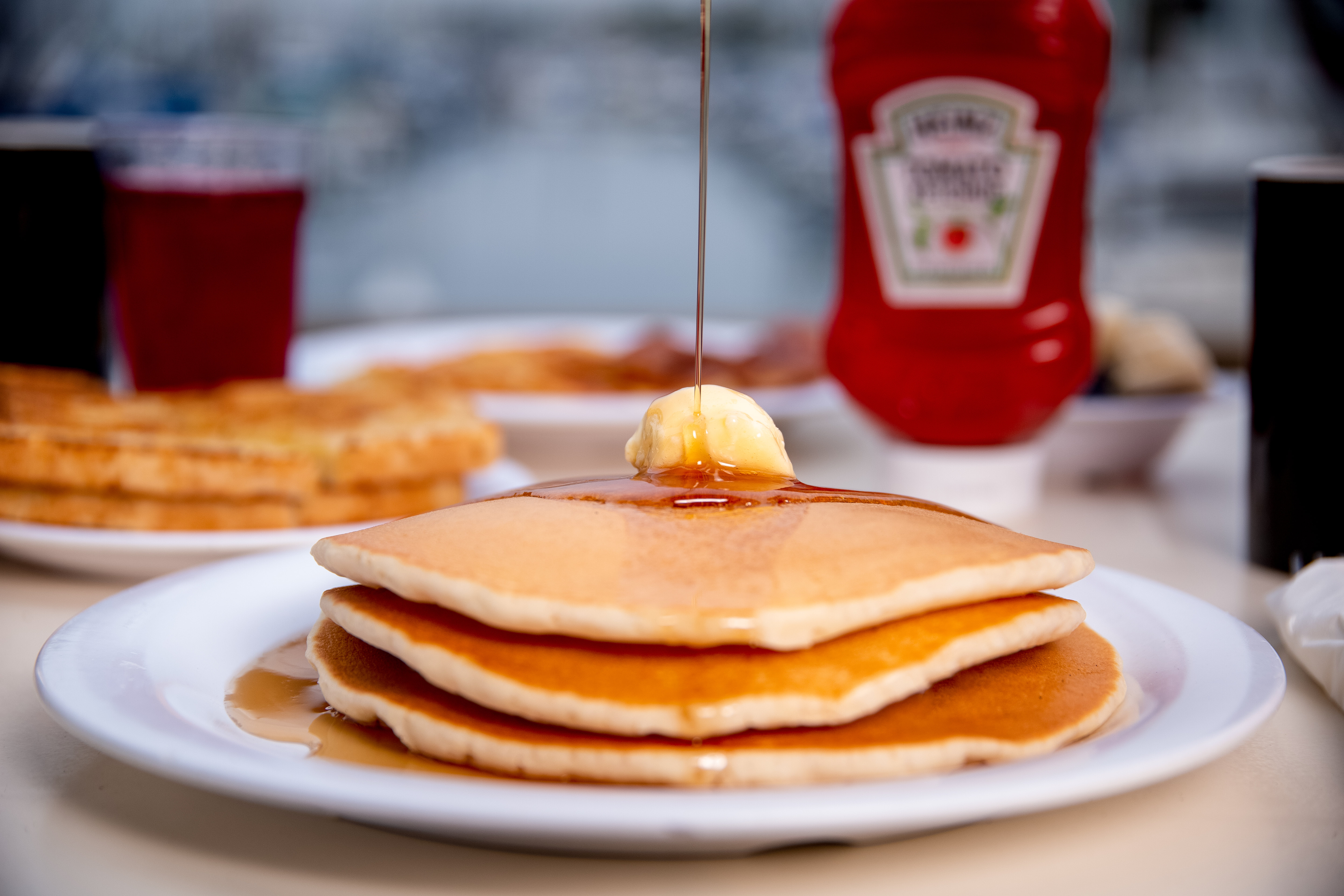
The place was already there. The product was hiding inside it.
Restaurants are often described as food businesses, which is true in the same way that cinemas are chair businesses. The food matters enormously. But the customer buys a block of time with a mood attached. Schooner or Later's move was to make the marina part of every order. Today the patio, heated covered patio and dining room serve breakfast and lunch seven days a week. On busy weekends, the wait can reach an hour. People still wait.
The setting alone would not have lasted forty years. The Lunds also understood the rare discipline of inheritance. Earl and Helen Schultz, the previous operators, had already created the cafe's most memorable dish: chopped ham, bell peppers and onion grilled with hash browns and eggs, then covered with cheddar. It was called Schultzie's Mess. The new owners kept it, shortened the name to The Mess and made it the flagship.
This is more interesting than inventing a signature dish. It is a case of recognizing that a signature already exists. Schultzie remained part of the restaurant and made chili from scratch each week until the volume became too much for him at age eighty. The first documented strain, in other words, was capacity. The handover was not a clean break; it was a relay.
“It just kind of happened.”Denise Lund, on becoming a restaurant ownerWhat the company actually sells
Breakfast is the receipt. Ritual is the repeat purchase.
Schooner or Later is a one-location consumer business, not the public-relations company some commercial databases claim it to be. Its business model is delightfully legible: sell omelets, benedicts, pancakes, burritos, melts, burgers and drinks; add takeout, online ordering, large parties, gift cards and merchandise; stop in the afternoon; do it again tomorrow. A smaller counter called The Little Later was revived in 2025 to catch people who want coffee and a pastry without committing to a full table.
The current menu shows what the experience costs. A two-egg breakfast is $14.95. The full Mess is $21.75. A crab-and-avocado Benedict or crab-and-avocado melt is $26.95. Mimosas begin at $10. This is not bargain-counter nostalgia. It is mid-priced brunch with a location premium, broad portions and enough menu range for the person who wants oatmeal to sit beside the person ordering a frozen margarita.
A morning measured in menu prices
Its customers are locals, families, tourists, marina regulars, brunch groups and patio-seeking dog owners. They are not merely solving hunger. They are solving the harder Sunday problem: where can a mixed group go that feels like an outing without becoming an occasion? The answer needs coffee, alcohol, eggs, lunch, a view, room for children and permission to linger. Schooner or Later bundles those needs into one address.
Someone from the family is usually watching the room
The most important technology at Schooner or Later may be an owner with peripheral vision. Denise's son Curtis, daughter Cori and grandson Ryan have all worked there. The company's own explanation for its durability is plain: someone from the family is generally present, listening when employees or customers say that something has slipped.
That presence is difficult to scale and easy to underestimate. A restaurant produces hundreds of tiny failures: a cold egg, an empty coffee cup, an impatient host, a table left sticky in the salt air. Software records the order. It does not notice the expression of the person who received it. Visible ownership closes that gap.
The culture is also stored in objects. A restored jukebox dates to about 1943. Artwork above the counter came from the old Towne Theatre in North Long Beach. A mural recalls downtown and the Pike around 1933. These are not coordinated by a brand agency. They accumulated, which is why they feel like evidence rather than styling.
The Galley before the Schooner
Earl and Helen Schultz run the Little Ships Galley and create Schultzie's Mess.
A new name, three patio tables
The Lund siblings reopen the cafe and begin making the unused waterfront do commercial work.
The Mess meets television
Diners, Drive-Ins and Dives features the restaurant, its waffle and the house scramble.
Legacy, then another service
A city Legacy Business certificate, a lease extension, a 40th anniversary and then the 41st year.
Television delivered attention. Repetition did the heavier work.
In January 2008, Guy Fieri's Diners, Drive-Ins and Dives put Schooner or Later in an episode called “Off the Hook Specials.” The Mess, a Belgian waffle and a crab omelet reached a national audience. That was an achievement, but it arrived twenty-three years after opening. The show amplified a place that had already learned how to be itself.
The harder change came inside the family. Denny died in 2024, leaving Denise as sole owner. A year later she marked the restaurant's fortieth anniversary without closing for a private celebration. The plan was a balloon arch, games and an otherwise ordinary day of service. This is a useful clue. At a ritual business, the customers do not want to observe the anniversary from outside. They want their usual table.
“This is my life. This is my passion.”Denise Lund, owner
Long Beach awarded the restaurant Legacy Business certification, a recognition for businesses that contribute to neighborhood history and culture. The city later extended its lease during planning for Marina Drive. Schooner or Later is therefore both a private company and a small piece of civic infrastructure - the sort made of hash browns rather than concrete.
The copyable part is not the nautical theme
Keep the product customers already love. Find the underused asset attached to the premises. Put decision-makers close enough to see failure while it is still small. Let the wait contain part of the experience. Add channels - takeout, coffee, gift cards - without making the core unrecognizable.
There are limits. This logic works best when the location is genuinely pleasurable, the product is repeatable, and ownership can remain present. A generic view cannot rescue weak food. An hour-long wait feels romantic beside sailboats and merely inefficient beside a parking lot. Family oversight becomes a bottleneck if growth requires many rooms at once. And continuity curdles into complacency when “the way we do things” becomes an excuse not to hear complaints.
Schooner or Later has chosen depth over geographic reach. It competes with waterfront restaurants and Long Beach brunch rooms, but its sharpest alternative may be staying home. Against that competitor it offers a reliable transformation: eggs become an excursion. The formula is not mysterious. The discipline is repeating it for forty-one years while the boats rock behind the patio.
Go for breakfast, stay for context