Sarvarth Misra once found himself explaining to an enthusiastic customer why buying his AI would not mean automating every difficult contract. A consumer goods executive wanted the redlining process taken off human hands. Misra urged a narrower start: routine documents, with more complicated agreements still requiring judgment. It is an unusual sales technique, putting the brakes on the buyer. For a former corporate lawyer, though, an overexcited promise is a familiar kind of liability.
That exchange captures a useful tension in Misra’s career. He sells a future in which software takes on more responsibility, while repeatedly returning to the question of how much responsibility it should be allowed. His company, once called ContractPodAi and now Leah, has expanded from contract management into AI systems for legal, procurement and finance. The territory has grown. The awkward question has followed him.
A signed contract looks wonderfully conclusive. It has dates, names and the pleasing finality of a signature. Inside a business, it is also the beginning of obligations, payments, deadlines and decisions. Misra has spent his entrepreneurial career moving closer to that second story: what people must actually do with the agreement once it exists.
The lawyer who noticed the machinery
Before software became his business, corporate and commercial law was his trade. Misra worked in Asia and the UK, with experience spanning mergers and acquisitions, capital markets, restructurings and cross-border joint ventures. His work also covered regulatory questions, foreign investment and taxation. These are matters in which a small detail can have a long working life.
He understood contracts from the inside. He also saw how slowly his profession was adopting technology. In recounting his move into entrepreneurship, he described an industry with considerable room for practical tools. The opportunity grew out of work he already knew, rather than a search for somewhere fashionable to put a new invention.
There was an earlier business, too. By October 2012, Misra and Robert Glennie were co-founders of NewGalexy, a legal services company with operations in London, Chicago and India. When it chose Glasgow for its European delivery centre, Misra was its executive director. The announcement anticipated 21 jobs and described a service using technology and processes to help law firms and corporate legal teams deploy their lawyers more effectively.
That episode belongs in his story because it shows how early the operating question appeared. How do you divide legal work? Which parts need a particular lawyer? Which can be handled elsewhere, with a defined process? Software would give those questions a different set of possible answers.
Who should do the next piece of work, and what do they need to know?
A filing cabinet acquires ambitions
ContractPodAi gave Misra a product through which to pursue the problem. He led its conceptualisation, design and development, and took responsibility for strategy, growth and commercialisation. A legal background was useful here because the work being organised had its own language, exceptions and consequences. Storing a document is straightforward compared with deciding what its contents require.
The early proposition sat within contract lifecycle management, usually shortened to CLM. The phrase covers the journey from requesting and drafting an agreement through review, approval, signature and later monitoring. It is a decidedly unromantic category name. So is plumbing, until the kitchen floods.
By 2020, Misra was talking about digital transformation as a problem of changing how legal departments operated. Implementation, governance, performance measures and the economics of contracting all featured in his discussion. The emphasis was on putting the pieces together. Buying separate tools did not automatically produce a functioning process.
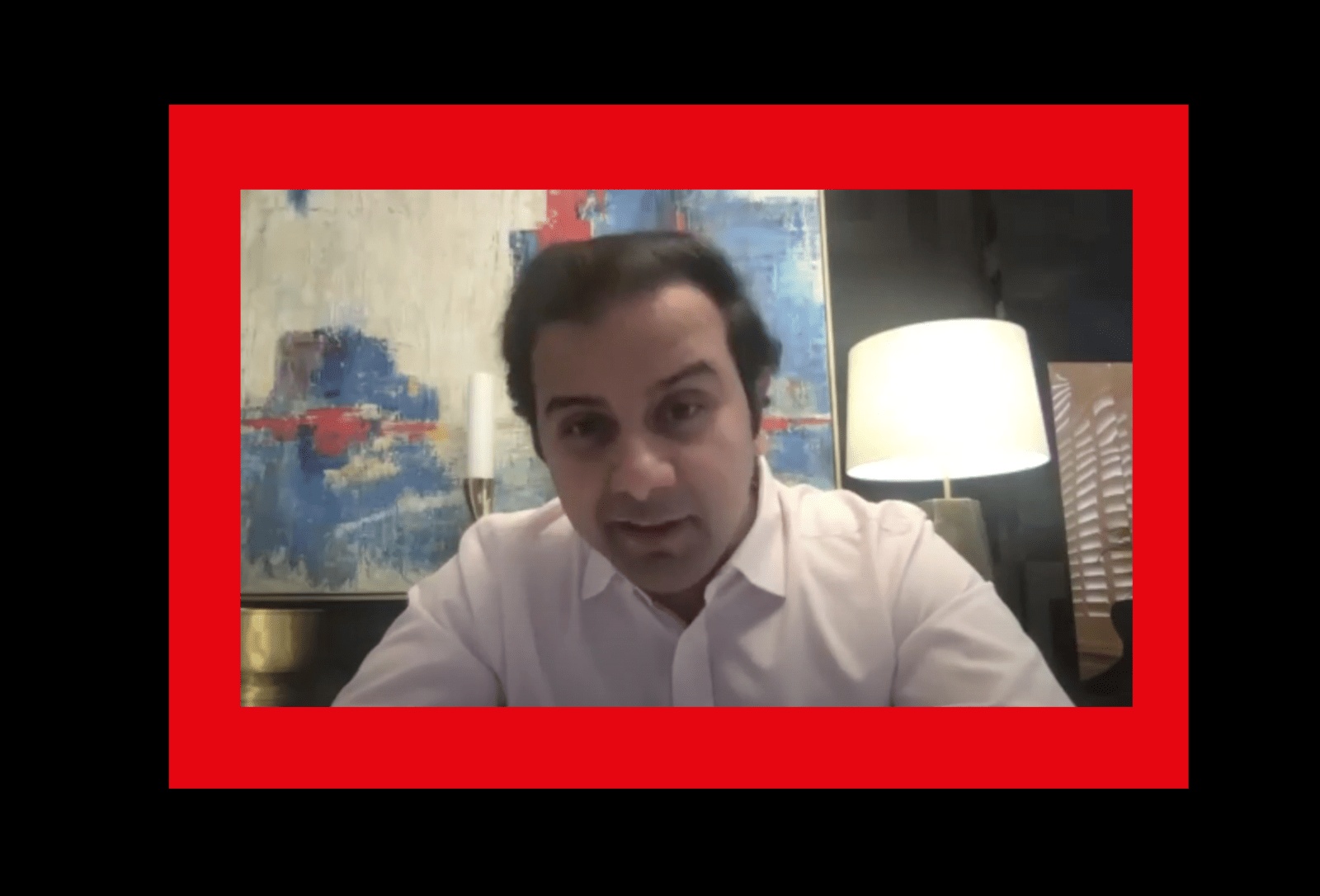
That earlier conversation makes the current company easier to understand. The language has changed with the technology. The concern with implementation was already there, well before enterprise AI became a regular item on a boardroom agenda. A process still has to work when the demonstration is over and the person presenting it has gone home.
The money bought a longer brief
On September 30, 2021, ContractPodAi announced a $115 million Series C round led by SoftBank Vision Fund 2. Existing investor Eagle Proprietary Investments participated, and SoftBank’s Ayush Jain joined the board. Insight Partners was already among the company’s backers. The financing gave Misra resources to expand the platform and its international business, including opportunities in Asia-Pacific.
His stated ambition at the time was a broader technology infrastructure for in-house legal teams, comparable in purpose to the systems other corporate functions used. The plan already reached beyond a single contract task. Contract management offered an entry point into a department with many related demands.
Growth funding led by SoftBank Vision Fund 2, announced under the ContractPodAi name.
Capital can pay for engineers, distribution and expansion. It cannot settle the question of whether a customer will trust a machine with consequential work. That question became more immediate as generative AI made the product easier to converse with, and much easier to imagine doing everything.
The salesman and the small print
Misra’s account of selling generative AI includes a film reference. He compared the initial enthusiasm to Jerry Maguire: “You had me at hello.” Leah’s generative AI legal services hub arrived in May 2023, bringing a more conversational way into work such as drafting and document review.
Enthusiasm brought a responsibility to explain the limitations. “Expectation management is fundamental,” he said. A bank executive had complained that the same question could yield an answer framed in a slightly different context. Misra acknowledged the technology’s behaviour. The consumer goods conversation was another example: start with routine redlining, rather than assume every agreement could pass through untouched.
“Expectation management is fundamental.”
Sarvarth Misra
There is a commercial logic to this restraint. A modest assignment that works gives the buyer something concrete to assess. An expansive promise makes every imperfection feel like a broken undertaking. In legal work, the difference matters because the customer is buying help with documents whose consequences can outlast the buying decision by years.
Other people’s institutions
Misra’s company also built relationships with organisations that already delivered professional services. In October 2024, KPMG announced a strategic alliance with ContractPodAi for AI-supported managed legal services. The arrangement paired Leah’s technology with KPMG’s legal delivery capabilities. It put the software inside a wider service offering.
That approach has a practical appeal. A legal team needs the technology to fit its work, and it may need help deciding how that work should change. A professional services firm has its own people, client relationships and implementation responsibilities. For Misra, these alliances provide a route from a product presentation to an operating environment.
Microsoft added another dimension. In June 2025, the companies announced an expanded collaboration built around Azure OpenAI in Foundry Models, with plans for agentic solutions across legal, procurement, compliance and regulatory work. Access through Azure Marketplace also offered a way to distribute the product internationally. Misra’s legal specialism would sit alongside infrastructure supplied by a much larger technology company.
Then came Leah Agentic OS in October 2025. The company described a platform for building, deploying and coordinating AI agents across business functions. The scope now extended into work that crosses departmental boundaries. The person running the company still came from law; the proposed customer conversation was becoming considerably broader.
When the product took the company’s name
On January 5, 2026, ContractPodAi became Leah. The name had previously belonged to its AI offering. Anna Burke, the company’s chief marketing officer, explained the initials as Lead, Empower, Accelerate and Harmonize. The rebrand gathered the expanding business under a shorter identity.
Misra said customers were asking the company to help reshape how their organisations worked across functions. By then, he reported, about 40 percent of revenue came from offerings outside CLM. That figure is his account of the business at the time of the rebrand. It helps explain why a name tied so tightly to contracts had begun to feel restrictive.
His description of the company’s accumulated experience was less polished, and more revealing: “the grind of operationalising AI when AI wasn’t fashionable.” There are less laborious ways to describe a technology business. Grind suggests deployments, exceptions and the inconvenient distance between an appealing idea and a dependable service.
- 01Request
- 02Review
- 03Approval
- 04Obligations
Human judgment + configured controls across the process
In February, Leah and PwC UK announced work on agentic operating models for Global Business Services. Their stated goal was to coordinate agents across processes, combining the software with expertise in organisational change. A subsequent PwC India announcement likewise emphasised governance, oversight and integration with existing enterprise systems. The implementation problem had acquired more departments.
A conductor, with rules
In May 2026, Leah launched Maestro, a layer designed to coordinate the orchestrators beneath it. Misra described the frustration of executives investing in disconnected AI tools. Maestro’s proposition was a shared view of autonomous workloads, with coordination, traceability and governance. It was a claim about running an operation, far beyond answering a question about a document.
September brought Leah Contracting, powered by Maestro. The company’s stated design assigns stages of contracting to specialist agents, applying playbooks and handing work between them. Customers determine where people must approve, judge or intervene. Signature remains a human step in the product’s published explanation.
The distinction matters to Misra’s larger ambition. Moving work automatically requires decisions about permissions, escalation and accountability. A helpful draft can wait for a lawyer to read it. A system that takes the next step needs boundaries before it begins. The controls become part of the product being sold.
There is a quieter counterpoint to all this organisational ambition. In a 2022 conversation, Misra described himself and his wife as introverts, and one of their two daughters as thoroughly extroverted. They were still wondering where she got it. Even a founder occupied with coordinating intelligent systems can encounter a household whose operating model resists explanation.
His professional ambition is clearer: extend the usefulness of AI from individual legal tasks into the connected work of an enterprise. Whether that succeeds will depend on what happens at each handoff. It is a fitting problem for someone who began with contracts. The signature was always going to be the easy place to stop the story.