A pharmacy student needs more than the right answer. She needs to understand why it is right, when it stops being right, and which detail in a patient’s history changes everything. That makes a pharmacy classroom an interesting place to put artificial intelligence. It is also a useful place to begin understanding MindHYVE.ai.
In March 2026, California Northstate University’s College of Pharmacy announced a collaboration to bring the company’s ArthurAI into advanced coursework. The plan starts with existing curriculum, adds instruction adapted to individual learners, and includes AI training for faculty. The unit of change is a course people already teach.
- MindHYVE builds professional AI workflows for education, healthcare, law, theology and finance.
- Its products combine specialized reasoning with commercial frontier models.
- Subscriptions buy software; institutions also scope integration, training and oversight.
The classroom is the clue
Founder Bill Faruki calls the guiding idea “equalization.” In a May 2025 interview, he described a familiar imbalance: good services concentrate in affluent cities while everyone else travels, waits, or goes without. His proposal is to distribute more of the supporting expertise through software.
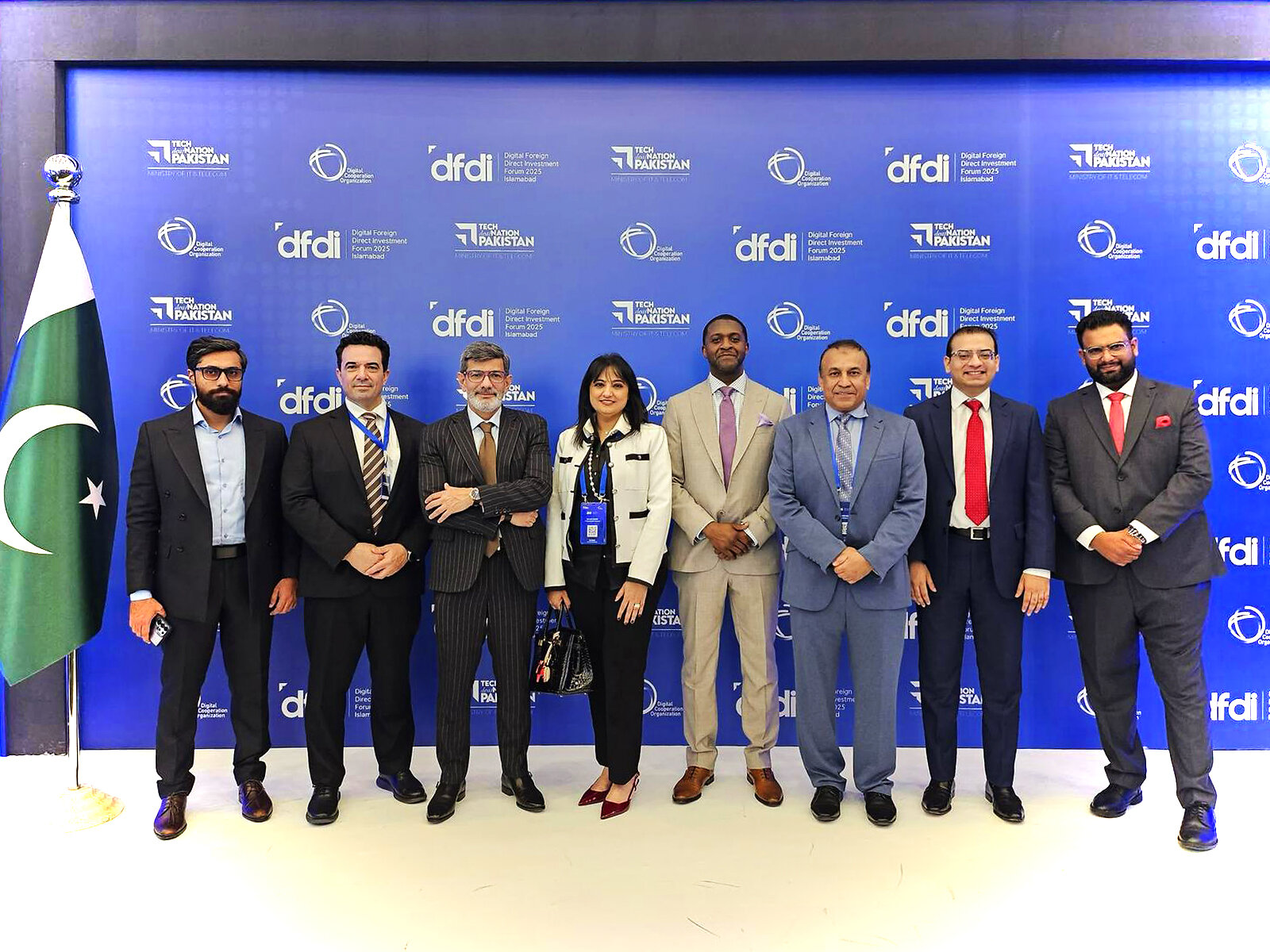
The company dates its research roots to HYVE Labs in 2022 and its incorporation to July 2024. Today, its public team spans Newport Beach, Islamabad and Nairobi. That geography fits the thesis. A product intended for institutions beyond wealthy technology markets needs people who understand those institutions.
“We’re in the access race.”
Bill Faruki / MindHYVE.ai
Software with a job description
ArthurAI handles learning. Its editions address schools, universities, vocational training, corporate learning, families and individuals. The proposed advantage is continuity: track what a learner understands, spot a gap, and adjust what comes next. Teachers remain part of the system, with assessment and progress tools.
ChironAI addresses clinical decision support and occupational medicine. Its published workflow stages clinical artifacts for physician attestation. The software can prepare work, but a clinician must review it before it becomes final. For a busy practice, that boundary is a product feature with consequences for how work moves.
JustineAI works on personal-injury and applicant-side workers’ compensation matters. Its advertised tasks include intake, medical-record organization, demand letters and case analysis. TheoAI serves Islamic study with evidence and transmission-chain information. EliAI focuses on medical-receivables finance. These are distinct professional chores, each with its own vocabulary and review requirements.

A committee inside the machine
Under those products sits Eve-Fusion. MindHYVE describes a five-model composition: a routing classifier, a small reasoner tuned for the profession, and three commercially available frontier models. The arrangement is assembled around the request. Eve-Grid supplies the Azure-based infrastructure.
Think of it as allocating work among specialists. A request must be understood, broken into parts, handled and assembled. The company’s technical proposition is that the coordination and domain training make the resulting workflow useful. It is a design argument, rather than evidence that every task will outperform another system.
The professional wrapper matters just as much. A lawyer needs to trace a statement to a record. A teacher needs to understand a learner’s difficulty. A physician needs to approve the final artifact. MindHYVE’s market position rests on fitting these habits into software that can do several steps of useful work.
The price of putting it to work
There are concrete entry points. ArthurAI Studio offers free course authoring and hosted publishing. Creator costs $149 per workspace per month on monthly billing, adding source-grounded courses and export options. Team costs $890 monthly with five seats included. Institutional learning editions use negotiated learner licenses.
JustineAI’s personal-injury plans list $149 monthly per support seat and $449 per attorney seat. Its California applicant-side workers’ compensation offering lists $99 for staff and $299 for attorneys. Annual plans have different rates. These prices describe the software subscription, rather than the total cost of changing a practice’s operations.
per workspace
per attorney seat
ChironAI uses institutional quotes, usually based on clinician count. Edition mix, site count, integration depth and contractual requirements affect the number. Its pilot has a defined caseload and end date. That gives a buyer a practical question: does this help on our cases, with our people reviewing the output?
An agreement is a beginning
The distribution strategy runs through institutions. The Open University of Kenya collaboration, signed in January 2026, explores ArthurAI in selected programs, with faculty support, localization and impact evaluation. Those details make the agreement interesting. They identify work that must happen between a demonstration and a dependable service.
There is a commercial route through personal relationships, too. MindHYVE’s published referral program offers partners 10% of revenue collected from referred clients for the life of their contracts, including renewals. The company supplies demonstrations, proposal support and onboarding. That is a revealing piece of the business model: someone who already knows a school or practice can introduce the software, while MindHYVE handles the product and contracting.
In Pakistan, a 2025 agreement with Islamabad Diagnostic Centre described phased diagnostic and reporting work. Separately, MindHYVE announced a $22 million investment commitment into Pakistan. Faruki said the money would arrive in stages as operating KPIs were met. The commitment describes planned spending by the company, rather than capital raised from investors.
There is a useful discipline here for other operators: choose a real workflow, define the pilot, retain a responsible reviewer, and expand against results. The approach depends on suitable records, staff participation and an edition that fits the task. Institutions needing capabilities outside that scope would have to establish fit before expanding.
MindHYVE’s proposition becomes easier to judge at this scale. Watch a teacher use the progress view. Watch an attorney check a record. Watch a physician review a draft. Expertise travels only when the person receiving it can put it to work.