The most revealing number in Sarah Chapman’s digital brief is not a model parameter or a software budget. It is seven in ten. Roughly 70 percent of Manulife customer service requests now travel from beginning to end online, without a call centre or manual handoff. That sounds like a technology story. Chapman, Manulife’s Chief Marketing Officer for Canada and its Global Head of Digital Transformation and Customer Experience, tells it as a story about behavior.
Putting an old process on a screen is easy to mistake for progress. The form is cleaner. The launch deck is polished. Yet the customer may still be navigating rules designed around the company rather than the task. Chapman’s distinction is blunt: digitization moves an existing process online; transformation reconsiders the process itself. The first produces a new interface. The second changes what Monday morning feels like for a customer and for the employee helping them.
That distinction explains an unusual executive journey. Before insurance, Chapman studied corporate responsibility in professional sport, worked in social innovation and corporate affairs at Hitachi, led strategy consulting at Deloitte Canada and ran sustainability at Manulife. Marketing and AI look like another province. In her career, they share a border. Each asks how a large institution can create value for itself while solving a problem for someone outside it.
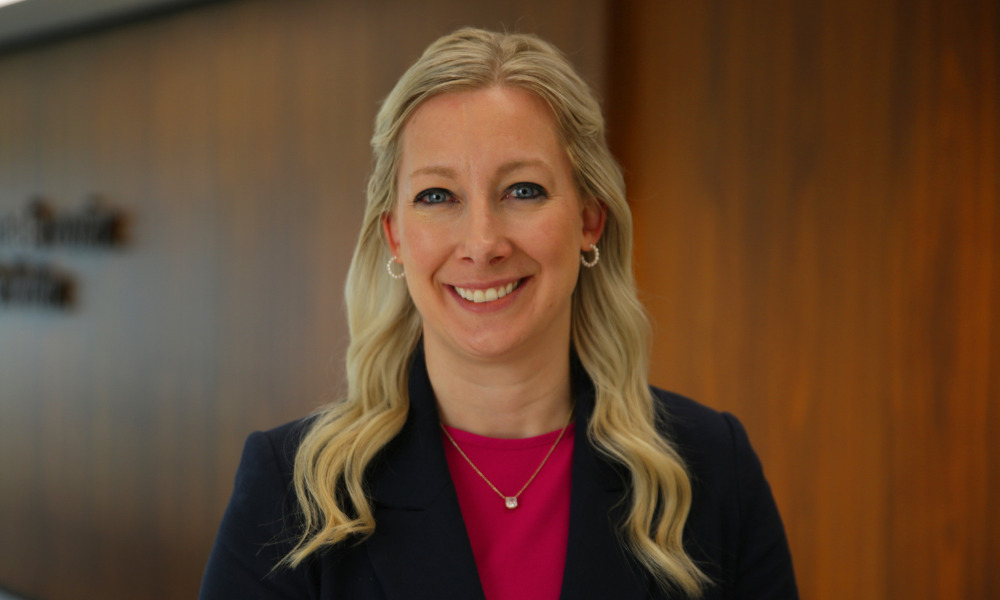
A career built around the same question
Chapman’s doctoral thesis at the University of Technology Sydney examined corporate social responsibility across 12 professional sports organizations in Australia, North America and the United Kingdom. Her premise was practical: community work should not sit detached from strategy as a worthy side project. Done seriously, it could create social benefit and business value together. She later described a 2010 book about that possibility as one of the sparks for pursuing the PhD.
At Hitachi, where her work included time in Japan and the wider Asia region, the question moved from sports organizations to an industrial company. How could existing products be reframed around social needs and open new customer segments? At Deloitte, it became a consulting question. At Manulife, which she joined in 2020, it first became a sustainability mandate and then expanded into marketing, customer experience and digital change.
The countries changed too: Australia, Japan, the United States and Canada. That movement seems to have left her suspicious of universal rollouts. Markets do not share identical regulation, readiness or appetite. Chapman recalls advice to go where momentum already exists, attach to it and drive. Prove the change where people are ready. Let the next group join the wave. The ambition can remain global while the first move stays local.
“Go where there is momentum and appetite and attach yourself and really drive; others will come along that journey and join that wave of momentum.”Sarah Chapman on scaling change
The shelf is the enemy
The queue of good ideas inside a company of Manulife’s scale is effectively endless. Chapman’s funding test compresses that queue into three questions. Will the work improve customer clarity, speed or consistency? Will it reduce cost, simplify a process or make it more reliable? Is there a believable route from launch to daily use?
Customer impact
Does the change make an important journey clearer, faster or more consistent?
Operational value
Does it lower friction, reduce cost or improve reliability and resilience?
A path to use
Is there real business ownership and a plan to make the new capability part of ordinary work?
The third is her trapdoor. A team can build an impressive tool and still fail to change a habit. “We can have the greatest ideas in the world,” she has said, “but unless we’re adopting them and changing our ways of working internally, you know that technology is going to sit on a shelf.” Adoption forces awkward operational questions into the room. Who owns the outcome? Which routine disappears? What incentive changes? What will be measured after the launch photos?
This is particularly relevant to AI, which can make almost any pilot look energetic. Chapman argues that an AI layer over a needlessly complicated process does not deliver the full value. The difficult work is often subtractive: retire a legacy step, clarify a decision right, remove a handoff, persuade a team to unlearn the method that made them successful yesterday.
A listening machine called VOICE
Chapman’s preferred example is an internal platform with an unusually legible name: VOICE, short for Valuable Opportunities to Improve Customer Experience. It gathers signals that once lived apart - digital behavior, call-centre transcripts, net promoter scores, complaints and other customer feedback - and makes them available through a self-serve analytics hub.
Generative AI summarizes volume, identifies themes and helps surface a source of friction before it hardens into a recurring problem. For the customer, the goal is fewer repeat calls and quicker action. For staff, it is a shared view of what people are actually experiencing rather than a contest between anecdotes. The tool matters because it changes the distance between hearing and acting.
Manulife uses a hybrid build-buy-rent model for major digital capabilities. That choice is not ideological. Complexity, scale, customer data and risk tolerance determine the answer. External partners must bring something complementary and align with the company’s responsible-AI principles. An insurer sells promises that may last decades; novelty cannot outrank trust.
The useful thing to steal
Give the adoption plan equal standing with the technical plan. Name the routine that changes, the owner who carries it and the customer outcome that proves it worked.
From reports to routines
Chapman’s sustainability years sharpened this instinct for measurement. She spoke often about data, financial-grade controls and the need to distinguish action from its appearance. In forestry and agriculture, that meant scientific measures such as species abundance, water quality and soil carbon. In customer experience, the objects change - call drivers, complaints, completion rates - but the discipline holds. A claim becomes more credible when a system can observe it.
Her portfolio at Manulife widened over time. She became Chief Marketing Officer for wealth and asset management in 2023, added the global digital and customer-centred mandate in 2025, and moved into the Canada CMO role in 2026. She is also listed as chair of three Manulife subsidiary boards, sits on UNICEF Canada’s board and teaches as a faculty member at Competent Boards. In 2025, The Globe and Mail’s Report on Business magazine included her among Canada’s Best Executives. She responded by redirecting the recognition toward colleagues and the culture they had built.
Her current Canadian marketing brief reaches across individual insurance, group benefits, affinity businesses and Manulife Bank. It includes brand, digital marketing, customer experience, data, personalization and AI. The title CMO can imply message-making. This version reaches deep into how the product is encountered, how feedback travels and how the institution decides.
“Digital transformation is less about the technology and it’s more about trust and clarity and leadership courage.”Sarah Chapman, 2026
The little sous chefs
Away from operating models, Chapman’s life has a more recognizable logistics problem. She has two young daughters and cheerfully describes herself as their taxi driver. Hockey, swimming, skating, golf and tennis fill the route. They keep her busy and, as she puts it, up at night “literally and figuratively.” The line lands because it resists the executive habit of converting family life into a leadership parable.
Cooking is the part she claims end to end. Shopping, preparation, savory dishes, desserts and even cleanup are included. Her daughters are the “little sous chefs.” They eat what the kitchen produces, she jokes, because they do not have a choice. There is something fitting in the pleasure she takes in the entire process. The final plate is inseparable from the unglamorous steps that made it possible.
That may be the quiet coherence in Chapman’s work. She does not treat outcomes as detachable from systems. Community programs need strategy. Environmental commitments need measurements. AI needs a simpler process beneath it. Customer feedback needs somewhere to go. A digital tool needs an owner, an incentive and a routine.
Manulife has declared that becoming an AI-powered organization is part of its enterprise strategy. The phrase is large enough to fit on any corporate wall. Chapman’s contribution is to pull it down to human scale. Did the customer avoid another call? Did the underwriter gain time for judgment? Did the employee stop re-keying the same information? Did the new habit survive the quarter?
The future of an old industry will arrive through models, data and automation. It will become real through smaller acts of courage: choosing what to stop, admitting what is too complex and making the useful behavior easier to repeat. The technology can open the door. People still have to walk through it.