Moving a pension ought to sound like an instruction: send it over there. In the M&G Wealth case described by Altus Consulting, it meant manual work, chasing updates and a customer unable to trade while the transfer crawled along. Altus helped design the architecture for automating that journey. One reported result was pleasingly specific: the transfer-out discovery stage went from days to minutes.
There is a whole business in that gap between what a financial product promises and what its machinery can manage. Altus inhabits it. The Bath consultancy works with insurers, investment firms and banks on the operating models, systems and change programmes that determine whether a good idea survives contact with everyday administration.
Its pitch has enough technical vocabulary to occupy a conference afternoon. Its best work is easier to describe: establish what happens, show who is responsible, work out what needs changing, and help people change it. In March 2025, Accenture acquired the consultancy. For a firm built around the details of financial services, that opened a much larger delivery network.
A map before the machinery moves
Altus’s public portfolio reports more than 1,400 engagements, across 11 countries, for over 250 clients. The names range from Santander and Legal & General to friendly societies and specialist investment businesses. These are institutional customers buying help with a particular business problem. The saver waiting for a transfer benefits further down the chain.
The firm divides its services into strategy, operations, digital and delivery. Strategy can include assessing a market, shaping an investment proposition or deciding which technology to buy. Operations examines how the business actually functions. Digital work covers architecture and data; delivery takes a programme through planning, testing, migration and implementation. A client can need several at once.
“Our advice is based on what can be achieved and we even say how.”
Altus Consulting, on its approach to strategy
That line is more useful than the usual promise to transform everything. It makes the advice testable. A proposed platform should come with an account of its dependencies, the people who will operate it and the route from the existing system. An attractive destination is only part of the purchase.
Commercially, Altus is a business selling specialist engagements, supported by tools and training. Its published projects show consultants working alongside client teams and suppliers. The customer is buying diagnosis, design and execution capacity, with knowledge of financial services already in the room. Capco occupies overlapping management and technology consulting territory. Internal architecture and change teams are another option for organisations with the capacity.
Two summits, quite a lot of paperwork
Altus’s PEAK tool captures the capabilities and processes a financial business needs, connects them to regulation, and records accountability. It can show the operational consequences of a proposed change. That matters because the same change may cross product, compliance, technology and customer-service boundaries long before anybody agrees who should pay for it.
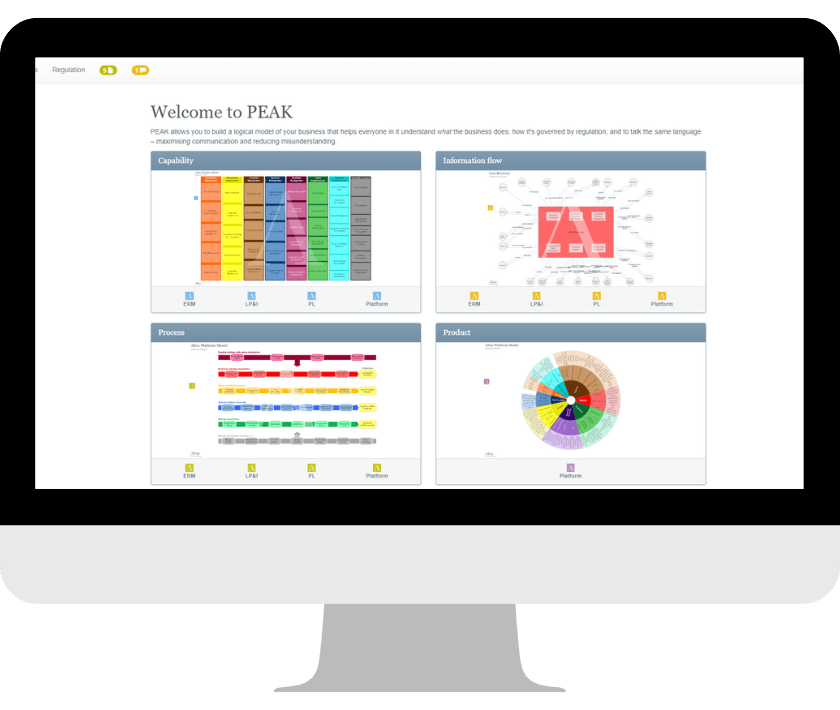
At Nucleus, the exercise covered 1,074 capabilities and 292 end-to-end processes. Altus configured PEAK to distinguish the board member ultimately accountable, the manager responsible day to day, and the team or outsourcer performing the work. Workshops and training helped staff populate and maintain those connections.
Colour-coded views made gaps and overdue documentation easier to spot. The value of the model was partly conversational: people could discuss the same business using the same definitions. That is a modest-sounding improvement until a process falls between two departments and each believes the other owns it.
APEX addresses the change programme itself. Powered by Method Grid, it combines configurable project material and reference models with a framework for organising delivery. Altus describes playbooks for recurring financial services changes, including migrations and platform replacements. Dependencies, document versions and the status of deliverables are among its targets. Even an ambitious programme still needs somebody to know which file is current.
Conceptual illustration of the roles, not a prescribed project sequence.
The dashboard problem started underneath
Blackfinch already used Power BI for reporting. Its difficulty was inconsistent information across separate sources and limited ability for users to answer their own questions. Another colourful chart would have been a rather expensive distraction.
Altus ran workshops on the sales process, established data definitions and designed a platform using Azure Synapse Analytics. The work included a data dictionary, a warehouse model and rules for duplicate information. Data-quality issues went back to the business for correction. Daily feedback helped refine the dashboards as they developed.
The reported engagement lasted 12 weeks and produced six dashboards, drawing on three databases and spreadsheets. It also included documentation and a handover, with recruitment of a technical specialist to support the platform. The useful lesson is in that last detail: building a reporting system also creates a maintenance job. Someone must inherit it.
A smaller team is a claim you can count
The M&G transfer work took a staged approach, fitted to the group’s wider technology plans. Altus reported transfer-out automation benefits equivalent to three full-time employees. That is a measure of capacity, not a statement that three people lost their jobs. Nor does a faster discovery stage establish that every transfer completes within minutes.
Santander supplies a different view of the economics. In its historic wealth-platform case, Altus says its team peaked at four consultants and contributed fewer than 400 person-days. Alongside Santander and FNZ, it helped shape the proposition, architecture and operating arrangements, including selection of a pension partner.
The same account describes the overall project as taking less than half the time and around a quarter of the cost of comparable banking projects. Those are Altus’s comparisons, and should be read as such. A person-day total is useful evidence of staffing effort; it does not reveal a client’s full invoice or establish a price for the next platform.
For a buyer, the practical move is to separate the measures. Ask how much consultant effort is proposed, which internal people must contribute, what software and migration work are involved, and which outcome the engagement will actually deliver. A saving in one administrative step and a saving across an entire programme are different propositions.
Borrowing a lesson before it becomes your problem
Altus’s Quilter work demonstrates another purchase: assurance while a migration is underway. The programme set out to move nearly £50 billion of assets belonging to almost 500,000 customers. Altus supported audit and risk teams, reviewing areas such as planning, testing, business readiness and data migration.
When a report into a major migration failure at a high-street bank became available, Altus compared those issues with Quilter’s programme. Findings went into risk discussions and board-level reporting. The case describes concerns being raised in near real time, while decisions could still be influenced.
That is a concrete example of new evidence changing the questions being asked. It also illustrates the limits of a reusable method: another organisation’s failure is a prompt for investigation, not proof that the same fault exists in yours. The comparison needs people who understand both the warning and the system in front of them.
A bigger owner, a precise boundary
Altus began in 2005, with Kevin Okell among its founders. Equisoft acquired the business in 2021. At that point the combination included specialist consulting and automation software for investment and pension operations. The shared interest was in improving the complicated administration behind financial products.
The March 2025 transaction changed that arrangement. Accenture acquired Altus Consulting from Equisoft; Equisoft retained the former Altus software business. Historical references to Altus Transfer Gateway therefore need their historical context. PEAK and APEX remain presented on the consultancy’s own product pages.
Accenture’s stated rationale was to add financial services operating-model, data and platform knowledge to its advisory and delivery capabilities. For Altus, chief executive Martyn Evans described the attraction as resources to support larger programmes, “whilst maintaining the values and approach that helped us build such a strong business”. That was the ambition expressed at the acquisition, not a measured result of integration.
The people behind the process maps
Altus emphasises recruiting people who have worked in financial services. Its Aspire programme describes a one-to-two-year induction into management consulting. In a published employee account, digital consultant Scott Martin describes a thorough induction followed by shadowing his manager on an engagement. Sector experience still needs a way to become useful advice.
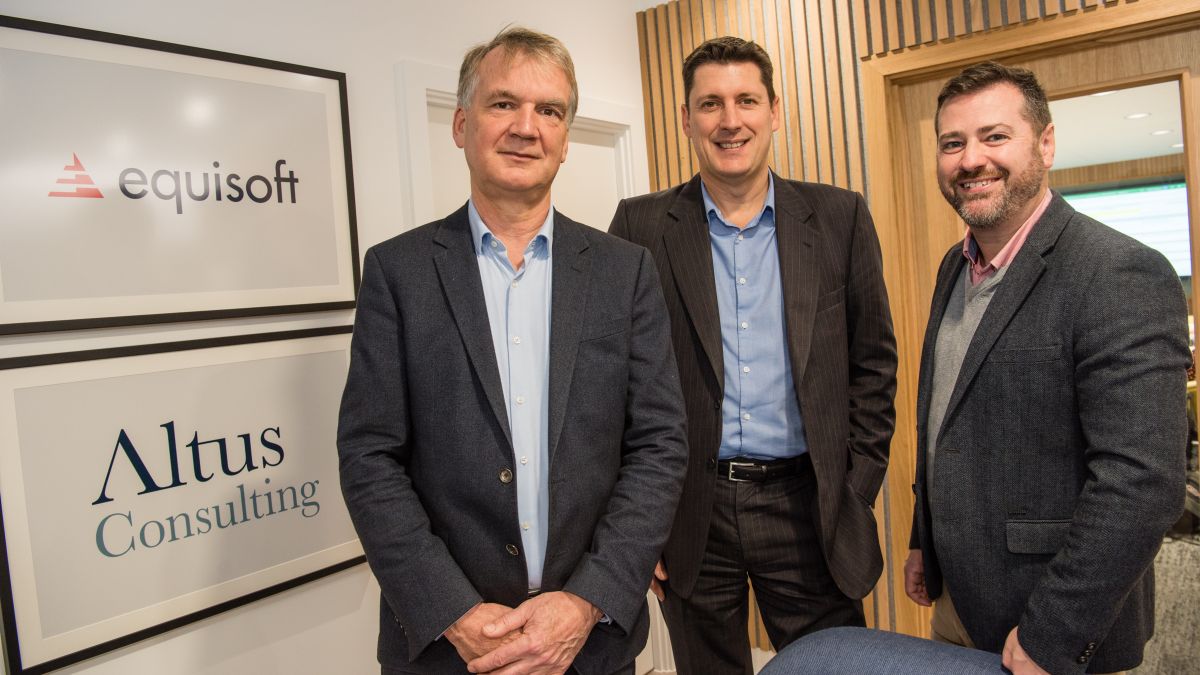
The office offers a less abstract cultural detail. Opened in 2022, the Bath Quays headquarters included collaboration spaces, accessible facilities, a well-being room and an outdoor terrace with a herb garden. The firm also backed Britain’s Team Bobsleigh Brad and announced a 2025 golf event supporting Sporting Family Change. There is life beyond the process inventory.
The transferable habit is to make a business legible before committing it to a large change. Agree definitions. Locate handoffs. Put names against responsibilities. Test a proposed design against the systems already running. Keep the people who must maintain the result involved throughout.
These cases suggest the method depends on access and participation. If operational staff cannot contribute, data problems remain uncorrected or ownership stops at handover, a model can become another document to maintain. Altus’s more persuasive projects join the diagram to the work. The customer waiting for their pension may never see either. A shorter wait is what they will notice.