Sandra Moran’s first professional language was not branding. It was systems. She began her career as a systems analyst and programmer, close enough to the machinery to learn an enduring lesson: technology earns its keep when an input becomes a useful output. More than 25 years later, that instinct still animates her work. Only the system has grown larger. It now includes employers, employees, skills, software, and the awkward distance between finishing a course and becoming better at a job.
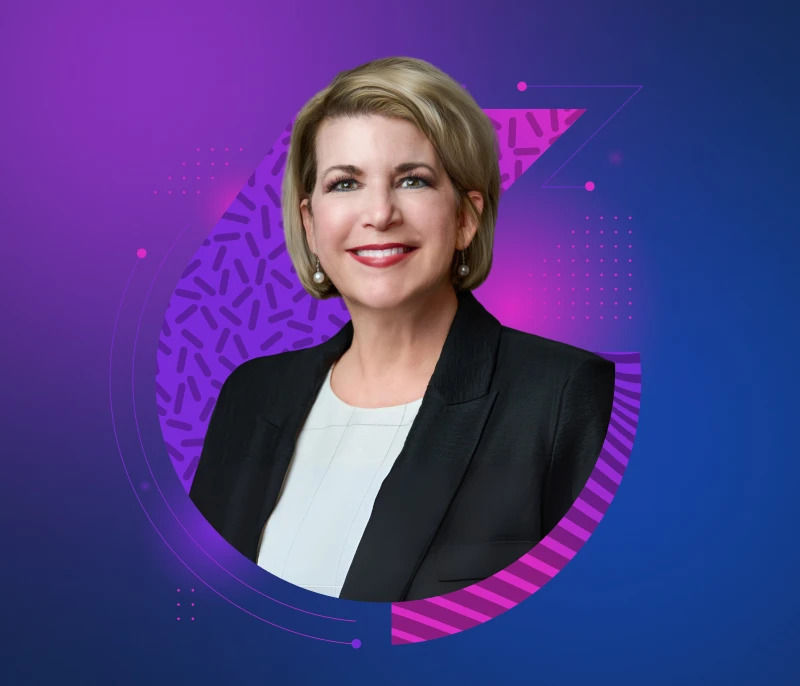
From the Detroit metropolitan area, Moran leads global marketing at Schoox, the Austin-based workplace learning company. Her brief covers brand, demand, and revenue growth for software built around frontline learning and workforce performance. The title is conventional. The question underneath it is pleasantly unruly: if learning cannot be connected to performance, what exactly is everybody congratulating themselves for?
Corporate learning has traditionally favored tidy evidence. A module was assigned. A module was opened. A module was completed. Somewhere, a green check appeared. The check is comforting, obedient, and almost useless at explaining whether a restaurant manager handled a rush better, a new hire reached competence sooner, or a technician made a sounder decision. Moran’s current argument is that learning should be designed backward from the work.
“Learning is one of the most powerful levers a business has, yet it’s often undervalued or under-measured.”Sandra Moran, 2026
The programmer inside the marketer
Moran’s technical beginning is not a decorative biographical flourish. She has said that starting in systems served her well because technology became integral to every company’s success. The point is less “CMO who can code” than “executive who expects the parts to connect.” She later worked across marketing, sales, new business, product management, and customer experience - functions that companies often arrange as neighboring countries with unreliable border crossings.
Her career moved through several species of difficult enterprise software. At Hyperion and OpenText, she held global leadership roles. At INTTRA, the giant subject was ocean shipping. Its platform sat beneath transactions across carriers, freight forwarders, and shippers. In public comments during those years, Moran discussed everything from customized standards to booking-response times and container reliability. Marketing an ocean-shipping network is not an exercise in sprinkling sparkle over a homepage. The value lives in coordination: cleaner data, faster decisions, fewer avoidable delays.
By 2014, INTTRA was processing roughly 1.5 million messages a day and had visibility into about 35 percent of global container traffic. Those figures described more than scale. They showed how a platform could reveal patterns no single participant could see. Moran’s job sat at the hinge between that technical capability and the customer’s practical question: where is the delay, and what can I do about it?
A career in consequential complexity
The next chapter brought her to LLamasoft, the Ann Arbor supply-chain design company. Its software helped organizations model networks and balance trade-offs, a phrase that could double as a job description for any competent executive. As senior vice president and chief marketing officer, Moran helped shape the company’s market story before Coupa bought LLamasoft for $1.5 billion in 2020.
When the deal closed, she described the combined opportunity in terms of strategy and execution. Customers could plan capital spending with a fuller view of trade-offs, rather than treating the lowest price as wisdom delivered on a stone tablet. It was another version of the same translation problem: a model is valuable because it improves a decision.
In February 2021, Moran joined WorkForce Software as chief marketing officer. The timing was raw. Employers were still improvising through a global upheaval in how, where, and when work happened. Large organizations with hourly, mobile, unionized, seasonal, and distributed employees faced operational rules too complicated for optimistic slogans. Moran arrived with a mandate to raise the company’s profile while connecting sales, services, marketing, and client experience.
The people the dashboard forgot
At WorkForce Software, Moran’s attention settled on deskless employees - the people keeping production lines, stores, logistics networks, and service operations moving while much of the technology conversation orbited office workers. The company’s annual employee-experience research compared what employers believed they provided with what employees said they received. Inside the company, the work acquired an unofficial name: the employee-experience gap study.
The phrase matters. A gap is not an attitude; it is a system output. In a 2023 conversation about the research, Moran spoke about workers wanting fair pay, useful communication, input into their working lives, and just-in-time training on mobile devices. Her optimism rested on a practical observation: the technology existed. The lag was in action.
“The great resignation can really be looked at as a great awakening.”Sandra Moran, reflecting on work after 2020
This is where Moran’s customer-centric description becomes concrete. The customer is not merely the executive signing the contract. The product eventually reaches a person on a shift, often under time pressure, using a phone, with no appetite for a grand tour of the software’s architecture. If learning arrives too late, speaks too generally, or requires the wrong device, its impressive feature list becomes a museum exhibit.
The performance-first learning loop
Begin with what needs to improve.
Define what the role demands.
Make it timely, relevant, and usable.
Measure behavior and performance.
From attendance to impact
Moran joined Schoox as CMO in July 2025 after WorkForce Software’s acquisition by ADP. Schoox hired an executive already fluent in frontline operations just as learning technology was being recast by AI. Her stated attraction was the chance to reshape an overdue industry, particularly for workers historically underserved by technology despite being central to operating performance.
The ambition is to move the learning-management system beyond administration. In Moran’s description, skills can become a common language connecting hiring, performance, mobility, and development. AI can help map role-based skills, personalize learning, and link development to business goals. The attractive part is not infinite content. The internet has already achieved that dubious miracle. The attractive part is relevance: less material, better aimed.
Her framework begins with a business problem, identifies the capabilities a role requires, supplies targeted learning, and watches for an observable result. This is systems thinking wearing sensible shoes. It also changes the status of the learning team. Rather than reporting attendance to the business, practitioners can begin with the business and design the intervention accordingly.
There is a useful restraint in that logic. Not every problem is a training problem. A broken process does not become noble after someone attaches a course to it. Starting with the outcome forces better diagnosis. If knowledge or skill is genuinely missing, learning has a job. If the obstacle is bad tooling, muddled incentives, or an impossible schedule, the honest answer belongs elsewhere.
The connective-tissue executive
Moran’s public résumé includes two strategic acquisition chapters. LLamasoft became part of Coupa. WorkForce Software became part of ADP. It would be tempting to turn those transactions into a theory of individual corporate magic. The more useful lesson is quieter: in enterprise software, marketing is connective tissue. Product, sales, service, and customer experience must eventually tell the same truth in different rooms.
That work rewards an operator’s temperament. Moran has repeatedly described her approach through customers and measurable value. Colleagues and company biographies emphasize high-performing, cross-functional teams. Her own writing ranges across retention, communication, employee expectations, and the practical management of deskless work. She also spent more than three years judging a high-school entrepreneurship competition, an apt side role for someone professionally occupied with turning a complicated proposition into a clear pitch.
In early 2026, her outward focus at Schoox sharpened around role-specific learning and business outcomes. She argued that frontline workers should finally receive technology and support suited to their work: mobile, timely, skills-driven, and connected to growth. The aspiration is expansive, but the test remains modest enough to fit on a sticky note. Did the person become more capable?
By August, Moran was also recruiting a creative director with a category-building assignment. Her public pitch was unusually specific about the intended audience: the people running restaurants, building structures, stocking shelves, and keeping manufacturing lines moving. The brand, in this telling, has to make those workers visible while giving a new kind of learning platform a visual grammar. The search reveals another strand of her operating style. Creative work is not the ornamental last mile. It is one of the systems through which a company explains whom it serves and rallies a team around the same claim.
That same month, she joined a Schoox discussion about restaurant learning and business impact. The setting had changed again; the measurement question had not. Course completions could show that activity occurred. Workforce capability, skill gaps, readiness, and operational indicators could show whether the activity mattered.
That may be the neatest way to understand Moran’s career. Ocean-shipping data, supply-chain models, workforce software, and learning platforms appear to be four different worlds. In each, the real work is translating a large system into a better next move. Software loves to announce what it contains. Moran’s attention keeps returning to what somebody can do with it.