Sam Lewis once thought a client presentation would work rather like a college presentation. You explained your analysis. People listened. Perhaps a friendly face offered a manageable question. Then, in a consulting simulation at Applied Predictive Technologies, senior colleagues began interrupting. They were playing clients, and they wanted answers. The imaginary customer even had a name: H. E. Pennypacker, borrowed from Seinfeld. A fictional businessman had introduced Lewis to a thoroughly real problem.
The work had to be useful to somebody who was free to interrupt it. Lewis later helped design training that used realistic client exercises; the program reached more than 500 new hires. He remembers the importance of making the experience fun as well as demanding. Pennypacker was doing two jobs: puncturing the solemnity and making the lesson stick.
Years later, Lewis is the founder and CEO of Fruitful, where the same practical question appears in a different form. What good is a financial recommendation if the person receiving it still has to do all the difficult work of putting it into practice? A plan can look splendid on paper. Payday, however, arrives without reading the paper.
Before the bank accounts, baseball and public policy
Lewis’s early interests were broader than the job titles that followed. He came from Dobbs Ferry, New York, and attended Riverdale Country School in the Bronx. At Dartmouth, he studied History modified with Economics and pursued a Public Policy minor. A 2012 campus biography places him in the Class of 2013, already collecting responsibilities with the enthusiasm of someone who had discovered that a calendar could, technically, hold more.
He was a student assistant at the Rockefeller Center, a senior editor of the Dartmouth Law Journal and president of the Dartmouth College Democrats. He also played club baseball and served as social chairman of Phi Delta Alpha. His internships included environmental lobbying and strategy communications. During his sophomore winter, he spent a transfer term at the University of Sydney.
That is a student record with several possible futures in it. Policy, writing, organizing and business all had a place. The next step described that spring was a summer at a management consulting firm in Washington, D.C. His eventual career would put him to work on the behavior of businesses before he built a business concerned with the behavior of money.
A view from inside the machinery
At Applied Predictive Technologies, Lewis worked in a business that helped organizations use data to make decisions. Its clients included banks, retailers and restaurants. Mastercard acquired APT in 2015. Lewis stayed through the transition and spent more than five years at Mastercard, eventually leading product work.
The job brought him close to large financial institutions, including Citi, USAA and Capital One. He could see how a customer’s financial life was divided among products and departments. A checking account and a credit card might belong to the same institution while operating according to different commercial priorities. The customer, meanwhile, had to make the whole arrangement add up.
That experience became part of the case for Fruitful. Lewis saw younger adults surrounded by products and suggestions, with much less help executing a coherent plan. He moved from working on tools for institutions to building something intended to coordinate the individual’s next financial steps. The change in vantage point matters: the same bank account looks rather different from opposite ends of the transaction.
Give the paycheck somewhere to go
Fruitful launched its membership in 2023. Lewis has since described its purpose through a distinction that receives less attention than investment picking: income allocation. Before a person can worry about the composition of a portfolio, money arriving in an account has to cover the present and make some provision for the future.
In January 2026, he discussed that focus with Bobby Ma on the Wharton FinTech Podcast. Fruitful was described as having raised $37 million and serving thousands of members across all 50 states. The discussion centered on using guidance and automation together. Those figures describe the company’s reported reach at that time, rather than a promise about what any individual member will achieve.
The company announced Money Map in September 2025. It organizes a member’s finances into bills, spending and goals, then connects those decisions to accounts, routing rules and transfers. A Guide, Fruitful’s term for its certified financial planners, helps establish the plan. The system is intended to carry it out as income comes in.
already on the calendar
for everyday choices
what comes next
There is a modest but consequential change of emphasis here. A recommendation becomes an arrangement. The member still has choices, and those choices can change. But carrying out yesterday’s decision should require less repeated administration today. The feature Lewis keeps coming back to is the handoff between deciding and doing.
A person stays in the picture
Lewis’s enthusiasm for automation comes with a continuing role for human advisers. When he explains the choice, he reaches for consequential life decisions. Buying a house involves more than determining whether a number fits inside another number. People want someone they trust to help them think through the commitment.
“It all starts with being human.”
Sam Lewis, on customer relationships
In Fruitful’s model, technology supports the work of a financial planner while the planner remains part of the relationship. The distinction is practical. Processing information and understanding what a person is trying to accomplish belong in the same service, even when they call for different skills.
His conversation with Mark Bruno on RIA+ explored how that relationship could work for younger investors who expect a digital experience. Data can help a Guide understand a member’s circumstances. A prospective member can look for a suitable adviser. Portfolios and savings arrangements can be connected to personal goals. The person at the other end of the conversation remains part of what the member is choosing.
Lewis returned to the wider problem with Andrew Yang in February 2026: financial advice that depends on people repeatedly finding the time and effort to implement it. His interest in automated systems follows naturally from that concern. The ambition is to make progress possible during an ordinary week, with its interruptions and unfinished tasks, rather than requiring a recurring burst of administrative resolve.
The price of following through
Building that arrangement also meant building access to financial products. Fruitful worked with Synctera on the infrastructure connecting it to its sponsor bank. Cash & Card launched in February 2025, bringing deposit accounts and a secured charge card into the service. Lewis’s explanation for using a partner was straightforward: finance is complicated, and assembling every component independently consumes time.
That choice reveals another part of the operator behind the idea. A company promising less work for its customers has plenty of work of its own: account connections, payment movements, adviser workflows and the everyday business of making separate systems cooperate. The simple experience has to be constructed somewhere.
The offer has evolved. As checked in October 2026, Fruitful allows people to start with a $0 membership and includes three months of Premium. Keeping Premium subsequently costs $999 a year. Premium includes more ongoing access to a Guide, higher rewards and no investment management fees; investment fees may apply to the free offering. Earlier interviews describe earlier prices. The changing offer is part of the company’s development.
For Lewis, the point of the service extends beyond making an account easier to open. The question is whether people can use the arrangement to carry out the decisions they made with their adviser. A home page can describe a plan in a few lines. Keeping that plan useful as someone’s circumstances change is an ongoing job.
Leave room for the joke
For all the system talk, Lewis leaves some evidence of a less formal voice. In a LinkedIn post about fintech and automation, he added a small clarification: he had selected the emojis himself. The choice had apparently been an enjoyable part of the day. It was an unexpectedly personal footnote to a discussion of financial infrastructure.
The joke fits comfortably beside Pennypacker. Both suggest an appreciation for the small things that make demanding work easier to enter. A training exercise can be rigorous and entertaining. A financial conversation can be serious without requiring everyone to sound like an annual report. That matters in a business asking people to talk openly about decisions they may have postponed.
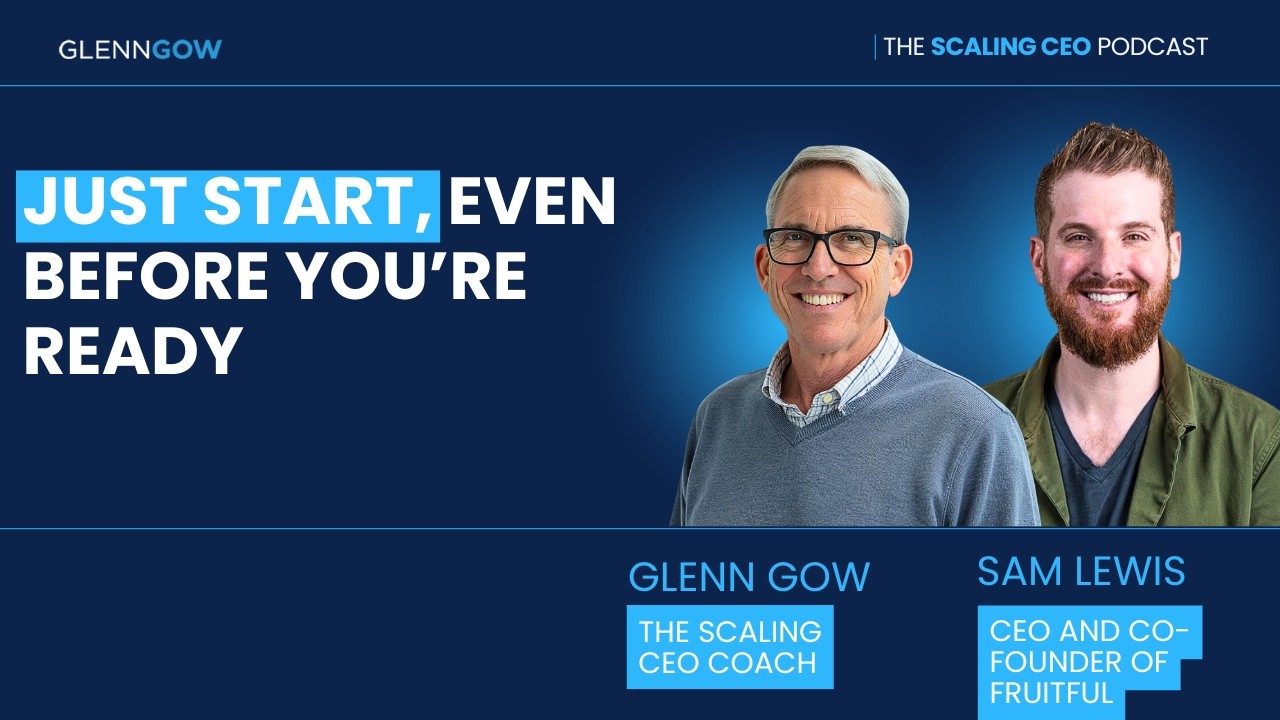
On The Scaling CEO Podcast, Lewis discussed momentum, developing talent and humility in leadership. His public advice favors beginning, learning and adjusting over waiting for ideal conditions. There is room in that approach for a question from the audience, a changed assumption, or a client who refuses to sit through the rest of the slides.
H. E. Pennypacker was never going to become a paying customer. He was useful anyway. Lewis’s story keeps returning to the moment when an orderly explanation encounters somebody else’s life. At Fruitful, the test comes each time income arrives and an agreed plan has to become something that actually happens.