The credit card that refuses to ask for your credit score. Built for the people the system never bothered to see.
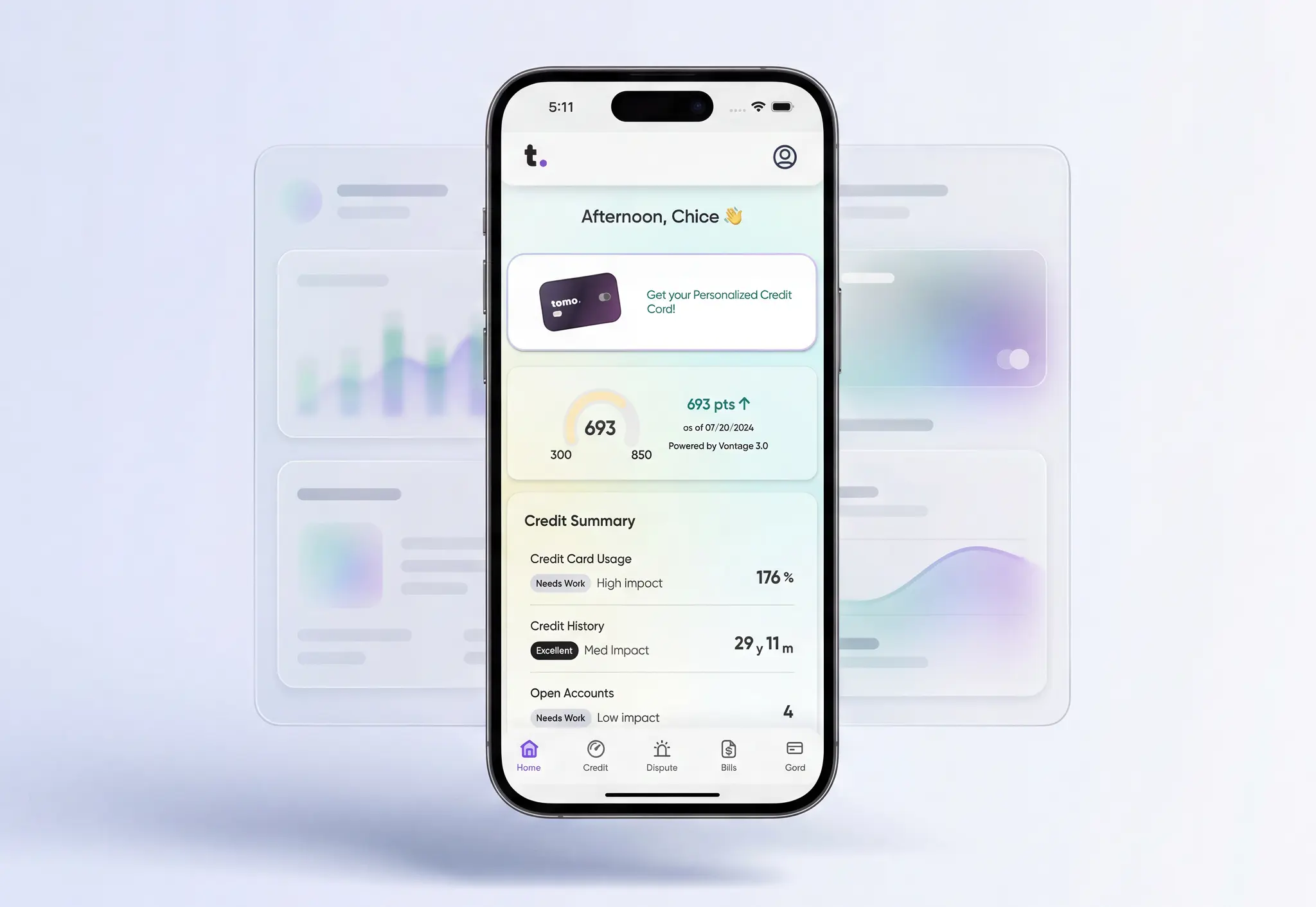
Open the TomoCredit app and the first thing you see is a number doing something credit scores rarely do for newcomers: going up. A little arc, a cheerful 693, a green arrow. For roughly 40 million Americans, that arc is the difference between an apartment and a rejection, a car and a bus pass. TomoCredit decided that number should be a starting line rather than a locked gate - and then built a company around the stubborn idea.
The setup is almost comedic in its bluntness. No credit check. No deposit. No APR. No fees. In an industry that has spent decades engineering ever-cleverer ways to charge people for the privilege of borrowing, here is a credit card whose pitch is, essentially, a list of things it will not do to you. The catch - and there is always a catch - is that TomoCredit makes its money from merchants, not from you. It only profits when you spend, never when you stumble. The incentives, for once, point the same direction as the customer.
How do you approve someone with no credit history without a credit check? You stop reading the past and start reading the present. TomoCredit's proprietary Tomo Score ignores the FICO ghost and instead studies cash flow - what lands in your bank account, what leaves it, how steadily. It turns out that a person with a real job and a real paycheck is a real customer, even if the three credit bureaus have never heard of them. Wall Street calls this alternative underwriting. Kristy Kim calls it common sense.
Once you identify them, give them a card - they spend a lot, and they don't default.
Kristy Kim came to the United States from Seoul at eleven. She graduated from UC Berkeley, took a job in investment banking, and went to a Lexus dealership to buy her first car - a milestone, a small American victory. The loan was declined on the spot. Not because she couldn't pay. Because, as a first-generation immigrant, she had no credit history at all. To the system, she was invisible.
That contradiction - employed, capable, and yet unbankable - became the company. In 2018 Kim and co-founder Dmitry Kashlev started TomoCredit, joined by a founding team that had collected its degrees from Berkeley, Harvard, NYU, MIT and Stanford and, between them, every flavor of the credit-ghost experience. They had all stood at some version of that dealership counter. They built the card they wished had existed.
TomoCredit's reported default rate against a widely cited figure for American Express. Approximate, from public statements.
A credit card with no credit check, no deposit, no APR and no fees. A weekly autopay rhythm helps you build a real score fast - useful whether you're an immigrant, a student, or simply starting over.
The underwriting brain. It reads bank activity and cash flow instead of a FICO number, finding good borrowers the bureaus can't see. This is the part that makes "no credit score needed" possible.
An AI financial assistant launched in 2025. It watches spending, flags fraud and unusual patterns in real time, and turns budgeting from a chore you avoid into guidance that finds you first.
Open the app again. That little arc, that cheerful number ticking up. A year ago the same person might have been standing at a dealership counter, employed and capable and quietly told no. Now the number moves on its own each week, the AI nudges before the late fee, and the gate that used to be locked is just a line on a chart. TomoCredit didn't argue that the credit-invisible deserved a card. It built the card, watched them not default, and let the data make the argument for it.