A useful answer can disappear without anybody losing it. The call ends. The notes are filed. A presentation goes into a folder, where it enjoys the quiet retirement traditionally reserved for presentations. Somewhere else in the same organisation, another person is beginning to ask much the same question. Sam Glasswell has built a company around the suspicion that this is an expensive way to learn.
Glasswell, the co-founder and CEO of Arbolus, knows the trade that produces those answers. He spent six years at AlphaSights, connecting business clients with professional expertise, before business school and a spell at Genpact. With Will Leeming, he went on to build a business that asks what else an expert’s knowledge could become once the appointment has finished.
That question has carried him from arranging access to people toward organising what they know. It is a less theatrical ambition than replacing human judgment, and rather more specific. The customer who has actually bought a piece of software knows things that its sales presentation may never volunteer. Glasswell wants that experience to remain available when the next interested person comes looking.
A law degree, then a different sort of brief
Glasswell studied Law and Management at the University of Leeds between 2004 and 2008. He joined AlphaSights in 2008, beginning as an analyst and progressing to vice president. His responsibilities included client relationships, new business and developing colleagues. Before he was selling a different approach to expert research, he had spent years doing the work that made the existing approach valuable.
An expert network helps a client reach someone whose experience can answer a particular business question. The introduction matters because relevant knowledge is unevenly distributed. A polished corporate account and the practical experience of someone who has used a product are different kinds of evidence. Finding the right person can take work before a single substantive question gets asked.
He left for IESE Business School, completing his MBA in 2016. VentureRing, an initiative connecting investors and startups, appears in his career during that period. Genpact followed, in global relationship management and business development. The sequence gave him experience on several sides of a commercial relationship: finding knowledge, building networks and selling services. None required pretending that the buyer’s attention was unlimited.
There is a more traditional business in his family background. His father, Paul Glasswell, leads the family furniture company, Glasswells. Sam, Paul’s oldest son, took his own business career into professional knowledge. Furniture and professional knowledge make an unlikely pair of inventories. One occupies a warehouse; the other can vanish into a meeting note. Both need a customer.
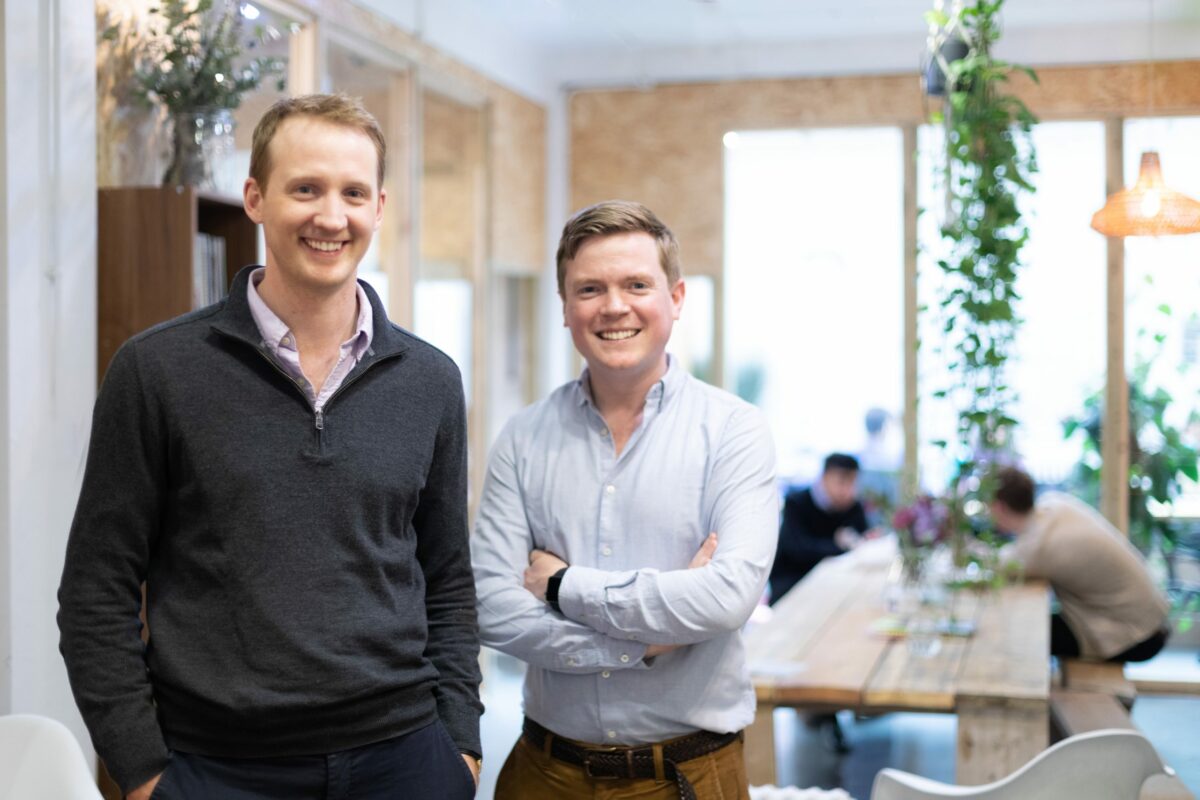
The folder where good answers go
Collective IQ Group, the company behind Arbolus, dates to 2017. Glasswell and Leeming built the venture together; Arbolus followed in 2018. Their opportunity came from a familiar frustration. Businesses paid to reach knowledgeable people, but the value of the resulting conversation could remain trapped inside one assignment, one team or one person’s notes.
By 2021, Glasswell was describing the problem in wonderfully unromantic terms: “These interviews are usually held by a single department and their findings end up lost in PowerPoint presentations or reports.” There is a particular indignity in paying for insight and then giving it the same filing arrangements as the office seating plan. His proposed remedy was to make it easier to retain, search and use.
Arbolus raised $6 million in a round led by Fuel Ventures, with Plug and Play participating. Its technology brought tools for working with external knowledge into the same business as sourcing the people who held it. The ambition was to make the effort of learning useful across more than the immediate conversation. Glasswell was asking clients to think about the working life of an answer.
A $15 million Series A followed in April 2022, led by Element Ventures alongside Fuel Ventures. The announcement also described revenue tripling over the preceding year and a team that had doubled to 100. Those were company figures for that moment. For Glasswell, the stated ambition reached further: “We want to index the world’s human knowledge and make that widely searchable for the first time.”
“We want to index the world’s human knowledge and make that widely searchable for the first time.”
Sam Glasswell · April 2022
Learning to ask in another format
The live interview has its own advantages. A surprising answer can produce a better follow-up question. A researcher can check an assumption while the other person is still talking. It also has a timetable. When every question requires another appointment, research inherits the scheduling habits of everybody involved. Even a very good answer may arrive after an inconvenient amount of calendar administration.
Arbolus’s Canopy offered another route: asynchronous video questions and answers. Clients could gather responses without arranging every exchange as a live call. The company also developed customer data and surveys alongside its interview services. Glasswell’s interest in the industry’s evolution became explicit in his 2023 writing about a third generation of expert networks, organised around how quickly a client could reach useful insight.
In November 2024, Arbolus announced a $20 million Series B investment led by Kayne Anderson Partners Fund V, sub-advised by Composition Capital. The business said it had more than doubled revenue since its previous round and grown to 180 people. The investment was intended to support American commercial operations and further products. Canopy was already part of the explanation for its growth.
Separate announced rounds, not a measure of personal wealth.
The figures explain some of the company’s capacity to expand. The product choices explain the business Glasswell was trying to build. Each format gives a researcher another way to pursue a question. A quick response might settle one point. A longer discussion might uncover the complication. A library might supply evidence before either participant has opened a calendar.
The customer knows where the bodies of work are buried
Business software produces a particularly useful kind of witness: the customer paying to use it. That person can describe what happened after purchase, how the product compares with alternatives and whether another contract seems worthwhile. These are practical questions for an investor examining a software company. A renewal intention contains information that a flattering product description does not.
Glasswell’s recent work puts that customer experience near the centre of Arbolus. Its Customer Library brings together structured evidence about B2B technology, including customer sentiment and renewal intentions. The premise is easy to understand. Before an investor commits money to a company, it helps to know how the people already committing money to its products feel about the arrangement.
The harder part is turning individual experiences into something clients can use repeatedly. Reviews need context. Researchers need to understand whose experience they are reading and what question it helps answer. A collection becomes useful when someone can find the relevant material at the relevant moment. Otherwise, it risks becoming a larger, more expensive version of the folder Glasswell originally complained about.
Still making the meetings
There is a useful glimpse of Glasswell away from product descriptions in his account of a New York trip. He listed eighteen client meetings, conversations with colleagues, an AGC Partners conference and a twelve-hour stop in Boston. He also fitted in a loop of Central Park with Jay Middleton. “Nowhere in the world makes me feel as alive as you do,” he wrote of New York.
The schedule suggests that building software to carry knowledge further still leaves a founder with plenty of conversations. Customers have to explain what they need. Colleagues have to work through how to deliver it. The park, at least, offered a meeting without slides. It is a small detail, but a welcome one in a career otherwise described through rounds, roles and product names.
IESE included Glasswell in its 2022 40under40 entrepreneurs selection. In September 2026, he returned to the school’s community as a panellist at its first UK Summit in London. Alongside Edward Orr and Jonathan Lakin, in a discussion moderated by Reuters’ Jane Barrett, he joined a conversation about entrepreneurship, learning through experience and adapting when circumstances change. His company’s development gave him something concrete to bring to that discussion.
A library with the doors open
By July 2026, Glasswell and Leeming were introducing a new brand for Arbolus. Glasswell’s explanation was brief: “We’d completely outgrown our beginnings.” Their account described a business built around a global expert community and customer data. A different identity was meant to catch up with the work. The substance was the changing relationship between a service delivered once and information used again.
On October 15, the founders announced Arbolus Intelligence, a free public portal into the Customer Library. It offered company exploration across seventeen categories, with registration opening access to the fuller library. They described more than a million data points and a community of 200,000 professionals. The unit matters: a data point can be one piece of evidence within a customer’s broader experience.
Opening that door gives Glasswell’s long-running question a practical test. Someone can arrive with an interest in a company, inspect what is available and decide what to ask next. The expert call remains part of Arbolus. Its place in the sequence is changing as more information becomes available before a conversation begins.
Glasswell’s career has followed the journey of an answer: finding the person who holds it, arranging the exchange, preserving what was learned and making it useful to another reader. The next reader is the interesting part. They may have a different investment, a different comparison or a question nobody asked on the original call. A good answer deserves the chance to meet them.