The prospect sits through the demo. The salesperson shares a screen, explains the features, and ends with a cheerful promise to follow up. Then comes silence. To the person who booked that meeting, the explanation can seem obvious: the lead was wrong. Ethan and Madison Wade had begun to suspect something else. What if the meeting itself was where the opportunity disappeared?
- Salesify analyzes sales calls, offers coaching, and drafts follow-up emails.
- Its founders came from sales outsourcing, where booked meetings exposed a second problem: closing them.
- The useful test is whether feedback changes the next conversation.
The lead was fine. The demo needed work.
The Canadian brothers created Salesify in 2023 after working on their agency. Their company story describes clients who struggled to sell effectively. That is an uncomfortable discovery for a business helping people grow sales. You can deliver the introduction. You cannot assume the conversation that follows will make good use of it.
Madison’s public origin account describes a conversation with Ethan in Barcelona about the repetitive rituals of selling: a little rapport, a long product presentation, then a buyer who vanishes. His diagnosis shifts attention from the supply of prospects to the quality of the exchange. A seller can know the product thoroughly and still learn remarkably little about the person considering it.
“While it might be business-to-business, it’s still human-to-human.”
Madison Wade / co-founder
Their response was a software company centered on the call. Salesify’s stated mission is to make coaching accessible, intuitive, and affordable. The opportunity is easy to recognize: a sales manager cannot attend every meeting, while a salesperson has another meeting starting. Somewhere between those two calendars, useful feedback gets postponed.
A recording needs a second act
Salesify’s documented workflow begins with the conversation. It records and transcribes meetings, analyzes their content, and turns that material into coaching and next steps. Its product pages describe objections, customer pain points, action items, sentiment, and speaking share. The aim is to make a completed call useful while the seller still has time to act on it.
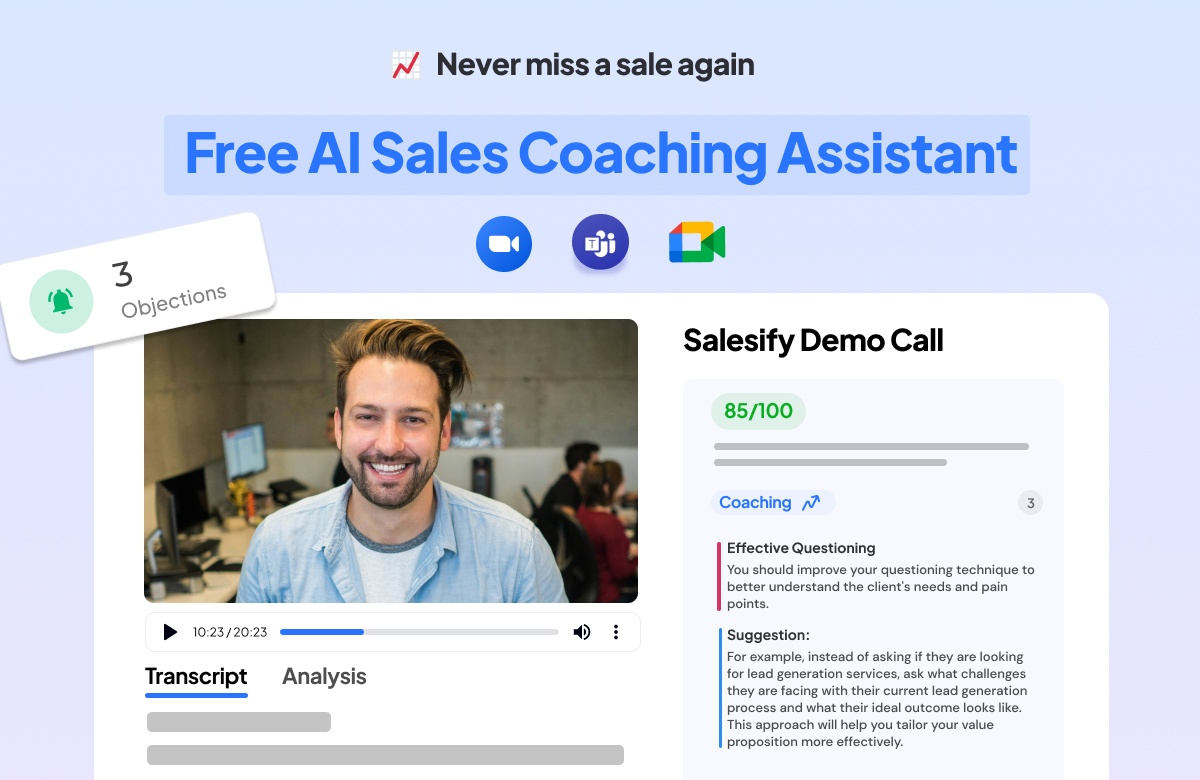
There are two audiences for this information. A representative needs a concrete improvement to try. A manager needs to understand what happens when the team takes its sales approach into actual meetings. Salesify addresses B2B teams, entrepreneurs, and smaller businesses; its own description names technology, SaaS, and real estate among the industries it serves.
One public Product Hunt commenter, describing himself as a solo founder handling agency sales, said the tool helped identify gaps in how he handled objections. That is a useful account of the intended experience, rather than a measurement of business results. The appeal is specific: somebody selling alone can get a second interpretation of a conversation.
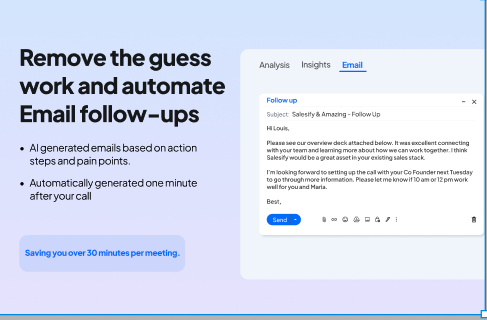
Follow-up drafts give the analysis somewhere to go. Salesify describes emails generated from meeting content and outcomes. The practical advantage is continuity: the buyer’s concern can survive the journey from spoken conversation to written response. A seller still needs to check that the draft reflects what was actually agreed.
- 01CaptureCall + transcript
- 02ExamineObjections + signals
- 03CoachA change to try
- 04ContinueThe follow-up
The price of paying attention
Published listings document a free plan with five recording hours a month, a $39 monthly Starter plan with 20 hours, and a $79 Pro plan with 40 hours and custom playbooks. Enterprise is listed with custom pricing. These are historical published prices; the precise billing and allowance terms belong in any purchasing conversation.
Hours deserve attention. Five hours accommodate ten half-hour calls. Forty hours accommodate eighty. That arithmetic says nothing about coaching quality, but it gives an evaluator a concrete starting point: how much of the team’s actual work could fit? A low entry price becomes less informative when the relevant calls exceed the allowance.
Salesify occupies the conversation-intelligence market alongside tools such as Gong, Chorus, and meeting assistants. Its pitch emphasizes accessible coaching and follow-up work for smaller teams. That positions it around a familiar management problem rather than a claim to have invented call analysis. The question for a buyer is whether this particular feedback fits the way their team sells.
Sell to the signal
The company’s own early selling offers another lesson. In June 2024, Ethan described reaching $5,000 in monthly recurring revenue within three months. His account is a founder’s report, not audited financial information. The method is more transferable than the headline number.
He described choosing European prospects in Apollo, moving contacts into Clay, checking for account-executive or sales-leadership hiring, and sending personalized outreach through Smartlead. He reported roughly 3% demo interest. Free trials and onboarding support followed. The sequence attached an offer to a visible sales-building activity, then gave interested prospects a way to experience the product.
That is something another operator can copy thoughtfully: look for evidence that a problem matters now, offer a bounded trial, and help the buyer reach a useful result. The software stack is incidental to that logic. Hiring a sales leader is a clue about organizational activity, not proof that someone wants an AI coach.
Make the next call different
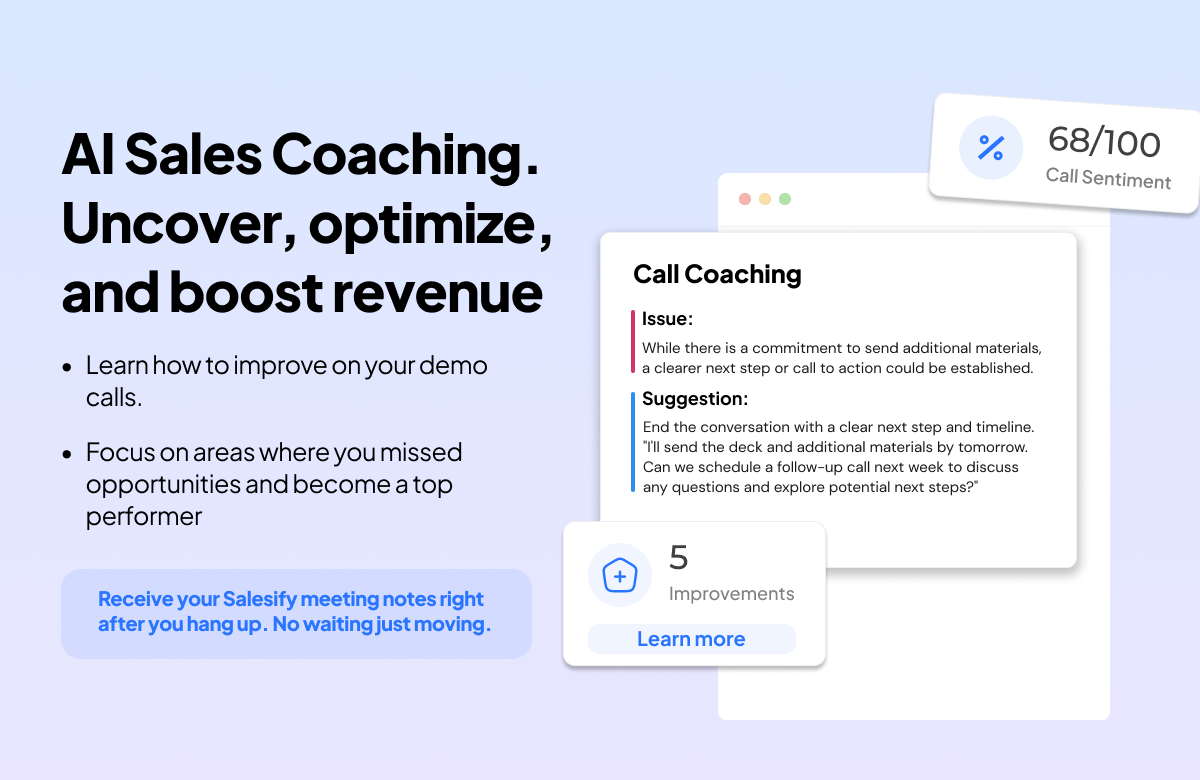
For a team evaluating Salesify, start with a call the seller remembers clearly. Compare the identified objection with the buyer’s actual words. Check the proposed next step against the commitment made. Then choose one coaching suggestion and try it in the next meeting. This is an editorial test of the product’s premise, not a promised outcome.
The conditions matter. A poor transcript can distort the interpretation. A sentiment score cannot establish purchasing authority or budget. Feedback that nobody reads cannot improve a conversation. Teams without enough recorded material, or without time to discuss the recommendations, have little basis for expecting a useful coaching habit to emerge.
The Wades’ original observation remains the interesting one. A company can work hard to fill its calendar and still overlook what happens once the meeting begins. Salesify asks the seller to return to that moment, listen more closely, and carry something useful into the next call.