The first thing to fail was the data supply. William Ballance and Will Allred had met at a hackathon, built a personality-based marketing idea and raised $120,000 from angels. Then the provider supplying their data withdrew access. In Ballance’s telling, returning the money began to look like a possibility. They needed people they did not know to answer an email.
- Lavender’s Email Coach improves sales drafts where sellers already write.
- Its scoring and research tools serve reps; its dashboard serves managers.
- Ora goes further, researching, writing and sending outreach as an AI agent.
The supplier vanished. The inbox stayed.
The founders contacted researchers whose work they admired. Those researchers agreed to advise them, helping them build proprietary technology. Ballance recounts this rescue by cold email with the enthusiasm of someone who discovered that a locked door had a letterbox. Outreach had become a way to find collaborators.
A second disruption arrived with COVID-19. Technical co-founder Casey Corvino recalls the team deciding to pivot while sitting in NYU’s entrepreneur lab. Lavender, founded in 2020, emerged from that adaptation. The three founders brought sales experience, communication psychology and engineering to a familiar embarrassment: an email that takes ages to write and seconds to dismiss.
An editor at the point of temptation
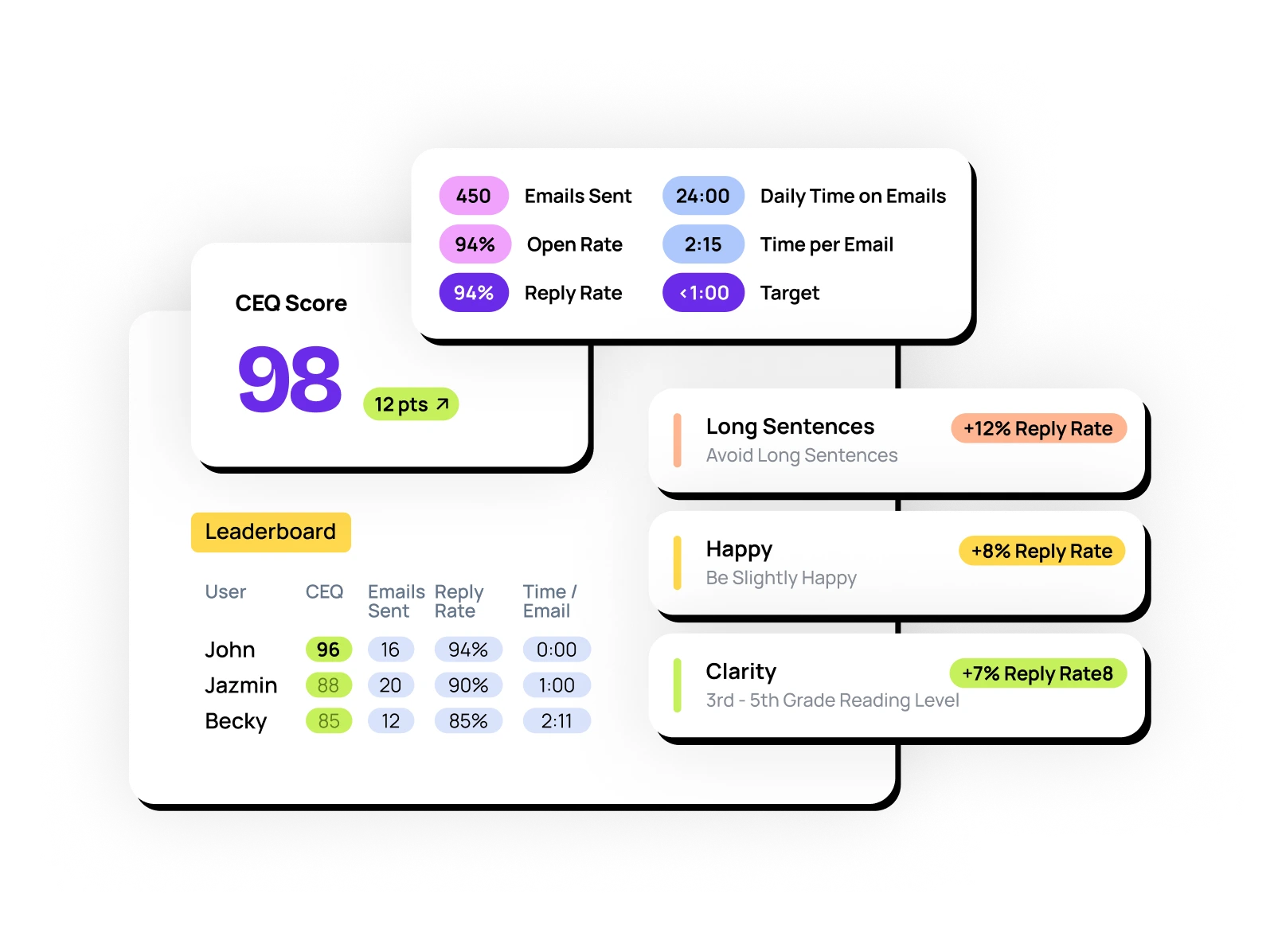
Lavender’s original proposition is pleasantly specific. Its Email Coach scores a draft, identifies weaknesses and suggests changes before the seller sends it. AI can help start the message; a personalization assistant brings recipient research into the workflow. Mobile optimization checks how the result will appear on a smaller screen.
The placement matters. A rep does not have to finish a draft, remember a training session and seek an appointment with a manager. Feedback arrives during composition, when an edit is still cheap. Lavender works with Gmail, Outlook and sales tools including Outreach and Salesloft. The intervention happens where the habit happens.
Managers get a different instrument: a Coaching Dashboard for individual performance, team trends and opportunities to coach. Named customers include Twilio, Clari and Sendoso. Their interest is understandable. Teaching every new rep to write a relevant opening message consumes time; correcting the same mistakes repeatedly consumes patience.
Broad writing assistants such as Grammarly also improve clarity and tone. Lavender narrows the assignment to sales communication and reply outcomes. Engagement platforms organize outreach, and Lavender integrates with them. Its original place in the market is the coaching layer inside that machinery.
“It reinforces everything we want the team doing.”
Ryan Swearingen, Twilio / quoted by Lavender
A reply is a small, measurable event
There is a trap in sales software arithmetic. A reply sounds encouraging, but “please stop emailing me” also qualifies. Lavender’s March 2026 benchmark report makes that distinction explicit: its sample of 231,818 recent cold emails excludes automated responses and bounces, while including positive and negative replies. It describes roughly 50,000 active connected inboxes, a measure of reach rather than paying companies.
For messages to HR, Lavender reports a 3.4% overall reply rate and 4.3% for emails receiving its A grade. That is about a 27% relative improvement, or 0.9 percentage points. Neither number suggests recipients have suddenly become desperate to hear from strangers. A better message can create more conversations while most messages still receive silence.
The HR analysis recommends warmth, a specific problem and a clear ask. Its broader lesson is to match the message to the person’s responsibilities. A chief people officer and an HR coordinator share a department, not a working day. One template treats that difference as an inconvenience. Good research treats it as the point.
The expensive part is attention
One of Lavender’s most useful observations costs nothing to borrow. Allred says strong reps were emailing drafts to themselves to inspect them on their phones. Lavender built a mobile editor around that behavior. A paragraph that looks manageable in a wide desktop window can become a forbidding wall on a phone. Whitespace is hospitality.
Its older guidance favors 25-50 words for opening cold emails, while distinguishing those from follow-ups that need context repeated. Copy the discipline, rather than treating the word count as a law: make one relevant observation, connect it to a plausible problem and offer an easy next step. Brevity without relevance is simply a shorter nuisance.
Lavender charges for making that discipline repeatable. Monthly Coach plans list $29 for Starter, $49 for Individual Pro and $99 per team seat, with lower prices under annual billing. A limited free plan and seven-day trial give buyers room to test the workflow. In February 2023, the company announced $13.2 million across seed and Series A rounds, including $11 million led by Norwest.
There is also a conspicuous social side. Lavender’s 2023 London event occupied Van Gogh and Dalí immersive venues, with music, glitter and sales reps among the guests. The community strategy gives users occasions to meet each other. A software subscription rarely supplies a satisfactory excuse for purple hair; this one at least supplies the occasion.

Then the coach hired an agent
Ora expands the job from improving a human’s draft to researching, writing and sending outreach. Users upload leads or connect Salesforce, train the agent and provide instructions. Building is free; launching an agent lists at $500 monthly for 1,000 emails per month. The buying decision moves from helping someone write to delegating part of their work.
That expansion deserves scrutiny on Lavender’s own terms. In a November 2025 essay, Allred argues that automated outreach can lack context and produce interchangeable messages. He suggests manually researching recipients of already-sent automated emails to see what the system missed. If research would change the message, the automation needs attention.
There is an organizational question alongside the writing question. Connecting a tool to a work inbox requires trust. Lavender’s February 2026 security Q&A says it became SOC 2 Type II certified in November 2023. It also says de-identified data can be used for model training, with an opt-out available on request. Teams should settle those terms as part of deciding whether the product fits their workflow. The cost of a seat is only one part of adopting it.
That is a useful test for buyers, too. Start with a defined audience, inspect the output and measure useful replies, meetings and the time involved. A score cannot establish that a prospect needs the product. Lavender’s founders once needed a stranger to care enough to answer. The company’s enduring challenge is helping its customers give strangers a reason to care.