Instantly is for the person who has seven sending inboxes, three spreadsheets, a lead database, a verification bill, and a nervous habit of checking whether yesterday’s campaign landed in spam. It gathers that clutter into one browser tab. Agencies can separate client workspaces. Founders can find prospects and launch a sequence. Sales teams can sort replies, update opportunities, and hand promising conversations to a human. The proposition is operational: less shuffling between tools, more time on targeting and follow-through.
That last clause matters. Instantly will operate the conveyor belt, but it cannot make a dull offer interesting or a scraped list welcome your arrival. Cold email works when the recipient can quickly see why the message reached them and why answering might help. Anyone hoping to press “AI Sales Agent” and wake up to a calendar full of qualified meetings should lower the temperature. The platform can remove repetitive labor. Judgment, restraint, and a reason to reply remain stubbornly manual.
Born when the inbox bill got silly
The origin story is unusually useful because it explains the product. Co-founder Raul Kaevand told interviewer Nathan Latka that the team had been running a lead-generation agency. As they added sending accounts, the software bill climbed with them. They built an internal alternative, used it for roughly 22 agency clients, then turned the machinery into a SaaS business. The four-person founding group is publicly identified as Kaevand, Nils Schneider, Sumit Kumar, and Reio Suun.
The early go-to-market had a pleasing loop: Instantly used Instantly to sell Instantly. An AppSumo launch supplied attention, while early users were steered into a Facebook group called Cold Email Masterclass. The generic name was deliberate search bait, with the brand appended at the end. By the 2023 Latka interview, the company reported $200,000 in monthly recurring revenue and 2,900 subscription customers, excluding lifetime-deal buyers. Today its LinkedIn profile says 700,000-plus businesses use the product. That is a company claim and should not be read as 700,000 paying subscriptions.
“The tool just sends emails. The actual success comes from list quality and how relevant your message is.”A blunt, useful summary from an r/coldemail discussion
One long route from stranger to reply
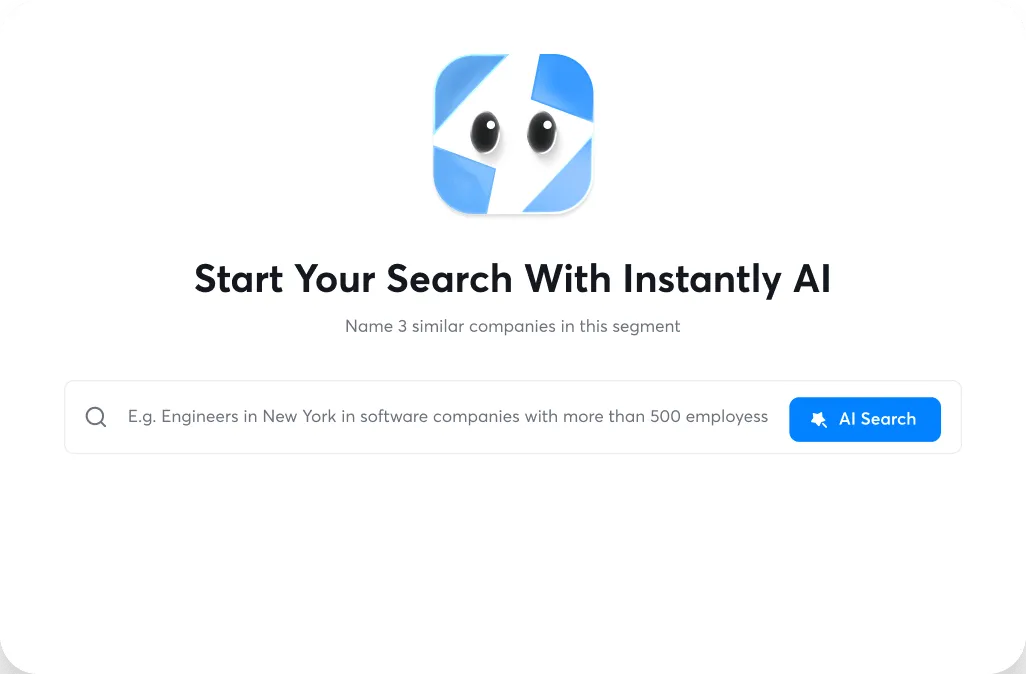
The basic workflow now stretches well beyond sequencing. SuperSearch finds people by role, company, industry, size, location, technology, funding, and other filters. Natural-language search lets a user describe an ideal customer profile without assembling every filter by hand. Records can then be enriched and verified before they enter a campaign. Those actions consume Instantly Credits, a separate subscription from Email Outreach.
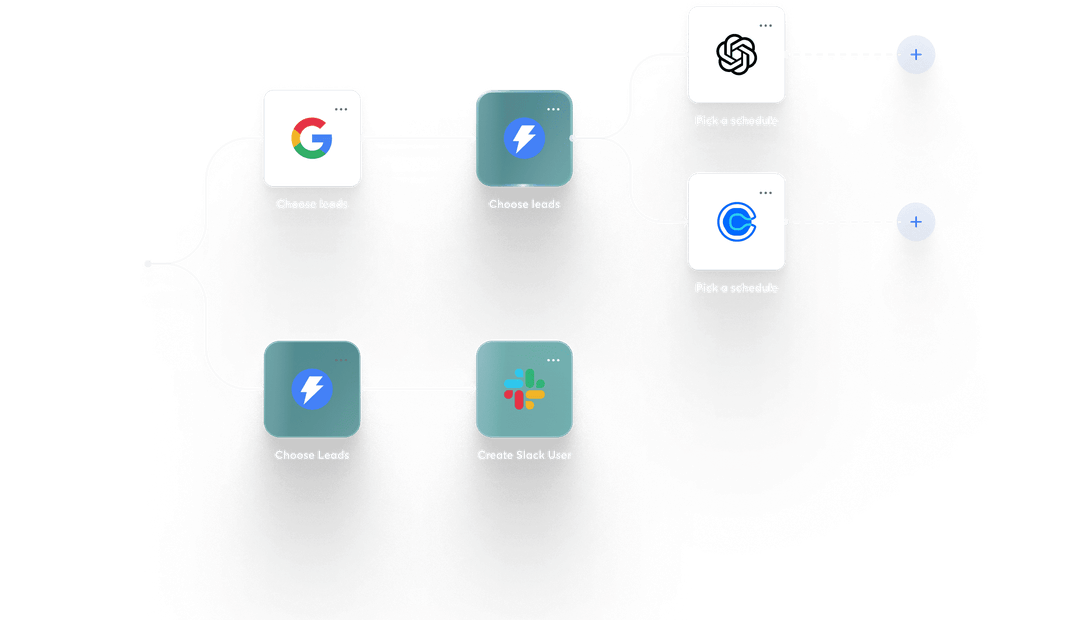
Campaigns carry multi-step copy, schedules, sending-account rotation, and tests. Replies arrive in Unibox, where operators can label and manage conversations across accounts. The CRM adds opportunity stages, tasks, reporting, calls, SMS, and LinkedIn-connection tracking. Automations can push an interested lead to HubSpot, alert a team in Slack, or fire a webhook. Zapier provides a path to thousands of other applications. The API and CLI matter to agencies that want repeatable campaign setup rather than another afternoon of clicking.
The agents have entered the mailroom
Instantly’s newer layer is a small cast of agents. The AI Sales Agent takes a website or detailed instructions, identifies matching prospects, writes individualized emails, creates a multi-step campaign, and adjusts messaging using replies. The Lead Finder Agent watches a campaign’s active-lead count and replenishes it when the supply drops below a threshold. The Reply Agent classifies incoming sentiment and assists with responses. Copilot helps with research, targeting, sequence creation, analysis, and, since July 2026, building automations from plain-language instructions.
In June, an AI Deliverability Agent arrived to inspect DNS health, blocklists, warmup scores, bounce rates, provider balance, campaign copy, and abuse complaints. It recommends what to fix first and can support actions such as pausing a risky campaign. This is sensible automation because deliverability involves many small signals. Still, a dashboard score is evidence, not immunity. Live inbox placement, bounces, complaints, and actual replies deserve more weight than a cheerful gauge.
The $47 price tag is the first drawer
As of the company’s July 2026 plan guide, Email Outreach starts at $47 a month for 1,000 uploaded contacts and 5,000 emails a month. Hyper Growth is $97 for 25,000 uploaded contacts and 125,000 monthly emails. Light Speed is $358 for 100,000 contacts and 500,000 emails. Paid outreach includes unlimited connected sending accounts and warmup, which is the economic idea at the product’s center. “Unlimited accounts” does not mean unlimited sends.
| Layer | Starting monthly price | What it buys | Watch closely |
|---|---|---|---|
| Email Outreach | $47 | Accounts, warmup, campaigns | Contact and send limits |
| Credits | $9 | Search, enrichment, verification, AI | Cost per action and expiry terms |
| CRM | $47 | Pipeline and multichannel work | Whether your current CRM is enough |
| Inbox Placement | $47 | Placement and spam testing | One-time versus automated tests |
Credits begin at $9 a month for 150 and power lead data, verification, enrichment, website-visitor features, and AI actions. CRM and Inbox Placement each begin at $47. Domains, pre-warmed accounts, and done-for-you inboxes are additional purchases. This modularity can be fair: a simple sender does not subsidize every database lookup. It also makes casual price comparisons misleading. Build a monthly model with your expected contacts, verifications, agent actions, CRM seats, domains, and placement checks before buying.
Warmup is maintenance, not diplomatic immunity
Instantly’s automated warmup exchanges messages among participating accounts to build sending history. The deliverability tools also inspect authentication and campaign copy, run placement tests, and monitor 94 blocklists. These are useful checks. They do not control Gmail, Microsoft, recipient behavior, the reputation of every provider, or whether your list contains people who never asked to hear from you.
Use secondary domains that resemble your brand, configure SPF, DKIM, and DMARC correctly, ramp volume gradually, verify addresses, and keep each inbox’s daily load conservative. Watch hard outcomes: placement tests across providers, bounce rate, spam complaints, positive replies, and meetings. Stop a campaign when those deteriorate. A warmup score can look tidy while a weak list or an overeager sequence burns the underlying reputation.
The reviews disagree, loudly
G2’s late-2025 snapshot showed 4.8 out of 5 across 3,882 reviews. Its summary concentrated praise around ease of use, support, simplicity, and features, while common negatives included cost, missing features, and limitations. Reddit users often describe Instantly as an approachable place to start, especially for a clean interface and background warmup. One 2026 poster reported 30 consultation sign-ups after contacting about 15,000 people, though it took months for the process to produce results.
Trustpilot presents the sharper edge. Recent complaints cite cancellation confusion, renewals, credit rules, support delays, and disappointment with warmup or placement. A widely discussed Reddit complaint said pre-warmed accounts could only be used inside Instantly and that this restriction was not obvious during purchase. Instantly’s current plan documentation says credentials can be downloaded for done-for-you or pre-warmed Google accounts, suggesting that policy or product behavior may have changed. Confirm access and portability for the exact account type you buy.
Review sites select for different moods, and no single star average settles the case. The repeated pattern is more useful: people like getting operational pieces into one clean workspace; frustration rises when buyers misunderstand separate subscriptions, credits, ownership, or what deliverability software can promise. Read the billing terms. Export a test campaign and its data. Cancel a trial subscription once, just to see the controls. Boring tests make peaceful customers.
Which rival belongs on the shortlist?
| Product | Put it on the shortlist when... | Central question |
|---|---|---|
| Instantly | You want many inboxes, lead data, sending, replies, and light CRM in one place. | How many paid modules will your workflow need? |
| Smartlead | You run agency-scale sending and want granular infrastructure controls. | Which interface and client controls suit operators? |
| lemlist | Personalization and multichannel sales engagement matter more than raw inbox economics. | Will per-user or feature pricing fit the team? |
| Apollo.io | The contact database and broader prospecting workflow lead the purchase. | How do data quality and sequencing compare in your niche? |
Run the same small campaign through finalists. Import the same verified list, connect comparable accounts, recreate the sequence, inspect reply handling, and calculate the complete monthly cost. For agencies, test workspace separation, permissions, exports, and API operations. For an in-house sales team, test handoff to the CRM you already use. Feature lists are easy to imitate. Daily friction is harder to hide.
A seven-day trial that teaches you something
- Day 1: Define one narrow audience and one concrete offer. If the audience is “all founders,” keep working.
- Day 2: Connect a few secondary-domain inboxes. Check SPF, DKIM, DMARC, and account permissions.
- Day 3: Find or import a small list. Verify it, sample it by hand, and record the credit cost.
- Day 4: Write a short sequence yourself, then compare it with the agent’s draft. Delete the puffery.
- Day 5: Test Unibox, labels, an integration, a data export, and your preferred CRM handoff.
- Days 6–7: Review placement, bounces, replies, time saved, and the full projected bill. Do not judge revenue after a week.
The verdict
Instantly earns its place for agencies and lean B2B teams that need to operate many inboxes without paying software fees on every connection. The integrated search-to-reply route is convenient, and the automation layer is becoming genuinely useful. Buy it with a calculator and a deliverability routine. Skip it if your volume is tiny, your current CRM already handles the job, or you expect software to invent the offer, relevance, and patience that good outreach requires.