Fourteen friends went to Yosemite. They took photographs, as friends tend to do in a place built for looking at. Afterwards came the familiar expedition: finding out who had which pictures, asking for copies, and watching a shared folder wait patiently for contributions. Sachin Dev Duggal thought this deserved a company. The result was Shoto, an app organised around getting the photographs your friends had taken. A holiday had acquired a product roadmap.
It is an unusually useful place to begin his story. Before Builder.ai’s funding rounds, before the title Chief Wizard, before the collapse that made the title such an uncomfortable souvenir, there was this small annoyance. Something should have been easy. It wasn’t. Duggal wanted to put software between the two conditions.
By August 2026, living in Dubai and launching SeKondBrain, he was pursuing another version of that problem: the things people tell their AI assistants disappear into separate conversational cupboards. He wants the context to travel. Between the photograph app and the memory company sits a business failure that any account of his career has to carry with it.
A broken computer, then a bank
Duggal was born in London in April 1983. In his own account, his early technical education accelerated when he broke his mother’s computer and had to work out how to repair it. Building computers became a teenage business. The lesson was practical: understanding a machine could rescue a difficult afternoon and, with customers, produce some money.
His education and employment overlapped. He studied Information Systems at Imperial College London while working at Deutsche Bank, having first approached the bank at seventeen. Later came the MIT and Entrepreneurs’ Organization executive programme. The sequence is more interesting than a string of institutions: he was trying things at work while still learning how they were supposed to work.
At twenty-one, he started Nivio, which streamed a Windows desktop over the internet. The ambition was to loosen the relationship between software and the computer sitting in front of you. Applications could arrive from elsewhere. A user with an iPad could, for example, reach Windows software. In 2011, Stanford’s teaching programme listed him as Nivio’s president and CEO; the cloud was already his working territory.
He called himself Chief Wizard at Nivio, too. Builder.ai did not invent that flourish. On his old personal blog, he introduced himself as a technologist who had become a banker and then a technology entrepreneur, joking about confusing himself. The title belonged to a long-running public persona: technical work should leave room for a little theatre.
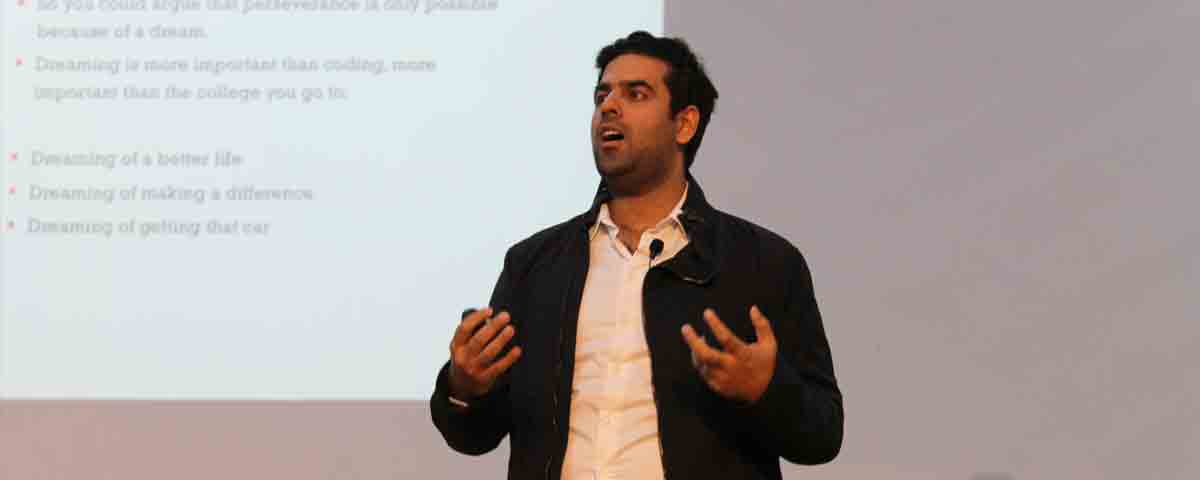
The app that needed an app builder
Shoto gave that persona a domestic setting. Its starting point was a problem with friends, photographs and permissions. In a September 2015 introduction, Duggal described trying automatic sharing and finding that it alarmed users. Making sharing technically possible had not made people want to do it. He and his collaborators revised the approach around asking for the pictures someone wanted to receive.
This distinction mattered. A product could reduce the number of taps and still misunderstand the person holding the phone. Shoto tried to organise photographs into albums and trips while leaving choices about sharing with their owners. The founder who would later talk at length about context was already working with the question of what a photograph meant to a particular group.
Building the app produced another frustration: finding developers who could deliver what he needed. Software development itself became the next target. In an early interview about SD Squared Labs, the offer was strikingly concrete: an app on a single platform would cost no more than $25,000, even if the work cost the business more. The supplier would absorb the pricing risk.
That helps explain Builder.ai’s appeal. Buyers usually know what they want software to do long before they know how to commission it. Cost, timing and technical vocabulary can turn an ordinary business decision into an examination for which nobody supplied the textbook. Duggal wanted to sell a clearer purchase.
When the pizza pitch met serious money
Established in 2016 as Engineer.ai, the company that became Builder.ai proposed assembling applications from reusable components, with automation and a network of people providing custom work. A login or a payment feature did not have to be invented anew for every customer. The comparison to Lego was easy to grasp; the promise of ordering software like pizza was easier still.
The company’s own 2023 description explicitly included human developers and designers. This matters when considering the subsequent argument about its AI. Employing people was part of the stated model. The harder question was how much useful work the automation actually performed, and whether customers’ expectations matched what the business could deliver.
Series D announced, led by Qatar Investment Authority. Builder.ai said the round brought its total funding above $450 million.
Microsoft invested, and Qatar Investment Authority led the May 2023 round. Investor names gave the proposition institutional weight. For Duggal, an argument about how software ought to be made had become a company with international operations and substantial obligations. Every additional customer required delivery; every expansion added work behind the cheerful interface.
In November 2023, he won EY’s UK Entrepreneur Of The Year award. His response gave credit to the team doing the work behind the ceremony. There was a recognizable rhythm to the public Duggal: an expansive ambition, a playful title, and repeated thanks to the colleagues who made the ambition presentable.
He also had interests beyond the office. Tennis appears repeatedly in his accounts of himself, and his 2024 conference biography recorded a board role at Ultimate Tennis Showdown. The attraction is easy to see without turning it into a theory of his character. Tennis gives a point a beginning, an end and a score. A growing software company is less considerate.
The warning he had already put into words
Years before Builder.ai failed, Duggal described a management problem with unusual precision. In a 2020 career interview, he explained how a founder’s direct knowledge becomes a process as a company grows; later, other people hold the knowledge of that process. Problems that once disappeared in a quick exchange now travel through an organisation.
He also rejected two pieces of advice: grow regardless of cost, and keep cutting costs while growing. His view was that expansion and optimisation required choices, sometimes alternating between them. These were the observations of someone who understood the pressures. Knowing the pressures, of course, does not settle how well they were handled.
“but I built too much, too fast.”
Sachin Dev Duggal, reflecting on Builder.ai in 2026
In February 2025, Manpreet Ratia succeeded him as CEO. Duggal’s resignation as a director of the UK operating company was recorded on March 11. On May 20, Builder.ai announced it was entering insolvency proceedings. The business that had promised to remove uncertainty from commissioning software had left employees and customers facing a particularly severe form of it.
Former employees described heavy dependence on human development work, missed delivery expectations and financial problems. Ratia subsequently defended the existence of the company’s AI platform. The failure became an argument over both the accounts and the technology. Treating every contested explanation as an established fact would make the story simpler and less accurate.
Later accounts continued to differ. An investor-commissioned review disputed allegations of circular billing. That dispute does not change the insolvency. It does mean that a collapsed business, a disputed transaction and a finding of wrongdoing are separate things. For employees who lost jobs and customers left with unfinished projects, these distinctions may offer little comfort. They still matter to an accurate account.
- 2004Nivio: Windows delivered from the cloud
- 2015Shoto: photographs your friends have
- 2016Engineer.ai: the business behind Builder.ai
- 2025CEO departure, followed by insolvency
- 2026SeKondBrain launches Kemory
A separate legal matter also belongs in the current picture. In April 2026, India’s Enforcement Directorate said it had filed a supplementary prosecution complaint naming Duggal in the Videocon money-laundering case, concerning transactions involving Nivio-related entities. These are the agency’s allegations, rather than a conviction. Duggal and Builder.ai had denied allegations when the matter was reported in 2024. That earlier denial predates the 2026 complaint.
A second business about remembering
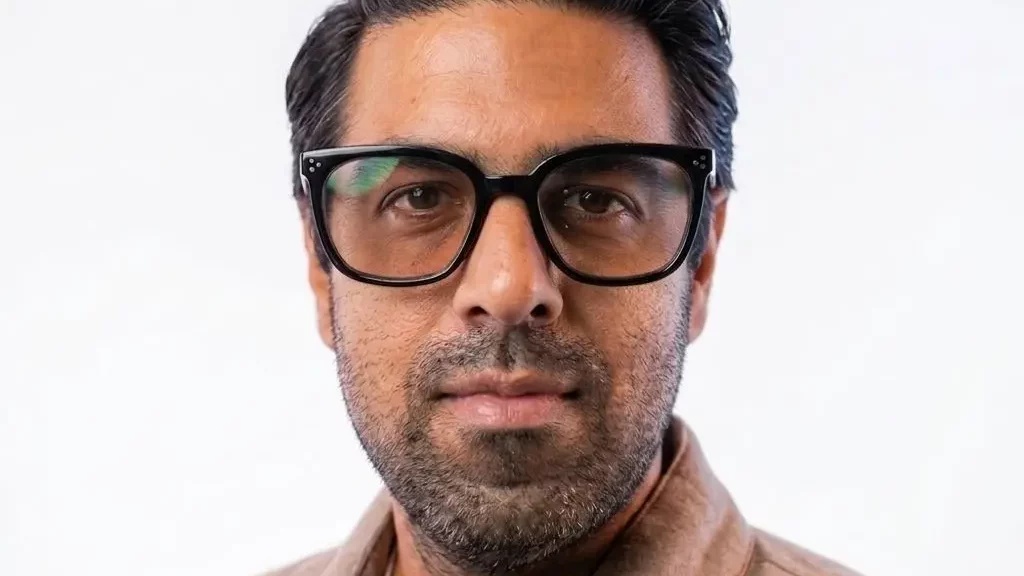
The new company, SeKondBrain, places its emphasis on memory shared across AI tools. Its first product is Kemory. The proposition is that users should be able to carry relevant knowledge between assistants, rather than repeatedly explain themselves. Duggal is again trying to remove a tiresome chore from a process that was supposed to save time.
At the August 2026 launch, he demonstrated moving a conversation from ChatGPT into Manus with earlier context retrieved for the next system. His demonstration account contained more than 18,000 memories across roughly 1,300 namespaces. Those were demonstration figures, rather than customer totals. The use case was tangible: keep the work together while the software around it changes.
The company describes a small team with several former Builder.ai colleagues, including product leader Priyanka Kochhar. Its public account of how it works stresses fewer layers and people owning work from beginning to end. These are choices about organisation as well as product design. Whether they produce the intended results will depend on the work that follows.
Duggal’s writing has moved further into the same territory. On his Substack, he considers communication, meaning and the way knowledge passes between people and systems. The terminology can become elaborate. The everyday problem is familiar enough: somebody has already explained this, decided this, or tried this, and now everybody is doing it again.
There is continuity here, though no automatic redemption. Nivio moved applications away from a particular computer. Shoto tried to retrieve photographs stranded on other people’s phones. Kemory aims to move useful context beyond a single AI service. Duggal keeps finding things that should travel more easily. His next company must show that the business carrying them can endure the journey.
The conversations continue
- SeKondBrain - current venture
- Kemory - product
- Orchestrating Intelligence - personal writing
- Twitter / X
- Shoto - the founder’s 2015 introduction
- Nivio-era personal blog
- School visit - 2017
- EY - award profile
- Builder.ai - 2023 funding announcement
- Inside the collapse - Rest of World
- Investor-commissioned review - January 2026
- The next venture - August 2026 interview
- Builder.ai reflections - New Economies video
- Founder to CEO - Jungle Ventures video
- UK company appointments
- Videocon matter - April 2026 agency statement
- The 2024 denial - Inc42
- 2026 reflections - Rolling Stone UK