Builder.ai wanted ordering an app to feel like ordering dinner. Choose the ingredients, agree the price, wait for delivery. It was a wonderfully legible sales pitch for anyone who had watched a modest software project turn into a calendar-eating monster. Then, in May 2025, the delivery company itself ran out of money.
Chief executive Manpreet Ratia told Bloomberg that lender Viola Credit had seized $37 million from Builder.ai’s accounts, leaving $5 million. A business that had attracted Microsoft and Qatar’s sovereign wealth fund was heading into insolvency. The story continued beyond that announcement: Britain’s Companies House now lists Engineer.ai Global Limited, its UK operating company, in liquidation. A court order to wind it up was filed on January 22, 2026.
That ending matters to anyone encountering an old product page. Builder.ai belongs in the past tense. But the business is worth examining beyond its spectacular finish. Its offer addressed a recognisable frustration: people who understand their customers often lack the technical skills, staff or patience to commission software. Builder.ai sold them a way through that gap.
01A software factory with a Chief Wizard
The company dated its beginnings to 2016. Its own origin story described two engineers struggling to launch a photo-sharing app after their developers let them down. Founder Sachin Dev Duggal turned the experience into a proposition: break software into repeatable parts, then organise production around those parts. He also adopted the title Chief Wizard.
The founding record needs care. Saurabh Dhoot was widely described as a co-founder in early coverage. In 2024, lawyers for Builder.ai and Duggal told the Financial Times that the designation recognised friendship and advice, and that Dhoot had not helped establish the company. Duggal remains the unambiguous founder. The business’s 2016 origin is also distinct from its UK entity’s October 2017 incorporation.
Originally known as Engineer.ai, it announced the Builder name in October 2019, saying customer feedback had prompted clearer communication. The company wanted to make software accessible to people regardless of technical background, eventually letting them describe a business need in ordinary conversation and receive an application.

02What arrived after you spoke to Natasha
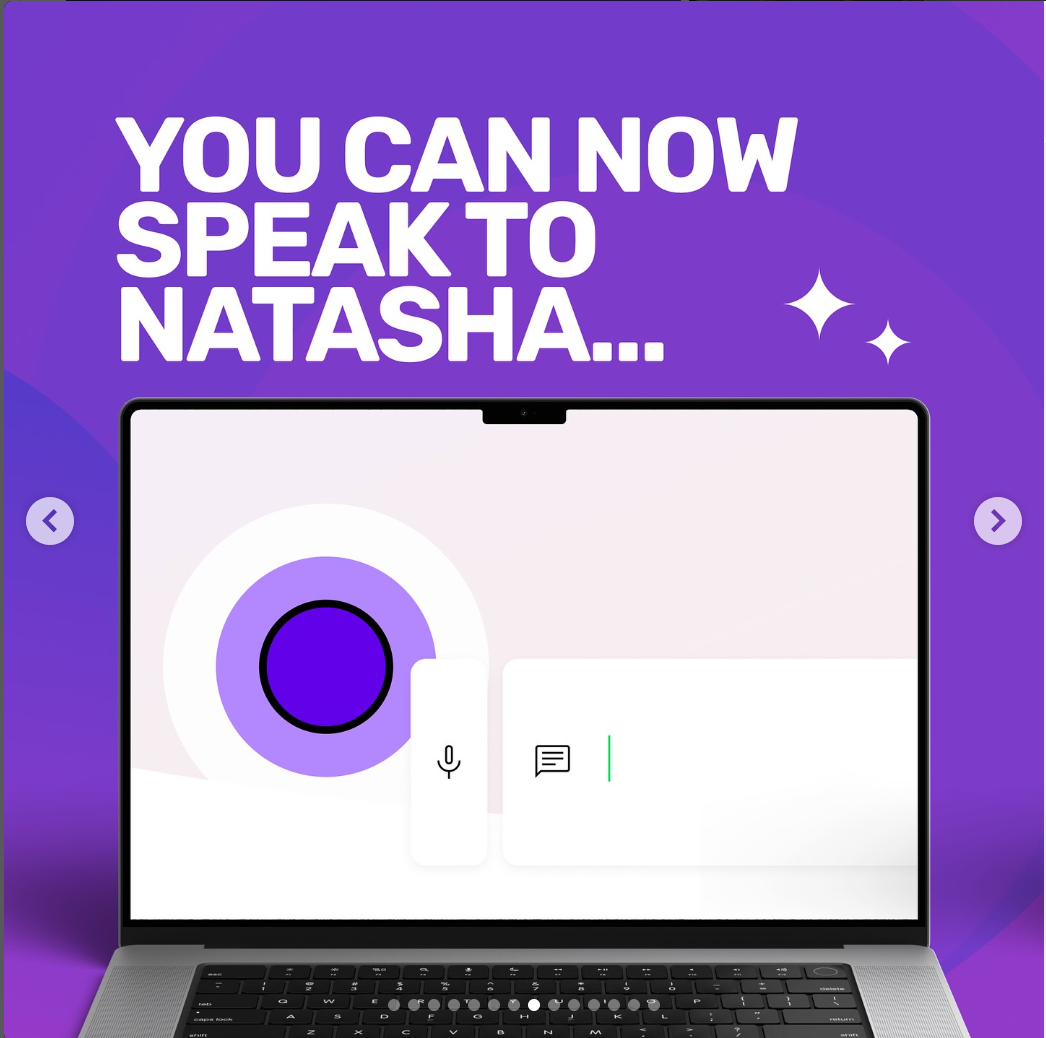
Natasha was the front door: an AI assistant that asked about an idea and recommended features. Builder Studio was the custom-app service behind it. Customers selected functions for web, iOS or Android software, agreed a scope and received a price and timetable. The company’s published workflow explicitly included human specialists who customised features, plus a dedicated expert who managed delivery.
Those experts were called Productologists. A weekly conversation with one was part of the offer. Builder Home provided the project dashboard; a Buildcard recorded the specification.
Builder.ai advertised a library of more than 600 reusable features. Its technical descriptions covered tools for linking screens into prototypes, managing project dependencies and tracking progress. The intended advantage was repetition: a developer should not need to rebuild a standard feature for every customer. The difficult part was making those standard pieces behave properly in a particular business.
There were several routes through the catalogue. Builder Now produced clickable prototypes. Studio Store packaged apps for common selling and booking needs. Studio Rapid targeted enterprise development. Studio One supplied maintenance after launch, while Builder Cloud handled infrastructure services. These were different purchases under one brand, which helps explain why describing the entire company as a chatbot misses most of the business.
- 01Describe
the idea - 02Agree features
and price - 03Assemble
and customise - 04Test
and launch
Automation and human specialists were both part of the published workflow.
03The customer wanted a shop, not a coding lesson
The target buyer was often an entrepreneur or small business owner with an idea and no engineering department. A restaurant might need ordering; a service business might need appointments; an established organisation might want to replace paperwork. Builder.ai also pursued larger accounts. Its case-study catalogue covered education, property management, fitness, retail and events.
Specific projects tell more than a wall of customer logos. Builder.ai described an interactive app for BBC Click Live, with registration and audience participation. A SoftwareOne partner page also described that use case. The company profiled Learners India’s education tools, OpiGo’s investing community and Dubai Refreshments’ work on manual processes. Those examples establish the kinds of jobs it pursued; they do not establish uniform customer satisfaction.
Its place in the market was between an app-building tool and a development agency. Adjacent alternatives include Bubble for visual app building and OutSystems for enterprise development. The buyer was purchasing a managed outcome, with reusable software and automation inside the process. That distinction explained the appeal to nontechnical customers: they could delegate development without first learning a visual programming environment. It also meant delivery depended on a service organisation that had to coordinate real people.
04The fixed price had a perimeter
What did it cost? Custom Builder Studio projects had feature-based quotes, not one universal subscription price. The historical pricing page listed custom prototypes from £1,999 and a Studio Store Starter plan at £75 a month for 24 months. That is £1,800 across the stated term, before considering any separately priced additions. These figures describe an old offer, not an available checkout today.
Speed and scope affected the quote. More platforms cost more, and a faster build could cost more than a relaxed schedule. The first year of Studio One maintenance was advertised as included with app development. Builder.ai said customers owned their code once payments were complete. A fixed price was therefore meaningful only alongside the feature list, payment schedule and handover conditions.
The company’s FAQs made the boundary clearer: additional custom features were not included in the original price. Its business model combined project fees with maintenance and cloud services. Builder Cloud added another relationship, buying cloud capacity and offering customers discounts. Its published cloud policies described Builder.ai billing customers for AWS usage. A customer could therefore depend on the company both to build an app and to keep its infrastructure bills moving.
A fixed price was meaningful only alongside the feature list, payment schedule and handover conditions.THE CUSTOMER’S SIDE OF THE DEAL
05The cheques got bigger
Investors financed the expansion. A reported $29.5 million Series A in 2018 was followed by further funding, including a $100 million Series C in March 2022 led by Insight Partners. Builder.ai said that round brought total funding to $195 million. Its announcement reported 450 employees, up from 265 a year earlier, and plans to spend on automation, product development and international growth.
May 2023 supplied two endorsements in quick succession. Builder.ai announced a Microsoft investment and collaboration, including planned Azure AI connections and a Natasha integration for Teams. Later that month it announced more than $250 million in Series D funding led by Qatar Investment Authority, with investors including Iconiq Capital, Jungle Ventures and Insight Partners. The company put cumulative funding above $450 million.
Those announcements demonstrated fundraising power and institutional interest. They did not measure how much human work each delivered app required. Nor were announced product integrations evidence that every proposed connection had shipped. For a reader weighing the company’s achievements, the distinction is useful: winning a major backer was a milestone; delivering repeatable, profitable software was a separate test.
Announced round sizes in US dollars. Bar lengths use $100m and the $250m Series D floor; these are funding figures, not revenue.
06The promise was under strain before the bank account
Questions about automation preceded the collapse by years. In 2019, the Wall Street Journal reported employee concerns that Engineer.ai overstated its AI capabilities. Later, former employees interviewed by Rest of World described delivery delays, cancellations and customers refusing payment after missed benchmarks. The evidence points to trouble in fulfilling the promise before the final cash seizure, although it does not yield a single first failure across the entire business.
It is tempting to turn this into a joke about humans hiding inside a computer. That version loses an important detail: Builder.ai’s own marketing acknowledged human developers. The contested question was how much automation existed, how much work it saved and whether customers and investors received an accurate picture. Human participation alone cannot settle those questions.
Ratia defended the technology after the collapse, describing a real platform that combined language models and orchestration to automate parts of software assembly. Rest of World reported that defence alongside employees’ more sceptical accounts. Both belong in the record. The company had software and engineers; the extent to which its AI justified its promises remained disputed.
The cultural contrast was similarly revealing. Its careers page advertised hybrid work, learning budgets and a value system called HEARTT: heart, entrepreneurial spirit, accountability, respect, trust and transparency. These were statements of intent. They should not be mistaken for an independent assessment of how the company operated, especially once financial reporting came under scrutiny.
07A new chief executive could not refill the till
Builder.ai announced Ratia’s appointment in February 2025. The change preceded further scrutiny of its accounts. A Moody’s retrospective described 2024 revenue of $55 million against an earlier $220 million projection. Those figures should be read as a reported actual-versus-projection comparison, not two independently audited revenue series. The gap nevertheless shows the scale of the reset facing the business.
There is no need to invent a private moment when investors changed their minds. The observable sequence is more useful: leadership changed, financial claims faced examination, and a creditor took control of most of the cash. Ratia’s May account of the seizure supplied the immediate explanation for why the company could no longer continue as before.
Separately, Bloomberg reported allegations of reciprocal billing with Indian company VerSe to inflate sales. VerSe denied the allegations. They remain allegations, not a verdict to be slipped into a company profile as established fraud. What is established is the collapse: the US parent entered a Chapter 7 liquidation process in June 2025, and the UK company’s public record subsequently moved to liquidation.
Amounts reported by Manpreet Ratia to Bloomberg on May 20, 2025.
08Keep the specification. Check the delivery.
There is still something practical to take from Builder.ai’s offer. Start with a small, explicit feature list. Use a prototype to settle disagreements before development. Reuse ordinary components where possible. Give someone responsibility for the decisions that cross design, engineering and the customer’s business. These are lessons drawn from the model, not proof that Builder.ai executed them consistently.
The conditions matter. A repeatable catalogue is less helpful when an application’s value lies in unusual workflows, difficult integrations or requirements that keep changing. A fixed quote becomes fragile when the scope is unsettled. And ownership of code is only part of independence: a business also needs the knowledge and access required to maintain what it has bought.
Builder.ai understood how intimidating software procurement could be. It made the first conversation sound easy and supplied a memorable character to conduct it. The harder conversation was about everything that followed: working software, paid engineers, collected revenue and a company able to finish the job. By the end, the bank balance had made that conversation unavoidable.
The pitch, the product, the aftermath
Explore Builder.ai’s historical public presence and the reporting on its collapse.