A shopkeeper’s shopping list is an unlikely place to put a national ambition. It contains things that need to arrive, things that need to be paid for, and very little room for a founder’s philosophy. Saad Jangda chose it anyway. After a career working on products at Snap and Careem, he returned to Pakistan and helped build Bazaar around a modest, repeatable task: getting stock into a small retailer’s shop.
His larger purpose was already there. He wanted a company built from Pakistan, with opportunities for people who might otherwise assume their careers had to take them away. The interesting part of his story is the distance between those two scales. One customer needs the next order. One founder wants to change what building a career at home can mean. Bazaar has had to live in both worlds.
The friend on the return journey
Jangda grew up in Pakistan and studied economics at the University of Michigan between 2012 and 2016. His working life took him into technology products: advertising at Snap, then ride-hailing and food delivery at Careem. That is an education in how a service earns repeated use. A good idea has to survive the customer opening an app and expecting something to happen.
In Dubai, he reconnected with Hamza Jawaid, a childhood friend working at McKinsey. They had careers abroad and an interest in building something back home. Their eventual partnership therefore began with more shared history than most co-founder introductions provide. Before there was a company to explain, there was someone who already knew the person doing the explaining.
The pair returned to Pakistan and founded Bazaar in 2020. Karachi was Jangda’s hometown, and a place where his ambitions could become specific. In an early public reflection, he described their desire to make more of the country’s potential and to build a company that would develop the people working inside it. The address mattered as much as the idea.
There is a temptation to treat a return home as the end of a journey. For Jangda, it opened a new set of questions. Experience acquired elsewhere still needed to meet local customers. A product manager arriving with familiar methods has to learn which assumptions travel well. A retailer has no obligation to admire the founder’s previous employers.
A design problem with a delivery address
The early Bazaar app connected Karachi’s grocery retailers with wholesalers and manufacturers. A shopkeeper could order stock and have it delivered to the storefront the next day. The catalogue included branded goods and everyday staples. It was a proposition that could be understood without a seminar: choose what the shop needs, then get back to running it.
That simplicity placed a substantial burden on the company. Behind an uncomplicated order sits a chain of decisions about availability, fulfilment and delivery. The customer sees the result. The product team sees the work required to produce it. For someone moving from product management into founding, the promise on the screen becomes a responsibility that stretches beyond the screen.
Jangda’s own description of himself is pleasingly unceremonious: “Product and design geek.” In a 2025 gathering directory, he also described an obsession with good design. Both sound at home in a technology office. Put them beside a retailer’s stock order and they become more demanding. Design has to help a busy person complete a useful task.
He had emphasised understanding the customer when discussing Bazaar’s beginnings in 2020. That focus gives the company’s origin a practical texture. It begins with what someone already does, and what makes doing it difficult. An attractive interface can help, but the parcel still has to arrive. Typography is rarely an acceptable substitute for flour.
Early demand offered encouragement. By the end of 2020, Bazaar had passed 10,000 Karachi retailers against an initial target of 800. Those are dated figures from the company’s early chapter, rather than a description of its present size. They show how quickly a routine procurement problem could turn into a much larger workload for the founders.
Karachi retailers · historical figures
The money, in dated chapters
Bazaar’s first funding announcement arrived in June 2020: $1.3 million in pre-seed capital. The founders had received a term sheet ten days after their first pitch. That is a tidy fundraising anecdote. It leaves the less tidy work of running the business ahead of them. A term sheet can arrive quickly; a dependable delivery operation still has to be built.
Funding accelerated. A $6.5 million seed round followed in January 2021, then a $30 million Series A that August. In March 2022, Bazaar announced a $70 million Series B led by Dragoneer Investment Group and Tiger Global Management. The rounds supplied resources for a company trying to connect several parts of a merchant’s working life.
Easy Khata extended the relationship into bookkeeping. Bazaar Credit brought short-term working capital into the offer. The merchant who needed goods also needed records and, sometimes, funds to purchase those goods. A business built around procurement was finding related jobs to do. Each addition made the offer broader and the responsibility more complicated.
The distinction matters when looking at Jangda’s achievements. Raising money is a documented milestone. Keeping connected services useful is continuing work. The early rounds explain how Bazaar could attempt more; they do not settle whether every new product would deserve a permanent place in the customer’s day. That question belongs to the people using it.
A company with room for other founders
Jangda’s career has also been shaped by introductions. Defy met him through Aatif Awan of Indus Valley Capital. The investor relationship became part of Bazaar’s August 2021 funding chapter. It is a reminder that the public story of a financing round includes a quieter social history: someone knows someone, makes an introduction, and the conversation continues.
Defy’s account of him emphasises his energy and his interest in developing people alongside products. Its Kamil describes conversations that leave the other person energised, even across a twelve-hour time difference. Venture capital often requires inconvenient hours. Jangda appears to have made a favourable impression on at least one person answering the call.
“Saad’s passion and energy seamlessly translate to developing products and people at scale.”
Kamil · Defy
Recognition widened the circle. In 2021, he and Jawaid were included in Forbes 30 Under 30 Asia. In 2022, they became the first Pakistani entrepreneurs selected into Endeavor’s global community. For a pair who had returned to build at home, international networks offered another way to connect their local work with people operating elsewhere.
Jangda has described a longer ambition for the people inside Bazaar: inspire and support them to start businesses of their own. It gives the company a second possible legacy, beyond products and deliveries. Someone can join to do one job, learn how an organisation works, and eventually decide to take on the uncertain job of founding something.
By 2024, that interest had a public setting in Founders Connect, a forum organised with Endeavor Pakistan. Jangda promoted a second gathering at Bazaar’s Karachi headquarters, focused on organisational structure and scaling teams. These are the questions that arrive after the first exciting idea, when a founder discovers that every new colleague changes the company a little.
His public life leaves room for a more ordinary detail, too. In the 2025 Endeavor directory, alongside his product interests and consumer-platform ambition, he wrote that he had just married and was in the middle of his honeymoon. Even a founder’s conference introduction can briefly contain a life that has nothing to do with the next funding round.
The next item on the list: payments
The customer list broadened. Bazaar Pro, launched in 2024, addressed procurement for offices, institutions, hotels and restaurants. Jangda publicly welcomed that expansion. The founding attention to a business’s purchases remained recognisable, even when the customer was no longer a neighbourhood grocery shop. Different buyers brought different routines to the same practical task.
In July 2025, Bazaar announced its acquisition of Keenu, a payments company founded in 2013. The deal added a business with an established merchant network and payment infrastructure. Jangda presented it as a step toward connecting commerce and payments more closely. Buying something and paying for it were becoming parts of a wider company plan.
The two businesses were to continue operating independently while aligning strategically. The acquisition therefore opened a chapter rather than finishing one. Combining organisations requires decisions about products, teams and customer experience. The announcement gave Jangda’s ambitions a larger field to work in, with all the ordinary obligations that come with taking responsibility for another business.
His early wish to develop a home-grown company still provides the thread through these changes. Snap and Careem gave him product experience. Karachi gave the venture a place to begin. Jawaid gave the journey a partner with a history. The retailers gave it a task that would come around again tomorrow, whether anyone felt inspired or not.
That is where the story earns its interest. Jangda’s aspirations concern a country’s technology future and the people who might build it. His company’s daily usefulness rests on something smaller and less patient. Someone needs an order filled, a record kept, a payment made. The next generation of founders can wait a little. The shop opens in the morning.
Follow the next chapter
Explore Bazaar, follow Jangda on LinkedIn and X, or read the Bazaar Engineering publication.
Further reading: the first funding announcement, the founders’ 2022 interview, joining Endeavor, and the Keenu announcement.
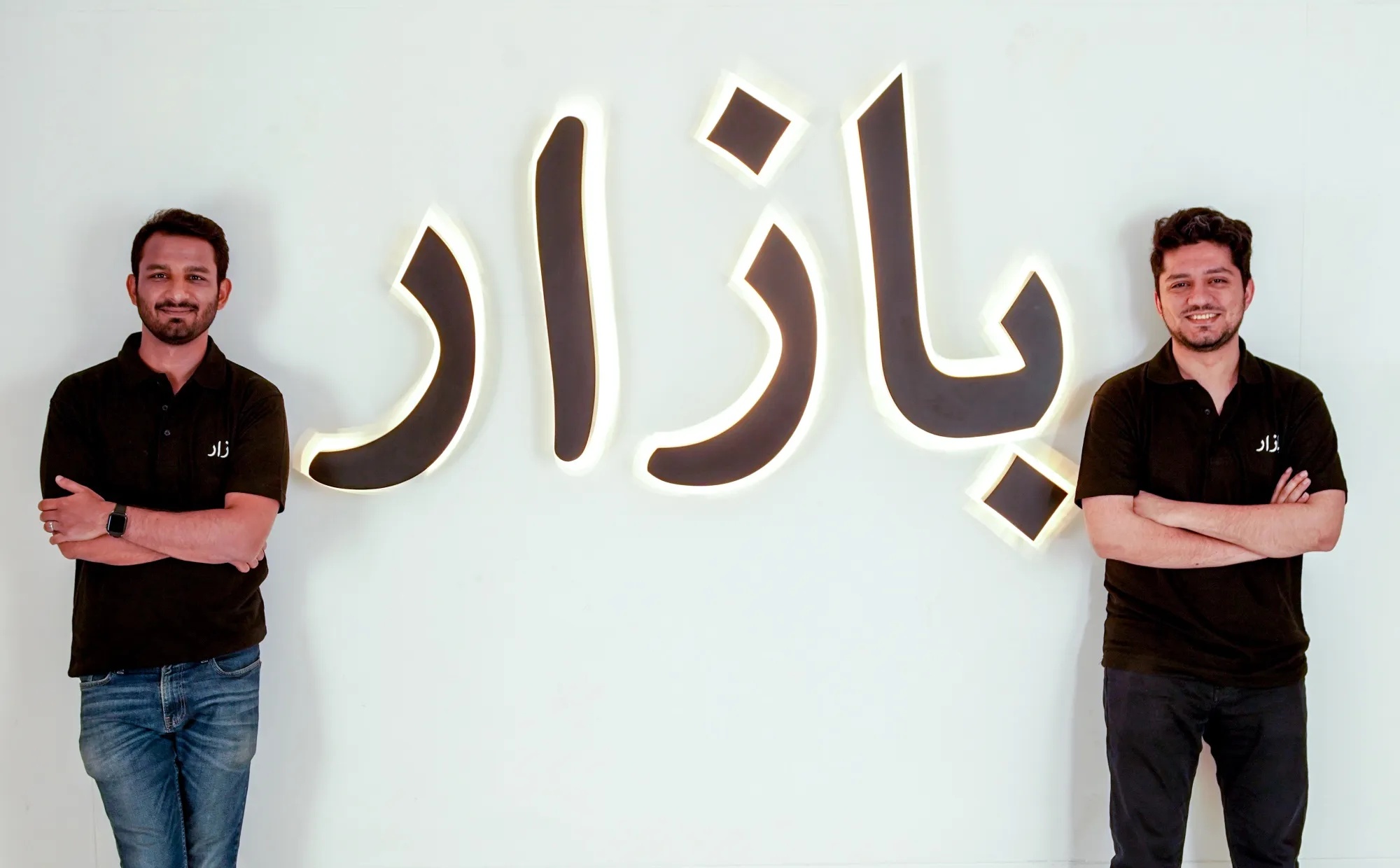
Photograph: Bazaar founders, published by Bloomberg in March 2022.